



The history of flashlights explains why choosing a light now involves more than finding a brighter bulb. For everyday use, choose a beam that suits the task, a working brightness you can sustain, and a power system you can maintain. Modern LED lighting expands those choices, but each improvement brings conditions worth understanding.
TL;DR: The change from incandescent to LED flashlights involved four connected developments: a different light source, different power options, more electronic control, and greater attention to heat. A small AAA light can still be useful. A rechargeable pocket light adds adjustable output and convenient charging. A larger light can add separate beam types, but maximum output and longest runtime describe different operating conditions.
📋 Table of Contents
- 1. Four changes explain the modern flashlight
- 2. What was before LED?
- 3. When did LED flashlights become common?
- 4. Why are LED flashlights better?
- 5. Light-source efficiency is only part of the energy story
- 6. Batteries changed the choices, not every flashlight the same way
- 7. Electronic control made working brightness more important
- 8. Heat management puts limits on high output
- 9. More light also brought more beam and control choices
- 10. Compare old and new flashlights around the same task
- 11. What may change next, and what still decides a useful light
- 12. FAQ
Four changes explain the modern flashlight
Start with the job the light must do. Finding a dropped key, walking a familiar path, and checking a distant fence do not require the same beam. The move toward LEDs expanded the range of portable tools available for these jobs. They did not remove the need to match light distribution, carrying size, controls, and available power to the situation.
The LED changed how electricity becomes visible light. Battery choices changed how much energy a particular package could carry and how that energy could be replenished. Electronics gave designers more ways to select and manage output. Heat management became especially noticeable when substantial output moved into a small housing. These changes interact, but an LED does not automatically provide every other feature.
That distinction helps when browsing a rechargeable flashlight. Charging describes the power arrangement; LED describes the light source. A rechargeable model can offer several output levels, but a simple replaceable-battery LED light can also be a sensible choice. Decide which benefits solve a real problem before treating a longer feature list as progress in itself.
| Everyday task | Useful type | What to examine | Example discussed below |
|---|---|---|---|
| Brief close-range lookup | Small replaceable-battery light | Accessible control and suitable beam | i3E EOS |
| Repeated walking and household tasks | Adjustable pocket light | Working mode, carry size, charging access | Baton 4 Pro |
| Switching between a broad area and a distant object | Larger multibeam light | Separate beam modes, controls, and output stages | Marauder Mini 2 |
What was before LED?
Incandescent bulbs were a familiar portable-light source before white LEDs became widespread. Electricity heated a filament until it glowed. A reflector and front window helped direct that light outward. Halogen bulbs also used a heated filament; the presence of a different gas arrangement did not make them LEDs. The practical distinction is between light from a hot filament and light from a semiconductor.
The Department of Energy's history of the light bulb describes improvements such as tungsten filaments and inert gas inside bulbs. These were meaningful advances within incandescent technology. The later transition to LEDs involved a different way of producing light, rather than another refinement of the same filament. The history of portable lighting therefore includes both gradual improvements and changes in the underlying source.
An older light may have a serviceable switch, sturdy housing, and a beam its owner understands. Its age alone does not decide whether it remains useful. The relevant questions are whether it works reliably, whether the specified batteries and replacement parts remain obtainable, and whether its light meets the intended task. A familiar tool can retain value without matching a modern output specification.
Avoid identifying a light source by beam color alone. Warm-looking light does not prove that a bulb contains a filament, and white light does not identify the battery chemistry. Read the model information and inspect only the parts that its instructions allow users to access. A sealed LED assembly should not be approached as though it were a traditional user-replaceable bulb.
When did LED flashlights become common?
There was no single changeover year for every flashlight category. White LED technology developed alongside improvements in optics, power supplies, and manufacturing. Adoption occurred over time, and a general-lighting milestone does not establish the year that most households bought LED flashlights. It is more accurate to describe a gradual transition than to assign a universal replacement date.
A useful dated reference comes from the Department of Energy's 2015 solid-state lighting program overview. It reports that early market-available white LED products in its 2006 evaluation delivered less than 20 lumens per watt. By the report's publication, its database included replacement lamps reaching 141 lumens per watt, while the most efficient LED luminaires exceeded 200 lumens per watt. These figures describe different general-lighting product groups, not measured flashlight performance.
The distinction prevents a misleading historical comparison. A number for an efficient luminaire cannot be assigned to a pocket light, and a result from early white LED products cannot stand for every incandescent flashlight. The evidence documents substantial technical progress. It does not establish that any named modern handheld light is ten times more efficient than an unspecified older model.
For a buyer, the more useful historical question is which advances reached the particular product under consideration. A compact light may use an LED yet retain a single output and a replaceable AAA battery. Another may combine rechargeable power, multiple levels, indicators, and several charging options. Both belong to the LED era, while offering quite different daily experiences.
Why are LED flashlights better?
LEDs give flashlight designers more freedom to deliver useful light within a small package. Their advantages can support compact carry, adjustable brightness, and different beam arrangements. However, the quality of a finished flashlight depends on the complete design. A favorable light-source label does not guarantee comfortable controls, appropriate brightness steps, or a charging arrangement that fits your routine.
The immediate benefit may be a light that is convenient enough to carry regularly. A small tool on a key ring can be available when a larger light remains in a drawer. Another benefit is choosing less output for close work instead of accepting the same bright beam for every task. These are practical gains even when maximum brightness is rarely needed.
Beam placement deserves equal attention. Light aimed at the object of interest is more useful than additional spill illuminating your hand or a nearby wall. Optical design influences that distribution. For a fuller explanation of the different sources themselves, the comparison of LED, incandescent, and HID flashlights separates their operating principles and selection tradeoffs.
Do not turn these advantages into a promise that every LED flashlight is better for every owner. A user may value one simple control more than many settings. Another may need rechargeable convenience for frequent use. The meaningful improvement is the one that removes a recurring inconvenience while leaving the light easy to operate and maintain.
Light-source efficiency is only part of the energy story
Lumens describe light output, while watts describe power. Dividing output by power produces luminous efficacy, commonly expressed as lumens per watt. That relationship helps explain why lighting technology matters. It does not tell you the runtime of a flashlight without additional information about its battery, output level, and operating behavior.
A complete light includes more than the emitter. Electronics manage the electrical supply, and the lens or reflector shapes the beam. A useful comparison must identify the boundary being measured. An LED component specification, a finished lamp rating, and a complete flashlight measurement are different kinds of evidence. Placing them in one column without those distinctions can create an impressive but meaningless ranking.
Consider two practical choices for using an improvement in efficiency. A designer might aim for a smaller light that performs an ordinary task, or retain a larger package to deliver more light. A user might select a lower mode to extend operation, or use additional output for a short inspection. Greater efficiency creates options; the selected operating point determines which option you receive.
This also explains why maximum lumens alone cannot summarize the last twenty years. A stronger brief burst may help locate an object at a distance, yet have little value when reading a label nearby. For close work, accessible lower modes and a manageable beam can matter more. Judge progress by the light available where you need it, for the time you need it.
Batteries changed the choices, not every flashlight the same way
The LED transition and the move toward lithium-ion power are related developments, but they are not the same change. A light can use an LED with a replaceable household battery. It can also use a rechargeable lithium-ion battery with charging hardware integrated into the housing. The power arrangement needs to be evaluated on its own merits.
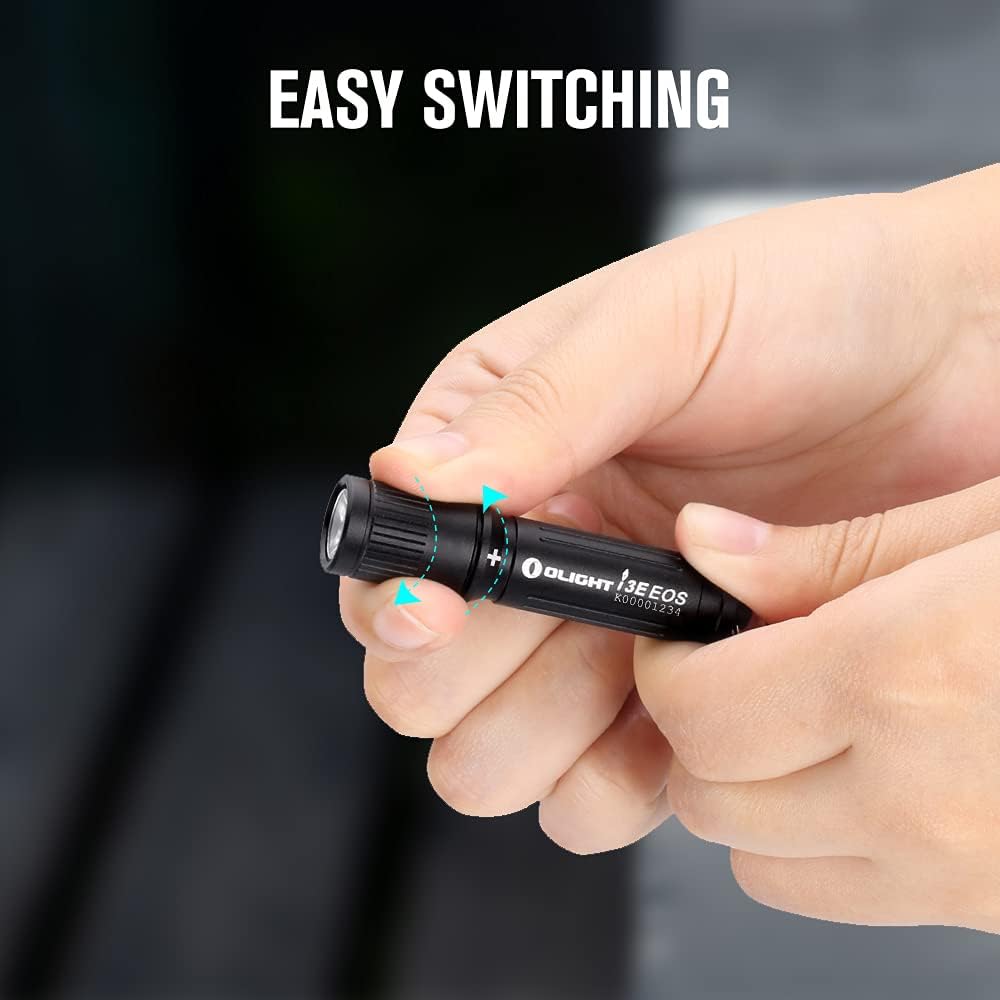
The Olight i3E EOS illustrates the first approach. Its US product information specifies a single AAA battery, a head-twist control, a 90-lumen output, and a TIR lens. That combination preserves a straightforward operating routine in a small keychain format. It provides a concrete counterexample to the assumption that a modern LED light must use a rechargeable lithium-ion pack.
For a brief search near a door or a quick look behind furniture, simple activation may be the main attraction. A replaceable AAA can also suit an owner who prefers keeping the specified replacement supply available. The limitation is equally clear: one output does not provide the brightness flexibility of an adjustable light. This is a convenience choice, rather than a substitute for every larger flashlight.
The i3E EOS manual lists different runtimes for its specified alkaline and NiMH batteries. That is a reminder to read the battery conditions beside a runtime claim. A number obtained with one battery type should not be transferred to another. Follow the instructions for the exact light and battery; physical size alone does not establish electrical compatibility.
A larger rechargeable light solves a different inconvenience: repeatedly replacing cells during frequent use. Its appeal depends on access to the specified charging method and enough time to replenish the battery. A charging port does not create energy by itself. A light kept for occasional use still needs a storage and readiness routine, even if its battery is rechargeable.
Battery capacity also needs context. Milliamp-hours describe electrical charge, while watt-hours describe energy. Voltage therefore matters when comparing capacity labels. Neither number, on its own, describes the brightness or runtime of a finished light. The selected mode determines how that stored energy is used. Compare complete mode specifications instead of choosing a flashlight by the largest battery-capacity number on a shelf.
This distinction is particularly useful when moving from a familiar household battery to a rechargeable system. A larger capacity label may accompany a light designed to deliver much higher output. The additional energy does not automatically translate into proportionally longer use at every setting. Look for a mode that serves the actual task, then read the corresponding runtime and its battery conditions together. Keep the battery label as supporting information rather than a substitute for that comparison.
Charging conditions can also affect the routine you choose. The Baton manual specifies a charging environment between freezing and forty-five degrees Celsius. That requirement matters if a light returns from a cold outdoor walk or has been sitting in a hot location. Select a suitable indoor charging location and follow the stated conditions before connecting power. USB-C identifies the interface; it does not cancel the temperature limits of the product using it.
For a household with several different lights, keep their instructions and compatible charging equipment identifiable. A familiar magnetic connector can invite assumptions about interchangeability, while batteries with similar dimensions can hide different electrical requirements. Match each light to its specified equipment before charging or replacing a battery. This organizational step matters more as a collection expands across generations, because a shared brand or similar housing does not establish compatibility.
Electronic control made working brightness more important
The Olight Baton 4 Pro shows how an LED pocket light can combine several developments. Its exact model information identifies side and tail switches, five brightness levels through the side switch, and both USB-C and MCC charging. These features address different tasks: selecting an everyday level, accessing higher output, and replenishing the light using an available compatible connection.
The side switch gives routine brightness selection a dedicated location. The tail switch provides access to High and Turbo with momentary and constant-on operation. That division can be useful when the same light moves between close household work and a brief outdoor inspection. It also creates a learning requirement. Understand the actual controls before depending on them in a dark hallway or unfamiliar yard.
Baton 4 Pro's published Turbo specification is 1,600 to 600 lumens, with stages of two minutes and 198 minutes. Its Medium setting is listed at 120 lumens for eighteen hours and thirty minutes. These are manufacturer specifications under their stated conditions. The long combined Turbo runtime does not mean that the initial maximum continues for the full period.
For a repeated evening walk, begin by considering a working level rather than the largest number on the product page. Think about how much of the path must be visible, whether nearby reflective surfaces create glare, and how long the outing usually lasts. Reserve higher output for a specific reason. A useful brightness progression lets the same tool serve more than one distance without requiring maximum output throughout.
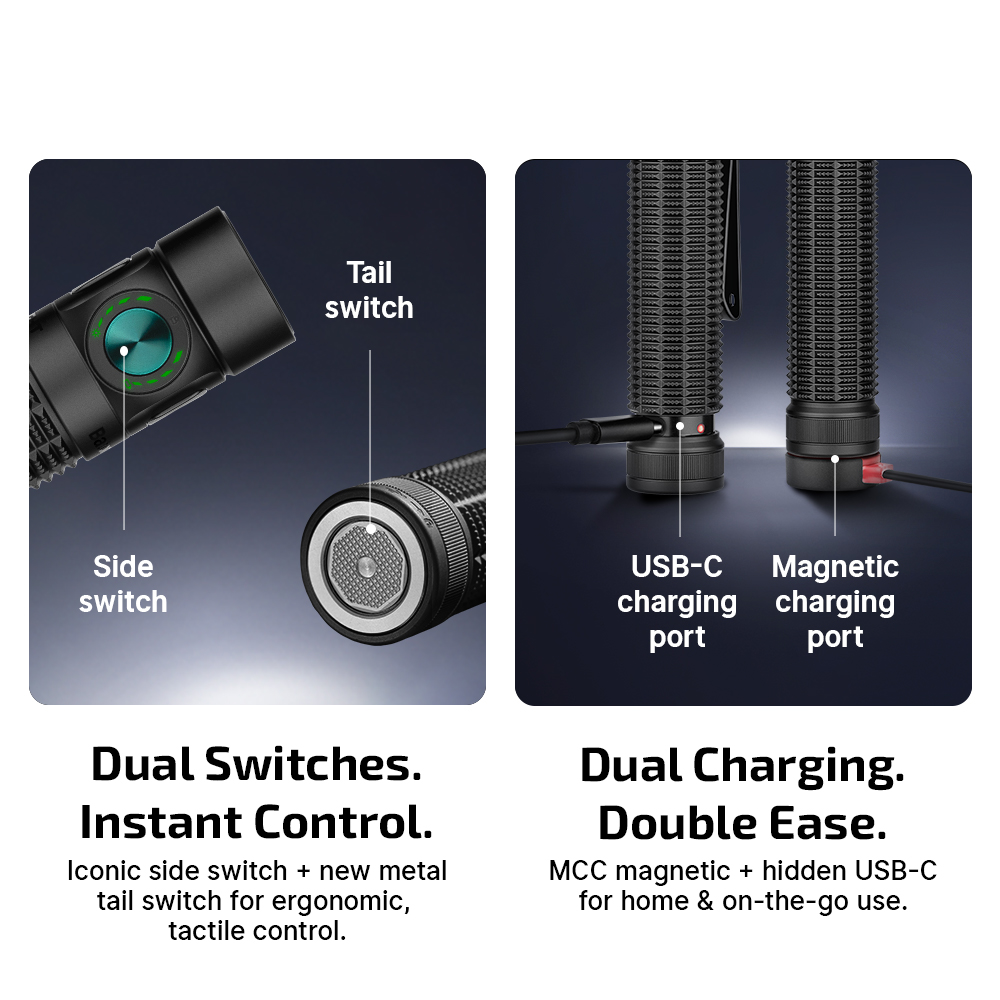
The rotating tailcap ring conceals or reveals the USB-C port, while MCC uses the magnetic charging connection. These are alternatives for supplying power to the light, not interchangeable battery standards. Confirm which cable and power supply are available where you expect to recharge. A convenient home arrangement may need a different plan when the light travels with you.
Someone choosing an edc flashlight should also consider where the tool will sit and how its controls remain protected. More accessible high output increases the importance of preventing accidental activation. The Baton manual calls for lockout during carrying or transport. Learn its specified lockout procedure rather than assuming that placing the light in a pocket makes the switches inactive.
Heat management puts limits on high output
LED flashlights can still become hot. Improved efficiency does not mean that all electrical energy becomes visible light, and a compact housing has to handle the heat produced during operation. This is one reason a maximum-output figure needs a duration and operating context. A short high-output stage and a lower working stage serve different purposes.
ENERGY STAR's explanation of LEDs and heat describes the role of heat sinks and the importance of controlling operating temperature. That general explanation supports a basic lesson for portable lighting: heat must be managed even when the source is efficient. It does not certify a particular flashlight or establish that model's surface temperature.
Use the model's instructions for the practical response. The Baton manual warns against obstructing the light-emitting opening, placing a hot light in a fabric bag, or repeatedly reactivating high modes. It also instructs users to select lower brightness or temporarily turn the light off if its surface becomes too hot. Treat these as operating limits, not challenges to overcome by forcing more output.
A warm housing and reduced brightness do not, by themselves, identify a fault. Equally, any unexpected behavior should not automatically be dismissed as normal thermal regulation. Compare the behavior with the manufacturer's documented stages and warnings. If the light behaves abnormally, stop using it and follow the model's support instructions instead of experimenting with its electronics or battery.
Choose the output appropriate to the task before reaching the thermal limit. A lower useful setting may offer a more comfortable tool for prolonged nearby work. Keep the beam opening clear, allow the light to cool before storage, and use only the specified charging arrangement. The practical benefit of a high-output light includes knowing when to reduce its output.
More light also brought more beam and control choices
The Olight Marauder Mini 2 illustrates a larger system built around different lighting jobs. Its US information identifies floodlight, spotlight, combined spotlight and floodlight, red light, and side light. The important advance for this discussion is the ability to change light distribution and function within one handheld tool, rather than merely replace one bulb with a brighter one.
A broad beam can help inspect an area near your feet, while a narrower beam can direct attention toward a more distant object. A side light offers another orientation when the work is near the body of the flashlight. These are task-based reasons to consider separate lighting configurations. They do not establish that every configuration is equally suitable for every distance or activity.
Its advertised 10,000 lumens refers to maximum floodlight output, while the 750-meter specification refers to spotlight throw. Those headline values describe different beam configurations. Reading them as one simultaneous beam would misrepresent the product. The official manual also presents staged output, so the maximum floodlight number should not be used as a promise of continuous brightness for an entire outing.
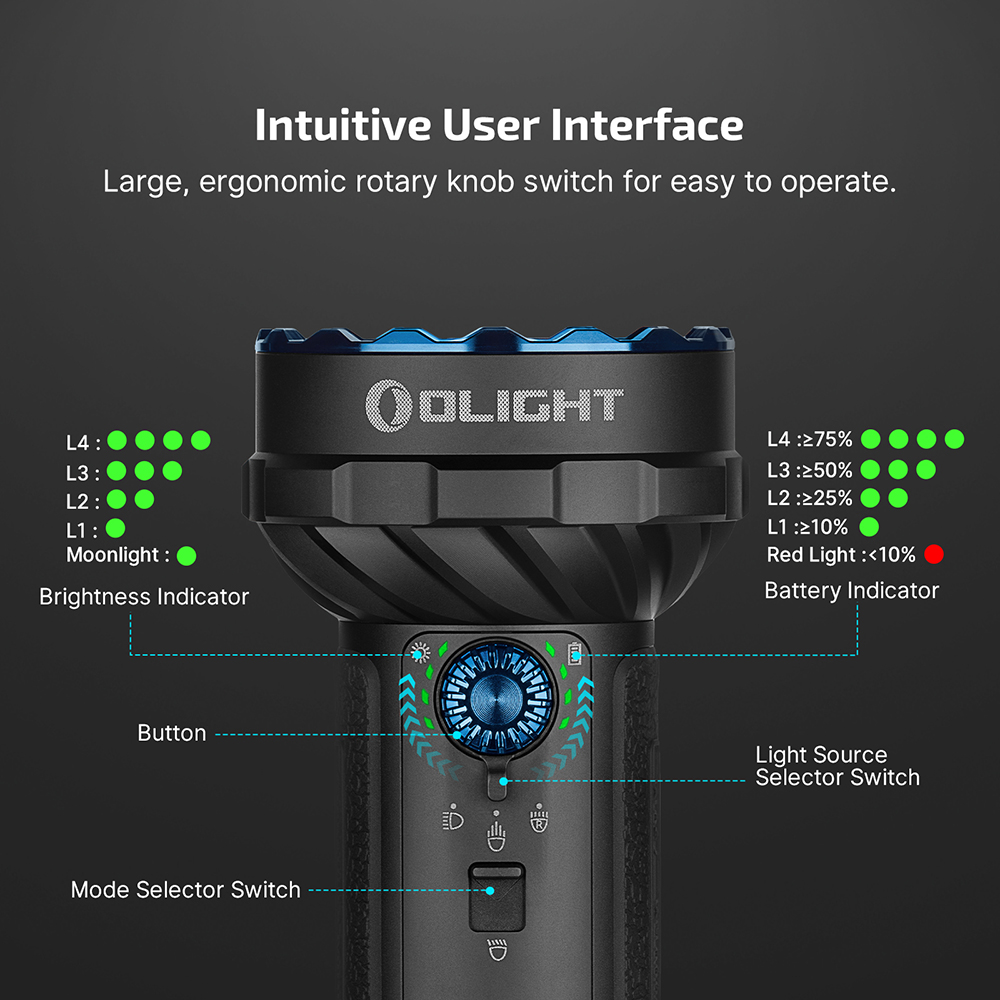
The rotary selector, toggle switch, and rotary knob provide more control than a simple on-off interface. That can benefit a user who changes beam types during a task, but it demands familiarity. Identify each control and its purpose in the manual before use. An indicator communicates a defined status; it should not be treated as a precise forecast of remaining runtime under every setting.
The 7,500 mAh battery and support for USB-C and MCC charging make power planning part of the larger system. The lanyard also serves as a USB-C charging cable. This can keep a charging connection close to the light, but you still need a compatible power source. An accessory that doubles as a cable does not remove the need to inspect its condition and use it as instructed.
The larger light is not the automatic upgrade for a key ring or lightly loaded pocket. Its additional controls and beam options earn their place when the task calls for them. If most use consists of a few seconds at a doorway, a simpler small light can remain more convenient. Match the carrying commitment to the benefit you will actually use.
Compare old and new flashlights around the same task
A fair comparison begins with a written task, not two maximum-output labels. Decide what must be visible, at what approximate distance, for how long, and with which hand available. Then examine the beam and operating level each light offers. This prevents a broad nearby floodlight and a narrow distance beam from being treated as equivalent merely because one lumen number is larger.
Separate source differences from power-system differences. If one light uses replaceable cells and another uses an integrated charging arrangement, part of the ownership experience comes from the batteries and charging hardware. It cannot all be credited to the LED. Likewise, a better pocket clip or easier switch may improve daily use without representing an increase in light-source efficiency.
| Comparison question | Record for each light | Avoid concluding |
|---|---|---|
| Does the beam suit the task? | Useful coverage at the intended distance | More lumens always means a better view |
| What output is available over time? | Named mode and documented stages | Maximum output lasts for the entire listed runtime |
| How is power restored? | Specified battery or compatible charging method | A matching connector or cell size guarantees compatibility |
| Is it practical to carry? | Actual carry location and control access | More features always improve readiness |
Check serviceability separately from brightness. For an older light, replacement bulbs and approved batteries may determine its useful future. For an integrated LED light, service may involve the complete assembly rather than a bulb change. Neither approach should be judged from appearance alone. Read the exact instructions and obtain support for the model instead of treating different generations as mechanically interchangeable.
The guide to Olight classic products examines simple features and their current uses. Here, the decision is narrower: identify which technical improvement would solve a problem the older light leaves unresolved. That might be lower working output, easier replenishment, a more suitable beam, or smaller carry. If no recurring problem exists, an upgrade needs less urgency.
What may change next, and what still decides a useful light
Future flashlight development may offer different controls, power arrangements, materials, and beam options. Those are possibilities to evaluate when documented products appear, rather than promises of a particular release or performance gain. A useful buying decision can be made from current evidence without predicting which technology will dominate the next decade.
Some questions will remain practical regardless of the emitter. Can you reach the control without changing to an awkward grip? Can you obtain the specified power supply? Does the beam illuminate the task without excessive nearby glare? Does the light remain convenient enough to carry? A technological advance has value when its implementation improves one of these ordinary interactions.
Choose one recurring task, then compare the appropriate operating modes and power routines of the lights that fit it. Keep a serviceable older light where it still performs a useful job. Add a modern LED light when its documented features address a specific limitation. Read the exact manual, learn the controls, and establish how the light will be ready for the next use.
FAQ
Changelog
- November 19, 2026: Product information and buying guidance reviewed.




