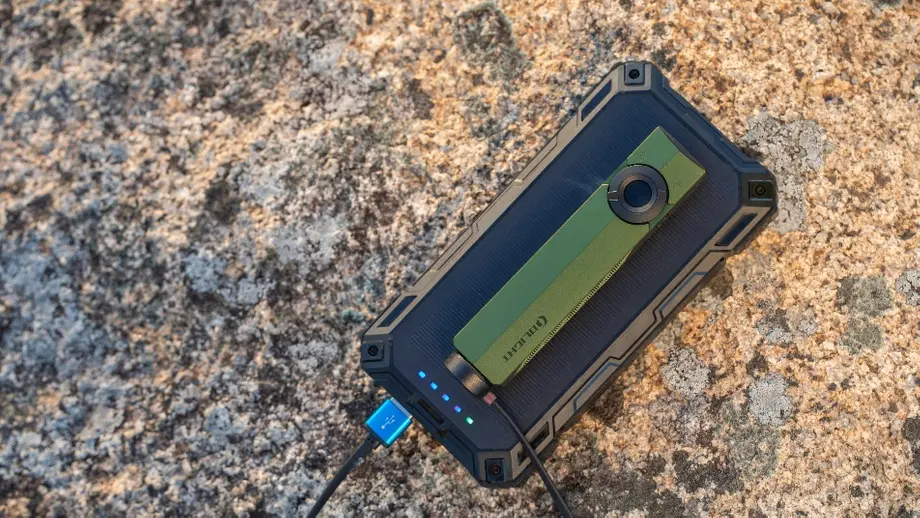
TL;DR:Choosing between magnetic vs USB-C charging depends on your priorities. Magnetic charging offers superior waterproofing, reduced port wear, and quick attachment, making it ideal for harsh outdoor environments. USB-C charging delivers universal compatibility, faster charging potential, and greater convenience for travel and everyday carry. Understanding how each charging method affects durability, IP ratings, and long-term usability will help you choose the best rechargeable EDC flashlight.
Table of Contents
- Introduction: The Great Flashlight Charging Debate
- Magnetic Charging Explained: Sleek and Weatherproof
- USB-C Charging Explained: The Universal Standard
- Head-to-Head: Pros & Cons Side-by-Side
- The Waterproofing Impact: IP Ratings Demystified
- Case Study: Olight’s Dual Approach (The Arkfeld Pro)
- The Verdict: Which One Should You Choose?
- FAQ
1. Introduction: The Great Flashlight Charging Debate
Selecting the best edc flashlight involves evaluating more than just lumens and beam distance. The method you use to replenish your battery plays a significant role in daily usability. The debate between magnetic vs usb-c charging continues to divide outdoor enthusiasts and emergency preparation planners.

How Modern Flashlights Power Up
Modern flashlight charging systems rely on built-in circuits to manage power delivery safely. Manufacturers design these systems to handle daily wear while keeping internal electronics dry and dust-free. The system either exposes the charging contacts directly on the tailcap or protects them behind a physical port barrier.
According to the USB Implementers Forum (USB-IF), USB Type-C was designed as a universal connector capable of supporting power delivery, data transfer, and a reversible interface, helping reduce cable fragmentation across consumer electronics. This standardization is one of the primary reasons USB-C has become increasingly common in rechargeable flashlights and other portable devices.(reference: usb-Type-C and USB Power Delivery Testing Index).
The Quick Answer: Convenience vs. Standardization
The core of the issue comes down to a simple trade-off. Magnetic charging offers unparalleled physical convenience and immediate connection. USB-C charging provides universal compatibility, letting you power up your device with the same cable you use for your phone, laptop, or tablet.
2. Magnetic Charging Explained: Sleek and Weatherproof
Magnetic charging stands out as a highly specialized approach to power management in illumination tools.
How Magnetic Flashlight Chargers Work
This system utilizes exposed external metal contacts on the tail or body of the flashlight. A matching magnetic charging cable snaps onto these contacts using magnetic force, completing the circuit to deliver power without requiring an open physical socket.
The Pros: Seamless Snapping and Less Wear-and-Tear
- Simple tactile alignment: The charger snaps directly into place without needing to look, which is incredibly useful in complete darkness or high-stress situations.
-

Baton Ultra in complete darkness or high-stress situations - No physical port degradation: Because there are no delicate male/female pins to insert and remove, there is virtually no physical wear and tear on the hardware, ensuring a lifetime of clean connections.
- Enhanced chassis strength: A solid metal tailcap lacks the structural weak points of an open port cavity, making the overall housing much more resistant to crush forces and drops onto hard surfaces.
- Improved environmental sealing: The elimination of an external port hole prevents water, mud, and fine dust from reaching the internal battery compartment, even if the exterior of the light is heavily soiled.
The Cons: Proprietary Cables and the "Grit" Factor
The primary disadvantage is the reliance on proprietary vs universal charging cables. If you lose the magnetic cable during a trip, you cannot recharge the flashlight using standard gear. Additionally, the magnetic tailcap attracts fine iron filings and metallic grit from the environment, which requires regular cleaning to maintain a secure connection.
3. USB-C Charging Explained: The Universal Standard
A USB-C rechargeable flashlight offers unmatched compatibility in modern electronic ecosystems.
Why USB-C Rules the Tech World
USB-C serves as the global standard for data and power delivery. It supports high-current fast charging and works across countless electronic devices, making it highly accessible.
The European Union has adopted USB Type-C as the common charging interface for many portable electronic devices, aiming to improve consumer convenience, harmonize charging technologies, and reduce electronic waste. This policy further reinforces USB-C as the dominant charging standard worldwide.(reference: consilium.europa-Common charger: EU ministers give final approval to one-size-fits-all charging port).
The Pros: One Cable to Rule Them All
- Universal access: You can charge your flashlight at home, in your vehicle, or via a power bank using any standard USB-C cable.
- Fast charging support: USB-C protocols safely handle higher power levels to decrease downtime, often bringing high-capacity 18650 or 21700 lithium batteries to full charge in a fraction of the time.
- Redundant backup options: Standard cables are easily replaceable at any local shop, eliminating the risk of being left stranded without power due to a lost or broken cord.
- Bi-directional power capabilities: Some advanced USB-C flashlights can double as backup power banks, allowing you to discharge power from your flashlight battery to charge emergency devices like your smartphone.
-

Baton4pro is charging
The Cons: Dust Flaps and Rubber Plug Fatigue
Traditional USB-C flashlights rely on rubber dust flaps to seal the physical port. Over time, these rubber covers stretch, tear, or pull open accidentally, leaving the sensitive internal port vulnerable to water and dirt intrusion.
4. Head-to-Head: Pros & Cons Side-by-Side
| Feature | Magnetic Charging | USB-C Charging |
|---|---|---|
| Cable Availability | Proprietary cable required | Universal standard cable |
| Connection Speed | Instant magnetic snap | Manual alignment and insertion |
| Debris Vulnerability | Attracts metallic dust and grit | Suffers from lint and dirt buildup |
| Port Wear | Virtually zero physical wear | Eventual wearing of internal port pins |
Charging Speed and Power Delivery
USB-C interfaces typically support higher power delivery rates, allowing larger capacity cells to recharge faster. Magnetic connections are often limited by smaller contact surfaces, resulting in slower charging speeds for high-capacity batteries. Standard magnetic chargers usually top out around 1A to 2A, whereas a modern USB-C port paired with a proper fast-charging wall block can comfortably deliver 3A or more. This makes USB-C highly efficient when recharging large 21700 batteries, which are increasingly common in professional-grade lights.
Additionally, the USB-C standard supports advanced Power Delivery (PD) protocols. This means the charger and the device communicate to deliver the optimal voltage and current dynamically. Magnetic cables, which are simpler in design, often deliver a fixed current and can struggle to manage thermals as efficiently during high-speed charging cycles, which can lead to slightly higher temperatures during operation.
Durability and Longevity Over Time
Because magnetic systems use solid metal external pads, they endure thousands of connection cycles without physical degradation. USB-C ports have delicate internal tongues and spring-loaded pins that can wear down or bend under rough usage.
Everyday Carry (EDC) Convenience
For daily carry, carrying multiple cables is highly inconvenient. USB-C allows you to travel light, while magnetic setups require packing a specific cable solely for your flashlight.

5. The Waterproofing Impact: IP Ratings Demystified
Waterproof ratings are critical for outdoor adventures. Understanding how ports handle moisture determines survival in wet conditions.
Ingress Protection (IP) ratings are defined by the International Electrotechnical Commission (IEC 60529), which classifies the degree of protection provided by enclosures against solid particles and water ingress. Manufacturers commonly use these standardized ratings to communicate environmental durability.(reference: IEC-IEC 60529).

Why USB-C Rubber Flaps Fail in Hard Rain
A flashlight waterproof IPX8 rating requires continuous submersion under water. Traditional rubber flaps on USB-C ports fail under pressure because water easily bypasses a loose flap during heavy downpours or accidental drops in deep water.
How Magnetic Ports Achieve True Sealed Waterproofing
Magnetic charging contacts are completely sealed from the factory inside the metal housing of the flashlight. Water cannot penetrate the solid metal body, ensuring a secure seal even when submerged.
6. Case Study: Olight’s Dual Approach (The Arkfeld Pro)
Olight addresses this charging dilemma by offering dual charging solutions on modern EDC designs.
Bridging the Gap: How Olight Tries to Have It Both Ways

Arkpro Series Flat EDC Flashlight
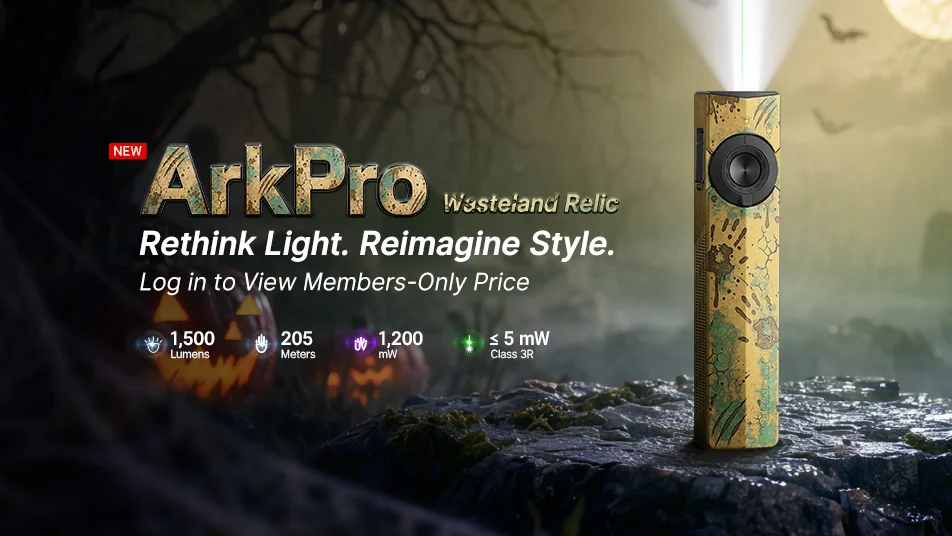
The Arkpro Series features an ultra-slim flat body, intuitive controls, and dependable performance, making it an ideal everyday carry flashlight for work, commuting, and outdoor activities.
View DetailsThe Arkpro Series Flat EDC Flashlight integrates both USB-C and magnetic charging. This unibody EDC light combines a 1,500-lumen floodlight, an 800-lumen spotlight, UV light, and a green laser, powered by a 2,000 mAh battery with IPX7 waterproof protection. By offering both charging options, users enjoy universal compatibility without losing magnetic convenience. This dual-input layout provides excellent redundancy, ensuring you can charge the light no matter what cables are available.

Baton Ultra Flashlight
Compact yet powerful, the Baton Ultra delivers high-lumen output, long runtime, and comfortable one-handed operation, making it a reliable lighting companion for everyday carry and outdoor use.
View DetailsSimilarly, the Baton 4 Pro Baton Ultra Compact Flashlight High Lumen series features a creative solution: a hidden USB-C port concealed under a rotating tailcap ring, alongside traditional magnetic charging contacts. This design protects the port from water and dirt while maintaining sleek aesthetics. By rotating the outer ring, you can completely seal the USB-C port behind a solid metal barrier, and then twist it open when you need to plug in a standard cable, offering excellent durability and clean aesthetics.
Lessons from the ArkPro Design
Integrating both charging ports ensures the light remains functional even if you lose the proprietary cable. This redundant system represents an ideal design path for the best rechargeable flashlights 2026.
7. The Verdict: Which One Should You Choose?
Both charging systems offer distinct functional advantages depending on your specific use case. Deciding between a magnetic-charging flashlight and a USB-C model requires assessing your daily routine, environmental conditions, and gear preferences. There is no single "correct" choice, but rather the most suitable tool for your personal needs.
By carefully analyzing how and where you intend to use your illumination tool, you can make an informed decision that ensures your flashlight is always charged, reliable, and ready to light up the dark whenever you need it.
Choose Magnetic If You Value Extreme Weather Resistance
Select magnetic charging if you work in extremely wet, muddy, or dusty environments. The completely sealed contacts provide reliable protection against water and dirt intrusion.
Choose USB-C If You Travel Light and Hate Proprietary Cables
Select USB-C if your primary concern is packing light. Eliminating proprietary cables simplifies your gear setup, making it the ideal choice for travel, backpacking, and everyday utility. If you prefer to carry a single, high-performance charging cable that connects to your phone, power bank, laptop, and flashlight, USB-C is the obvious choice. This universal standard ensures you can easily find charging options at any office, vehicle, or hotel room worldwide.

Additionally, if fast charging is a priority, the superior power delivery of USB-C interfaces will keep your high-capacity batteries topped up with minimal downtime. For casual users, urban commuters, and lightweight backpackers, the sheer convenience of a standardized charging ecosystem makes USB-C a practical and versatile choice for daily carry.
8.FAQ
Which is faster, USB-C or magnetic charging?
USB-C charging is typically faster. It supports higher power delivery protocols, whereas magnetic charging is often limited by smaller contact surfaces, resulting in slower speeds for high-capacity batteries.
Why do USB-C flashlights fail more often in heavy rain?
They rely on a rubber rubber flap to seal the port. Over time, these covers stretch, tear, or pull open, failing to maintain a true flashlight waterproof IPX8 rating compared to factory-sealed magnetic ports.
Is there a flashlight that offers both charging methods?
Yes. The Olight Arkfeld Pro (ArkPro) Flat EDC Flashlight integrates both USB-C and magnetic systems, meaning you never have to worry about losing a proprietary charging cable while traveling light.