TL;DR: A miner’s cap lamp supplies portable light while the worker’s hands are free. Underground in a U.S. coal mine, use permissible portable electric lighting approved under the applicable requirements. Ask the mine operator which exact lamp and configuration to use, where to collect it, and what to do if it fails.
📋 Table of Contents
- 1. Confirm which lamp the operator issues or permits
- 2. What are miner's lights called?
- 3. Read the approval as a record for an exact design
- 4. What headlamps do navy SEALs use?
- 5. How did old miner headlamps work?
- 6. Check which setting the light is for
- 7. Prepare for the equipment handoff
- 8. Choose personal lighting for ordinary surface tasks
- 9. Plan what to ask before your first shift
- 10. FAQ
Confirm which lamp the operator issues or permits
| Before the shift | Ask the mine operator | What the answer helps you do |
|---|---|---|
| Identify the work location | Which mine, area, and assignment am I preparing for? | Find the requirements that apply to that job |
| Get the exact equipment | Which lamp and configuration does the mine issue or permit? | Bring the verified lamp and its specified parts |
| Confirm the equipment record | What approval identification belongs to this unit? | Check the actual item with the responsible person |
| Ask about a damaged or missing lamp | Who replaces it, and where do I report the problem? | Obtain the proper replacement before proceeding |
| Check what stays outside | What is the rule for personal items and spare lights? | Keep unverified equipment out of restricted areas |
Find the person who handles cap lamps before you shop for a spare. A mine may have a lamp room or another equipment issue point. Ask where to pick up your light and where the mine wants it returned. The approval question belongs with the actual lamp and assignment. A web search, a photograph of a similar product, or an assurance that someone else carries the same style cannot settle it.
The U.S. federal statute for underground coal mines requires permissible electric lamps approved by the Secretary for portable illumination underground. A cap lamp is one kind of portable electric lamp. The requirement also reaches portable lighting beyond that particular shape. Use the lamp the operator provides or verifies for the work. Ask what equipment and procedures apply if you need another light. 30 U.S.C. § 877(d), portable electric lamps.
A listing for a miners headlamp can show products intended for several different settings. It may show a consumer lamp with a fabric band, a work light aimed at a bench, or a manufacturer’s electric cap lamp. The category title does little to establish where the thing can be used. Find the actual model name and ask the mine what documentation it accepts. Have the responsible person check that information against the unit that will be issued.
Ask about the details you will need during a shift. For example, find out whom to contact if the lamp returns damaged or the normal replacement is unavailable. The answer should come from the mine’s own procedures. Keep any personal light separate from the issued gear until the operator tells you where it belongs. If a piece of equipment is unusual, let the equipment staff see the complete item and the documentation it came with.
Keep a note that identifies the exact item your question concerns. A lamp number, manufacturer and model, and the area where it is needed usually tell the recipient more than a comparison of two product photos. Write down any instructions the operator gives you about returns or replacement. If a mine uses a shared counter, ask whether the information should go to the person at issue, a supervisor, or a safety staff member.
What are miner's lights called?
A head-worn light used by a miner is commonly called a cap lamp or an electric cap lamp. The U.S. underground coal statute also covers permissible portable electric lamps beyond cap lamps. Ask the mine operator which model and equipment term applies to your assignment. Confirm the actual unit before relying on a label or product description.
See what the name is used for in context. A lamp attached to a cap and a personal headlamp can both leave the hands free. A specific cap lamp approval tells you about a design evaluated under its applicable program. To understand a listing, look for the name of the actual device, its approval identification where applicable, and whether the seller is describing the same item the operator has on record.
Some employers use a local term for a type of equipment or a particular assembly. Ask what the term means at your site. For instance, an instruction to bring the issued lamp may include the components the lamp room assigns with it. If someone tells you to get a replacement at a particular counter, make sure you know what belongs to the equipment and what the mine wants brought back.
Read the approval as a record for an exact design
The 2025 annual federal Part 19 text describes the approval of electric cap lamps, including how approvals are granted and how approval plates identify the approved design. It ties those plates to the equipment the agency evaluated. Ask the operator to verify the actual approval details for the lamp in your hand. A plate is useful identification when it corresponds to the complete unit and its approved configuration. 2025 annual CFR Part 19, electric cap lamps.
Find out where the relevant identifying information belongs on the equipment supplied to you. The Part 19 approval-plate provision describes the wording, approval number, and attachment or marking on the battery container for the lamps it covers. The operator can tell you what to check on the exact equipment in use and what record to consult. Someone verifying the light should see the whole assembly if there is any question about which parts are present.
Approval is important at the level of the actual design. Part 19 addresses changes to a design and the manufacturer’s responsibility to make equipment according to what was accepted. If a battery, lamp housing, lead, or mount differs from what the crew uses, report the difference. Do not rely on visual resemblance when the equipment staff can check the approved configuration and decide what replacement is appropriate.
Products can make several different claims on the same package. A water or dust rating can describe protection against specified ingress conditions. A lumen rating describes light output. A drop rating can describe performance under a stated test. Each describes a different property. The approved use of a cap lamp depends on its actual approval records and the operator’s instructions for that job.
A word such as “rugged,” “industrial,” or “explosion-proof” on a sales page needs context. Identify what the manufacturer claims, which exact product it refers to, and who has verified the relevant approval. A separate guide explains the same starting point for checking equipment before entering a classified area. For mine work, use the mine’s own equipment process to translate any document into an answer for your assignment.
If an approval mark is worn, incomplete, or difficult to read, report the exact problem before depending on it. An operator may know how to trace the device from the equipment register. It could also issue a different lamp and take the questionable one out of rotation. Either action belongs with the mine. Send the responsible person the information you can see and let them decide whether the unit is ready.
November 2026 update on the redundant coal regulation
MSHA published a final rule on November 12, 2026, with an effective date of December 14, 2026. The agency announced that it will remove and reserve 30 CFR § 75.1703-1 because the section duplicates protections in the remaining framework. MSHA says the change does not reduce protection. The statutory rule on permissible portable electric lamps remains the relevant starting point for an underground coal shift. MSHA’s November 2026 final rule on permissible lamps.
Keep the date and the section number attached to that change when discussing it. The final rule identifies the provision it removes and describes why other requirements continue to apply. A headline that says a lamp rule was removed leaves out the important question of which one changed. Ask the operator for the current written instructions before you make a decision about any item that will go underground.
What headlamps do navy SEALs use?
Public information does not establish one headlamp model used by all Navy SEALs. A claim about a particular team, person, or pictured light tells you little about other users or assignments. For mine work, start with the exact device your operator provides or verifies under the rules that apply to your work area.
A headlamp can be comfortable, easy to see on a shelf, or convenient to carry with gloves. Those qualities matter when you select a personal light where one is allowed. They tell you nothing about whether a particular lamp can go into a regulated work area. A description written for a different profession also leaves out the approval information your equipment staff actually needs.
If a product page makes a claim about a group using a light, keep the claim in its original context when you raise it with a supervisor. Provide the exact model and its documentation if you have a genuine equipment question. Someone responsible for issuing lamps can start from the intended assignment, check what the site accepts, and avoid the confusion of trying to identify a device from a picture.
How did old miner headlamps work?
Some early mining lamps produced light with an oil flame. Early electric models combined a small bulb with a storage battery. The U.S. Bureau of Mines documented both approaches in 1917 and explained why the construction of the electric equipment mattered. The historical account helps explain the transition to electric cap lamps and the need to evaluate a complete design.
The early battery and headpiece were sometimes separate. The bureau describes designs with the battery carried on the back and the light at the head. It also records early electric lamps carried in the hand. A modern photo of an older lamp may show the headpiece without the battery, lead, or other parts that made up the portable equipment. 1917 U.S. Bureau of Mines bulletin on approved electric lamps.
The archive helps put the word “approved” in context. Bureau engineers looked at how lamps performed as equipment and the problems individual components could create. That history explains why a catalog image of a lamp or its emitter is incomplete. For a shift today, take the current unit and its actual identification to the mine’s equipment staff. A museum label and a procurement record have different purposes.
People may encounter an old lamp in a collection, a workplace display, or a family photograph. Look for the museum’s identifying information, the design period, and whether the object is shown with its original components. Keep that historical question separate from the question of what replacement gear to request for an upcoming shift. The lamp room and its current equipment records can answer the second question.
Check which setting the light is for
The federal annual metal and nonmetal underground standard in 30 CFR § 57.17010 states that individuals shall wear or carry individual electric lamps for illumination underground. That sentence describes an obligation in that setting. Ask the operator for the equipment and procedures that apply to the actual job. 2025 annual CFR § 57.17010, electric lamps.
An aboveground address also gives too little information by itself. One part of a property may be an ordinary staffed office. Another may have its own equipment restrictions. Ask about the exact place where you will carry or use the light, including any route or assignment that changes along the way. Follow the employer’s rules on what can enter that area even if the personal light will stay in a pocket.
| Setting | Ask before carrying a portable light |
|---|---|
| Underground coal assignment | Which permissible portable electric lamp and configuration will the operator issue or verify for this job? |
| Underground metal or nonmetal assignment | Which individual electric lamp does the operator specify for this mine and assignment? |
| Aboveground area with equipment restrictions | Which written requirements apply to the exact area and equipment? |
| Ordinary unclassified surface task | Does the employer allow personal lights here, and is this job appropriate for one? |
| Personal use away from the site | What controls and beam suit the actual household or outdoor task? |
Think through a day that starts in a staffed building, continues past a controlled entrance, and ends in a different area. Get the equipment answer for each place where you will be. A light you may have used while walking from a parking area can end up in the same work bag as issued gear. Give the two types of equipment separate homes so one does not follow you somewhere it should stay out of.
If you are new to a location, ask who can speak for it. An experienced colleague may tell you where the equipment counter is, while the supervisor or designated equipment person can tell you what to use. Instructions from a previous site may not fit a new one. Bring the assignment or visitor information to that conversation so the responsible person can answer for the actual destination.
For someone ordering equipment on behalf of a crew, the location also matters when writing the request. Identify the mine, the application, the configuration the operator requires, and who will check any proposed substitute. Keep those details together so an order for an ordinary surface work light does not get confused with a request for an approved cap lamp. Ask suppliers for the exact documentation the site needs.
Prepare for the equipment handoff
Before arriving, find out whether the mine assigns your lamp by name, provides it from a shared stock, or has a different issue process. Ask whether you need to bring a record to the counter and when to arrive to have questions answered. If you are scheduled at an unfamiliar location, learn whether temporary employees and visitors receive their equipment at the same place as the regular crew.
At the counter, ask what combination of components you are receiving and what should return together. It can help to hear the process from the person handing over the equipment. If one item has a number and a separate component has another mark, let that person explain what the site records. You should be able to identify the unit clearly when calling about a problem later.
Report a difference while you are still at issue. For example, a replacement might come from a new batch or use a different piece of equipment than you expected. Give the staff the number and show them the difference. If their records and the physical item do not line up, leave the decision with them and ask what you should use for the assignment.
Ask whom to contact when a light becomes unreliable during a shift. Use the site’s instructions for reporting, getting a replacement, and handling any work affected by the loss of light. If you are handed a unit with an obvious defect before starting, report what you see so the staff can evaluate it. Buying a bright consumer light at short notice does not solve an issue with the lamp a mine requires.
You can make a concise report without trying to diagnose the equipment. Record the unit’s identifier, which part or behavior drew your attention, and when you noticed it. For example, say the lamp was flickering when it was handed over at the counter and identify the unit. Give that information to the responsible person in the way the site requests.
Before leaving, return the components the mine assigned to you. Follow the instructions for any unit that has been removed from service. If a different person staffs the counter later, make sure the defect report reaches the appropriate record or person. A clear handoff helps the next shift see why an item was set aside instead of finding it back among ready gear.
Outdoor lighting stores offer a different kind of decision. A shopper might ask whether a headband fits comfortably, how easy the control is to locate, or where the light can be recharged. Anyone working through a mine equipment issue should settle the location, equipment, and approval questions first. Personal shopping is useful for a separate lighting task where the equipment is allowed.
Choose personal lighting for ordinary surface tasks
In an ordinary unclassified area where the employer allows personal lights, a wearable light can free both hands for a routine task such as sorting items in a staffed storeroom. A handheld light may be easier to pass to another person who needs to read a label. If the building lights are sufficient, leave them on and use portable light only for the shadow or poorly lit spot that prompted the search.
The everyday choice between a headlamp and a flashlight starts with where the beam needs to land. Think about whether you need that light to follow your gaze or remain aimed at an object while you look up to talk. Check switches, beam placement, and comfort somewhere you can see what you are doing. Follow the site’s personal-equipment rules.
One ordinary use away from a mine is reading the labels on two storage boxes in a garage. A headband holds the beam while both hands lift a lid. If someone needs to keep the light on the inside of the box while you look in another direction, a second person can hold a handheld beam. Try the arrangement with room lights on and see what the separate light helps you do.

The supplied fabric assembly helps you tell a consumer headlamp from equipment that a mine issues with other gear. Inspect that assembly in ordinary room light. Make sure it is the one supplied for the model, and use the instructions that came with the device. For any job with a helmet requirement, get the compatible equipment the responsible person specifies.
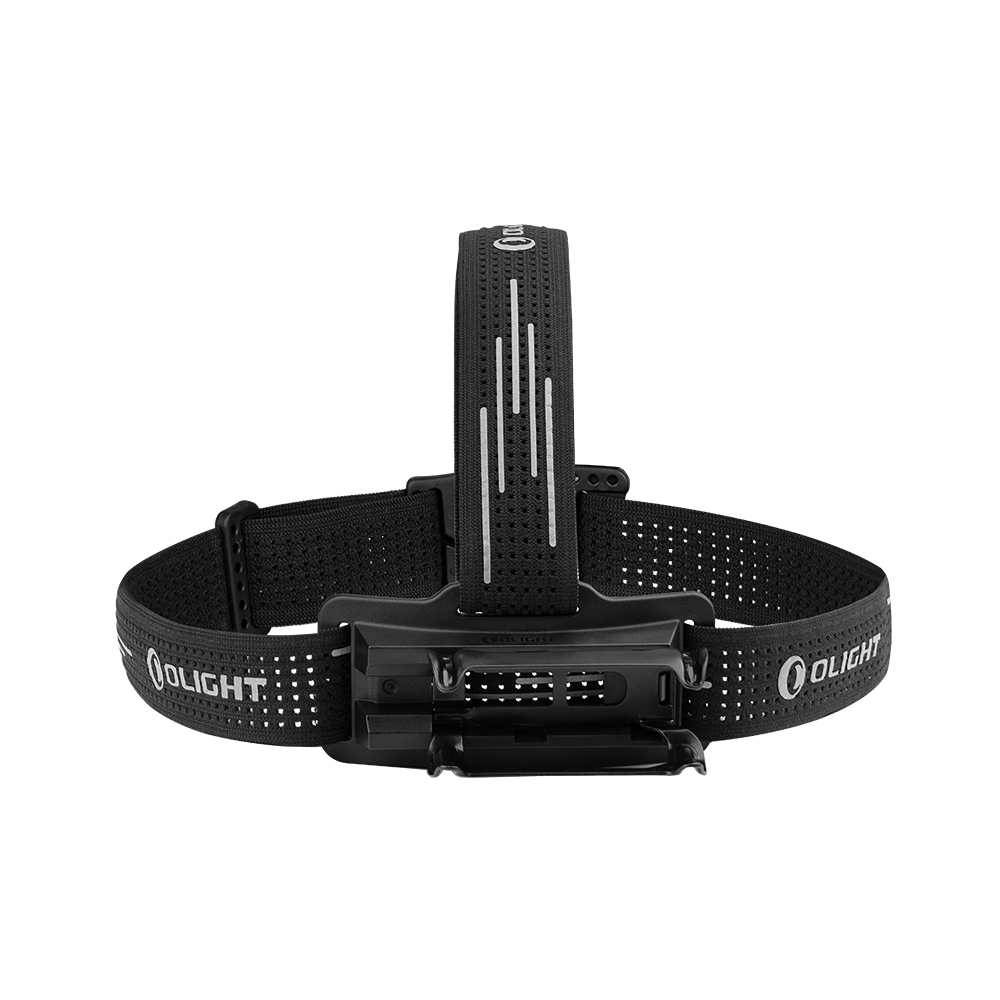
The official product photo shows the supplied headband and its bracket without the lamp in place.
The large side switch is helpful to see before you purchase. Look at where it sits relative to the emitters and where your fingers will rest while using the light. Take a minute to practice turning it off and locating its control without directing it toward anyone. Check how it feels with the clothing and gloves you use for the ordinary task, where personal gear is allowed.
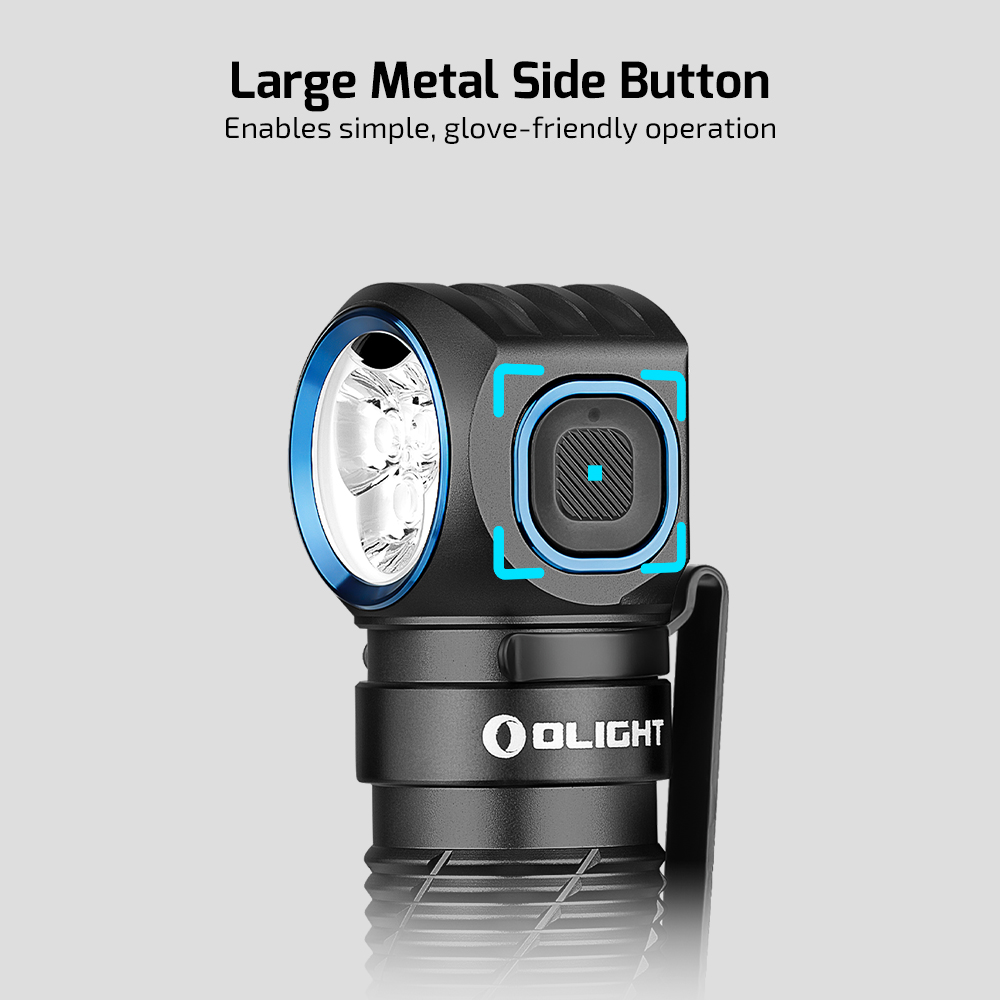
Olight’s official product close-up shows the side button beside the right-angle head.
Keep the exact manual handy even for off-duty use. The same switch may have several functions, and someone borrowing the light may know only how to turn it on. Show them which control they need while they can still see it. If the light will be stored beside issued gear in a permitted area, label the personal container and keep its charger there.
Plan who returns the light after an ordinary task. A flashlight moved from a shelf to a workbench can become hard to find the next time it is needed. Have the borrower bring it back to the same designated place. Follow the manual and the building’s rules for any charging location. In a restricted setting, the mine’s own equipment return and charging procedures govern the issued lamp.
Plan what to ask before your first shift
A good call to the operator can be short. Explain the assignment you have been given, ask where your portable light comes from, and get the name or location for reporting a problem. Then ask where any personal light should be left. If you are arranging lamps for several people, record who verified the equipment and where they want any later substitutions sent for review.
If you already own a light, tell the operator the exact model and where you hoped to use it. Saying you own a headlamp leaves the other person to guess whether you mean an ordinary consumer model or equipment with documented approval. Give them enough information to decide how they want you to handle that personal item before you arrive.
A crew preparing a short assignment may see a change in schedule, work area, or supervisor. Check whether the earlier equipment instruction still applies to the new location. Keep the instruction with your assignment note rather than carrying a list of unrelated lamps. If your plan to pick up equipment falls through, ask the site how it wants you to get the proper gear.
Leave enough time to ask questions at the counter. The staff can show you what goes with the issued equipment, where to look for its identifying information, and who handles faults. If a colleague asks what kind of light to buy, find out what they need it for before recommending a consumer product. A recommendation for sorting things in a home garage is useful only within that setting.
FAQ
Changelog
- November 19, 2026: Checked the United States Code, 2025 annual CFR provisions, MSHA’s November final rule, the Bureau of Mines archive, and the current Black Perun 3 product page and image sources.