


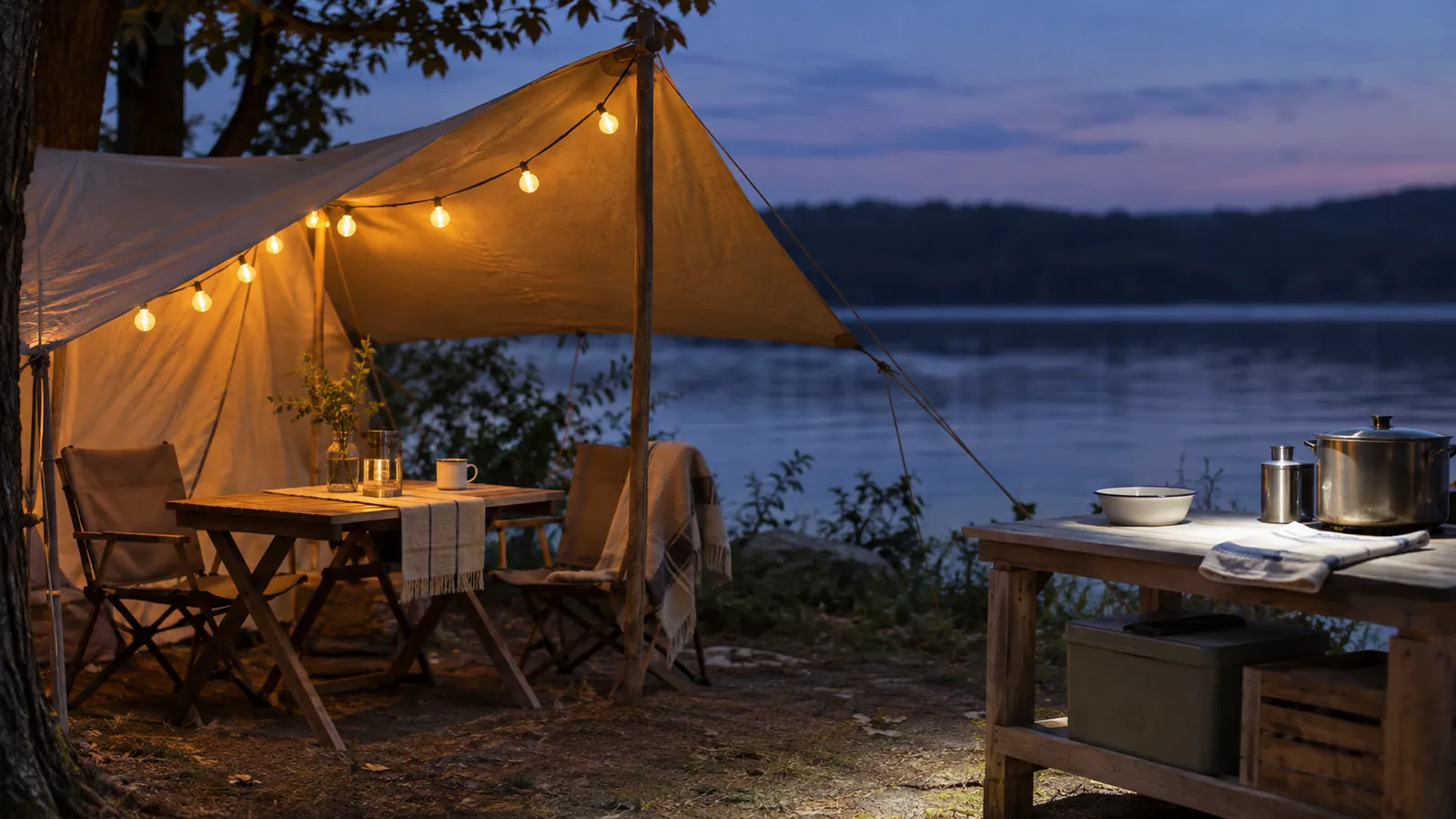
Choose camping string lights for a welcoming seating area and a separate, adjustable light for food preparation, gear repairs, and moving around. A strand can outline a shelter beautifully while leaving the cutting board in shadow. Pick the practical light first, then add the shortest, simplest strand that gives the campsite the atmosphere you want.
| Comparison | String lights | Diffused camp lantern | Headlamp or adjustable task light | Strongest use |
|---|---|---|---|---|
| Light placement | Distributed along the hanging route | Broad light around its position | Directed toward the current task | Match the light to the surface |
| Shared table | Depends on height, spacing, and individual emitters | Useful when its position covers the table | Useful for one work area; check other campers' sight lines | Evaluate the actual tabletop |
| Movement | Usually stays with the shelter | Can move between locations | Travels with its wearer or attachment point | A personal light for leaving camp |
| Packing | Includes the strand, controller, and power equipment | Includes the light and its power equipment | Includes the light, mount, and charging equipment | Compare the complete packed setup |
| Runtime comparison | Check the selected brightness and power source | Check the exact mode | Check the exact mode and any output reduction | No universal category winner |
📋 Table of Contents
- 1. TL;DR
- 2. What are the best camping string lights?
- 3. Coverage at the table: output, placement, and shadows
- 4. Battery, USB, and solar power
- 5. What are some good outdoor string lights for camping?
- 6. Practical Olight options for camp tasks
- 7. What are some good LED string lights for camping?
- 8. Runtime and packing comparisons that mean something
- 9. Combining atmosphere with useful working light
- 10. Connections, weather, and careful storage
- 11. Light that respects the rest of the campground
- 12. Check the setup before the trip
- 13. Frequently asked questions
TL;DR
Use a strand for the seating area's atmosphere and a controllable light for the surface where work happens. Choose the power system for the whole trip, check each component's outdoor instructions, and compare complete packed kits. Keep a personal light accessible when leaving the shelter.
What are the best camping string lights?
The best camping string lights fit your shelter, have an appropriate outdoor-use rating, offer a comfortable steady low setting, and use a power arrangement you can support for the trip. Favor simple controls and manageable cable length. If the main goal is cooking or repairing equipment, select the working light before choosing decorative strands.
Start with the space you actually occupy after sunset. A small canopy over two chairs needs a different hanging route from a group dining shelter. Measure that route before shopping, including the distance between the power source and the first illuminated section. Extra cable that trails across an entrance creates another item to manage each evening.
Next, decide how much control you need. A strand that looks inviting at its brightest setting may feel intrusive once everyone sits down. Check whether dimming changes the steady illumination you want, whether the controls remain reachable after installation, and whether the chosen setting is easy to restore. An elaborate app is optional; a reachable switch is useful every night.
Look beyond the string itself. Include the battery holder, controller, charging lead, adapters, and protective storage in the purchase decision. A compact reel can be convenient, but its dimensions alone do not describe the whole packed system. A simple strand powered by equipment already in the camp kit may take less space than one requiring several dedicated accessories.
Some campers will get more value from a camping lantern than a decorative strand. A lantern is easier to move from the table to the tent entrance when the evening's activities change. Strings make more sense when the hanging location is predictable and shared atmosphere is part of the purpose. Compare the broader camp lighting options by the job you need to do, then check the selected light's actual coverage.
Coverage at the table: output, placement, and shadows
Judge useful light where the work happens. Seeing every bulb along a canopy edge does not tell you whether a printed instruction sheet is readable in the middle of the table. The emitters may be visible from your chair while much of their light falls elsewhere. A close view of bright bulbs can also make the work surface feel relatively dark.
The FTC's explanation of lumens and watts distinguishes light output from energy use. That is a helpful starting point when reading specifications, but total lumens still do not describe an entire campsite arrangement. Where the light points, how far it sits from the work, and what blocks it all affect the result at the table.
For a fair comparison, keep the table, task, and viewing position the same. Place a familiar printed page and a few ordinary utensils where they will be used. Check from both sides of the table. A lamp that works well for one person can shine into the other person's eyes, especially when hung low between seats.
Hand shadows deserve their own check. Hold an empty pot, move a spoon, and reach across the work surface before cooking begins. Your hand or a standing companion may interrupt light from one direction. Moving a task light to the side can improve the usable view without raising its setting or adding another decorative strand.
Lumens and a local light-meter reading also answer different questions. A light meter measures illumination at its sensor's position; a product's lumen specification describes output. Do not convert one into a claimed campsite result without the relevant measurements. For everyday packing decisions, a repeatable readability check is more useful than an unsupported promise that a strand covers a particular area.
Battery, USB, and solar power
Choose the power system around the nights away and the charging opportunities you can actually count on. A removable-battery strand may suit a short trip with documented replacement cells. A USB strand can suit a campsite with a compatible power source. A solar set needs suitable charging conditions and enough stored energy for the evening's plan.
| Power arrangement | Useful reason to consider it | Details to verify | Common planning mistake |
|---|---|---|---|
| Replaceable batteries | Cells can be changed without waiting for a charge | Required chemistry, quantity, polarity, and compartment protection | Assuming any cell of similar size is suitable |
| Integrated rechargeable battery | One contained lighting unit | Charging method, selected-mode runtime, and battery condition | Treating the longest stated runtime as the normal bright setting |
| USB-powered strand | Can share compatible camp power equipment | Input requirements, controller rating, cable length, and power-source behavior | Assuming a USB connector proves every power source works |
| Solar charging | Can reduce dependence on another charging source | Panel placement, recharge conditions, battery storage, and backup plan | Expecting a shaded campsite to reproduce ideal charging conditions |
For replaceable batteries, read the manufacturer's required type before buying spares. Organize fresh and used cells so they cannot be confused during packing. Keep loose cells protected against contact with metal items, and follow the equipment's instructions for replacement and storage. A familiar battery format is convenient only when the correct batteries are available.
USB describes a connection, not an unlimited supply of power. Check the strand's input requirements and the source's supported output. Some power equipment has operating behavior that matters at low loads, so confirm the intended combination before departure. A setup that shuts down unexpectedly at a dim setting needs resolving at home rather than during dinner.
A solar panel must be placed where it can receive suitable light, which may differ from the best place to hang the strand. Think about tree cover, the shelter roof, and whether the panel can remain in its permitted location during the day. Check the product's actual charging instructions rather than assuming a few hours outdoors restores a depleted battery.
Separate the decorative energy budget from essential lighting. If the same power bank supports lights and a phone, decide which use has priority before the trip. Switching off an unneeded strand is easier than discovering that every device depends on one nearly empty battery. Carry a suitable personal light whose availability does not depend on the decorative setup remaining connected.
What are some good outdoor string lights for camping?
Good outdoor camping strings have documented suitability for their intended exposure, protected connections appropriate to that use, secure hanging points, and a complete power system you can keep within its instructions. Choose a length that fits the shelter without crossing walkways. A weather-resistant illuminated section alone does not establish that its controller and power source tolerate the same conditions.
Read the ratings for each part of the system. The strand, connector, battery compartment, controller, and adapter may have different requirements. A protective cap may need to be fitted before exposure, and charging may have different restrictions from normal operation. Follow the complete instructions instead of treating one waterproofing label as permission to leave everything in standing water.
Check the hanging method as carefully as the electrical details. Use the product's intended attachment points and shelter-approved supports. Keep the cable clear of cooking equipment, moving tent doors, and places where someone will pull a chair back. Do not use an electrical cable as a tensioned guyline or as a support for other equipment.
If a campsite supplies mains electricity, use equipment intended for that service and location. Confirm the campsite's requirements and the complete lighting setup's electrical instructions. A small decorative load does not make damaged plugs, unsuitable extension cords, or improvised connections acceptable. Anyone uncertain about the supplied outlet should ask campground staff rather than modify the installation.
There is no need to choose a named third-party strand simply because a product photograph looks like a campsite. Look for documented outdoor suitability and practical controls before decorative shape. Compare the exact version being sold, because similarly named strands may differ in power source, cable arrangement, and included accessories. A useful specification answers a packing question.
Practical Olight options for camp tasks
A working light should solve the remaining visibility problem after the decorative lights are in place. At a fixed table, that may mean adjustable aim from a suitable support. For gathering equipment or walking away from the shelter, a headlamp can keep illumination with the person. These roles matter more than making every light in the kit serve every purpose.
Oclip 2 Pro: adjust the aim from a suitable support
Oclip 2 Pro has a tilting head and rotating clip, with floodlight, spotlight, and red-light functions. Its independent adjustments are useful when a suitable attachment point faces one direction and the tabletop sits elsewhere. Secure the light first, then adjust the head toward the work area without assuming every canopy fabric or pole is an appropriate mount.
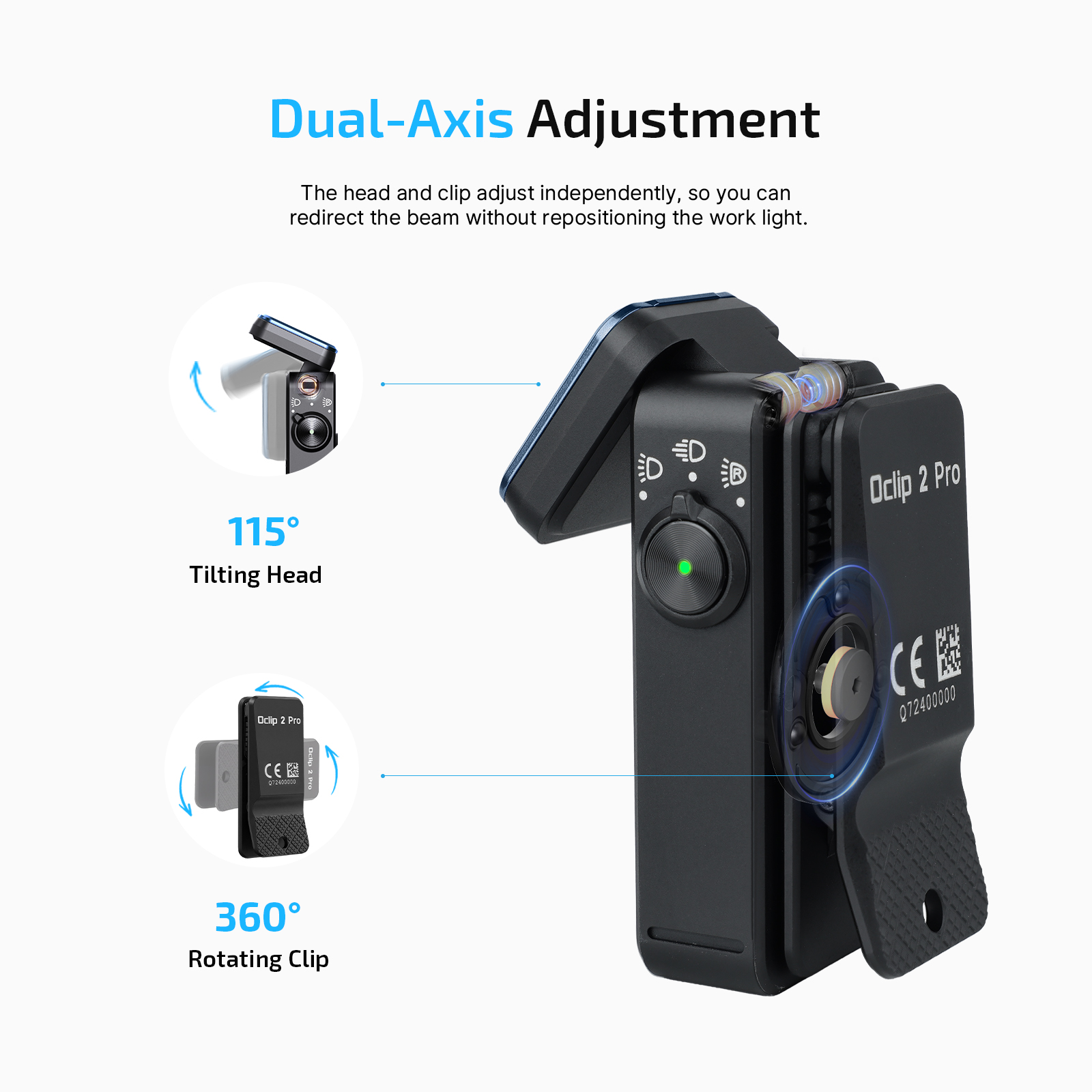
The official Oclip 2 Pro diagram distinguishes the 115-degree head adjustment from the 360-degree clip rotation.
Start with a steady white-light function that lets you see the task clearly. Aim it below the faces around the table, and check the light from the opposite seat before settling in. A clip flashlight can provide flexible placement, but the support still needs to hold the particular light securely without slipping or damaging the shelter.
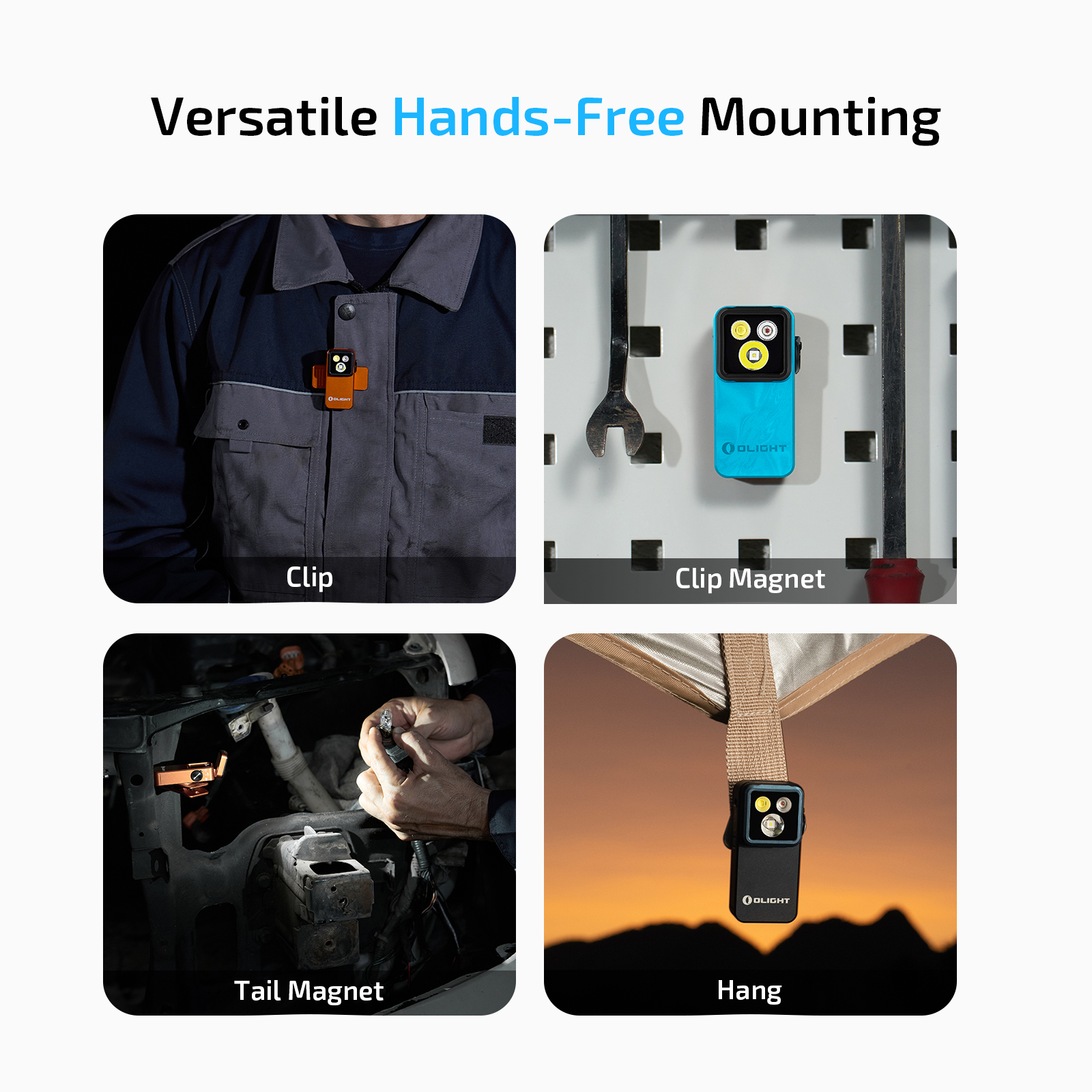
The official Oclip 2 Pro gallery illustrates clip, clip-magnet, tail-magnet, and hanging attachment methods in several finishes.
Do not turn an attachment problem into a brightness problem. If a hand shadows the work or the beam reaches the wrong surface, reposition the light before increasing output. Check access to the controls as well. A light attached behind a loaded bag may be secure yet inconvenient to switch off when the group leaves the table.
Perun 3: illumination that follows the wearer
Perun 3 is a headlamp and right-angle flashlight supplied with a headband. For camp work, its main advantage is that the light can follow the person handling the task. Olight specifies MCC3 magnetic charging for this model, so include the correct charging cable in the equipment plan rather than assuming any cable in the bag will connect.
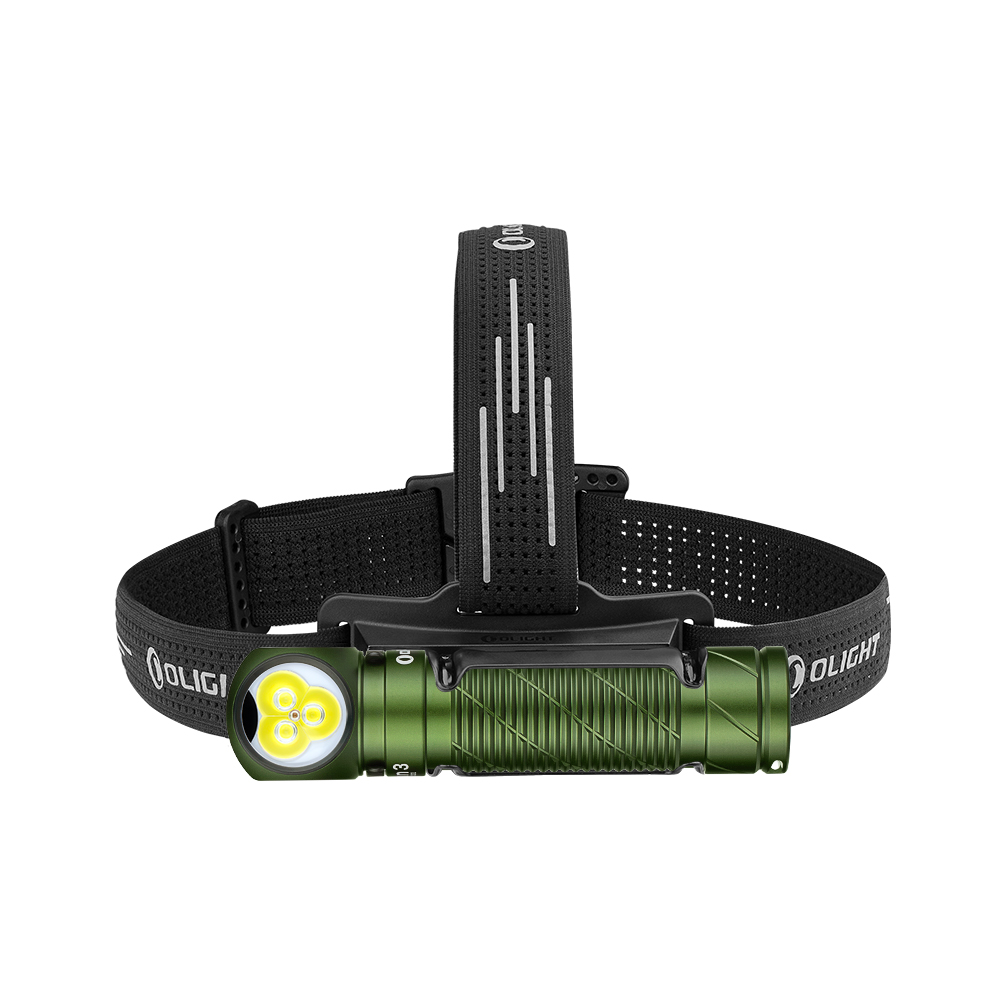
Perun 3 in OD Green, shown with its front holder and overhead headband strap.
Fit the headband and set the angle before the evening's work. Then check what happens when you look toward another camper. A headlamp follows your gaze, including during conversation. Lower its aim or switch it off when it is unnecessary, and use an appropriate low setting for nearby tasks rather than treating maximum output as the default around a shared table.
A rechargeable headlamp also needs a plan for the next night. Know which cable and compatible power source it needs, when charging can happen, and how much reserve the trip requires. The decorative strand can stay at the shelter while the personal light accompanies you to collect gear or find the permitted route back.
What are some good LED string lights for camping?
Good LED camping strands offer a useful steady setting, manageable brightness, clear power requirements, and an arrangement that suits the intended shelter. Prioritize the light's lowest comfortable setting and complete outdoor instructions over the number of effects. Pick the appearance you enjoy, then verify that an independent task light still covers detailed work.
Look at the illuminated points from a seated position. Bare emitters can appear much brighter than their surroundings, even when the table remains dim. Diffused covers or a different hanging route may create a more comfortable view. Evaluate the actual product rather than assuming that all LED strings produce the same distribution or visual effect.
Color is a separate choice from useful task coverage. A warm-looking decorative setting may suit a relaxed seating area, while steady white light is easier to use when you want to inspect labels or equipment without a changing color effect. Check both functions at home. The setting that looks best in a photograph need not be the setting you use for a practical task.
Flashing modes add little to an ordinary shared dinner. Choose a steady setting when people are reading, handling utensils, or moving around the table. Check how the controller behaves after switching off and on; an unexpected return to a bright effect can be annoying in a quiet campground. Keep the control accessible so adjusting the strand does not require climbing or pulling the cable.
Avoid buying on the LED label alone. Compare complete dimensions, supported power, outdoor-use limitations, and how the strand stores. A longer strand means more cable to route and pack. It does not automatically mean more useful illumination at the one surface that needs it. Choose the shortest arrangement that accomplishes the decorative purpose without adding avoidable clutter.
Runtime and packing comparisons that mean something
Compare runtime at the setting you expect to use. A manufacturer's longest duration may belong to a very low mode, while maximum output may reduce during operation. Read the mode table for the exact product and configuration. A headline duration and a headline lumen figure should not be combined into a claim that the light maintains both simultaneously.
For a strand, note whether the runtime refers to steady light, an effect, or a particular dimming level. Check which battery or external power source the figure assumes. If that information is missing, do not use the number to promise a weekend of illumination. A short pretrip operating check can reveal whether the equipment behaves as expected at your chosen setting.
Think in evening tasks as well as hours. Dinner preparation, cleanup, a short gear search, and relaxed conversation may use different lights and settings. Write down the expected sequence before deciding what to charge or pack. That makes it easier to preserve the personal light for work and movement while limiting the strand to the time it adds something to camp.
Measure packed volume as a complete kit. Include the strand's controller, battery holder or power bank, hanging clips, charging cable, and storage pouch. For the practical light, include its headband or other mount and required charging equipment. A bare-light weight comparison can hide the accessories that determine whether the system fits into the available pocket or bag compartment.
The relevant winner depends on the trip. A car camper may accept the extra strand for a shared sitting area. A walker carrying every item may prefer a headlamp and omit decoration. A group staying several nights may keep a small shared lighting kit near the shelter. Choose the smallest arrangement that covers the actual work and the atmosphere the group values.
Combining atmosphere with useful working light
Set up the practical lighting before hanging decorative lights. Establish a clear work surface and a place for a personal light to remain accessible. Then add the strand around the area where people will sit. Check the whole arrangement after dark, because an attractive hanging route in daylight may put bright points directly in someone's seated line of sight.
For two people under a small shelter, a short dimmable strand can provide atmosphere while an adjustable light covers meal preparation. Keep the task light away from a location where a standing person will block it. After cleanup, switch off the task light and lower or switch off the strand according to the remaining activity and campground expectations.
For a family or group table, make visibility a shared check. Ask the person opposite the light whether it shines into their face. Check the far edge of the table as well as the area nearest the light. Two modestly placed sources may suit separate tasks, but adding lights without checking their direction can simply create more glare.
For a compact walking kit, the decorative strand may be the first item to omit. A well-fitted personal light supports camp setup, equipment checks, and movement without requiring a hanging route. If atmosphere matters enough to carry a strand, compare its entire packed system and power budget against the rest of the kit. Keep the reason for carrying it specific.
| Camper or trip | Decorative choice | Practical-light priority | Decision to make before packing |
|---|---|---|---|
| Short car-camping stay | Short steady, dimmable strand if wanted | One adjustable source for table work and an accessible personal light | Is there a suitable hanging route? |
| Shared group shelter | Controlled, low-brightness seating-area light | Coverage checked from several seats | Can anyone switch the decoration off easily? |
| Walking trip with limited space | Optional; often simplest to omit | Personal light and dependable charging or battery plan | What does the strand add for its complete packed size? |
| Campsite with limited recharge opportunities | Limit decorative operating time | Preserve task-light reserve | Which equipment has first call on available power? |
Connections, weather, and careful storage
Check the whole strand before packing. Look for damaged insulation, cracked housings, loose plugs, corrosion, or parts that no longer close as intended. Stop using damaged equipment and follow the manufacturer's repair or replacement instructions. Do not hide a damaged section inside a bag or assume a strip of tape restores its outdoor rating.
Connectors often receive more handling than the illuminated section. Unplug by the intended grip, avoid pulling on the cable, and keep protective caps with the equipment they belong to. Store the power components where they will not be crushed by furniture or cookware. These habits make setup easier and reduce the chance that a small missing part changes the permitted use.
Route cable away from feet, chair legs, and door openings. Make the entrance obvious without stringing a low cable across it. Attach the strand using its designed points; do not tighten it between moving supports. If the shelter shifts or someone moves a chair, the cable should not become the piece taking that force.
Pack equipment according to its storage instructions, including drying requirements. Coil the strand loosely enough to avoid sharp bends and keep the controller from tangling in the cable. Label any dedicated adapter so it returns to the same kit. A quick inspection while packing away is easier than discovering a damaged connection at the next campsite.
Treat weather changes as a reason to reassess the setup. Follow each component's instructions for rain, charging, and storage instead of improvising an enclosure that traps heat or collects water. If the equipment cannot be used safely in the conditions, put it away. A decorative strand is optional; the camp plan should remain workable without it.
Light that respects the rest of the campground
Keep the illuminated area within the place where it is needed. Before settling down, view the setup from the edge of the campsite and the neighboring tent's direction. A strand that looks gentle from underneath may be conspicuous across the path. Lower the setting or alter the position when the light reaches beyond the activity it is serving.
The National Park Service's natural-lightscape guidance encourages using light only when needed and reducing unnecessary outdoor illumination. Apply that principle to the evening's changing activities. Meal preparation may need an aimed task light; sitting quietly afterward may need much less. Switch equipment off when the group leaves or goes to sleep.
Ask about local requirements before hanging anything on shared or natural supports. Follow the campground's rules for attachment, quiet hours, and night lighting. Do not assume trees, fixtures, or nearby sites are available as supports. An easy-to-remove arrangement on permitted equipment is easier to adapt if staff ask for a change.
Keep personal lighting considerate too. Look down or lower the light before speaking face to face, and avoid scanning surrounding tents with a bright beam. Use a suitable steady setting for nearby work. These small adjustments help retain useful illumination at the table without turning the entire campsite boundary into the lighting target.
Check the setup before the trip
Rehearse the arrangement using the actual strand, power source, and practical light. Pick a familiar page, an empty cooking container, and the gear you expect to handle. Place them on a similar work surface and check the lighting after dark. Use the same objects and viewing position when changing the light so the comparison stays meaningful.
If you use a light meter, record its model, the sensor location and direction, the light's position, the operating mode, and the power arrangement. Keep these conditions fixed for repeated readings. Label your own measurements clearly. They describe the particular setup you measured, not every strand or every campsite using the same product category.
| Check to record | Keep consistent | What the result helps decide |
|---|---|---|
| Readability at near and far table edges | Same page, viewing position, and work surface | Whether the work area needs a different light position |
| Hand and cookware shadows | Same objects and task sequence | Which side provides useful task illumination |
| Selected-mode operating check | Same starting charge, mode, and power equipment | Whether the intended power combination behaves as expected |
| Complete packed size and weight | All cables, mounts, batteries, and storage included | Whether the decorative system earns its packing space |
| Connection and cable inspection | Product instructions and the complete system | Whether anything needs replacement before travel |
Try the controls with the equipment installed where it will be used. Check whether you can reach the switch without disturbing the strand and whether the personal light remains accessible when the table is covered with gear. Practice switching the decorative lighting off while retaining the light needed for cleanup. A good arrangement should be convenient to use, not merely possible to assemble.
Finish with a power and packing check. Confirm that the correct charging cables return to the bag and that each rechargeable light is ready for the next intended use. Separate anything damaged or unsuitable for the forecast conditions. The goal is a campsite that remains usable when the decorative light is off, with atmosphere added only where it makes the evening better.
Frequently asked questions
Changelog
- November 18, 2026: Product information and buying guidance reviewed.




