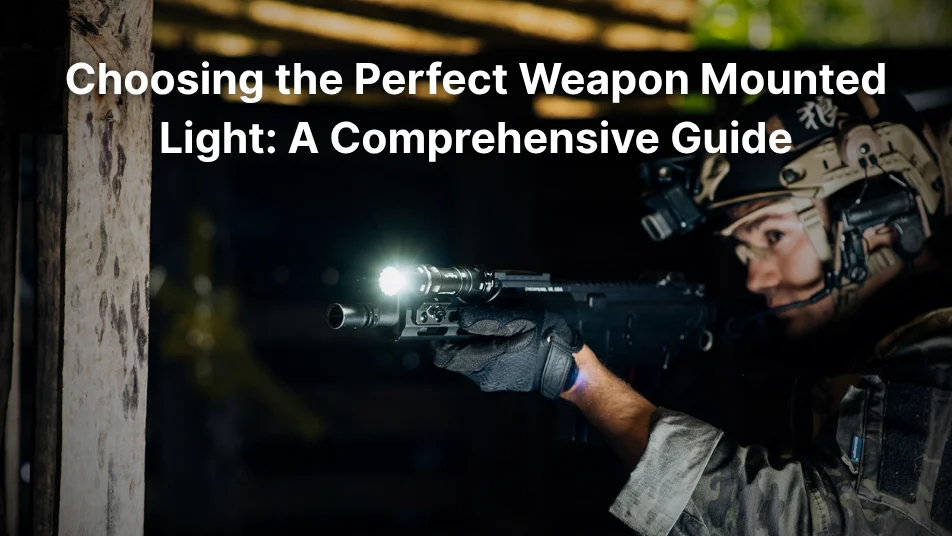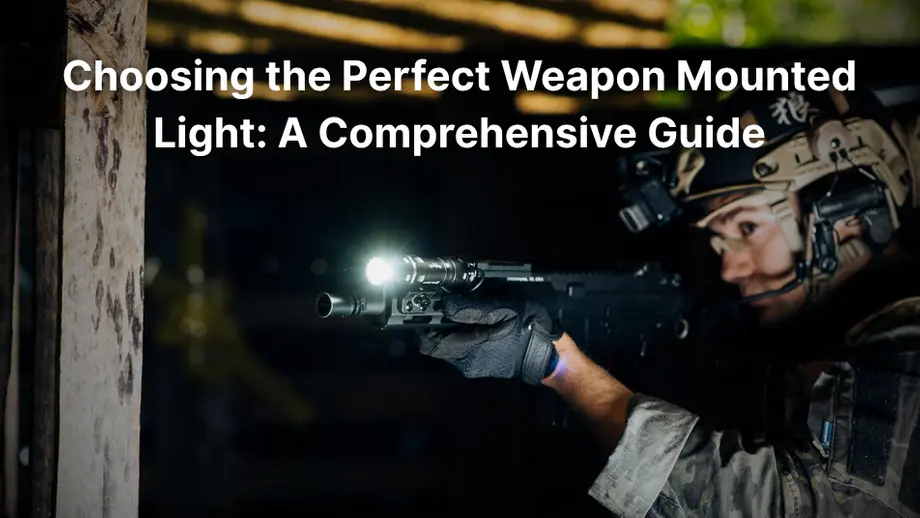
In low light, positive target identification is non-negotiable. Whether you’re hearing a strange noise outside your house, responding to a bump in the night, or tracking game at first light, seeing clearly is paramount. A high-quality weapon-mounted light (WML) turns a daytime tool into a capable 24/7 solution.
But with a sea of options, specs, and features, how do you choose the right one? This guide breaks down the essentials so you can match the light to your needs and your firearm.
Pistol or Rifle? Match the Light to the Platform
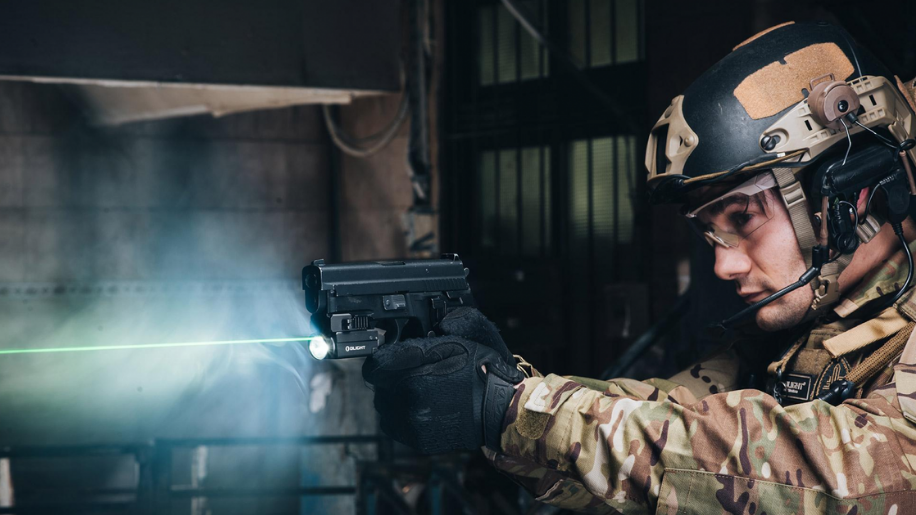
For Your Pistol
A pistol light should be compact, lightweight, and intuitive—without compromising your master grip. Look for:
Compact size that doesn’t protrude excessively past the muzzle.
Low weight to preserve balance and control.
Ambidextrous paddles you can activate instantly with either hand, without shifting your grip.
A strong compact example is the PL-MINI 2 Valkyrie—renowned for its adjustable sliding rail (flush fit on many railed pistols) and quick, ambidextrous activation. If you also want an aiming aid, the Baldr S combines a powerful white light with a green/blue laser in one compact package.
Laser products are regulated in many regions. Always follow local laws and safe-use guidance.
For Your Rifle
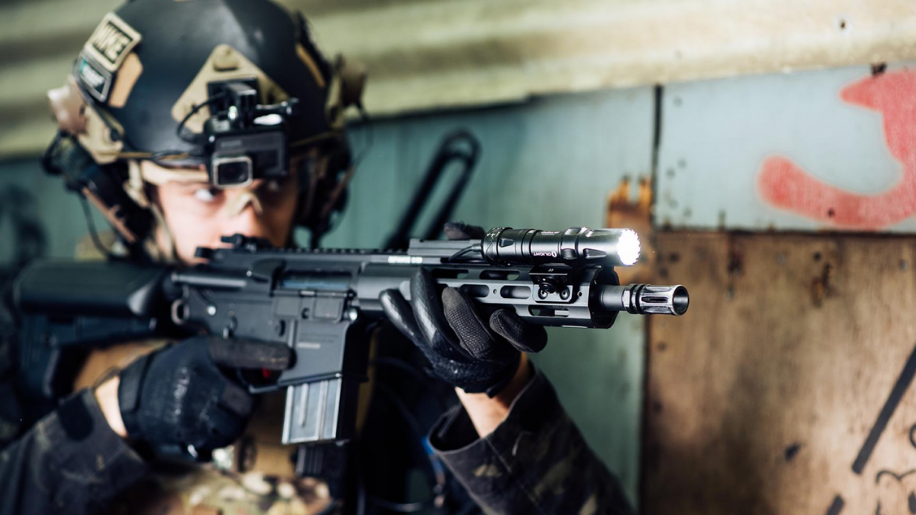
Rifle lights have different priorities. With more rail space and a steadier platform, you can choose a larger, higher-intensity, more robust WML. Focus on:
Higher candela for identification at 100+ yards.
Durable mounting—secure Picatinny or M-LOK solutions that lock up tight.
Remote activation so your support-hand grip never changes.
The Odin Mini is purpose-built for this role: a dedicated M-LOK mount, a locking magnetic remote switch, and a beam pattern optimized for rifle distances—an excellent fit for AR-15s and other modern sporting rifles.
Ergonomics and Activation: Seconds Count
Under stress, you default to your training. A complicated switch is a liability.
Pistol lights: Ambidextrous paddles with momentary-on (press-and-hold) and constant-on (quick tap) are fast and easy to master.
Rifle lights: A tailcap clicky is fine for admin use, but a remote pressure pad excels for practical application—you keep control without reaching forward.
Before you buy, consider your grip and where your fingers naturally rest. The switch should be right there.
Built to Last: Durability and Power
Your WML must endure recoil, impacts, and weather.
Materials: Hard-anodized, aircraft-grade aluminum is the standard.
Water resistance: Aim for IPX6 or higher. IPX8 indicates manufacturer-specified continuous submersion capability.
Power:
CR123A disposables have long shelf life and wide availability—good for seldom-used setups.
Rechargeables are convenient and cost-effective. Modern magnetic charging lets you top off without removing the light.
Conclusion: Find the Light That Fits Your Mission
Choosing a WML isn’t a spec contest. It’s about aligning performance, compatibility, ergonomics, and durability with your real-world scenarios.
Quick recap:
1. Compatibility: Pick a light designed for your pistol or rifle.
2. Ergonomics: Controls must be intuitive under pressure.
3. Durability: Choose construction and ingress protection that match your environment.
Ready to dial in your setup? Explore our full range of professional-grade weapon-mounted lights and equip yourself for the dark.