TL;DR:Unstable lighting during night trail running causes visual fatigue, distorts depth perception, and increases fall risks. Headlamp bounce occurs due to multi-directional biomechanical forces, poor weight distribution, and reduced strap friction. To secure a stable running headlamp, runners must prioritize low weight, wide flood beams, and sweat-resistant designs like the Olight Perun 3 Mini. This guide explores the biomechanics of bounce, essential selection criteria, and practical tips to ensure a steady beam on technical trails.
A secure light source is essential for night trail runners. When a headlamp bounces, it causes visual fatigue and compromises safety on technical paths. This guide explains why headlamp bounce occurs, how it impacts your performance, and what features to look for in a stable running headlamp. We also review a top-performing option for 2026 and provide actionable tips to keep your beam steady on every run.
Table of Contents
- Why Running Headlamps Bounce: The Biomechanics Behind an Unstable Beam
- How An Unstable Beam Affects Running Performance And Safety
- What Makes A Good Running Headlamp?
- Why The Olight Perun 3 Mini Is Built For Stable Night Running
- Tips To Reduce Headlamp Bounce During Every Run
- FAQ
Why Running Headlamps Bounce: The Biomechanics Behind an Unstable Beam
Understanding the physics of running helps identify why some headlamps fail to stay still.
How Head Movement Changes During Running
When running, your body moves along three axes: vertical, lateral, and rotational. Biomechanical studies on vertical ground reaction force published in the Journal of Biomechanics show that running mechanics involve significant vertical displacement and high cumulative impact force with each stride.The vertical displacement—the rise and fall of your hips and head with each stride—exerts downward and upward forces on your headwear. Trail runners experience even greater variation due to uneven terrain, high steps, and sudden directional changes. This continuous, multi-directional acceleration forces a poorly designed running headlamp to shift out of place.
Why Heavy Headlamps Create More Bounce
The primary culprit behind unstable lighting is weight distribution. A heavy front-facing light acts as a lever on your forehead. Due to inertia, a heavy lamp wants to stay in place when your head moves up, and continues downward when your head drops. This lag creates a noticeable shaking effect. To counteract this, users often overtighten the strap, which leads to localized pressure points, headaches, and restricted blood flow. localized pressure on cranial structures can trigger pressing and tightening pain during physical activity.( reference: National Institutes of Health ).
How Sweat and Loose Straps Reduce Stability
Sweat reduces the friction between the elastic band of your runners headlamp and your skin or hair. Standard synthetic bands become slick when wet, allowing the light to slide down the forehead. Furthermore, standard elastic bands stretch and degrade over time. As the material loses its elasticity, the tension decreases, causing the entire setup to sag during high-impact movements.

How an Unstable Beam Affects Running Performance and Safety
A shaking beam does more than just annoy you; it directly impacts your physical output and trail safety.
Visual Fatigue from Constant Beam Movement
The human brain continuously processes visual input to build a stable image of our surroundings. When your light source bounces, your eyes must constantly adjust to the shifting shadows and rapid changes in contrast. Clinical guidance on eye strain notes that viewing unsharp, low-contrast, or constantly moving environments places intense demands on the visual system and leads to rapid ocular fatigue.This constant accommodation fatigues the ciliary muscles in your eyes, leading to eye strain, headaches, and a loss of spatial awareness during long night runs.(reference: American Optometric Association ).
Missing Obstacles on Technical Trails
Technical trail running requires split-second decision-making. Wet roots, loose rocks, and low-hanging branches appear suddenly. A bouncing beam creates moving shadows that can distort your depth perception. When a shadow flickers over a rock, it is difficult to judge its height or stability. A stable running headlamp ensures that obstacles remain consistently illuminated so you can plan your foot placements with confidence.

Why Beam Smoothness Matters More Than Maximum Lumens
Many runners prioritize raw lumen output over beam quality. However, a high-lumen spotlight with a harsh, concentrated hot spot actually worsens the effects of bouncing. As the hot spot moves up and down rapidly, it creates a strobing effect against the ground. A wide, smooth flood beam distributes light evenly across your field of view, minimizing the visual disruption caused by minor head movements.
What Makes a Good Running Headlamp?
To find the best headlamp for trail running, you must look past basic brightness numbers and analyze structural design, strap material, and beam profiles.
Lightweight Design for Long-Distance Comfort
For trail running, every gram matters. A lightweight build reduces gravitational pull on your forehead during vertical movement. Keeping the total weight of the lamp head under 100 grams significantly decreases inertia, eliminating the rotational torque that causes a headlamp running setup to slip.
Secure Fit That Stays Stable While Running
A stable running headlamp requires a secure mounting system. The bracket must contour to the forehead to prevent side-to-side wobbling. Additionally, the strap needs high-quality adjustability to maintain consistent tension without squeezing too tightly.
Balanced Flood Beam Without Harsh Hot Spots
The ideal trail running headlamp uses a wide-angle optic or lens that spreads light smoothly. A balanced flood pattern provides peripheral vision, allowing you to see the trail edges and upcoming turns without constantly turning your head.
Sweat Resistance for High-Intensity Runs
High-intensity running generates heat and sweat. The headband must feature moisture-wicking materials and, ideally, an internal silicone grip or anti-sweat strip that channels moisture away from your eyes while preventing the band from slipping down.
Battery Runtime for Daily Training and Ultramarathons
Your light must match the duration of your run. For daily training, a lightweight internal battery is sufficient. For ultra-marathons, look for systems that offer rapid recharging options or external power bank compatibility so you are never left in the dark.( reference: Foxy Running).
Why the Olight Perun 3 Mini Is Built for Stable Night Running
The Perun 3 Mini Headlamp Flashlight is a highly capable choice for runners seeking a lightweight, high-performance illumination tool.

Perun 3 Mini Headlamp Flashlight
The Perun 3 Mini is a lightweight right-angle headlamp delivering powerful hands-free illumination in a compact design. With multiple brightness levels, magnetic charging, and versatile mounting options, it's ideal for running, hiking, camping, maintenance, and everyday outdoor tasks.
View DetailLightweight Construction That Minimizes Bounce
The compact form factor of this light makes it an exceptional best trail running headlamp candidate. By keeping the profile close to your forehead, it minimizes leverage and inertial drag. This low-profile geometry prevents the light from bouncing during fast descents or sprint intervals.
Smooth, Wide Beam for Comfortable Vision
With five white light modes delivering up to 1,250 lumens, the optical system is optimized for clean, wide-angle illumination. It eliminates harsh hot spots, reducing eye fatigue over hours of use. The inclusion of red light modes helps preserve your night vision and is ideal for reading maps or running in misty conditions without blinding glare.
Reliable Performance in Sweat and Rain
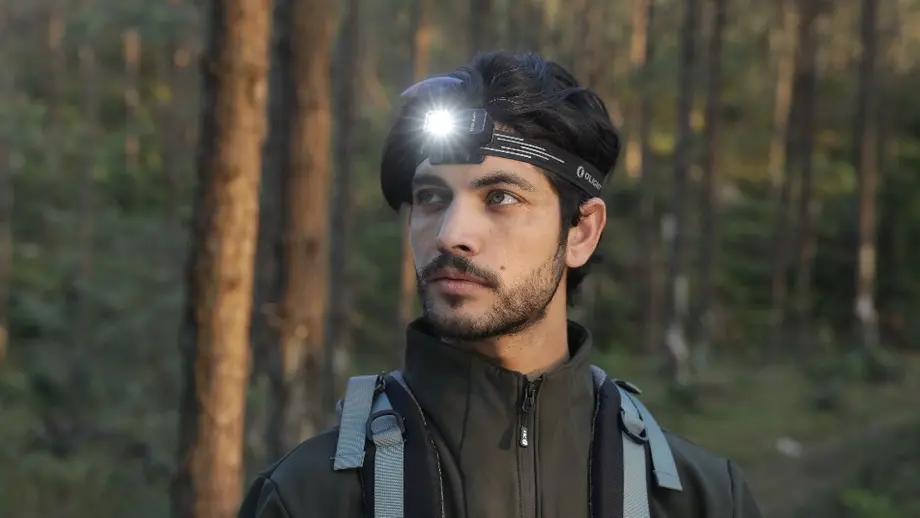
The upgraded headband is 25% lighter than previous generations. It features a 3D-breathable mesh construction and an integrated anti-sweat strip that keeps sweat out of your eyes and prevents the band from sliding. The 360-degree reflectivity on the band also enhances your visibility to others on road-to-trail transitions.
Versatile Use Beyond Running
Equipped with a quick-release bracket, you can switch the light from a headlamp to a handheld or clip-on light instantly. The magnetic tailcap and pocket clip allow you to attach it to running vests, belts, or magnetic metal surfaces, making it highly adaptable for camping, trail side repairs, or backup use.

Tips to Reduce Headlamp Bounce During Every Run
Even with the best trail running headlamp, proper setup is required to achieve complete stability.
Adjust the Headband for a Secure Fit
Adjust the band so it sits snug but not constricting. A good rule of thumb is that you should be able to slide two fingers flat under the band comfortably. If the band has a top strap, adjust it to take some of the vertical weight off your forehead.
Position the Light Correctly on Your Forehead
Position the lamp head slightly above your brow line. If it sits too high, it will pull backward and wobble; if it is too low, it can interfere with your eyebrow movement and slide down your nose. Angle the light housing downward slightly so you can see 3 to 5 meters ahead without needing to bend your neck.
Match Brightness to Your Running Environment
Using maximum brightness constantly is rarely necessary and drains battery fast. Use lower, wider flood settings for flat, easy paths to conserve battery and minimize high-contrast shadows. Save high-output turbo modes for technical, rocky downhills where maximum detail is required.
Maintain the Headband for Better Grip
Over time, salt from dried sweat degrades elastic materials. Hand-wash your headband regularly in cold water with mild soap to remove oils and salts. Air-dry the band to maintain its original elasticity and grip properties.