


A 21700 platform makes sense when the lights that do your important jobs explicitly accept the same replacement battery. Keep an 18650 setup when its smaller lights already meet those jobs and share an approved spare. Choose by exact compatibility first, then carrying comfort and replenishment. A larger capacity label cannot make an incompatible cell useful.
TL;DR: Build the battery kit around named replacement parts, not a drawer of similar cylinders. Group lights only after checking the exact model, approved battery, and charging method. A mixed kit with clearly separated spares can be easier to maintain than a supposedly universal kit that needs exceptions, adapters, or an unfamiliar replacement light.
📋 Table of Contents
- 1. Flashlight battery types are only the first sorting step
- 2. What the Olight 21700 listing actually lets you consolidate
- 3. Why the customized 18650 still deserves its own group
- 4. Make a compatibility map before replacing any light
- 5. Check the plan against separate people and locations
- 6. One battery platform does not mean one universal charger
- 7. Decide what to standardize and what to leave alone
- 8. Keep spares protected and replacement decisions visible
- 9. Turn the plan into a short, accurate shopping list
- 10. Frequently asked questions
Flashlight battery types are only the first sorting step
The problem usually appears while packing. Several lights work well, but each seems to need its own spare. A headlamp belongs in the hiking bag, a compact handheld stays by the door, and a larger light handles yard checks. Buying one battery size for everything sounds efficient. That promise is useful only if the lights actually share the complete replacement specification.
The numbers on a cell identify a size family, not a complete purchasing instruction. They do not tell you every detail about the finished battery's contact arrangement, protection, or approved devices. An online listing that says 18650 is not automatically describing the same replacement as another listing with that number. Start a compatibility group with a manufacturer's actual replacement part and the lights it names.
Capacity adds another separate question. Milliamp-hours describe a battery rating; they are not a universal number of hours of useful light. The flashlight's output setting, electronics, operating conditions, and battery requirements still matter. Compare whether a light supports your task before choosing the platform around it. A larger battery in a light that is awkward to carry does not solve a missing bedside light.
Use this first comparison to decide what to investigate, rather than as permission to swap cells.
| Decision | 21700 approach | 18650 approach | Check before buying |
|---|---|---|---|
| Keep an existing light | Useful when the exact light lists that replacement | Useful when the exact light lists that replacement | Full model name and approved battery part |
| Reduce spare types | Several approved lights may share one part | Several approved lights may share one part | Actual compatibility list, not size alone |
| Compare capacity | Read the rating on the particular battery | Read the rating on the particular battery | Voltage and conditions; no automatic runtime ratio |
| Simplify charging | May still require model-specific charging equipment | May still require model-specific charging equipment | Battery approval and charging approval separately |
| Keep a household backup | Evaluate the complete light and spare plan | Evaluate the complete light and spare plan | Who uses it, where it lives, and how it is replenished |
A useful inventory therefore has three layers: the device, its approved replacement, and its approved charge path. Two devices can share a spare without sharing every accessory. Two devices can use similar charging connections without sharing a battery. Keeping those relationships separate prevents a tidy-looking shopping list from becoming a confusing kit at home.
What the Olight 21700 listing actually lets you consolidate
The Olight 21700 rechargeable battery discussed here is the customized ORB-217C50, rated at 5,000 mAh and 3.6 V. Its US listing names compatible models including Seeker 4 Pro, Seeker 3 Pro, Perun 2, Perun 3, Baton 3 Pro Max, and Prowess. This is a named replacement for a defined list, rather than a claim that every light with a large battery tube accepts it.
That list creates a practical opportunity for someone who already owns compatible lights. A home handheld and a separate outdoor headlamp may draw from one clearly identified replacement supply. The benefit is fewer different parts to buy and track. It is not permission to move a cell into an unlisted light simply because the cell seems to fit or the light has a familiar family name.

Official ORB-217C50 product photograph. The wrapper identifies this particular replacement battery; matching a size number or wrapper color alone does not establish compatibility with another light.
Before ordering a spare, compare the full device name against the current replacement listing and its own instructions. Seeker 4 Pro is a more precise identification than Seeker. Perun 3 is more precise than headlamp. If the light's suffix or generation differs, stop the comparison there and get confirmation for that exact version. Similar names are especially easy to confuse when a household keeps both an older and a newer light.
A shared replacement also needs a clear allocation. If two people take compatible lights on separate trips, one spare kept at home does not back up both trips. Decide whether the spare belongs to a location or travels with a person. Put that decision on the inventory. Consolidating the part number simplifies purchasing; it does not multiply the number of batteries available when the lights are apart.
The buying trade-off is the complete light, not just its cell. Keep a compatible larger light when its handling, storage location, and job already work for you. Do not replace a comfortable compact light merely to match a spare in the garage. The savings in inventory complexity have to justify the change in what someone actually carries and uses after dark.
Why the customized 18650 still deserves its own group
The Olight customized 3500 mAh 18650 battery is a different replacement, identified here by the exact store SKU b3500S2R. Its US listing names Warrior Mini 3, Warrior Mini 2, Warrior Mini, Perun, Baton Pro, S30R II, S30R III, S2R Baton, R20 Javelot, and H2R. Those specific names are the evidence for the group; the word Pro by itself is not.
For an owner of several listed lights, retaining that group can be the sensible choice. A familiar light may already fit a coat pocket, a bedside space, or a particular person's grip. An approved spare maintains that useful equipment without forcing a change of light. Standardization should reduce mistakes and unnecessary purchases, rather than turn working equipment into something that suddenly seems obsolete.
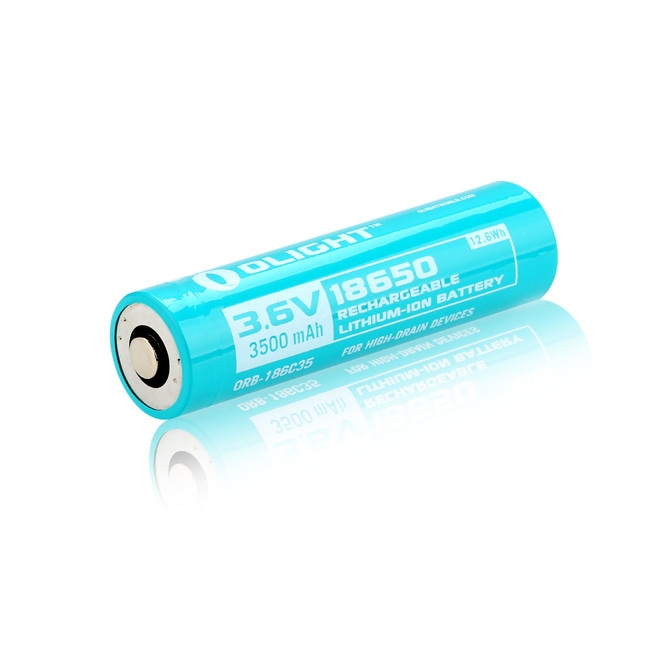
Official customized 18650 product photograph. Olight notes that this battery's outer cover has been updated while its other materials and parameters remain the same. Confirm the approved replacement rather than relying on one wrapper design.
The wrapper note addresses a real replacement problem. Olight says buyers may receive either the older or newer outer cover while the battery's other materials and parameters remain unchanged. A different-looking wrapper therefore does not automatically mean that the approved replacement has changed. Conversely, a matching turquoise color does not prove that two different battery models are interchangeable. Identify the part and supported device before judging the artwork.
Pay particular attention to generation names here. The listing names Perun, while the separate 21700 listing names Perun 2 and Perun 3. It names Baton Pro; that wording should not be silently expanded to every later Baton model containing Pro. These are reasons to keep the complete model on a replacement note. They are not instructions to infer compatibility from a partial name or to experiment with the battery compartment.
An extra 18650 group may cost you one additional inventory line, but it can preserve a well-understood backup. Consider how often that line creates actual work. A clearly labeled spare for a light used every day may be easier to manage than a replacement light whose controls, storage, and charging arrangement everyone must learn. Remove unnecessary variation when it is convenient, not merely because the drawer contains two sizes.
Make a compatibility map before replacing any light
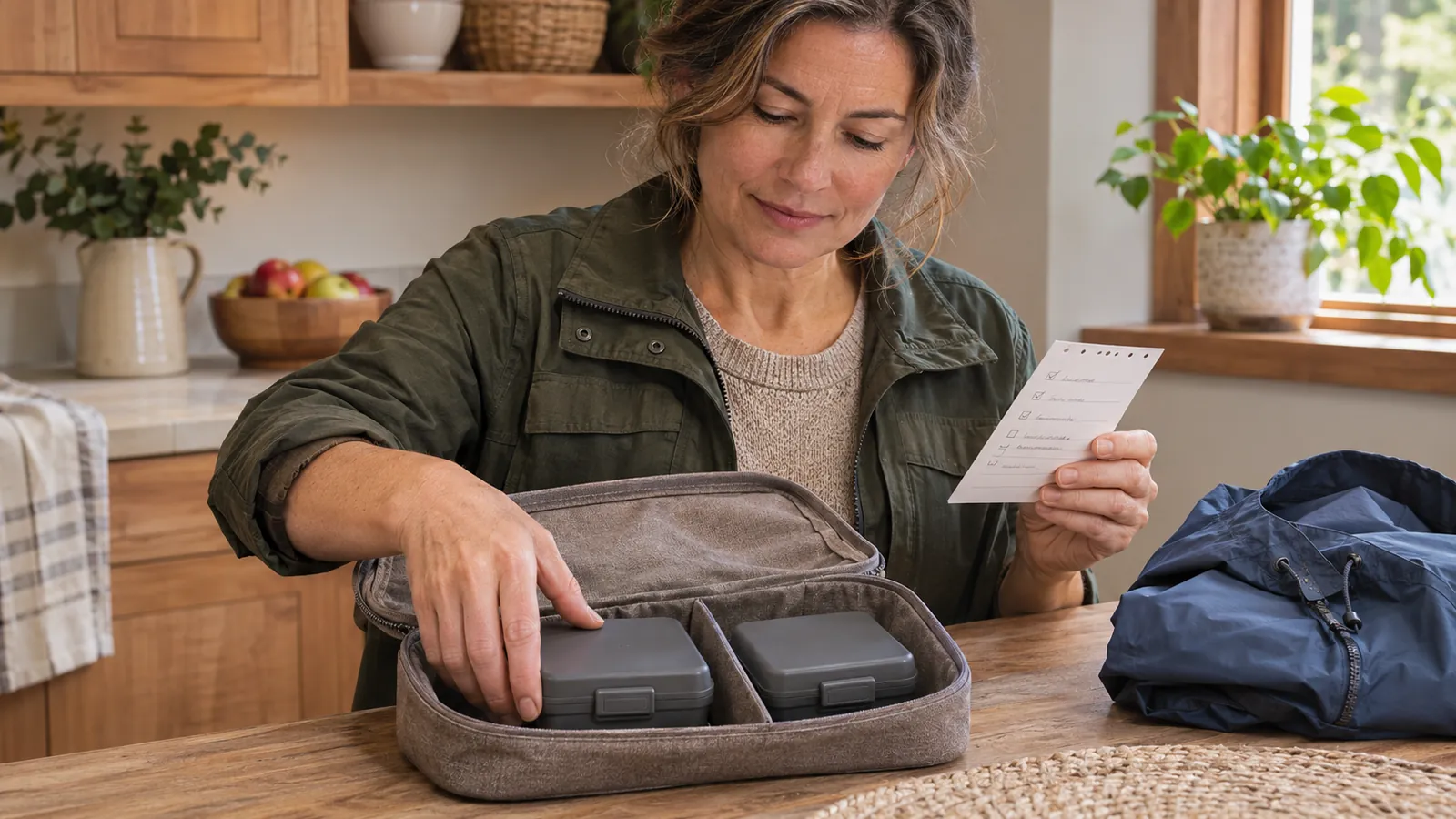
Start with the lights that matter when plans change: the one someone can find immediately, the one that travels, and the one that frees both hands for an ordinary task. Write their full model names from their own markings or purchase records. There is no need to open unfamiliar equipment to make this list. If the battery is not intended to be user-replaced, record the complete device and its supported charging arrangement instead.
For each replaceable-battery light, add the approved battery part and the source of that approval. A saved manual and a clear replacement listing are more useful than a note saying big rechargeable. Keep the note with the purchasing information, not on a cell where a label could cover a terminal or obscure required markings. Someone else should be able to order the correct part without comparing loose batteries by eye.
Now separate what is compatible from what is available. A cell reserved for a bedside light is not necessarily a travel spare. A spare that has not been replenished is not ready just because its part number is correct. The inventory can record where each item lives and when it was last prepared without pretending to measure its remaining capacity. This is a record of actions and assignments, not a home battery-health diagnosis.
| Inventory field | Useful entry | Entry that leaves a problem unresolved |
|---|---|---|
| Device | Exact model and generation | Blue flashlight |
| Approved replacement | Manufacturer part and supported model | Any 21700 |
| Charging arrangement | Exact supported charger or in-light method | USB cable |
| Assignment | Doorway light, hiking bag, or named person | Shared somewhere |
| Spare status | Assigned location and last preparation date | Looks charged |
| Exception | Keep this separate; confirmation still needed | Probably compatible |
An unconfirmed match belongs on an exception line, outside the common supply. It is better to keep one old light's replacement separate than to label the entire box universal. If neither its instructions nor its manufacturer can establish the correct part, leave it out of the consolidation purchase until that question is resolved. A bigger order does not turn an uncertain match into a supported one.
Use the map when buying the next light, not only when buying batteries. If two models both meet the real task, compatibility with an existing approved replacement can become a useful deciding factor. If only one meets the task comfortably, keep the exception visible. This approach lets the kit become simpler over time without forcing an expensive replacement of everything at once.
Check the plan against separate people and locations
A shared part number is most valuable when it removes a recurring identification problem. Suppose a home handheld and an outdoor headlamp both explicitly appear on the same approved replacement list. The purchasing record can identify one replacement for both, but the location record still needs two destinations. Describe which light is prepared for the house and which travels. Do not assume that a spare accompanying the headlamp remains available to the person staying home.
Now consider the same two lights on a family outing. The common replacement can simplify the parts carried, yet both people may need working lights at the same time. Treat the spare as backup capacity for the plan rather than as a reason to keep one person's light unprepared. The battery decision should support independent lighting where it is useful, not make the household depend on one person carrying the only replenishment item.
A second location can change the charging decision without changing the replacement. A light kept at work may need its own supported charging equipment because bringing the home arrangement back and forth is inconvenient. Put that equipment on a separate line before judging whether consolidation saves packing. One approved cell type with several well-placed charging arrangements may be simpler in practice than one portable charger that is always in the wrong place.
For a shared household, the person who orders batteries may not be the person who uses the light. Write the purchase note for that handoff. Include a photograph of the exact model marking in the equipment record, the replacement name, and the usual storage location. Avoid instructions such as use the long green one: wrapper revisions and similar colors make that description unreliable. A clear record remains useful when a different person has to replace a missing spare.
Do the same for a light that belongs to a relative or a second household. It may look like one of yours while carrying a different generation name. Keep its approval separate until the exact match is established. A shared shopping order can contain several different replacements without turning them into one interchangeable supply. Keeping each destination visible prevents a bulk purchase from creating an accidental swap after delivery.
There is also a reason to retain an integrated-battery light even when it cannot join the loose-spare supply. If it meets a distinct task and has a manageable approved charging method, it can remain a useful device with its own entry. Do not open it to create a replaceable-cell platform. The trade-off is that its replenishment depends on the complete device and supported charging arrangement instead of an interchangeable spare; record that difference honestly.
Before completing the plan, walk through an ordinary departure rather than an invented endurance test. Can the person find the light, identify its assigned protected spare, and locate the supported charging equipment? Is the home light still available after the travel kit leaves? These checks test the organization of your equipment, not a battery's electrical performance. They often reveal a missing assignment that another purchase alone would not fix.
One battery platform does not mean one universal charger
Battery compatibility and charging compatibility need separate checks. A replacement can be approved for a flashlight without being approved for whatever loose-cell charger happens to be on the shelf. Read the instructions for both ends of that relationship. Do not treat a similar connector, a magnetic attraction, or a slot that holds the cell as evidence that the charging arrangement is correct.
A household charger can also have a much narrower purpose than its appearance suggests. The Olight Ostation X AA configuration considered here is identified by SKU OSTATIONXAA,AOSTATIONXADUS. Its AA manual specifies AA Ni-MH batteries. The product page also offers a separate AAA version. Neither the page's combined AA/AAA title nor a photograph of small cylindrical batteries makes this a charger for the 18650 and 21700 replacements above.
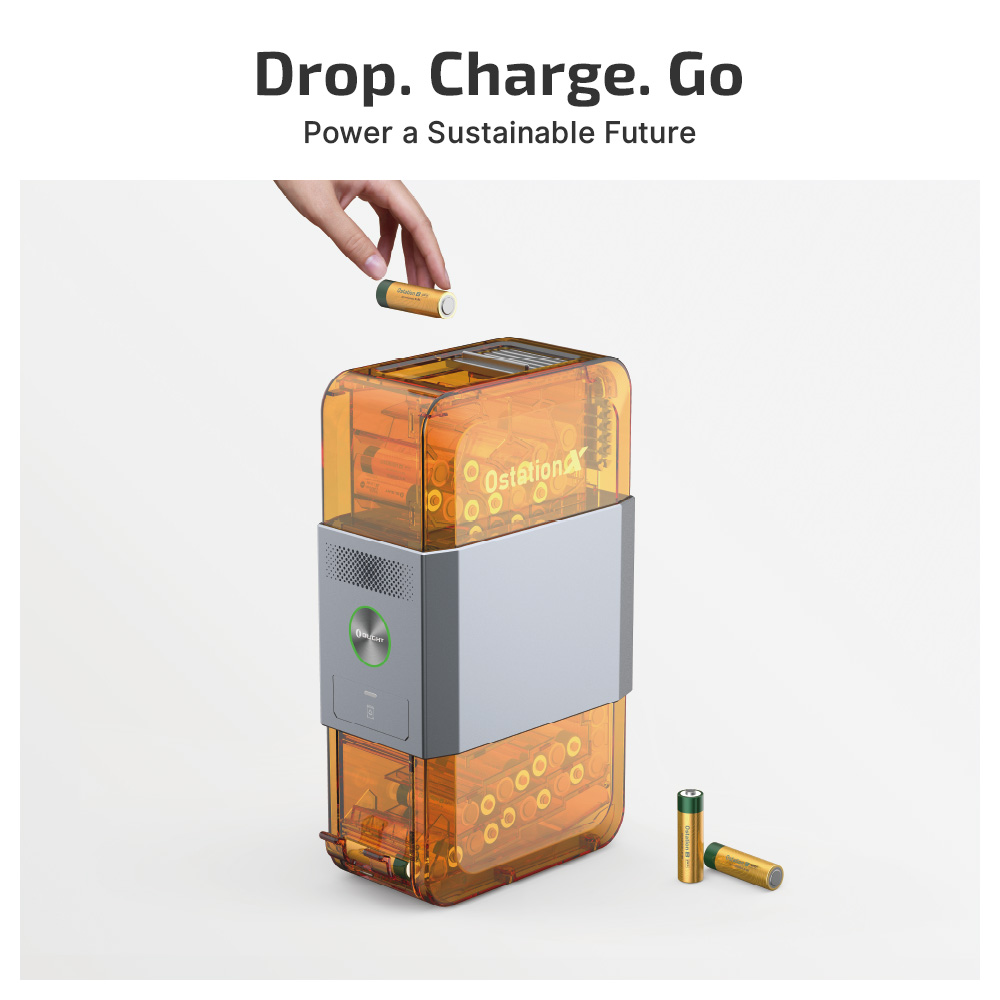
Official Ostation X AA configuration image. This version's manual specifies AA Ni-MH batteries; the pictured loading system is not a way to charge the 18650 or 21700 replacements discussed above.
Ostation X's charging, sorting, and storage functions address the separate problem of managing a household's supported rechargeable cells. The AA manual lists storage for up to thirty-two batteries and charging for one to four at a time. Those are different capacities. A storage compartment full of cells does not mean that every cell is being charged simultaneously, and a sorting feature does not replace identifying the battery type before loading it.
The household benefit is organization within the supported category. Keep the AA supply for devices whose own instructions accept those cells, while the flashlight replacement supply remains separately identified. A family can have a coherent system with more than one chemistry or format. Coherence comes from clear destinations and replenishment routes, not from putting every cylinder through the same machine.
For the AA version, the manual also specifies a USB-C power source supporting the PD protocol at twelve volts and at least one and a half amps. A shared USB-C plug shape is not that complete requirement. This is another reason to keep the correct power arrangement with the device. Follow the exact manual for setup; do not improvise adapters or treat another household charger's settings as interchangeable.
Decide what to standardize and what to leave alone
For a household with two compatible 21700 lights, the first improvement may be as simple as one clearly named replacement supply and separate protected storage for the spares. Keep the existing lights in their useful locations. Check whether each person knows which spare belongs to them and how that light is normally replenished. The purchase is successful when it removes uncertainty during the next ordinary use, not when the battery drawer looks uniform.
For a traveler who already likes a listed 18650 light, carrying its approved spare can be more practical than moving to an unfamiliar light with a larger battery. The smaller replacement group remains intentional. The question is whether the complete kit is easy to carry, identify, and replenish on that trip. Do not assume that choosing the larger size automatically reduces the number of things that must be packed.
For an occasional-use emergency light, prioritize a location and check routine that somebody will actually maintain. An impressive battery specification is little help if the light is hidden or its spare is missing. Establish the useful room roles first; the published room-by-room emergency flashlight plan addresses that allocation. Battery consolidation then supports those jobs instead of dictating an unsuitable light for every room.
For a mixed household, keep a small number of explicit groups. One approved rechargeable replacement group can serve the relevant flashlights, while a separately supported AA supply serves its own devices. Leave an older but useful light as a documented exception. When that light eventually needs replacement, compare a compatible alternative then. There is no need to discard a working light to complete a battery project on one shopping trip.
| Situation | Sensible next action | Reason to pause |
|---|---|---|
| Two lights appear on one exact replacement list | Confirm both manuals, then plan the shared spare supply | Generation or charging requirement differs |
| A useful older light takes another approved part | Keep one labeled exception | No clear replacement identity |
| A new light meets the same task equally well | Consider compatibility with the existing group | Bigger format makes the light inconvenient |
| Household devices use supported AA rechargeables | Maintain a separate, appropriate charging supply | Charger and device approvals do not match |
| An owner wants to reduce packing | Count complete lights, spares, cases, and charging equipment | A smaller cell count adds unsupported adapters |
Keep spares protected and replacement decisions visible
A spare battery should travel as a protected item, not as an object rattling around with keys and coins. Choose storage that prevents terminal contact with metal and protects the cell from damage. Keep its identity available without needing to unload a collection of bare cells on a counter. Separation is especially useful when two sizes or several similar-looking replacements share the same equipment bag.
For flights, the FAA's spare lithium-battery guidance requires uninstalled lithium-ion and lithium-metal batteries in carry-on baggage with terminals protected against short circuit. If a carry-on bag is checked at the gate, remove those spares and keep them in the cabin. Check the airline's restrictions before travel; a familiar flashlight battery is not exempt from the handling requirements because it is small.
Do not turn an uncertain battery into a spare by relabeling it. A damaged wrapper, unreadable identification, leakage, or another sign of damage calls for manufacturer guidance rather than a trial in a different light. Keep questionable items out of the ready supply. The aim is to preserve a supported, identifiable replacement system, not to extract one more use from a cell whose condition or identity is unclear.
End-of-life handling belongs in the same inventory plan. The EPA advises separate collection for used lithium-ion batteries, rather than household trash or curbside recycling. It also gives terminal-protection guidance and directs owners of damaged batteries to the manufacturer for handling information. Identify the appropriate local collection route before discarding a replacement; moving a questionable cell into the kitchen junk drawer only postpones the decision.
Turn the plan into a short, accurate shopping list
Write the purchase by exact replacement part, the device it will support, and where it will live. Keep battery quantity separate from device quantity: a light already containing its working cell may need an assigned spare, while another light may need no new battery at all. This prevents a platform project from becoming an order for duplicates that nobody has a use for.
Check the cart against the current selected listing. Confirm whether the offer is a single cell, a multipack, a charger, or a bundle, and whether its configuration matches the note. The 21700 listing discussed here describes one battery; do not infer a pair from a product photograph or expect a charger to arrive with a cell unless the selected offer says so. Packaging contents are a purchasing condition, separate from compatibility.
Keep a copy of the relevant model and replacement information with your equipment record. That record helps the next person avoid confusing an older Perun with a later generation or an AA charger with the separate AAA version. Revisit it when a light changes, a replacement listing changes, or an exception becomes difficult to support. A useful platform is maintained information as much as a collection of matching hardware.
If the next purchase is a rechargeable flashlight, make battery compatibility one criterion after the actual task and handling requirements. If you are choosing a first flashlight, there is no old spare supply to preserve, so start with the job and build the support kit around that choice. Both paths can end in a manageable system without pretending that one battery belongs in every device.
Frequently asked questions
Changelog
- November 18, 2026: Product information and buying guidance reviewed.




