


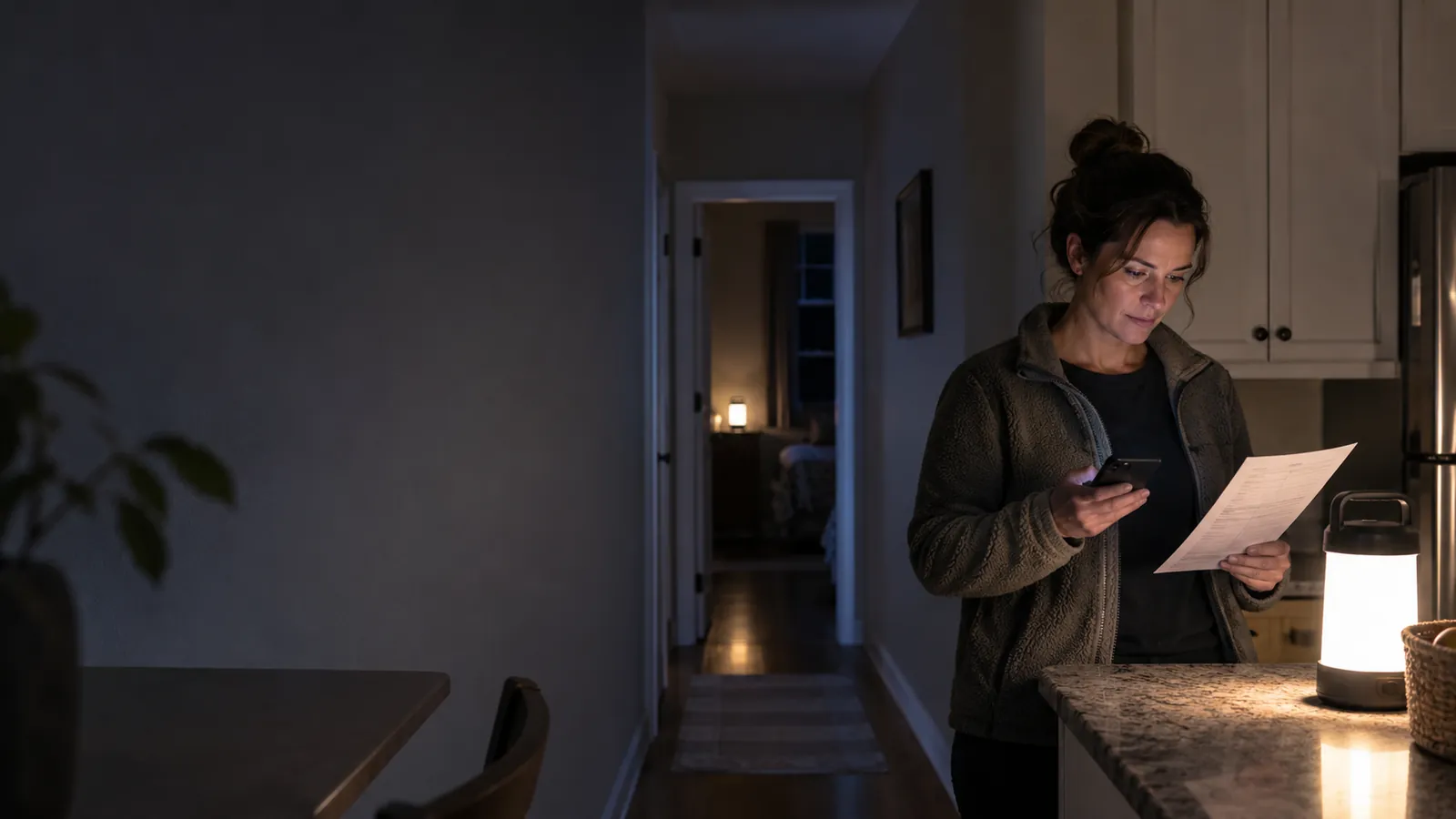
For an under-$200 home plan, start with one clip-on task light, add three personal lights, then add a headlamp if hands-free work matters. A dedicated lantern is still the better choice when the main goal is an even pool of light over a shared table.
⚡ TL;DR
Under $200, the clearest home-lighting mix is one Oclip 2 Pro Black, three i3E EOS Summer Palm lights, and one Perun 3 Black. Those exact variants totaled $178.95 before tax and shipping in the November 19, 2026 U.S. capture. This assigns separate roles for a nearby task, personal routes, and hands-free work; choose a lantern for broad shared-room light.
📋 Table of Contents
- 1. Three emergency-light budgets, compared
- 2. Compare the four product roles
- 3. How the tiers are calculated
- 4. Plan the rooms before choosing a light
- 5. Under $50: start with one adjustable clip-on light
- 6. Under $100: add three personal lights
- 7. Under $200: add hands-free light for two-handed work
- 8. Baton 4 Pro: a rechargeable handheld alternative
- 9. How to use one flashlight safely as a temporary room light
- 10. Make the lights useful after the first hour
- 11. Why emergency guidance says to avoid candles indoors
- 12. A buying checklist for the final cart
- 13. What is the best emergency light for home use?
- 14. What is the best emergency flashlight for home use?
- 15. What is the best indoor emergency light?
- 16. Frequently Asked Questions
- 17. Product details
Three emergency-light budgets, compared
| Budget | Exact product mix | Observed subtotal before tax and shipping | Household role | Main tradeoff |
|---|---|---|---|---|
| Under $50 | Oclip 2 Pro Black (OCLIP2PROBK) | $49.99 | One adjustable clip-on light for a nearby task or a temporary work area | One light follows one task; it is not a whole-room lantern |
| Under $100 | Oclip 2 Pro Black + three i3E EOS Summer Palm lights (I3ESP × 3) | $88.96 | One attachable task light plus one small personal light per assigned user or location | AAA cells and rechargeable-light charging follow different routines |
| Under $200 | Oclip 2 Pro Black + three i3E EOS Summer Palm lights + Perun 3 Black (PERUN3BK) | $178.95 | Task light, distributed personal lights, and hands-free illumination | The plan still depends on placement, charge, and a separate room-light choice when broad ambient light is needed |
The listed subtotals use those exact variants as displayed in Olight’s U.S. product data on November 19, 2026. Tax and shipping are excluded. Colors, bundles, promotions, and availability can change, so verify the selected variants and checkout total before ordering.
Compare the four product roles
| Exact product example and captured U.S. price | Published output, feature, or protection | Power and charging | Best-fit home role | Placement decision |
|---|---|---|---|---|
| Oclip 2 Pro Black (OCLIP2PROBK), $49.99 | 530-lumen floodlight, 125-meter spotlight, red mode, IP66 protection; 115° head tilt and 360° clip rotation | USB-C or MCC charging | Aimable clip-on light for a shelf, strap, or compatible task location | Check that the clip or magnetic surface is secure; use a lantern for stable shared-room lighting |
| i3E EOS Summer Palm (I3ESP), $12.99 each | 90 lumens, up to 44-meter beam distance, twist activation; 2.38 in long and 0.68 oz | One AAA battery | Compact personal light for keys, short routes, and close tasks | Assign one per person or location; do not treat several narrow beams as an area lantern |
| Baton 4 Pro Black (BATON4PROMBCW), $69.99 | Up to 1,600 lumens, 200-meter beam distance, side and tail switches; 111 × 23 mm and 4.02 oz / 114 g with battery | 3,500 mAh battery; USB-C and magnetic charging | Rechargeable handheld alternative for someone who prefers a conventional flashlight | It occupies a hand during use; select a headlamp for tasks that need both hands free |
| Perun 3 Black (PERUN3BK), $89.99 | Up to 3,000 lumens and 160-meter throw; white and red modes; 20-day Moonlight-mode claim | 5,000 mAh rechargeable battery | Hands-free work with an included headband; detachable handheld use | The 20-day figure is the Moonlight-mode claim, not a continuous maximum-output plan |
Prices above reflect exact U.S. variants in Olight product-page captures dated November 19, 2026; tax and shipping are excluded, and prices can change. Oclip 2 Pro’s IP66 rating and i3E EOS’s 0.68-ounce weight are listed on their respective captured U.S. product pages. The Baton 4 Pro dimensions and 4.02-ounce / 114-gram weight are the model-specific official specifications with battery included.
These figures describe different properties. Lumens describe output, while beam distance describes a different aspect of a beam; neither alone guarantees how brightly a particular kitchen, hallway, or stair landing will look. Pick the role first, then use the official manual’s mode chart to plan charging and operating levels. For Perun 3, Olight lists a 20-day Moonlight runtime separately from the 3,000-lumen maximum, so those values should not be combined into one expectation.
How the tiers are calculated
| Decision input | Method used here | What the reader can do with it |
|---|---|---|
| Price | Add the published U.S. price of each exact named variant; keep tax and shipping outside the subtotal | Recheck the same variants in the live cart before purchase |
| Product comparison | Use Olight’s published model features, battery type, charging method, and operating modes | Match a feature to a real household task rather than choosing by the largest number |
| Room plan | Separate shared-area light, personal movement, and two-handed work | Assign the product to a room or person before an outage |
| Runtime planning | Keep each stated duration attached to its named mode and operating condition | Compare like with like and follow the selected model’s manual |
Plan the rooms before choosing a light
A household blackout plan has at least three distinct jobs. If the first step is choosing a flashlight, begin with the work it must do. First, people need a stable source where they gather: a kitchen counter, dining table, or living room. Second, they need a portable beam for moving between rooms without walking into furniture, pets, or a stair edge. Third, some tasks require two hands, such as checking a breaker panel, reading a label, helping a child, or preparing food. One flashlight can move between those jobs, but each handoff means the light is not available in the previous room.
Start with the rooms people will actually use. A kitchen often becomes the gathering point because it has water, supplies, and a table, but a bathroom route and the path to bedrooms still matter. In a multistory home, identify the stairs and landings separately. A light placed at the top of the stairs does not help someone who is already downstairs. The practical test is simple: can each person locate a light from the place they are likely to be when power fails?
Then list people and tasks. A household with one adult at home has a different need from a home with children, older adults, guests, or someone who depends on powered medical equipment. Light selection cannot replace a backup power plan for medical devices, communication, heating, cooling, or refrigeration. Treat lighting as one part of the preparedness plan and follow local emergency guidance.
A quick map can be more useful than another purchase:
- Mark the kitchen or main gathering point.
- Mark every stairway, hallway junction, and bathroom route.
- Assign a light to each adult or regular household member.
- Identify one hands-free option for tasks that need two hands.
- Decide where each light returns after use, and who checks it.
If the map shows one central light and no way to find it in the dark, improve access first. A light stored in a locked drawer, buried in a camping bin, or left in a car is technically owned but not practically available.
Under $50: start with one adjustable clip-on light
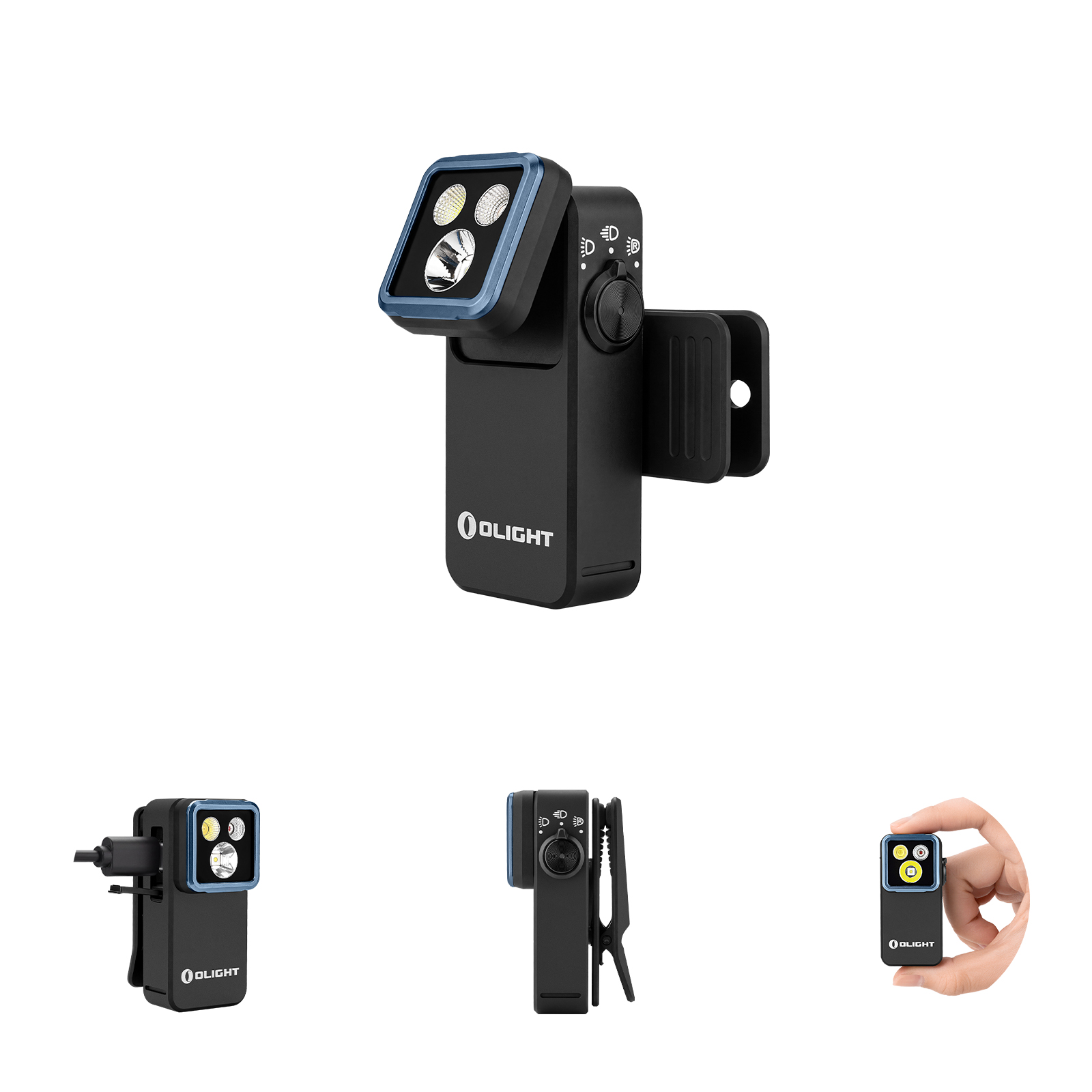
Oclip 2 Pro Black is the $49.99 option in this comparison. Its job is to give one person an attachable light that can be aimed for a nearby task. The page lists a 530-lumen floodlight, a 125-meter spotlight, and a red-light mode. A dual-axis setup tilts the head through 115 degrees and rotates the clip through 360 degrees. The clip is specified for attachment points up to 14 mm thick. The official page lists USB-C and MCC charging.
That is a flexible task role, but it is still one light. It can help illuminate a cabinet, a supply shelf, or a short nearby task when the attachment point is compatible. It does not become a whole-room lantern because the floodlight specification is high. Aim it away from faces and check the attachment before trusting it over a counter or walkway. If the household’s first priority is evenly lighting a shared table, compare a purpose-built lantern instead.
Under $100: add three personal lights
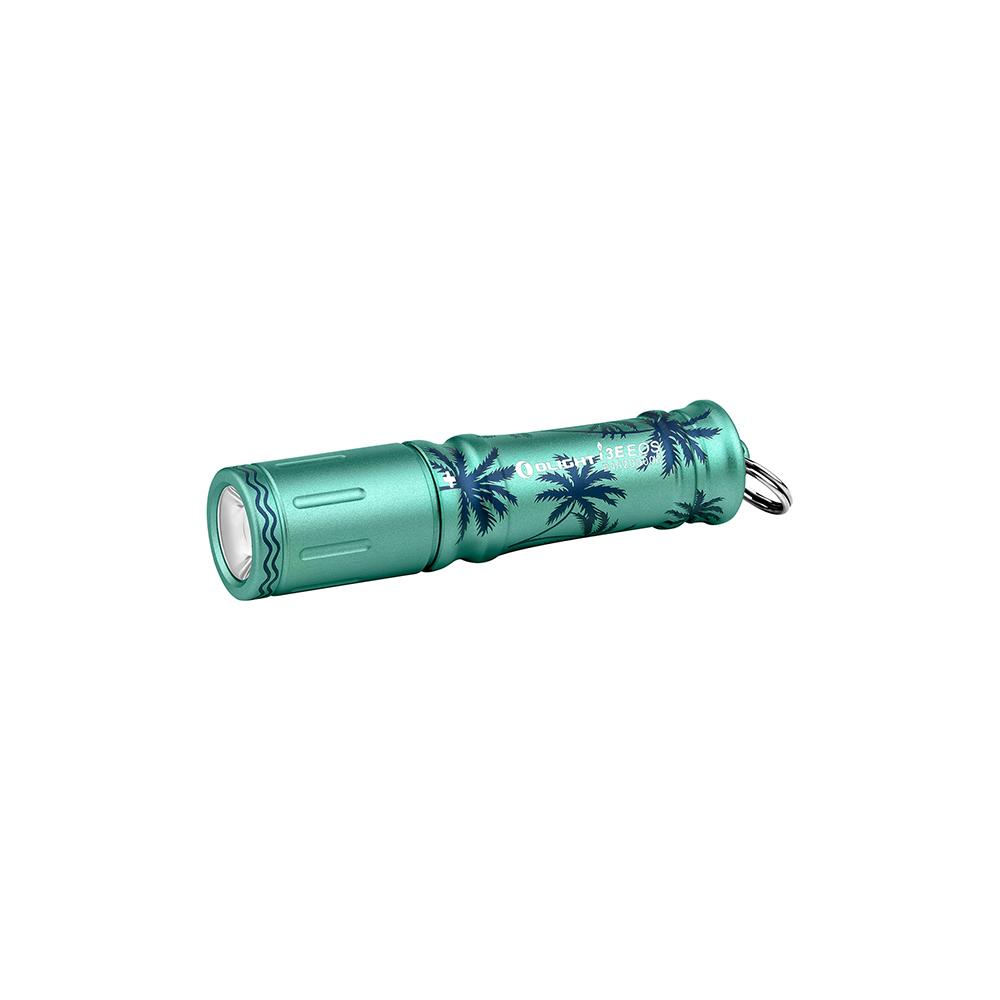
Adding three i3E EOS Summer Palm lights at $12.99 each brings the subtotal to $88.96 with the Oclip 2 Pro Black. This changes the plan from one person working with an attachable light to a small household arrangement: one light can stay with the task while the others are assigned to people, a bedroom route, or the emergency-supply location.
The Summer Palm variant is an i3E EOS with a mint-green palm pattern. The product page describes 90 lumens, up to 44 meters of beam distance, twist activation, a single AAA battery, a 2.38-inch length, and a weight of 0.68 ounces. Its appeal is simple access: a small light can live on keys or in a known drawer rather than being carried from room to room. A replaceable AAA cell also creates a different maintenance routine from the rechargeable models in this plan.
The limit is just as important as the convenience. A keychain light is suited to close tasks and short movement, not to evenly illuminating an entire kitchen. Assign each one before an outage. Keep compatible spare cells in their intended storage condition and follow the product instructions when replacing a battery. If a user has difficulty twisting a small control, choose a different role or make sure another adult can help.
Under $200: add hands-free light for two-handed work
Adding Perun 3 Black at $89.99 brings the three-tier mix to $178.95 before tax and shipping. Its role is different from the clip-on and keychain lights: the headband frees both hands for a task, and the light can be detached for handheld use. That is useful for reading instructions while handling supplies, checking a shelf, or carrying items along a route.
The U.S. product page lists up to 3,000 lumens, a 160-meter throw, a 5,000 mAh rechargeable battery, white and red modes, and a 20-day runtime in Moonlight mode. These specifications describe separate conditions. A maximum-output number is not a sustained-runtime promise, and the Moonlight figure does not describe high-output use. Use the mode chart in the exact manual when deciding how to operate and recharge it.
A headlamp is most useful when the wearer needs both hands. It is less convenient for a close conversation if aimed at another person’s face, so lower or redirect the beam when talking. Keep the headband with the light, set the fit before an outage, and make sure the person assigned to it knows the controls. If the household has no two-handed task that benefits from head-worn light, the third tier may be unnecessary.

Baton 4 Pro: a rechargeable handheld alternative
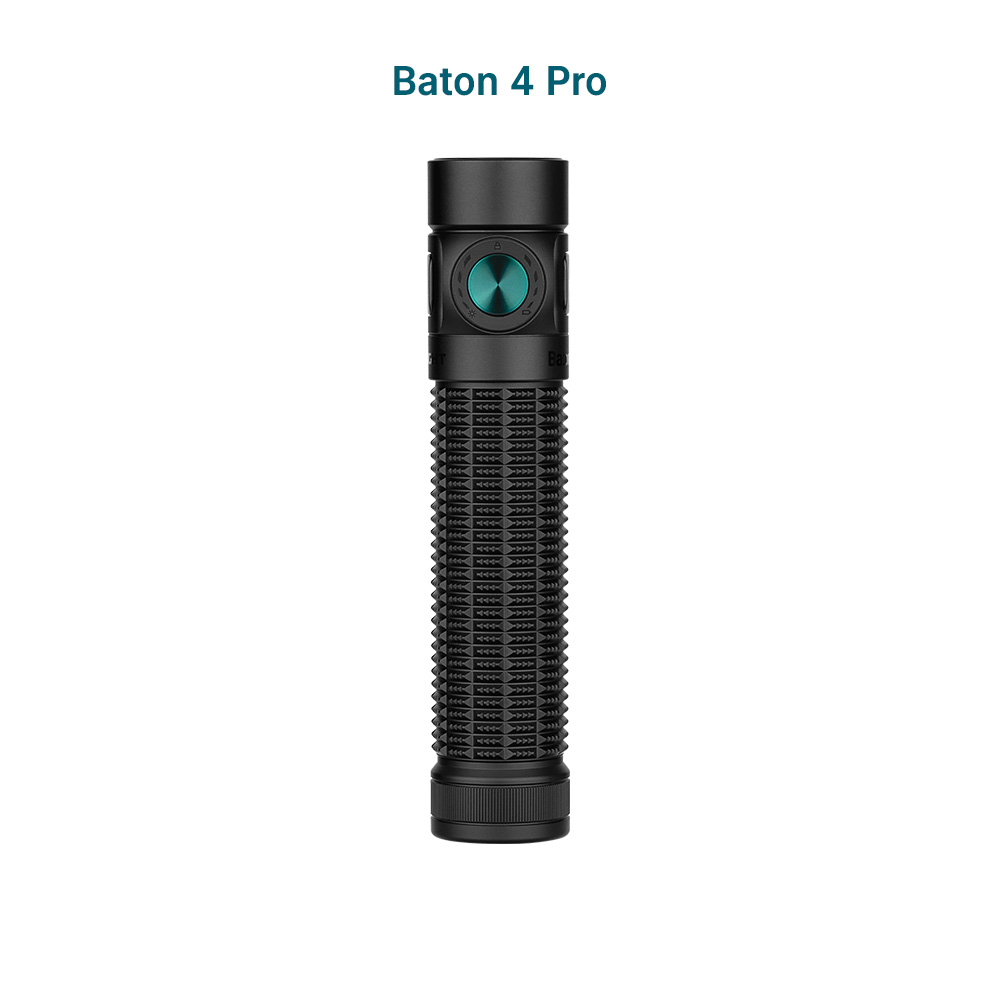
Baton 4 Pro Black is a different choice for someone who prefers a conventional handheld light over a clip-on or head-worn format. The captured U.S. product page lists $69.99 for the black variant, up to 1,600 lumens, 200 meters of beam distance, a 3,500 mAh battery, side and tail switches, USB-C charging, and magnetic charging. It is a rechargeable flashlight format for users who want a hand-held beam and more control than a compact keychain light.
One possible alternate pair is Baton 4 Pro Black plus one i3E EOS Summer Palm at $12.99, totaling $82.98 before tax and shipping. That arrangement gives one person a rechargeable handheld and another a personal light. It does not include the clip-on adjustment or hands-free role in the main tiers. Olight’s Everyday collection is useful for comparing carry-oriented options, but select by the actual features listed for the chosen model.
How to use one flashlight safely as a temporary room light
A handheld light can help a household orient itself, but improvised placement should be stable and should not create a fire or fall hazard. Before the outage, test a few safe resting positions at home: on a clear, level surface, pointed toward a wall or ceiling to soften glare. Keep the light away from children’s reach if it could be knocked down, and do not balance it on a bottle, a doorway, or a stack of supplies where it may fall.
A magnetic tail can attach only to a suitable metal surface. Check that the surface is stable and that the beam is aimed away from eyes. Do not assume every light has a magnetic base or that a magnet will hold on painted, thin, or nonmagnetic material. A clip light should be attached only where the clip fits securely and cannot snag or slip. A headlamp can be set down for a short task if its shape and surface allow it, but it is not automatically a stable table lantern.
If the room needs ambient light for a longer activity, an actual lantern or area light may be the better category. Compare its published battery system, placement options, output levels, and runtime conditions. The examples here cover handheld, clip-on, and headlamp roles; choose a dedicated lantern or area light if broad, stable room illumination is the priority. Do not place a flashlight on a heat source or cover it with fabric to diffuse the beam.
Make the lights useful after the first hour
An emergency light plan is only as dependable as its preparation. Place lights where people can find them without opening an app or searching a cluttered closet. Keep spare AAA batteries with the small lights if the manual and battery condition support that plan. Rechargeable models need a schedule that fits normal life; a calendar reminder can work better than relying on memory.
Use the official manual for the exact charging method and battery instructions. Do not assume USB-C, magnetic charging, or a dock is interchangeable across models. Olight’s charging-station collection can help identify available docks, but match the charger to the exact light. Store cables with their intended device or label them. If a product has a magnetic charger, avoid treating an unrelated magnetic cable as a compatible replacement. Check the charging contacts and ports for dirt or moisture only as the manual permits.
Every few months, perform a brief readiness check in ordinary lighting:
- Confirm each light turns on and its control sequence is familiar.
- Recharge rechargeable models using the specified method.
- Check replaceable cells and keep spares within their recommended storage condition.
- Inspect headbands, clips, and accessories for wear.
- Return each light to its assigned place after testing.
A low setting is often a better starting point for a household task than maximum output. Use more light when it is useful, then step down. That habit can reduce glare and avoid spending power on brightness the task does not require. Keep phones and other communication devices in a separate charging plan; a flashlight battery should not be assumed to power them.
Why emergency guidance says to avoid candles indoors
Lighting equipment is only one part of blackout safety. The American Red Cross power-outage guidance advises using flashlights instead of candles during an outage and warns that outdoor cooking devices and generators must not be used indoors because of fire and carbon monoxide risks. Follow official local instructions for generators, heating, food safety, and evacuation.
A flashlight should not be treated as a heater, a cooking tool, or a substitute for a working smoke alarm. Keep exits and stair routes clear. If an outage affects someone’s medical equipment, contact the relevant provider and local emergency services according to the household plan. If a storm or other event makes a home unsafe, leave when officials advise it; additional lighting does not make an unsafe building safe.
For a simple household conversation, agree on where the lights are, who checks them, and which room serves as the gathering point. A five-minute walk-through now can prevent a frantic search later. For more detailed room assignments and a longer outage timeline, read Olight’s room-by-room power-outage lighting plan. Include children in an age-appropriate way: show them where a light is kept and how to ask an adult for help, without asking them to handle batteries or charging equipment unsupervised.
A buying checklist for the final cart
Before deciding which tier is right, answer these questions:
- Where will people gather? If the answer is the kitchen, determine whether you need an area light rather than several narrow beams.
- Who may need an individual light? Assign one to each regular user and one to the most important route or supply location.
- Which task needs both hands? If there is a realistic household job, add a compatible headlamp or clip-on light.
- How will each model be powered? Count the exact replaceable cells, cable types, and charging methods; do not assume they are interchangeable.
- What is the complete checkout price? Check the exact color, bundle, tax, shipping, and discount before treating a budget as satisfied.
- Can everyone operate it? Practice the switch or twist control and return it to the assigned location.
Product details and included accessories can change, so verify the page for the chosen SKU before purchase. When selecting a mix, prioritize the gap in the household plan instead of adding a second light that performs the same job.
What is the best emergency light for home use?
For the best balanced under-$200 plan in this comparison, combine one Oclip 2 Pro Black, three i3E EOS Summer Palm lights, and one Perun 3 Black. The mix covers an attachable task light, individual close-range lights, and hands-free work. Choose a dedicated lantern instead when evenly lighting a shared room is the primary job.
What is the best emergency flashlight for home use?
For one person moving around a home, choose a flashlight with familiar controls and a power routine that can be maintained. The i3E EOS fits close tasks; Baton 4 Pro provides a conventional rechargeable handheld role; a clip-on or headlamp answers different placement needs. The right choice depends on whether the light must stay in hand, attach to something, or leave both hands free.
What is the best indoor emergency light?
For a shared indoor area, a purpose-built lantern is generally the better form when stable, broad illumination is the priority. A handheld, clip-on, or head-worn light is designed around a directed beam and a person or task. If using one temporarily, aim it safely toward a stable surface and avoid improvised mounts that can fall.
Frequently Asked Questions
Product details
Product specifications are drawn from the current U.S. Olight product pages and the linked official product cards.
Changelog
- November 19, 2026: Product information and buying guidance reviewed.




