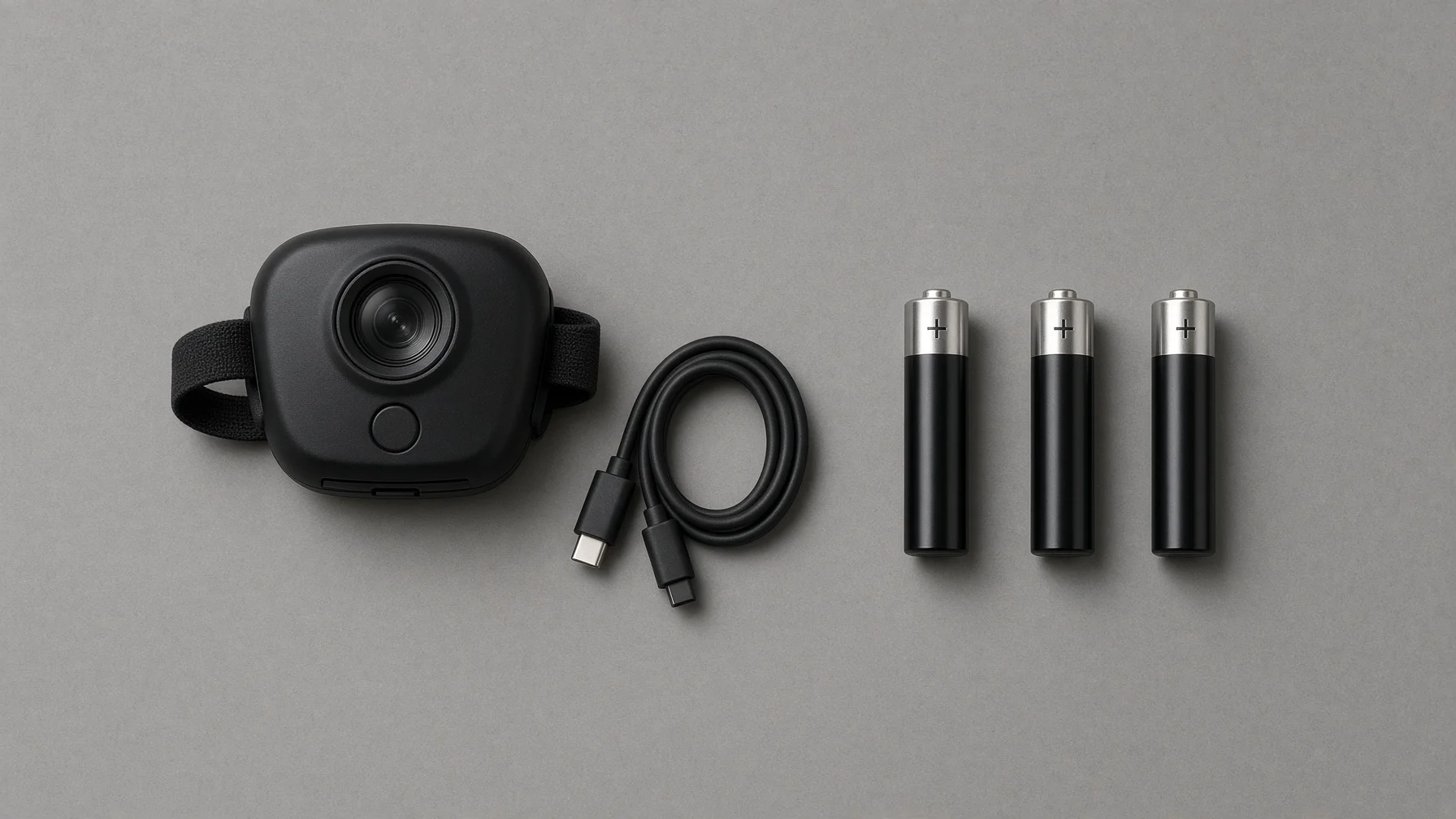
Olight makes the lights discussed here. Olight specs and prices come from its product pages as of September 2026; race rules, sunrise and sunset times, and battery data come from the official sources linked in each section.
⚡ TL;DR
The best headlamp for ultra running is one whose battery you can swap in seconds. Of the four Olight lights compared here, the Perun 3 is the top pick: one 5000 mAh 21700 cell runs 120 lumens for 25 hours, so a 10-hour race night fits on one cell with room to spare. The lighter Perun 3 Mini needs about three cells a night.
This table gives the short answer by race situation. Prices are regular prices on Olight's product pages as of September 2026.
| Scenario | Recommended light | Key official spec | Price | One-line reason |
|---|---|---|---|---|
| 100-mile race, fewest battery swaps | Olight Perun 3 + one spare Olight 21700 | Medium 120 lumens for 25 hours; IP68; 5.29 oz (150 g) | $89.99 + $26.95 | One cell covers a full race night on Medium, and the spare covers time on High |
| Lightest head unit, crew at night aid stations | Olight Perun 3 Mini + 650 mAh IMR16340 spares | 1.9 oz (54 g) with battery; Medium 100 lumens for 4.5 hours | $64.99 (some colors sold out on September 24, 2026) | Light on the forehead, but plan a cell swap about every 3.5 hours |
| Required second light and waist light | Olight Oclip 2 Pro | 530-lumen floodlight; Medium 100 lumens for 3 hours 45 minutes; 2.66 oz (75.5 g) | $54.99 | Clips to pack straps and hip belts, so it doubles as a low-angle trail light |
| 100K that ends before midnight | Olight Perun 3 Mini + one spare cell | 500~350 lumens on High for 2 + 75 minutes | $64.99 | Short night, light weight, one swap at most |
| Brightest burst for a technical descent | Olight Perun 3 | Turbo 3,000~800~600 lumens for 2 + 180 + 30 minutes | $89.99 | The most output of the group, with a long 800-lumen stage |
Most ultra runners learn about headlamps the hard way. The light that looked fine on a two-hour training run fades at 3 a.m. on a canyon climb. The aid station has no time to recharge it, the cold night makes the battery quit early, and a tired crew fumbles the spare cell by the light of a phone. This guide deals with each of those problems: how long your night really is, how many cells it takes, how to swap them fast, and what the big races require.
📋 Table of Contents
- 1. What Is the Best Headlamp for Ultra Running?
- 2. How Long Is Your Night? Start Time, Pace, Sunset and Sunrise
- 3. Removable Cells, Built-In Batteries or an External Pack?
- 4. How Many Batteries Do You Need for a 100-Mile Night?
- 5. Aid Station Battery Swap: A Crew Checklist That Works in the Dark
- 6. Cold Nights and Wet Weather: How Much Runtime You Lose
- 7. Common Mistake: Running the Whole Night on High
- 8. What Do Western States, UTMB, Hardrock and Leadville Require for Lights?
- 9. What Is the Best Headlamp for Running?
- 10. What Is the Best Headlamp for Running at Night?
- 11. What Is the Brightest Headlamp for Running?
- 12. How Many Lumens Should a Headlamp Have for Trail Running?
- 13. How This Guide Worked Out Its Numbers
- 14. Your Pre-Race Lighting Action Plan
- 15. FAQ
What Is the Best Headlamp for Ultra Running?
The best headlamp for ultra running uses a removable, rechargeable cell, runs a usable trail setting (about 100 to 200 lumens) for several hours per cell, and is light enough to wear for 10 hours or more. Pair it with a second light, because many races require two. Among Olight lights, the Perun 3 needs the fewest swaps and the Perun 3 Mini weighs the least.
Those three qualities pull against each other. A bigger cell lasts longer but weighs more on your forehead. A smaller head unit is comfortable but needs more swaps. The right balance depends on one number you can work out before race day: how many hours you will spend in the dark.
This table compares the four Olight lights discussed here, using only figures from Olight's product pages.
| Spec (Olight official) | Perun 3 | Perun 3 Mini (CW) | Oclip 2 Pro | Oclip 2 Ultra |
|---|---|---|---|---|
| Max output | 3,000 lumens | 1,250 lumens | 530 lumens (floodlight) | 580 lumens (floodlight) |
| Max light intensity | 6,400 candela | 6,000 candela | 3,906 candela | 4,225 candela |
| Beam distance | 524 ft (160 m) | 508 ft (155 m) | 426.5 ft (125 m) | 426.5 ft (130 m) |
| Medium runtime | 120 lumens, 25 hours | 100 lumens, 4.5 hours | 100 lumens, 3 hours 45 minutes | 100 lumens, 3 hours 30 minutes |
| Low runtime | 30 lumens, 89 hours | 10 lumens, 30 hours | 10 lumens, 25 hours | 10 lumens, 25 hours |
| Battery | Customized 3.6V 5000mAh 21700, removable | Customized 650mAh 3.6V 16340, removable | 600 mAh, built in | 600 mAh, built in |
| Weight | 5.29 oz (150 g) | 1.9 oz (54 g) with battery | 2.66 oz (75.5 g) with battery | 2.80 oz (79.5 g) with battery |
| Water rating | IP68 | IPX8 | IP66 | IP66 |
| Red light | Yes (60 and 15 lumens) | Yes (45 and 5 lumens) | Yes (40 and 4 lumens) | Yes (40 and 4 lumens) |
| Regular price | $89.99 | $64.99 | $54.99 | $94.99 (Premium bundle with charging dock) |
Read the Medium row first. It is the setting most runners will spend the night on, and it is where the lights differ most: 25 hours on one Perun 3 cell against 4.5 hours on one Perun 3 Mini cell.
Olight Perun 3: fewest swaps
The hard part of a 100-mile night is keeping enough light for 9 to 13 hours without depending on a crew. The Olight Perun 3 headlamp runs 120 lumens for 25 hours on its 5000 mAh 21700 cell, so one cell covers most race nights on Medium. The large metal side button is easy to find with gloves on. It also works as a handheld flashlight with a magnetic tail and clip.
Its limits are real. At 5.29 oz (150 g), it is almost three times the weight of the Perun 3 Mini, which you will feel on a long descent. Olight also notes that the metal headlamp bracket is expected to scratch the body if you take the light in and out often. If weight on your forehead bothers you, the Mini is the better head unit.
Olight Perun 3 Mini: lightest head unit
For runners who want almost nothing on their forehead, the Olight Perun 3 Mini headlamp weighs 1.9 oz (54 g) with its battery. Olight says its upgraded headband is 25% lighter, with breathable mesh, an anti-sweat strip and 360° reflectivity. A quick-release bracket turns it into a handheld light.
The trade-off is runtime. Medium runs 100 lumens for 4.5 hours, so a full race night takes about three cells, and a crew or drop bag has to supply them. On September 24, 2026, the default Orange CW version showed Sold Out on Olight's product page, so check stock well before race day.
Olight Oclip 2 Pro: backup and waist light
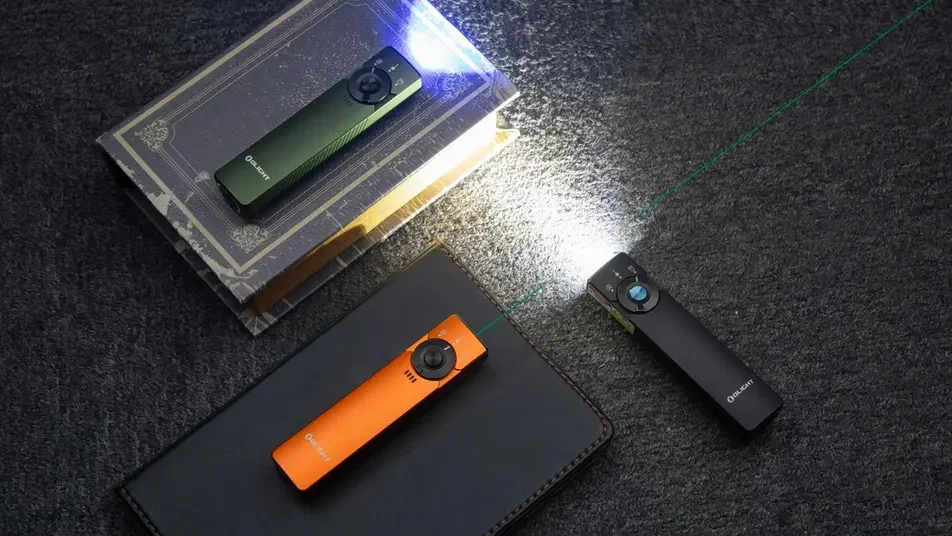
The Olight Oclip 2 Pro clip light is not a main race light, because its 600 mAh battery is built in and cannot be swapped. It earns its place as the second light. Its clip grips objects up to 14 mm thick, including straps, and the head tilts 115° while the clip rotates 360°. That lets you aim it down the trail from a hip belt or shoulder strap. The Oclip 2 user manual adds a caution for anyone with an implanted heart device: "If you have an ICD or pacemaker, avoid close or prolonged contact with this product to prevent possible interference."
On Medium it runs 100 lumens for 3 hours 45 minutes, and on Low 10 lumens for 25 hours. It charges by USB-C, so you can top it up from a power bank. Its IP66 rating covers rain, not submersion. The Oclip 2 Ultra adds UV and a slightly brighter floodlight, which an ultra does not need, so the Pro is the better value here.
How Long Is Your Night? Start Time, Pace, Sunset and Sunrise
Your night is the number of hours between the moment trail shadows get too deep to run without a light and civil dawn, or your finish if it comes first. For a 30-hour Western States runner, that is about 8.5 hours. For a 30-hour Leadville runner, it is about 12 hours, because Leadville also starts in the dark at 4:00 a.m.
Work it out from three official numbers: your race start time, your expected pace at each aid station, and the sun times for the course. Western States publishes expected 24-hour and 30-hour pace times for every aid station in its Western States participant guide. The race starts at 5:00 a.m., and a 30-hour runner is due at Foresthill (mile 62) at 10:45 p.m. Leadville's race page lists a 4:00 a.m. start and a 30-hour official cutoff.
Sun times come from the U.S. Naval Observatory sun and moon data service, using the 2026 race dates. For Auburn, California on June 27, 2026, it gives sunset at 8:34 p.m. and end of civil twilight at 9:06 p.m.; on the morning of June 28, civil twilight begins at 5:09 a.m. and the sun rises at 5:41 a.m. For Leadville on August 22, 2026, civil twilight began at 5:57 a.m. and ended at 8:19 p.m., and it began the next morning at 5:58 a.m.
This table turns those numbers into light hours. It assumes you switch on 30 minutes before civil twilight ends, because canyons and tree cover get dark earlier.
| Race and finish goal | Dark before sunrise at start | Night section | Total light hours | Planning figure (plus 1-hour buffer, rounded up to the half hour) |
|---|---|---|---|---|
| Western States, 24 hours | None | 8:36 p.m. to finish at 5:00 a.m. | About 8.4 hours | 9.5 hours |
| Western States, 30 hours | None | 8:36 p.m. to 5:09 a.m. | About 8.6 hours | 10 hours |
| Leadville, 25 hours | 4:00 to 5:57 a.m. (about 2 hours) | 7:49 p.m. to finish at 5:00 a.m. | About 11.1 hours | 12.5 hours |
| Leadville, 30 hours | 4:00 to 5:57 a.m. (about 2 hours) | 7:49 p.m. to 5:58 a.m. | About 12.1 hours | 13.5 hours |
The buffer matters because night miles are slower than planned for most runners. If you are slower than your pace chart, your night gets longer at both ends. Western States tells 28- to 30-hour runners to plan to pick up a light at Michigan Bluff, which a 30-hour runner reaches at 8:50 p.m.
For a race with two nights, such as Hardrock with its 48-hour cutoff, do this for each night separately and plan a full recharge or a new set of cells between them.
Removable Cells, Built-In Batteries or an External Pack?
For a single-night 100-miler, a headlamp with a removable cell is the most reliable choice, because a fresh cell takes seconds to install and needs no power at the aid station. Built-in batteries need hours of charging. External battery packs run longer but add a cable and weight at the back of your head.
Each design fails in a different way. This table compares them for an all-night race.
| Battery design | How you add runtime mid-race | Time at the aid station | Main failure mode | Best role in an ultra |
|---|---|---|---|---|
| Removable rechargeable cell (Perun 3, Perun 3 Mini) | Swap in a charged spare cell | Under a minute with practice | Spare left uncharged, or cell put in the wrong way | Main headlamp |
| Built-in battery (Oclip 2 Pro, Oclip 2 Ultra) | Recharge from a power bank or wall outlet | Hours, not minutes | Nothing to swap if it runs flat between aid stations | Backup, waist or hand light |
| External pack on the back of the strap | Swap the pack or plug in a power bank | About a minute | Extra weight and a cable that can snag | Main headlamp for runners who accept the weight |
| Disposable AAA or AA cells | Swap in new cells | About a minute | Output often drops as cells drain | Emergency spare only |
The removable-cell design also fits the way most crews already work. They carry one bag per aid station, and a charged cell is smaller than a gel packet.
How Many Batteries Do You Need for a 100-Mile Night?
Divide your planned light hours by the official runtime of the mode you will use, then shrink that runtime for cold. On Medium, the Perun 3 needs one 21700 cell for a 10-hour Western States night and one for a 13.5-hour Leadville night. The Perun 3 Mini needs three cells for Western States and four for Leadville. Carry one more than the math says.
The formula is: cells needed = planned light hours ÷ (official runtime × cold factor), rounded up. The cold factor is an estimate, not an Olight rating. It comes from Battery University's data on Li-ion discharge in the cold, which lists about 83% of room-temperature capacity at 0°C (32°F) and about 66% at –10°C (14°F) for one high-capacity energy cell, the Panasonic NCR18650B. Olight does not publish cold-weather runtimes for these lights.
Western States says night temperatures "drop into the 40-degree to 50-degree range," so the 0°C figure (0.83) is a conservative choice there. Leadville's race page says to expect "nighttime lows in the upper 20s," about –2°C to –3°C. Battery University publishes no figure for that temperature, so this guide estimates 0.80 by drawing a straight line between its 0°C and –10°C points. At 27°F (about –3°C) the same line gives about 0.78, and the cell counts below do not change.
This table shows the result. Each count includes the cell already in the light.
| Light and mode (Olight official runtime) | Western States, 10 hours, factor 0.83 | Leadville, 13.5 hours, estimated factor 0.80 |
|---|---|---|
| Perun 3 Medium, 120 lumens, 25 hours | 10 ÷ 20.75 = 0.48, so 1 cell | 13.5 ÷ 20.0 = 0.68, so 1 cell |
| Perun 3 High, 600~120 lumens, 300 + 30 minutes (5.5 hours) | 10 ÷ 4.57 = 2.19, so 3 cells | 13.5 ÷ 4.4 = 3.07, so 4 cells |
| Perun 3 Mini Medium, 100 lumens, 4.5 hours | 10 ÷ 3.74 = 2.68, so 3 cells | 13.5 ÷ 3.6 = 3.75, so 4 cells |
| Perun 3 Mini High, 500~350 lumens, 2 + 75 minutes (1.28 hours) | 10 ÷ 1.07 = 9.39, so 10 cells | 13.5 ÷ 1.03 = 13.15, so 14 cells |
| Perun 3 Mini Low, 10 lumens, 30 hours | 10 ÷ 24.9 = 0.40, so 1 cell | 13.5 ÷ 24.0 = 0.56, so 1 cell |
| Oclip 2 Pro Medium, 100 lumens, 3 hours 45 minutes (built in) | 10 ÷ 3.11 = 3.2 full charges | 13.5 ÷ 3.0 = 4.5 full charges |
A real night mixes modes. Suppose you spend 7 hours on Medium, 1 hour on High for fast descents and 2 hours on Low for power-hiking climbs and aid stations. On the Perun 3 that uses 7/25 + 1/5.5 + 2/89 = 0.48 of a cell before cold, or 0.58 after the 0.83 factor. On the Perun 3 Mini, the same night uses 7/4.5 + 1/1.28 + 2/30 = 2.40 cells, or 2.89 after cold, so plan on three.
Note: These are planning estimates built from Olight's published runtimes and one cell's published cold-capacity data, not field measurements. A cell riding on your warm forehead may lose less than the air temperature suggests, and a cell stored in a cold drop bag may start the night with less. The extra cell covers both errors.
The Oclip 2 Pro row explains why a built-in battery belongs in the backup role. It would need three to four and a half full charges to serve as a main light, but as a second light on Low it covers the night on one charge.
Aid Station Battery Swap: A Crew Checklist That Works in the Dark
The fastest aid station swap is not a cell swap at all. Your crew hands you a second, fully loaded headlamp, and you are back on the trail in seconds. The crew then changes the cell in the light you just handed back, calmly and under their own light, so it is ready for the next stop.
Use this two-light rotation from the first night aid station onward. Set it up the day before the race:
- Number every cell. Charge each spare fully, wrap a strip of colored tape around it and write a number on the tape. Numbered cells tell your crew which one has been used.
- Pack each cell in its own case or small bag. Loose cells in a pocket with keys or coins can short across the terminals.
- Pre-load Light B. Put a fresh cell in your second headlamp, switch it on to confirm, and switch it off. Your crew carries Light B, not loose cells.
- Brief your crew with one card. List the aid station, expected arrival time, which light you will arrive with and which cell number goes in next.
At the aid station, the handoff takes four moves:
- Switch your headlamp to Low as you come in, so you do not blind your crew.
- Take Light B from your crew, switch it on at Medium and check the beam on the ground at your feet.
- Hand over Light A and tell your crew roughly how long it has run since the last swap.
- Leave. Do not wait for the cell change.
After you leave, the crew changes the cell in Light A:
- Switch Light A off, then open the battery tube.
- Drop the used cell into a bag of a different color from the fresh cells.
- Insert a fresh numbered cell, matching the polarity markings shown on the light and in its user manual.
- Close the tube fully so the seal seats, then switch the light on at Low to confirm it works.
- Write the time and cell number on the card.
Tip: Practice the whole swap with gloves on, in a dark room, at least ten times before race day. The two errors that cost the most time are putting the cell in backward and not closing the tube all the way. Both are easy to catch at home and hard to fix at 3 a.m.
Check the pacer rules before you plan any handoff between aid stations. The Western States Rules for Pacers state that "Pacers may not carry water, food, flashlights, shoes, clothing, or other supplies for their runner," and Hardrock's rules summary uses the same wording. Leadville's rules say pacers "may act as burros, to carry food and equipment for their runner," so a Leadville pacer can carry your spare cells.
UTMB Mont-Blanc limits where your crew can help. Its 2026 regulations set a 1-hour penalty for "Assistance and/or crewing outside authorized zones," and another hour for carrying only one headlamp. Hand over Light B only inside an authorized crew zone, and make sure you leave with two working lamps.
If you are running without a crew, use drop bags. Western States strongly recommends "an extra flashlight" in the drop bags that go to each night aid station. A charged spare cell in each of those bags does the same job and weighs less.
Cold Nights and Wet Weather: How Much Runtime You Lose
Cold is the main reason a headlamp runs out early in an ultra. Battery University's discharge data shows a high-capacity Li-ion cell giving about 83% of its room-temperature capacity at 0°C (32°F) and about 66% at –10°C (14°F). A 25-hour rating becomes about 21 hours at freezing and about 16.5 hours at 14°F.
This table applies those published percentages to the Medium runtimes of the two swappable lights. The results are estimates: Battery University measured a Panasonic 18650 cell, not Olight's cells, and a power cell loses less; it lists about 92% at 0°C for its example power cell.
| Air temperature (Battery University, energy cell) | Capacity factor | Perun 3 Medium, estimated (25 hours official) | Perun 3 Mini Medium, estimated (4.5 hours official) |
|---|---|---|---|
| 25°C (77°F) | 100% | 25 hours | 4.5 hours |
| 0°C (32°F) | About 83% | About 20.8 hours | About 3.7 hours |
| –10°C (14°F) | About 66% | About 16.5 hours | About 3.0 hours |
| –20°C (–4°F) | About 53% | About 13.3 hours | About 2.4 hours |
Note: The Olight user manuals for the Perun 3 and the Perun 3 Mini list a working temperature of 0-40°C. The rows below freezing apply Battery University's cell data to Olight's runtimes; they are not Olight ratings, and Olight does not rate either light for use below 0°C. On a night below freezing, keep the light and its spare cells as warm as you can and carry the extra cell.
Mountain races swing through this range. The UTMB Mont-Blanc mandatory equipment page warns that the area can get "very cold (up to -10°C experienced above 2000m), with rain, hail or even snow." Hardrock's course description says the temperature "can suddenly and dramatically drop" above timberline.
Three habits limit the loss:
- Keep spare cells in an inside pocket or a chest pocket, not in the outer mesh of your pack.
- Ask your crew to keep the night's cells in a warm car or inside a jacket, not in a cold drop bag.
- Use the cold factor for your coldest expected hour when you count cells, not the average.
Wet weather is a sealing problem more than a runtime problem. The Perun 3 is rated IP68 and the Perun 3 Mini IPX8, while the Oclip 2 Pro is rated IP66. Before you open a battery tube after rain or a creek crossing, shake off the water and wipe the threads dry. Swap cells under the aid station tent, not in the rain.
Common Mistake: Running the Whole Night on High
Running the whole night on High is the most common way to lose your light before dawn. On the Perun 3 Mini, High lasts 2 + 75 minutes per cell, so a 10-hour night would take about ten cells. On Medium, the same night takes three. Save High for fast descents, and run most of the night on Medium.
High output feels safer in the first hour, and your eyes adjust to it. After that, turning down feels like going blind for a minute. That is a reason to start the night on Medium, not a reason to stay on High.
Use this mode plan as a starting point, and change it on your training runs:
- Runnable single-track and fire roads: Medium (120 lumens on the Perun 3, 100 lumens on the Perun 3 Mini).
- Fast, rocky descents: High for the descent only, then back to Medium at the bottom.
- Long power-hiking climbs: Low if the trail is smooth. You are moving slowly and looking at the next few steps.
- Aid stations and crew areas: Low or red light, so you do not blind volunteers or other runners.
- Route-finding in fog or at a junction: A short burst of High to find the next reflective marker, then back down.
Fog is the exception to "brighter is better." A bright beam from your forehead lights up water droplets right in front of your eyes. A light held at the waist or in your hand sits lower and farther from your eyes, which is another reason to carry the Oclip 2 Pro on a hip belt.
What Do Western States, UTMB, Hardrock and Leadville Require for Lights?
Only some ultras make two lights mandatory. UTMB Mont-Blanc's 2026 kit list requires two working headlamps with a backup power supply for each in the UTMB, CCC and TDS, and its regulations add a 1-hour penalty for carrying only one. Wildstrubel by UTMB, a separate race in Switzerland, has a similar two-lamp rule for its Wild110 and Wild70. Western States strongly advises two LED lights, while Hardrock and Leadville list a backup light and spares as recommended gear.
This table quotes each race's official wording and translates it into what you should pack. Rules change each year, so read your race's current rules before you pack.
| Race | Official wording (source) | Required or recommended | What to pack |
|---|---|---|---|
| Western States 100 | "EACH RUNNER SHOULD CARRY TWO LED FLASHLIGHTS." Also "plan to pick up a flashlight in Foresthill" (Course Description) | Strong recommendation | Two lights, plus a spare cell or light in the night drop bags |
| UTMB Mont-Blanc: UTMB, TDS and CCC (2026 mandatory equipment list) | "Two fully working headtorches or chest lamps with adjustable power, with a backup power supply system for each." "Recommended output: 200 lumens." For removable batteries: "Plan one set of spare batteries or spare battery packs for each of the two lamps." For lamps with no removable batteries, a power bank "is tolerated" if one lamp is always usable and the power bank "has a minimum capacity of 5000 mAh and is fully charged at the race start" | Mandatory | Two headlamps, plus a spare cell for each removable-cell lamp or a charged power bank of at least 5,000 mAh for a built-in-battery lamp |
| UTMB Mont-Blanc: UTMB, CCC and TDS (2026 Regulations, penalties) | "No headlamp" leads to disqualification; "only one headlamp" leads to a 1 hour penalty | Mandatory, with penalties | Both lamps in your pack from start to finish |
| UTMB Mont-Blanc: UTMB race only (2026 mandatory equipment list) | In the Contamines-Montjoie Nature Reserve, "one of the two required head or chest lamps must be fitted with a red light beam directed forwards" | Mandatory | At least one lamp with a front-facing red mode |
| Wildstrubel by UTMB, Switzerland: Wild110 and Wild70 (its own list, separate from UTMB Mont-Blanc) | "Two working headlamps with spare cells/batteries for each headlamp." "Recommendation of 200 lumens or more for the main torch light" | Mandatory | Two headlamps and a spare cell for each |
| Hardrock 100 | "Headlamp (+backup)" and "Spare Batteries" under Recommended Gear | Recommended | Two lights and spares for two nights |
| Leadville Trail 100 | "LED headlamp and/or flashlight (pack for your worst-case scenario finish time, not your best-case scenario finish time)" and "Spare light" | Recommended packing list | Lights for the 4:00 a.m. start and a night of up to 12 hours |
The Western States rule appears on its course description page, which also says: "If your lights fail, wait for another runner with a light. Do not try to find your way in the dark." The UTMB Mont-Blanc lamp rules come from its mandatory equipment list for UTMB, CCC and TDS, published as a chart on that page, and the penalties from the UTMB Mont-Blanc 2026 regulations. The Wildstrubel wording applies only to that race and is on Wildstrubel by UTMB's mandatory equipment page.
Hardrock's recommended gear is in its course description and conditions, and the Leadville list is in the race series' Leadville Trail 100 packing list.
Warning: A light with a built-in battery, such as the Oclip 2 Pro, has no spare cell to carry. UTMB Mont-Blanc's 2026 list accepts a fully charged power bank of at least 5,000 mAh for such a lamp, as long as one lamp stays usable while the other charges. Wildstrubel by UTMB's list only says "spare cells/batteries for each headlamp," so for that race, or any other race with a spare-battery rule, ask the organizer whether a power bank counts before you rely on a built-in-battery light as your second headlamp.
What Is the Best Headlamp for Running?
The best headlamp for running is the lightest one that still lasts your longest run on a mode you can run with. For runs under about four hours, the Perun 3 Mini at 1.9 oz (54 g) covers the whole run on Medium. For all-night ultras, runtime per cell matters more than weight, which favors the Perun 3.
Fit matters as much as specs. A light that bounces makes you tighten the strap, and a tight strap can press on your forehead for hours. Try your race headlamp on your longest night training run with the pack you will race in.
What Is the Best Headlamp for Running at Night?
For running at night, choose a headlamp with a main trail setting of at least 200 lumens that you can sustain for your whole run, a red mode for aid stations and a reflective strap. Wildstrubel by UTMB recommends 200 lumens or more for the main light. Add a second light at waist height to see rocks and roots better.
On the Olight lights here, the Perun 3's High step (600~120 lumens) and the Perun 3 Mini's High step (500~350 lumens) clear that 200-lumen mark. Their Medium settings (120 and 100 lumens) sit below it. For smooth, known trail, many runners will find Medium enough. For technical or unfamiliar trail, plan more cells for more time on High.
If you are new to how lumens and beam distance relate, this guide to candela, lumens and lux explains why a 6,000-candela beam reaches farther than its lumen number suggests. For shorter road runs where you would rather carry a light in your hand, see these flashlights for night running.
What Is the Brightest Headlamp for Running?
Of the Olight lights compared here, the Perun 3 is the brightest, with a Turbo output of 3,000 lumens and a 524 ft (160 m) beam. That 3,000-lumen peak lasts 2 minutes before stepping to 800 lumens for 180 minutes and 600 lumens for 30 minutes. It is useful for a steep descent or for finding a marker, not for a whole night.
Brightness also costs runtime you may need at 4 a.m. Every minute on Turbo drains the cell much faster than Medium. If your race night is 10 hours, the brightest setting you can sustain matters more than the brightest setting on the spec sheet. For all-night lighting in another sport, the same runtime logic applies in this coon hunting headlamp guide.
How Many Lumens Should a Headlamp Have for Trail Running?
Most trail runners need about 100 to 300 lumens for steady running at night, with a short boost above that for fast descents. UTMB Mont-Blanc's 2026 kit list gives a "Recommended output: 200 lumens," and Wildstrubel by UTMB recommends 200 lumens or more for the main light. Below about 100 lumens, rocks and roots get hard to judge at running pace, especially when you are tired.
Match the output to the terrain, not to your mood. Smooth fire roads are fine on 100 to 120 lumens. Technical single-track at speed benefits from 200 lumens or more. A stronger beam also helps you pick up the reflective course markers many races use at night. UTMB Mont-Blanc's regulations note that its markers are "made of a reflective material that catches the light from the runner's headlamp."
Browse the full range of Olight rechargeable headlamps if you want to compare other models against these output levels, or the wider range of Olight outdoor lights for hand-held and camp lighting.
How This Guide Worked Out Its Numbers
Every number in this guide comes from a published source or a calculation you can repeat with a calculator. No figure here comes from a field measurement. This table lists each input, where it came from and how it was used, so you can swap in your own race.
| Input | Source | How it was used | Count |
|---|---|---|---|
| Lumens, candela, runtimes, weights, water ratings, prices | Olight product pages, September 2026 | Copied as published, including stepped outputs | 4 lights, 2 cells |
| Aid station pace times and start time | Western States participant guide | Found when a 24-hour and 30-hour runner reaches the night | 2 finish goals |
| Start time and official cutoff | Leadville race page | Added the pre-dawn section to the night | 2 finish goals |
| Sunset, sunrise and civil twilight | U.S. Naval Observatory | Set the start and end of each night; lights on 30 minutes before twilight ends | 2 courses, 4 dates |
| Cold capacity factors | Battery University BU-501a (one Panasonic 18650 energy cell); Olight user manuals for the 0-40°C working range | Shrank official runtime for cold nights; the 0.80 Leadville factor is this guide's straight-line estimate | 4 temperatures |
| Light rules | Western States, UTMB Mont-Blanc (kit list and regulations), Wildstrubel by UTMB, Hardrock, Leadville | Quoted with the race named for each rule, and translated into a packing list | 5 races |
To do this for your own race, replace the pace times with your own splits, look up sun times for your course and race date, and use the coldest temperature you expect at night.
Your Pre-Race Lighting Action Plan
Start four weeks out. Work out your light hours from your pace chart and sun times, count cells with the formula above, then add one. Run at least one full night in training on the exact lights, modes and cells you will race with. Give your crew a written swap card, and check your race's current light rules.
Use this checklist in the final week:
- Light hours worked out for your slowest realistic finish, with a 1-hour buffer per night.
- Main light chosen: the Perun 3 for fewest swaps, or the Perun 3 Mini for the lightest head unit.
- Cells counted with the cold factor for your coldest hour, plus one extra. For the Perun 3, that means at least one spare Olight 21700 battery ($26.95). For the Perun 3 Mini, it means 650 mAh Olight IMR16340 batteries; the page lists a 550 mAh version from $5.95, and Olight lists only the 650 mAh version as compatible with the Perun 3 Mini.
- Second light chosen and charged, and checked against your race's spare-battery rule.
- Every cell charged, numbered, cased and packed in the right drop bag or crew bag.
- Swap practiced ten times with gloves in the dark, by you and by your crew.
- Pacer rules checked: whether your pacer may carry your lights or cells.
- Travel plan checked if you are flying: spare lithium-ion cells go in carry-on bags.
Safety note: If your lights fail on the trail, follow your race's instructions. Western States tells runners to wait for another runner with a light and not to try to find the way in the dark. Carry your second light where you can reach it without taking off your pack.
FAQ
Changelog
- September 21, 2026: First published.