


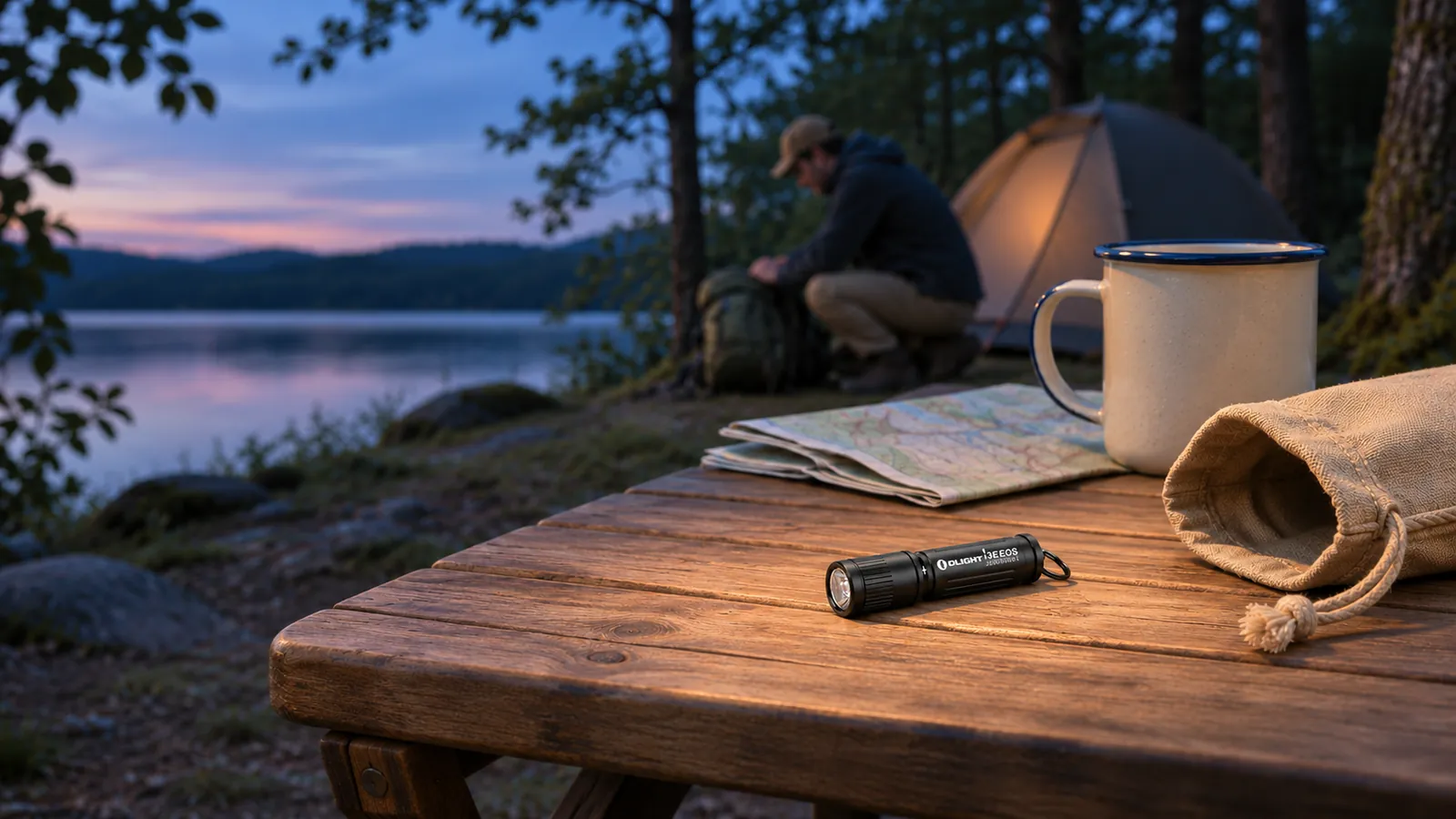
TL;DR: For a compact campsite finder, consider the AAA-powered i3E EOS. For a tiny rechargeable keychain arrangement, consider iUltra and its direct USB-C plug. For selectable Moonlight and adjustable clip-on placement, consider the base Oclip 2 Pro. Keep each published weight basis and the complete power kit separate when choosing.
📋 Table of Contents
- 1. Choose the campsite job before the weight limit
- 2. Read the under-100-g label with its stated basis
- 3. i3E EOS: a small AAA finder with a simple operating role
- 4. iUltra: a tiny rechargeable option with a direct-plug question
- 5. Oclip 2 Pro: a base configuration with low output and adjustable placement
- 6. The lowest useful setting deserves attention
- 7. A pocket light and a headlamp can solve different problems
- 8. Decide where the light belongs before bedtime
- 9. Count the power arrangement as part of the carried kit
- 10. Read output and duration under the correct conditions
- 11. Wet conditions do not remove charging and handling limits
- 12. Match the option to the role without a universal winner
- 13. Work through the evening before choosing the extra light
- 14. What is the best flashlight for camping?
- 15. How many lumens is a good flashlight for camping?
- 16. What is a good small flashlight for travel?
- 17. Frequently Asked Questions
- 18. Keep the pocket-light decision small and specific
Choose the campsite job before the weight limit
| Intended role | Option to investigate | Relevant documented feature | Important trade-off |
|---|---|---|---|
| A compact nearby finder | Standard black i3E EOS | AAA arrangement and twist-operated single output | No selectable low or Moonlight level |
| A tiny rechargeable keychain arrangement | Olive Green iUltra | Direct USB-C plug and included-battery mass | Suitable source and physical clearance are still required |
| Selectable low output and attached task placement | Base black Oclip 2 Pro | Moonlight setting, clip, and adjustable head | More equipment questions than the unit's net-weight figure alone answers |
A pocket light earns its place when it is available for a small task that would otherwise interrupt the evening. Finding a zipper, identifying a pouch, checking a label, and directing light at something beside the tent are specific jobs. They do not all require the same beam, operating level, or way of holding the light.
Start with the job that is not already covered. If a headlamp is available and comfortable for the intended activity, a compact pocket light may be an additional finder or a separate light that can be directed independently. If the headlamp is difficult to find after bedtime, the first improvement may be its storage location rather than another purchase.
The National Park Service includes illumination in its Ten Essentials guidance, recommends headlamps for hands-free use, and advises carrying extra batteries. That is a useful reminder to consider the complete outdoor lighting arrangement. The small light discussed here should have a defined place within the trip plan, not be expected to cover every possible activity by itself.
For the wider campsite arrangement, Olight's three-piece camping-lighting guide addresses a broader question. This guide concentrates on the compact light kept close at hand. Its value depends on access and task fit as much as the number printed beside its weight.
Read the under-100-g label with its stated basis
Published weight figures need a basis. A bare housing, a light with its battery, and a complete kit with a charging accessory are different things. Keep the source's wording attached to the number before comparing configurations. Otherwise, a small-looking difference may simply reflect different items being counted.
The table below uses the named configurations and manufacturer documentation. The manufacturer's i3E EOS manual explicitly includes the battery in its weight. The iUltra manual also states that its figure includes the battery. The Oclip 2 Series manual labels its figures as net weight and gives separate columns for the base light and Premium configuration.
| Exact option considered | Published mass | Stated basis used here | Power arrangement |
|---|---|---|---|
| Black i3E EOS | 19.4 g | Model manual: battery included | One approved AAA battery |
| Olive Green iUltra | 20 g | Model manual: including battery | Built-in rechargeable battery and direct USB-C plug |
| Black Oclip 2 Pro, base configuration | 75.5 g | Manual's net-weight entry for the base Pro | Internal rechargeable battery; charging equipment assessed separately |
The base Oclip 2 Pro entry should not be replaced with the Premium column merely because the family name is familiar. Read the column heading and the package being considered. A complete accessory arrangement can have a different mass from the light alone.
Keep the rest of the carried equipment visible as well. A spare cell, protective storage, a power source, and required charging equipment can all belong in the trip plan. The table identifies published unit figures. For a trip-level comparison, add the equipment that will actually be carried and keep that total separate from the unit figure.
i3E EOS: a small AAA finder with a simple operating role
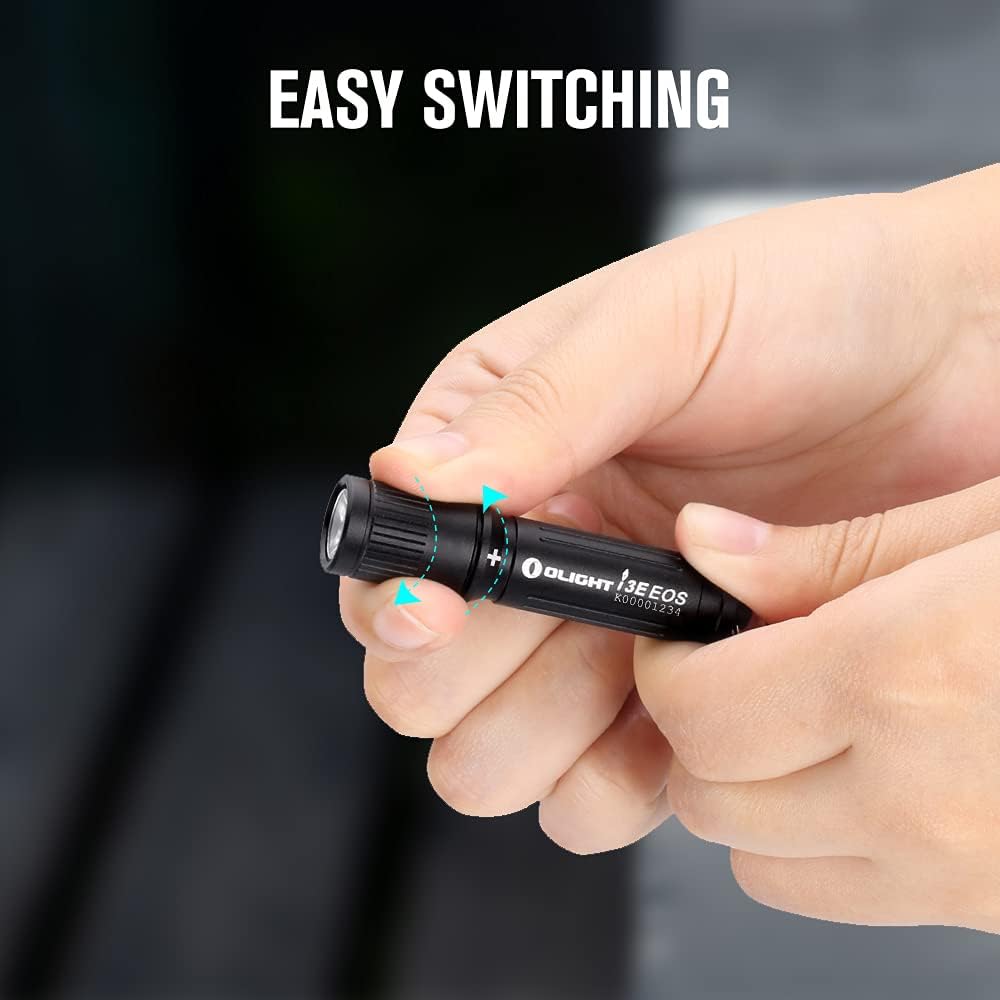
A zipper or pouch check is a more appropriate starting question than whether the smallest light can illuminate an entire campsite. Decide where the light will be stored and how the control will be reached. The official photograph helps show the grip and finger-access question; it cannot establish the same handling experience for every person.
The single-output arrangement also has a clear trade-off. If a selectable low or Moonlight level matters for a nearby task beside a tentmate, do not assume that a twist control is a brightness selector. Choose equipment with the operating levels that the task requires. Simple control and multiple levels are different features.
The manual identifies approved battery types rather than permitting every cell that appears to fit. Keep replacement requirements tied to the model, and follow its storage and installation instructions. A small spare is useful only when it belongs to the actual light and can be kept appropriately with the rest of the kit.
iUltra: a tiny rechargeable option with a direct-plug question
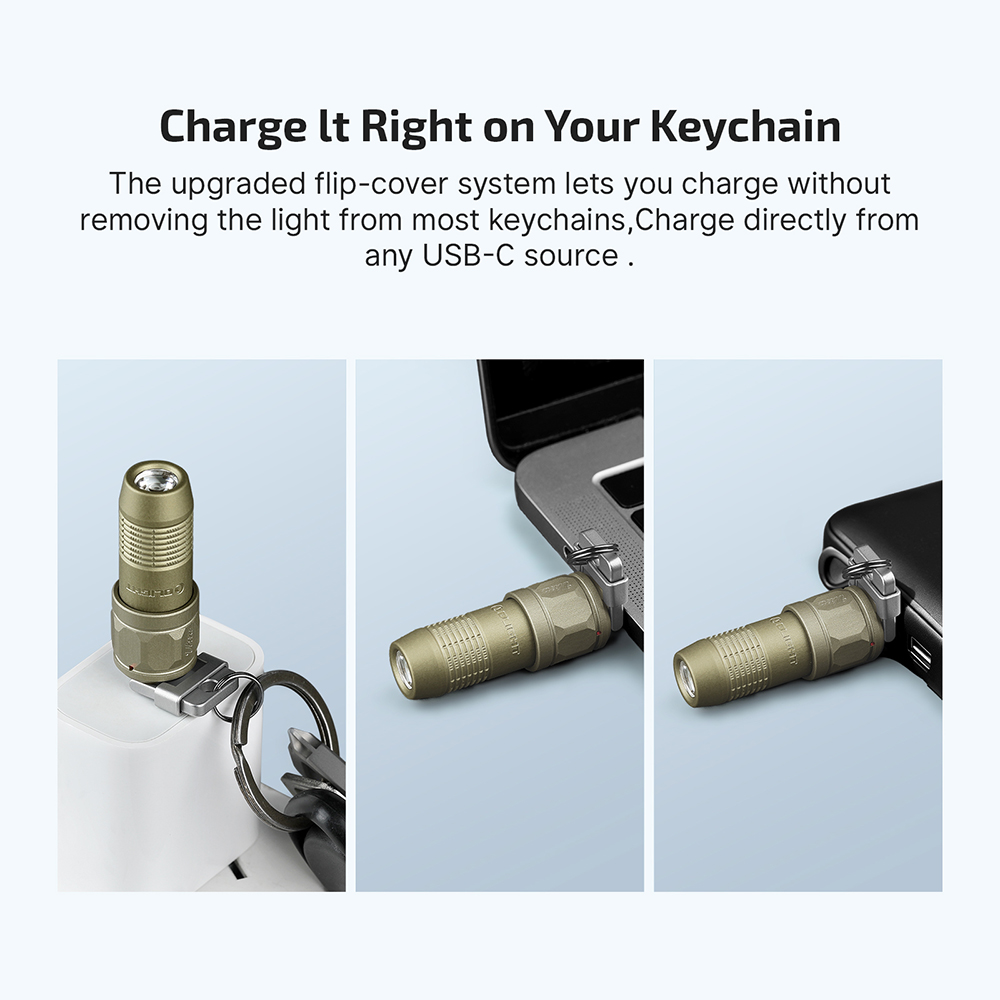
The direct-plug design can reduce the need for a separate charging cable for this light when the chosen source and arrangement are suitable. It does not supply electricity by itself. Identify the power source that will actually be available during the trip and check the product instructions before depending on it.
Physical clearance matters alongside the connector name. The body, attachment, and neighboring ports can affect how a direct-plug product fits a particular source. The official image shows example connections, not a promise that every device or port layout will accept the same arrangement. Check the actual combination rather than assuming that every USB-C opening provides the same usable space.
Learn the illustrated operating action before treating it like another familiar keychain light. The iUltra manual shows on and off through separation and reconnection. That is a different routine from assuming that every small cylindrical light uses the same twist control. Choose the arrangement that the intended user can identify and manage.
Like the other tiny single-output example, this is not a substitute for a documented selectable Moonlight mode. Consider the light for a specific nearby task, and keep the rest of the campsite lighting plan responsible for the activities it is meant to cover.
Oclip 2 Pro: a base configuration with low output and adjustable placement
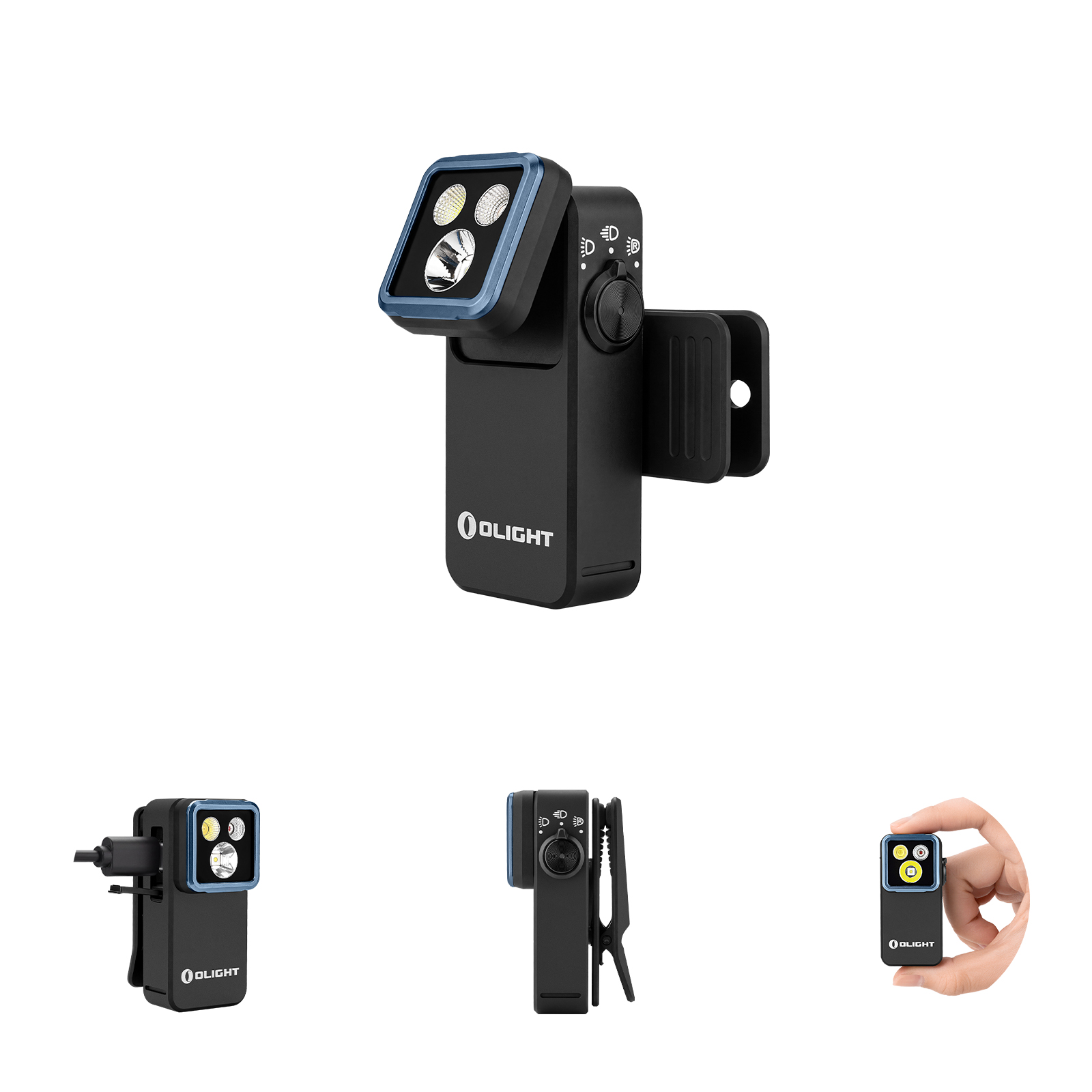
The useful difference is not simply a larger output number. An attached light may allow the beam to remain directed at a task while the hands are occupied. Assess the actual support and its documented limits. A clip is not a guarantee that every pocket edge, strap, or tent component is appropriate.
The mode table also shows why output should be read as a sequence. For the Pro's pure-flood Turbo mode, the manual lists 530, then 300, then 100 lumens, with corresponding stages of one, fifty-eight, and five minutes. The initial maximum should not be attached to the combined duration.
For a quiet close task, the existence of a selectable lower setting may matter more than the brief peak. Choose the documented mode that suits the view, and follow the instructions for selecting it. Do not use the maximum and the longest duration from different entries to describe one continuous camping session.
The lowest useful setting deserves attention
Inside or beside a tent, the task may involve a nearby zipper, a small item in a pouch, or printed information. Start by identifying what must be seen and where the light can be directed. A useful setting is one that makes that information available without making the entire decision about maximum output.
The two keychain examples and the clip-on example offer different choices here. The published single-output figures do not become dimmer modes because the lights are small. The Oclip 2 Pro's documented Moonlight setting provides an additional option, but its suitability still depends on the task, distance, beam direction, and surrounding surfaces.
Consider other people as part of the placement decision. Direct the beam at the information needed rather than toward another person's face. A lower selectable level can be a useful option for a close activity, while another task may need a different level or a different light. There is no reason to force every campsite action into the same mode.
If a low setting is essential to the intended routine, make it a selection requirement before purchasing. Do not discover the absence of that setting after choosing solely by mass. Conversely, if the role is a brief finder task and a single-output arrangement suits it, record that narrower role rather than rejecting or recommending the product on a universal rule.
A pocket light and a headlamp can solve different problems
A small pocket light can be directed without following head movement and can remain with a particular person or item. A head-worn arrangement keeps the hands available while the wearer directs the view. Decide which behavior the activity needs instead of treating one category as an automatic replacement for the other.
For example, identifying something inside a bag may be a short handheld task. Organizing several items while using both hands may favor an appropriate hands-free arrangement. These are practical distinctions about where light needs to remain.
An attached clip light is another placement option, but it should be evaluated on its own documented attachment conditions. A convenient clip location for one garment may not produce the needed beam direction for another task. The support, the head adjustment, and the user's movement all belong in the decision.
Keep the primary nighttime plan matched to the trip. The compact light's presence does not resolve every question about route finding, weather, shared equipment, or another household member's needs. Give it a clear job within the complete arrangement and identify which other equipment covers the remaining activities.
Decide where the light belongs before bedtime
Pick a location that the intended user can find and reach. A small light buried beneath a tightly packed bag can be less useful for an immediate task than one in a known pocket or accessible pouch. The right place depends on the actual tent arrangement, clothing, and equipment.
A pocket, a key attachment, and a clip are different carry arrangements. Check how the exact light can be removed or operated from the chosen location. The small control needs enough access for the person's fingers and the normal conditions of the trip. The official product image can identify the structure, while the instructions explain the intended operation.
For a clipped arrangement, examine the actual support and the permitted attachment. Do not assume that a product being described as a clip light establishes compatibility with every backpack strap or tent loop. Keep the light's own conditions attached to the decision and avoid treating an unfamiliar support as interchangeable with the illustrated one.
Before sleeping, decide who has the light and where it returns after use. If the only pocket light leaves with one person, someone else may no longer have access to it. This is a reason to consider the people and overlapping activities, rather than buying another similar item without a defined role.
Count the power arrangement as part of the carried kit
The unit's published mass is only one part of what travels. The AAA example needs an appropriate battery plan; the rechargeable examples need access to suitable charging equipment or stored power. Compare the complete arrangement that belongs to the trip, not just three numbers from a product table.
If an approved spare cell belongs in the plan, store and handle it according to the relevant instructions. A similar-looking cell should not be substituted on appearance alone. Keep the battery identity with the light so that a small, otherwise useful spare does not become an uncertain item in the bag.
For the direct-plug design, check the intended source and clearance. For a product with several documented charging methods, distinguish an available connection from equipment actually included in the package. The Oclip 2 Series manual identifies the magnetic charging cable as an optional accessory. A diagram showing a connection should not silently add that accessory to a purchase.
When comparing rechargeable flashlight options, keep the source of power as concrete as the light itself. A cable, a dock, and a power source are different items. Plan for what will be present during the trip rather than assuming that the presence of a USB connector settles the complete question.
Read output and duration under the correct conditions
A duration belongs to the model, mode, and conditions associated with it. A lower level lasting longer does not establish the duration of the highest level. A table describing successive stages should retain their order rather than being reduced to a maximum-output headline beside a combined time.
Battery arrangement is part of the statement as well. The i3E EOS documentation distinguishes the cells used for its published duration entries. That is a reason to preserve the stated condition when considering the information, not to transfer the longest entry to every battery that fits the general format.
For the iUltra, keep the published operating information attached to its own design and instructions. For the Oclip 2 Pro, choose the correct Pro column and white-light mode rather than borrowing a figure from another configuration or function in the same family table. Similar names and adjacent columns can describe different entries.
Choose the working level from the actual task, then consider the published duration and the rest of the power plan. An intermittent pattern of short uses cannot be converted into a guaranteed number of camping nights from a single rating. Keep the activity, setting, and equipment together when making the decision.
Wet conditions do not remove charging and handling limits
Read the exact product's environmental information together with its cautions. A rating is not a general instruction to ignore exposed connections, open parts, or the conditions described in the manual. The light's configuration during use and during charging matters.
The iUltra manual qualifies its IPX6 statement as applying to the main body and instructs the owner to keep the charging port clean and dry. Retain that qualification. A main-body statement should not become a claim that every exposed charging arrangement is suitable in wet conditions.
The Oclip 2 manual gives its own precautions, including keeping the charging-port cover closed when the port is not in use. Follow the specific product instructions rather than transferring a procedure or assumption from another light. Keep the equipment prepared in a way that respects the documented conditions.
A small edc flashlight can be a convenient item to carry, but its size does not define its environmental limits. Look up the exact model and configuration before the trip. If the intended conditions are not covered clearly, resolve that question rather than treating compact construction as proof of unrestricted outdoor use.
Match the option to the role without a universal winner
The useful choice is the option that addresses the intended campsite task with an understandable control and power arrangement. The opening role table connects the documented designs to questions a camper can answer. They do not require all three products to be purchased or every role to be covered by a new item.
Use the table to narrow the question, then read the matching product information. A camper who needs a selectable low mode should investigate that requirement directly. A camper considering the simplest compact finder may care more about access and the exact battery arrangement. A desired attachment location may make the clip and adjustment the deciding features.
If the role remains unclear, return to the campsite activity rather than selecting a winner from the mass column. A small published difference in unit weight does not decide whether the person can reach the control, prepare the power arrangement, or direct the beam at the needed information.
Work through the evening before choosing the extra light
Imagine arriving while there is still enough daylight to organize the tent. Put the primary lighting equipment where it will be used, then look at the remaining pocket-light job. If the missing task is identifying a pouch without unpacking the whole bag, a small finder may address it. If the missing task is holding light on the tent interior while both hands arrange bedding, the important requirement is an appropriate hands-free arrangement. Those are different purchases even when both fit a weight cutoff.
Now consider a short task after everyone has settled. A person needs to find a zipper and retrieve an item without searching through shared equipment. Decide whether the light can be located from the sleeping position, whether the control is reachable, and whether the available output suits the nearby view. If a selectable very low setting is important, choose that documented capability directly. A lighter single-output product does not gain the missing setting through careful packing.
For a shared tent, also decide what happens when the light moves. If one person takes the only accessible light outside, another person still needs a way to find the equipment reserved for their own activity. This does not require identical products for everyone. It requires an arrangement that remains understandable when people are in different places. Assign the compact finder a specific place and return it there so that another purchase is not being used to compensate for uncertain storage.
The following morning introduces a different question: what must return to the bag? Include the light, the power equipment that actually traveled, and any separate parts belonging to its operating arrangement. A direct-plug design should be managed according to its instructions, not left in an assumed ready state merely because it charged earlier. For a replaceable-cell design, keep the approved spare plan intact rather than mixing unidentified cells with unrelated equipment. Review the complete carried arrangement before treating the unit figure as the trip total.
For a second outing, use the role decision to avoid accumulating several lights that all solve the same small problem. If the existing finder is accessible and its operating level suits the task, the unresolved need may be shared-area lighting or an appropriate headlamp instead. If the unresolved need is a selectable low setting, compare that feature and its operation rather than buying another single-output keychain design because it is small. A useful upgrade changes a capability that the trip actually needs.
These examples give the three published configurations a practical place in the decision. The small AAA arrangement, the tiny direct-plug rechargeable arrangement, and the adjustable clip-on arrangement address different equipment questions. Choose the role first, confirm the exact documentation, and account for the rest of the carried power equipment. That sequence makes the weight limit useful without allowing it to decide controls, placement, or the lighting plan for the whole campsite.
What is the best flashlight for camping?
Choose the light that fits the actual activity and the complete trip plan. For a compact campsite pocket role, consider access, the lowest available setting, controls, power equipment, and exact published weight basis. A small finder, a hands-free light, and shared-area lighting can solve different problems. Keep the pocket light's job specific instead of assuming one small product replaces every other lighting need.
How many lumens is a good flashlight for camping?
There is no single useful lumen threshold for every camping task. A nearby zipper and a more distant view require different information and beam placement. Choose a documented working level that suits the task, then read its associated duration and conditions. A single-output keychain light and a model with selectable Moonlight are different choices; do not attach an unavailable mode to the smaller product.
What is a good small flashlight for travel?
A useful small travel light has a defined role, understandable controls, and a power arrangement that can be supported during the trip. Check the complete configuration and weight basis, including the battery where specified. For a direct-plug rechargeable model, consider the actual source and clearance; for an approved replaceable-cell design, keep the correct battery requirements with the plan.
Frequently Asked Questions
Keep the pocket-light decision small and specific
The best small flashlight for camping is a practical choice within a larger plan. Start with the activity, confirm the exact unit and published weight basis, and investigate the controls, operating levels, and power equipment that belong to it. A cutoff can help organize the options without becoming a substitute for those decisions.
The three named configurations show why lighter pocket equipment can still involve different trade-offs. Keep the useful role visible, avoid comparing unlike package figures, and let the complete camping arrangement cover the activities that a small finder or clipped task light is not meant to handle alone.
Changelog
- November 19, 2026: Product information and buying guidance reviewed.




