



TL;DR: Judge an Olight flashlight by the job, the exact model's documented behavior, the complete power arrangement, and the support terms that apply to the purchase. A useful evaluation connects those details to ordinary tasks. Keep published specifications, independent measurements, and individual experiences clearly identified rather than treating them as interchangeable proof.
📋 Table of Contents
- 1. Start with a job that a flashlight can actually solve
- 2. Build a small evidence packet before comparing claims
- 3. Read output and runtime as one complete statement
- 4. Separate a specification from a measured result
- 5. Baton 4 Pro: evaluate a compact handheld arrangement
- 6. Check the charging arrangement beyond the connector name
- 7. Perun 3: evaluate hands-free placement as a separate benefit
- 8. Evaluate the beam where the information needs to appear
- 9. Durability requires the conditions beside the rating
- 10. Read support terms separately from a brand reputation
- 11. Work through two ordinary household decisions
- 12. Is Olight a Chinese brand?
- 13. Do police officers use Olight?
- 14. Why does Olight get so much hate?
- 15. Frequently Asked Questions
- 16. Resolve a document mismatch before reducing it to a score
- 17. Make the decision specific enough to explain
Start with a job that a flashlight can actually solve
For a household buyer, a good brand is one that offers a suitable product with understandable operating information and an ownership arrangement the buyer can manage. That judgment becomes useful when attached to a task. Checking a water shutoff, walking a familiar path, and reading a label inside a cabinet require different ways of directing light. A brand name cannot decide those details on its own.
Write the task in one sentence before opening another comparison. Include where the light needs to reach, whether a hand must remain free, and how the light will return to a ready state. “See the valve label while holding a notebook” is a more useful starting point than “buy the brightest light.” It points toward beam placement, comfortable working output, control access, and storage.
Next, separate requirements from preferences. The ability to direct light while using both hands may be essential. A particular body finish may simply be pleasant to have. A buyer who separates the two can recognize a suitable model without asking every product in a brand's catalog to behave identically. This also makes a negative review easier to interpret: the reviewer may have needed a different arrangement.
Value includes what the purchase requires afterward. Olight's guide to price and trade-offs by product line provides useful background for that part of the decision. Keep the actual package, power requirements, and task together. A lower item price is less informative if it leaves the buyer without the equipment needed for the intended routine.
Build a small evidence packet before comparing claims
Keep four things together: the exact product page, the matching manual, the package description, and the written purchase terms. Record the complete model and configuration beside them. A shared family name is not enough when two versions use different controls, batteries, or output tables. The evidence packet should describe the product that would actually arrive.
Each document answers a different question. A product page introduces the design and available configurations. The manual explains operation and cautions. The package description identifies supplied equipment. The purchase terms address the transaction and support. If one document leaves a practical question open, consult the document responsible for that question instead of asking a photograph to establish an electrical requirement or a warranty to establish runtime.
| Question | Useful evidence | Decision it can support |
|---|---|---|
| Will the light fit the task? | Exact dimensions, beam information, controls, and configuration | Whether to investigate the model further |
| How does an output claim behave over time? | Matching mode table and any clearly documented measurements | Which operating level deserves attention |
| What needs to be charged or replaced? | Manual, compatible equipment, and package list | A workable power routine |
| What happens if the purchase has a problem? | Applicable written return and warranty terms | Whether the support arrangement is suitable |
Save the version being considered. A screenshot of a headline without the selected configuration can become confusing later. Include the date, the visible option, and the complete relevant table when keeping a record. This is ordinary purchase documentation, not an attempt to turn a shopping folder into a laboratory report.
Missing information is a reason to ask a precise question. “Which cable and supply does this configuration require?” is easier to answer than “Is the charging good?” The goal is a decision that survives contact with the actual package, not a collection of favorable phrases.
Read output and runtime as one complete statement
A peak-output number and a runtime number do not automatically describe the same continuous operating condition. Find the complete entry for the selected mode. If the manual gives successive outputs and times, retain that sequence. Otherwise, a buyer may attach the longest duration to the highest output and expect behavior the table does not describe.
The standard cool-white Baton 4 Pro manual illustrates the difference. Its Turbo entry lists 1,600 lumens followed by 600 lumens, with stages of two minutes and 198 minutes. Read those figures together. They do not mean that the initial maximum continues for the combined duration. The useful question for a longer task is which documented working level suits the job.
A homeowner reading labels does not necessarily benefit from using the largest available number. Nearby reflective surfaces, the size of the text, and the direction of the beam all affect the task. Start by identifying the required view. Then examine the available operating levels and the corresponding published duration, keeping the listed conditions attached to the information.
An independent runtime graph can add information when its model, sample, mode, battery, and conditions are clear. A graph with an unidentified version or an unclear starting mode cannot resolve a precise comparison. Olight's guide to reading runtime graphs and beam shots explains why the surrounding method matters. The photograph or curve should answer a defined question rather than serve as a general badge of quality.
Separate a specification from a measured result
An official specification identifies what the manufacturer publishes for a product. A measured result describes what a particular procedure found for a particular sample. An owner's account describes that person's experience. All three can help a buyer, but each needs its own label and limits. Moving a number from one category into another changes what the evidence means.
When reading a measurement report, look for enough detail to recognize the exact product and procedure. A clearly named model, the operating level, the battery arrangement, the observation time, and relevant conditions make the result easier to interpret. Where a sample was supplied or a commercial relationship exists, that disclosure belongs with the source assessment. Disclosure does not substitute for a method, and a detailed method does not erase a relationship.
A single observation should stay attached to its sample. It can reveal a behavior worth investigating, such as an output change or a particular control action. It cannot, by itself, establish how every unit will behave throughout its life. Likewise, an attractive beam photograph cannot establish the measured output of every light shown beside it.
Compare like with like before comparing the numbers. Two reports may use different versions, levels, batteries, or observation periods. If those differences remain unresolved, keep the results separate and ask what each one actually supports. A careful buying decision can acknowledge useful information without forcing unlike records into a ranking.
Baton 4 Pro: evaluate a compact handheld arrangement
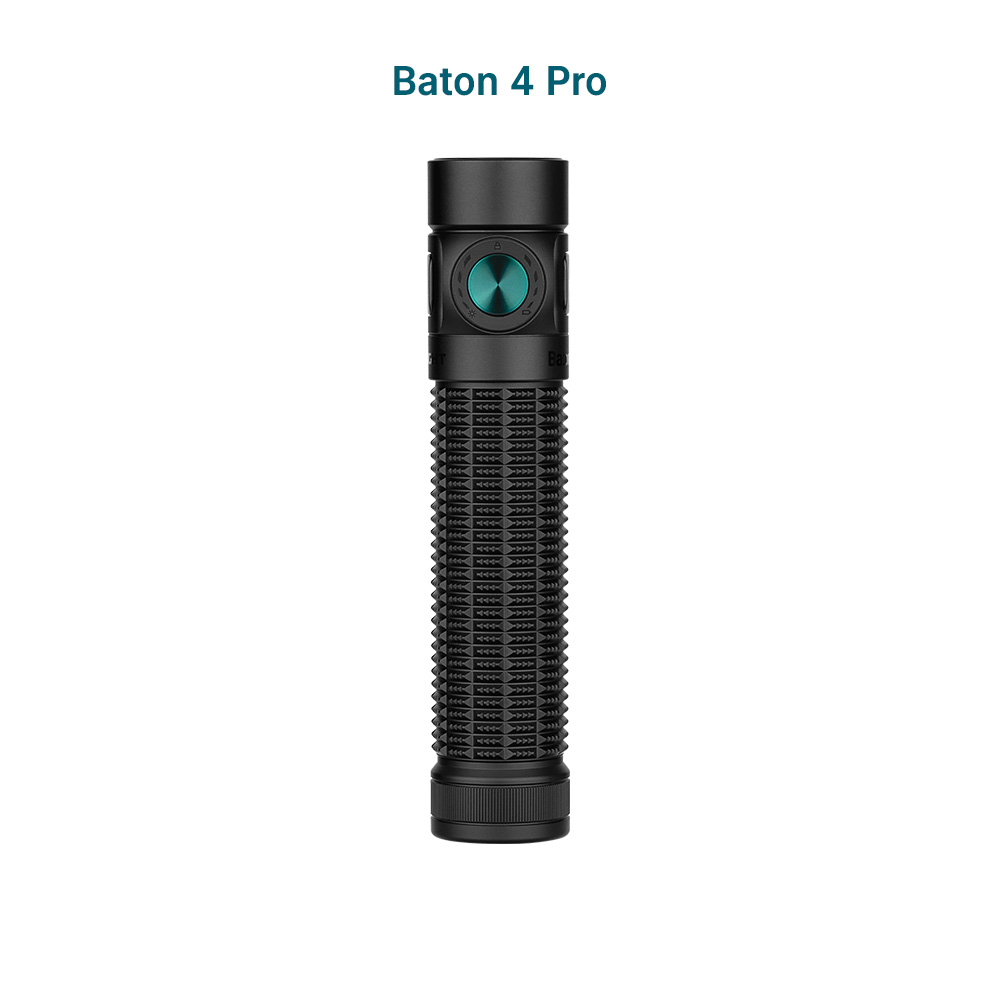
The standard model measures 111 millimeters long and 23 millimeters in diameter. Those dimensions help a buyer compare it with a pocket organizer or shelf space. They do not establish comfort for every person. Consider the other items carried in the same place, how the light would be removed, and whether the preferred control is accessible when it is needed.
Separate controls are useful only when their actions make sense to the owner. Read the matching operating instructions instead of assuming that a side switch and a tail button perform the same action. Decide which action belongs in the routine, including how the light is turned off and prepared for transport. Familiarity with another model is a starting point for a question, not a substitute for the instructions.
For an edc flashlight, daily convenience often comes from a repeatable routine: a known place to carry it, a suitable working level, and a place to recharge it. The documented design gives the buyer specific things to assess. Whether those things suit the individual is more useful than an unsupported claim that one control layout is best for everyone.
Check the charging arrangement beyond the connector name
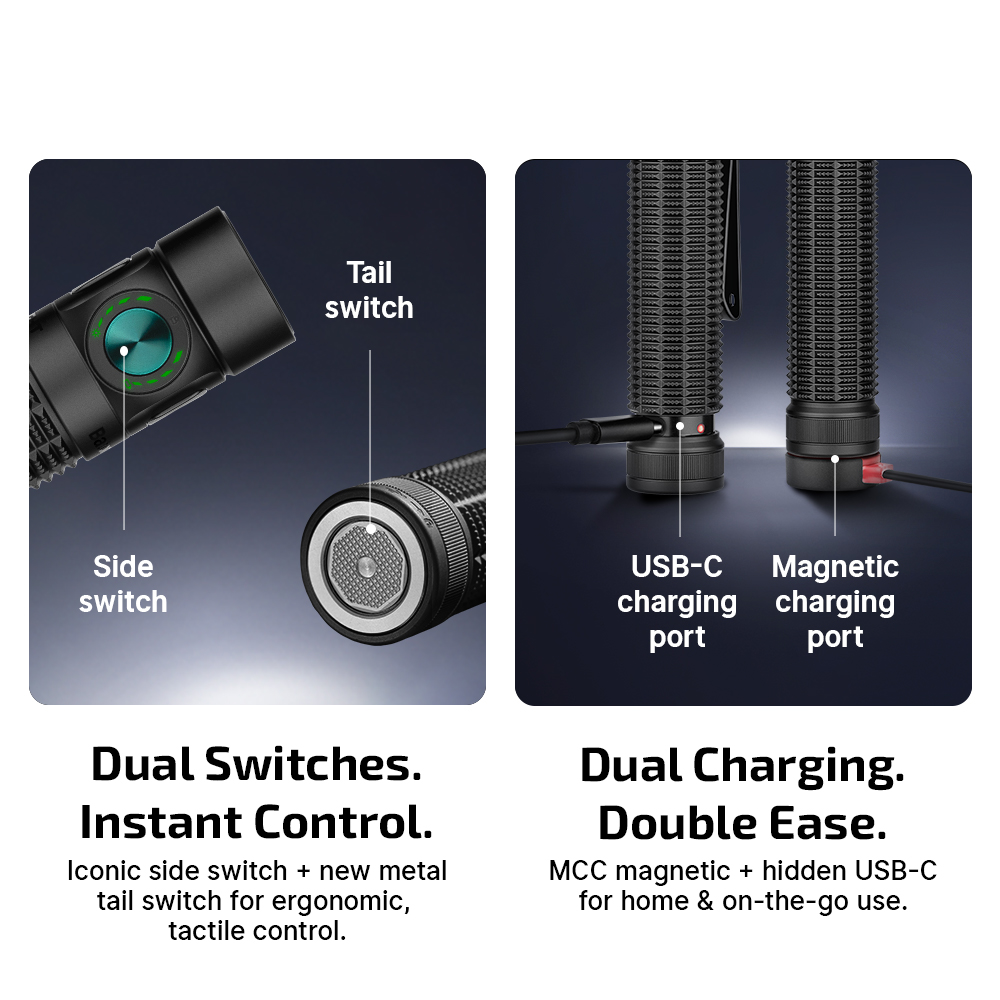
Official Baton 4 Pro detail: two charging connections and separate controls answer different ownership questions.
The Baton 4 Pro detail image shows the two charging connections and separates them from the controls. Its covered USB-C port and magnetic charging connection create different ways to organize the same ownership task. A buyer can consider leaving compatible magnetic equipment at a regular home location while checking which suitable equipment would travel with the light.
The connector name does not settle the complete charging arrangement. Confirm the specified cable, appropriate power supply, and supplied package before relying on equipment already in a drawer. A cable being physically present in the home does not establish that it is the correct choice for every product. Follow the exact instructions rather than treating similar-looking connections as universal permission.
Include the charging location in the decision. A desk that is easy to reach may support a consistent routine better than an inconvenient storage place. A travel bag needs enough space for the required equipment. These are practical planning questions; they do not require a claim that one charging method is faster or more reliable than every alternative.
Battery compatibility deserves the same precision. The standard Baton 4 Pro uses a rechargeable 18650 format, but that label alone does not approve every cell bearing the designation. Keep replacement requirements tied to the exact model. A rechargeable flashlight is a light, battery, and charging arrangement that the owner must be able to maintain, not merely a product with a familiar socket.
Perun 3: evaluate hands-free placement as a separate benefit

Consider the direction in which the task requires light. Reading a label while writing a note may favor a head-worn arrangement. Looking beneath a shelf from an awkward angle may require deliberate placement instead. Neither use can be decided from maximum output alone. The form of the light changes how the owner directs it, carries it, and keeps it available.
The product page's maximum-output claim and its Moonlight endurance claim describe different operating conditions. The page lists up to 3,000 lumens and a 20-day Moonlight runtime. Do not combine them into a claim that maximum output lasts for days. The working mode, its documented behavior, and the task remain the relevant comparison.
A product photograph can establish that a headband is shown and reveal the visible configuration. It does not establish fit on every head or a personalized comfort result. Compare the complete package and consider the intended wearing arrangement. The useful benefit is freeing the hands under appropriate conditions; it is not an automatic improvement for a task that needs light pointed somewhere other than the direction of the user's head.
Evaluate the beam where the information needs to appear
A beam is useful when it puts readable information in the right place. For an ordinary home inspection, identify the actual target before choosing a beam characteristic. A nearby label, the edge of a step, and a point farther along a path are different targets. Describe the distance and field of view in practical terms rather than using a single brightness number as a substitute.
Think about surrounding surfaces as well. A bright central area may help with one task while reflections from a nearby surface make another task less comfortable. A beam image can help explain the general distribution when the photograph's setup is clear. Its appearance also depends on how the image was made, so avoid treating visual impression as a direct measurement of every aspect of performance.
Use the lower working levels as part of the assessment. A brief distant check and a longer close task may reasonably call for different settings. The ability to choose an appropriate level is valuable when the owner understands the controls and the mode information. The decision should remain attached to the task rather than turning maximum output into a default setting.
At home, start with a simple plan for the view that matters: where the light will be, where the target will be, and what the user needs to read or recognize. This is a placement decision, not a destructive evaluation. Keep the light directed away from eyes and follow the model's operating instructions when checking whether the arrangement is suitable.
Durability requires the conditions beside the rating
Read any water-resistance or impact rating together with its stated conditions. A rating is not a promise that every accident, environment, or handling choice is acceptable. Find the matching model documentation and identify what the published rating actually addresses before treating it as support for a household or outdoor task.
A cosmetic mark, a failed function, and a support claim are different observations. If an owner reports a problem, useful details include the exact model, what happened, and which condition changed afterward. A photograph of a scratched surface does not establish an electrical failure. Conversely, a light that still turns on may need attention if another part of its normal operation has changed.
Avoid creating damage to investigate a review. Ordinary purchase evaluation should stay within the intended use, the instructions, and any applicable return conditions. Deliberately dropping, flooding, heating, or altering a light does not provide a sensible route to deciding whether it belongs in a household routine.
Instead, identify the environment before choosing the product. An occasional walk in ordinary weather and work around corrosive materials are different requirements. Use the published limits to decide which questions to ask, and seek clarification when the environment falls outside them. A confident decision comes from matching requirements to documented conditions, not from treating a rating as unlimited protection.
Read support terms separately from a brand reputation
Use the current U.S. warranty and return information for the purchase being considered. Olight's published terms distinguish applicable product and component coverage from exclusions and purchase conditions. Do not assume that a battery, accessory, or third-party transaction has the same arrangement as every other item carrying the brand name.
Keep the seller, purchase record, exact product, and stated coverage together. Check who handles a request, what information is needed, and which written terms apply. Warranty coverage and the ability to return an unwanted purchase answer different questions; one should not be used as shorthand for the other.
For the buyer, documentation reduces avoidable confusion. Save the order confirmation and the model information in a place that can be found later. If a component has a separate identity, include it in the record. This is especially useful when several lights or cables look similar in the same household. A clear record makes it easier to describe the item without guessing.
Evaluate support in terms of the help that the task may require. A light needed at a particular time may warrant a separate backup plan, regardless of the written coverage. A warranty does not create immediate availability during an interruption. Keeping those decisions separate lets the buyer assess both the purchase terms and the practical consequence of having the light unavailable.
Work through two ordinary household decisions
Suppose one person wants a small light for a familiar walk and occasional checks around the home. The practical comparison begins with carry space, an understandable control routine, and a charging location. The compact handheld example is worth investigating when those requirements fit. The next step is to examine the exact package and the working levels, not to infer suitability from a brand slogan.
Now suppose another person needs to read equipment labels while recording information. Both hands may already be occupied. A head-worn arrangement can address that placement problem more directly than adding maximum output to a handheld light. The buyer should still consider where the beam points as the head moves, whether the complete package is appropriate, and what level suits the nearby target.
| Household requirement | Starting point for evaluation | Question that could change the choice |
|---|---|---|
| Carry a small handheld on a familiar route | Exact body size, controls, working level, charging routine | Does the complete arrangement fit normal carry and storage? |
| Read labels while recording information | Headband configuration, beam placement, operating level | Does the light stay directed at the information needed? |
| Keep a spare ready at home | Storage instructions, compatible equipment, access | Can the household identify and prepare it without guessing? |
Use these illustrative decisions to distinguish the arrangements available for different needs. A person who values pocket carry and a person who needs both hands free should not be pushed toward the same answer merely because both ask whether the brand is good.
The final choice should survive a change in the sales headline. If the appeal disappears when a maximum-output figure or promotional phrase is removed, return to the task. A suitable light still needs a clear role, understandable behavior, a manageable power arrangement, and acceptable written terms.
Is Olight a Chinese brand?
The Baton 4 Pro manual identifies Dongguan Olight E-Commerce Technology Co., Ltd., gives an address in Guangdong, China, and carries a Made in China marking. Those are concrete statements about the named manufacturer and the documented product. For a U.S. purchase, also identify the seller and applicable support terms. A country label alone does not establish whether the exact model fits a task or how an individual unit will perform.
Do police officers use Olight?
An individual's equipment choice and an organization's approved equipment are different claims. A brand name, uniform in a photograph, or undated anecdote cannot establish a universal current purchasing policy. To assess a specific adoption claim, look for the named organization, exact product, date, and original record. For household use, choose the light from documented task requirements rather than treating an occupation as a product recommendation.
Why does Olight get so much hate?
A critical post can raise a useful question without measuring the views of all owners. Identify what the criticism actually concerns: a particular control, charging arrangement, purchase, or reported failure. Then check the exact model, the event described, and the supporting record. Repeated discussion does not by itself establish how often an outcome occurs. Judge whether the specific issue affects the intended task instead of turning a comment thread into a brand-wide reliability statistic.
Frequently Asked Questions
Resolve a document mismatch before reducing it to a score
If a short listing and a complete manual appear to disagree, first establish that they describe the same configuration. Check the selected option, the complete model name, the power arrangement, and the revision of the instructions. A screenshot retained from an earlier choice can remain in a shopping folder after the selected product changes. Resolving that identity problem is more useful than averaging two numbers that may belong to different products.
Next, identify the kind of statement being compared. A headline may name a maximum, while a table describes successive stages or several separate modes. A photograph may show an optional arrangement while the package list describes what is supplied. A support summary may introduce coverage while the complete terms explain purchase conditions and exclusions. Preserve both pieces of information until their relationship is clear. Do not silently treat the shorter description as the complete operating record.
A precise request can resolve the issue without asking a seller to defend an entire brand. Ask which configuration the figures describe, where the matching instructions can be found, whether the duration belongs to one level or successive stages, and which equipment is included in the particular package. If the question concerns charging or a replacement, name the exact light and the component being considered. Those details give the other party something concrete to identify.
Keep the response beside the source that raised the question. An answer that points to the correct table or confirms a package item is different from a general statement that the product is excellent. Read the answer against the original task: does it establish the setting, component, or condition needed for this purchase? When it does not, the missing detail remains relevant even if the product has appealing features elsewhere.
An unresolved question is useful decision information. It may mean that another documented configuration is easier to assess, that the purchase should wait for clarification, or that a different form of light fits the task better. It does not require a brand-wide verdict. The important result is a purchase that can be explained from identifiable information rather than a score built from incompatible summaries.
Make the decision specific enough to explain
A useful answer to “Is Olight a good brand?” names the product, the job, and the evidence that connects them. The compact handheld and head-worn examples illustrate why the right choice changes with carry requirements, hand use, beam placement, and charging routine. Those concrete differences give a buyer something to assess beyond an overall brand impression.
Before paying, explain the choice in ordinary language: what the light will do, which setting and placement make sense, what equipment belongs with it, and which written terms apply. If that explanation depends on an unidentified test, an unclear version, or an assumption about support, resolve the question first. A documented fit is a stronger basis for ownership than a ranking that leaves the actual task unanswered.
Changelog
- November 19, 2026: Product information and buying guidance reviewed.




