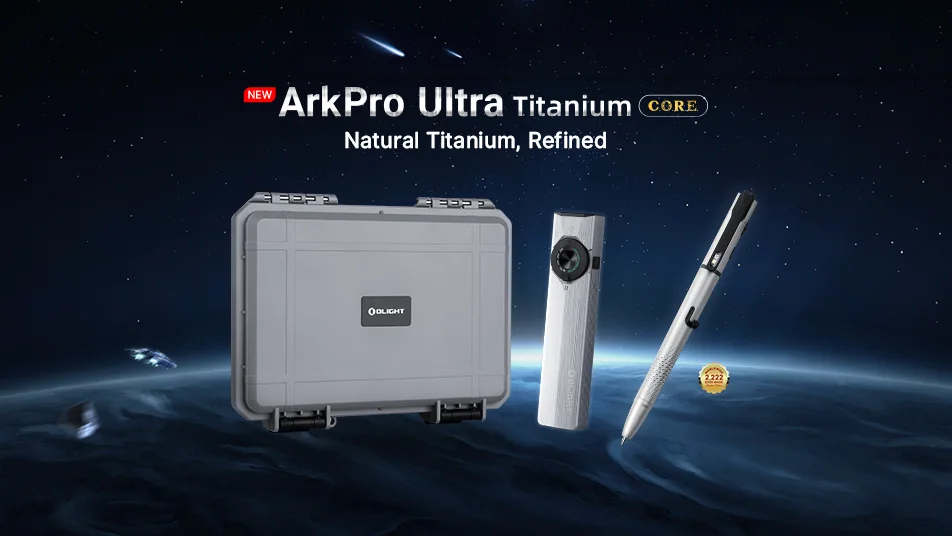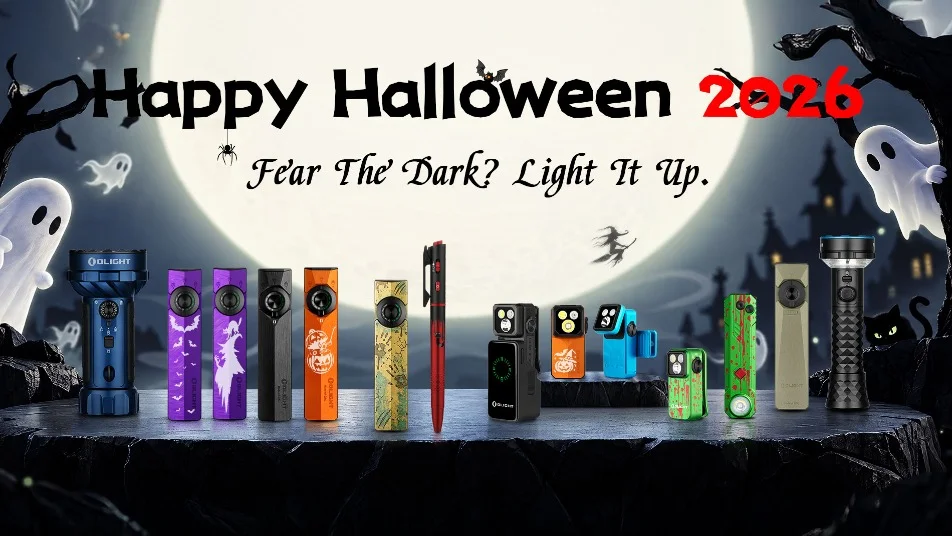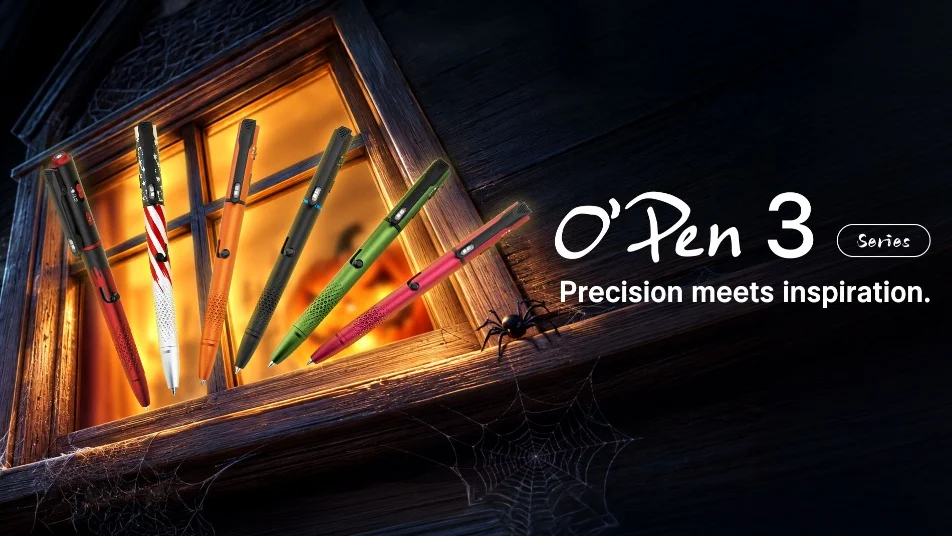
Olight makes the lights recommended here. Olight specs and regular prices come from its US product pages and user manuals as of September 2026. The reach estimates, charge budgets, charging times and costs below are calculations from those published numbers, not measurements. Distances are in meters (1 m = 3.28 ft).
⚡ TL;DR
The best camping flashlight works as one piece of a three-piece campsite lighting setup: a headlamp on every camper, one shared camp light for the table and tent, and a pocket flashlight for reach. From Olight's lineup, that means a Perun 3 headlamp ($89.99), a Sphere Ambient Light ($17.99) and a Baton 4 flashlight ($54.99).
Most camp lighting problems come from asking one light to do every job. A single lantern leaves the path to the vault toilet dark. A headlamp on high blinds whoever sits across the table. A phone light drains the battery you need for maps. This guide gives each camp task to one of three lights and shows the math: how far each flashlight mode reaches, what four campers use in two nights, and how long the kit takes to recharge.
This table lists each piece of a camping flashlight setup, the minimum spec to look for, and the Olight pick at its regular price in September 2026.
| Piece | Job at camp | Recommended type | Key spec minimum | Olight pick (regular price) |
|---|---|---|---|---|
| Head, one per camper | Setup, cooking, night trips | Rechargeable headlamp with red mode | 100+ lm mode lasting 10+ h, red light, lockout | Perun 3: 3,000 lm, Med 120 lm for 25 h, red 15 lm for 70 h, IP68, 150 g (5.29 oz) ($89.99) |
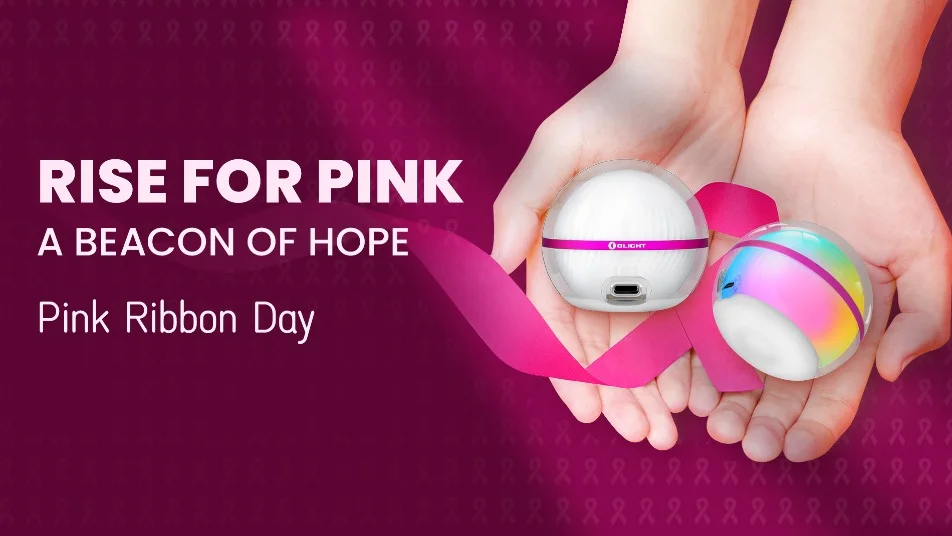
| Camp light, one per tent | Table glow, tent light, site marker | 360° ambient light, warm white plus red | 1 lm mode, warm white, magnet or hook | Sphere Ambient Light (Sphere C): 75 lm, 2,800 K, red 0.5 lm for 25 h, IP56, 93 g (3.28 oz) ($17.99) |
| Cook light, optional add-on | Aimed light on stove and prep board | Clip light with tilting flood head | 100 lm flood for 3+ h, clip | Oclip 2 Pro: 530 lm flood, 100 lm for 3 h 45 min, 115° tilt, IP66, 75.5 g (2.66 oz) ($54.99) |
| Hand, one per party | Reach, search, handoff to kids | Pocket flashlight with moon mode and lockout | 150 m+ beam, sub-1 lm mode, lockout | Baton 4: 1,300 lm, 170 m (557 ft), Moon 0.5 lm, IPX8, 52.5 g (1.85 oz) ($54.99) |
📋 Table of Contents
- 1. The Three-Piece Camping Lighting Setup, and Why One Big Light Fails
- 2. Campsite Lighting by Task: Arrival, Setup, Cooking, Tent, Night Trips and Search
- 3. Do I Need a Lantern or a Flashlight for Camping?
- 4. How Many Lumens Do I Need for Camping?
- 5. How Far Does a Camping Flashlight Reach on Each Mode?
- 6. What Color Light Is Best at a Campsite?
- 7. Four Campers, Two Nights: A Charge Budget for Camping Lights
- 8. Storage, Hanging and Rain: Where Each Light Lives at Camp
- 9. Campsite Light Etiquette and Dark Skies
- 10. The Olight Picks, and Where Each One Falls Short
- 11. Your Camping Lighting Action List
- 12. FAQ
The Three-Piece Camping Lighting Setup, and Why One Big Light Fails
Good camping lighting splits the work three ways. A headlamp puts light wherever you look and keeps both hands free. A camp light gives the table and tent a soft glow so nobody has to aim at anyone. A pocket flashlight (a torch, in Australian and British English) throws a beam past the edge of camp and can be handed to someone else. Each piece covers a gap the other two leave.
The National Park Service's Ten Essentials list lists flashlights and headlamps for lighting and favors the headlamp: "Headlamps are the recommended light source because they are hands-free. Be sure to pack extra batteries." A flashlight still earns its place at camp for three reasons a headlamp can't match. You can point it without turning your head at the person you are talking to. You can hand it to a child for a restroom walk with an adult alongside. And the Baton 4's rated 170 m beam outreaches even the Perun 3's 160 m.
To compare more options, Olight groups its camping flashlights on its outdoor page and its LED headlamps on a separate page. For a side-by-side of ten models from six brands, see our best headlamps comparison, which also picks the Perun 3 overall.
Campsite Lighting by Task: Arrival, Setup, Cooking, Tent, Night Trips and Search
Assign each camp task one lead light and one backup, and start every task on the lowest mode that works. Arrival and setup lean on headlamps. Cooking wants an aimed flood. The tent wants a dim, warm glow. Night trips want red inside the tent and low white outside. Search is the one job for the flashlight's full beam, in short bursts.
Arrival timing matters most. The National Weather Service's twilight definitions say that during nautical twilight, when the sun is 6 to 12 degrees below the horizon, "detailed outdoor activities are likely curtailed without artificial illumination." Pitch the tent before civil twilight ends if you can. If you can't, the headlamps do the staking while the Sphere sits on the table as a landmark.
This framework assigns each camp task to one piece of the setup, with a starting mode from Olight's ratings.
| Camp task | Lead piece and starting mode | Support piece | Mistake to avoid |
|---|---|---|---|
| Arrival after dark | Headlamp Med (Perun 3, 120 lm) | Flashlight High to find the site post and tent pad | Unloading by headlights aimed at the next site |
| Pitching the tent | Headlamp Low (30 lm) at arm's length | Camp light on the table as a landmark | Using Turbo, then losing night vision for the stakes |
| Cooking and dishes | Cook light Medium (Oclip 2 Pro, 100 lm) aimed at the stove | Headlamp Low for reading labels | Headlamps aimed across the table into faces |
| Evening at the table | Camp light (Sphere, 75 lm white) | Headlamps off | Leaving every headlamp on while you talk |
| Inside the tent | Camp light red Low (0.5 lm) or white Low (1 lm) | Headlamp Moon (5 lm) for reading | Hot lights stuffed into fabric pockets |
| 2 a.m. restroom trip | Headlamp red Low (15 lm) past sleeping tents | Flashlight Med (60 lm) for kids or unfamiliar paths | Switching white on inside a shared tent |
| Searching for a dropped item or eyeshine | Flashlight High (600 lm) in short bursts | Headlamp Low to keep your footing | Sweeping a beam across other campsites |
The pattern is simple: headlamps work close, the camp light works in the middle, and the flashlight works far. When a task needs more light than its lead piece gives, hand it to the next piece out rather than turning the first one up.
Do I Need a Lantern or a Flashlight for Camping?
You need both, because they solve different problems. A lantern or ambient light lights people and the table, so nobody has to point anything at a face. A flashlight lights things far away, such as the trail to the restroom or a tent stake you dropped. A headlamp then handles hands-busy work. Skip the lantern only when you backpack alone and weight rules every choice.
Each piece has one job the others can't do. The lantern spreads light in every direction, so a 75-lumen Sphere reads as a glow, not glare, and it marks where camp is from the path. The flashlight concentrates light into a beam, so the Baton 4 reaches a rated 170 m, far beyond anything a lantern can show. The headlamp follows your eyes, which neither of the others can.
Use a battery-powered lantern in and near the tent. The CDC's power outage safety page warns: "Never use a charcoal grill, hibachi, lantern, or portable camping stove inside a home, tent, or camper." For price tiers of bigger battery lanterns, see our guide to the best lantern for camping.
If you already own a tactical light, it can serve as the hand piece if it has a low mode and a lockout; our best tactical flashlight for camping guide picks the Warrior 3S for that role. The Baton 4 gets the pick here because the flashlight is the third piece of a set, not the main light, so pocket size matters more than throw.
How Many Lumens Do I Need for Camping?
For camping, size lumens by piece and by distance. The camp light needs only 0.5 to 75 lumens of diffuse glow, the headlamp 30 lumens for chores and up to 120 for rough paths, and the flashlight 300 lumens or more only for spotting things beyond 30 m (98 ft). A cook light at arm's length works at 50 to 100 lumens.
This scene table sets the output, beam, color, runtime and water protection each campsite zone needs, with the Olight mode that meets it.
| Campsite zone | Distance to the target | Output band | Beam | Color | Runtime to plan per night | Water protection | Olight mode that fits |
|---|---|---|---|---|---|---|---|
| Tent interior | Under 1 m | 0.5 to 10 lm | Diffuse | Red or warm white | 1 to 8 h | Condensation and damp hands (Sphere IP56) | Sphere red Low 0.5 lm (25 h) |
| Table and cooking | 0.5 to 1 m | 50 to 100 lm | Flood, aimed down | Warm white | 1 to 3 h | Rain and splashes, never a dish tub (Oclip 2 Pro IP66) | Oclip 2 Pro flood Medium 100 lm (3 h 45 min) |
| Camp paths | 2 to 15 m | 15 to 120 lm | Headlamp flood | Red near tents, white on rough ground | 0.5 to 1 h | Downpours and puddles (Perun 3 IP68) | Perun 3 Low 30 lm (89 h) or Med 120 lm (25 h) |
| Beyond camp | 30 to 150 m | 300+ lm | Throw | White | Minutes | A drop in a creek (Baton 4 IPX8) | Baton 4 High 600 lm (7 min before stepping down) |
More light is not automatically safer. The National Park Service's outdoor lighting principles say, "Increasing light output does not necessarily equate to a safer nighttime environment and can often reduce visibility and therefore safety."
Our best camping headlamp guide scores headlamps on low modes and red light if you want to go deeper on the head piece.
How Far Does a Camping Flashlight Reach on Each Mode?
A camping flashlight's rated beam distance applies only to its brightest mode. On Olight's Baton 4 ratings, the beam reaches an estimated 3 m on Moon, 16 m on Low, 37 m on Med, 116 m on High and the rated 170 m on Turbo. So Low is enough for a known camp path, and Med covers a campground loop.
The method: under the ANSI/PLATO FL 1 standard, beam distance is "The distance from the device at which the light beam is 0.25 lux," according to Streamlight's FL 1 summary. Since lux equals candela divided by distance squared, distance equals 2 times the square root of candela. The Baton 4 is rated 7,225 candela at 1,300 lumens, or about 5.56 candela per lumen. Assuming the beam keeps its shape at lower modes, each mode's candela is its lumens times 5.56.
This table estimates the Baton 4's reach on every mode, based on Olight's rated lumens and candela, not measured.
| Baton 4 mode (Olight rating) | Lumens | Estimated candela | Estimated reach to 0.25 lux | Rated runtime | Camp job |
|---|---|---|---|---|---|
| Moon | 0.5 | 0.5 x 5.56 = 2.8 | 2 x √2.8 = 3.3 m (11 ft) | 30 days | Finding the tent zipper |
| Low | 12 | 12 x 5.56 = 66.7 | 2 x √66.7 = 16.3 m (54 ft) | 35 hours | Walking a path you know |
| Med | 60 | 60 x 5.56 = 333 | 2 x √333 = 36.5 m (120 ft) | 8 hours | A campground loop or a kid's restroom trip |
| High (first step) | 600 | 600 x 5.56 = 3,335 | 2 x √3,335 = 115.5 m (379 ft) | 7 minutes, then 300 and 60 lm | Checking a sound at the tree line |
| Turbo (first step) | 1,300 | 7,225 (rated) | 170 m (557 ft, rated) | 1.5 minutes, then 600 and 300 lm | Short searches only |
Read the table by job, not by peak. If your camp walks stay within about 35 m of sight, Med covers them for 8 hours. Olight's manuals report these figures under ANSI/PLATO FL 1-2019, and the standard's current edition is FL 1-2025.
Safety note: The Perun 3 manual says, "Caution: Do not stare at operating light source." At camp, keep High and Turbo pointed at the ground or the tree line, never at faces, tents or the next site.
What Color Light Is Best at a Campsite?
Warm white is best for the shared campsite, and red is best for the tent and for walking near other people. The National Park Service recommends 2,700 K or warmer for outdoor lighting, since cooler LEDs emit more blue light that can cause glare and affect dark-adapted vision. Save cool white for search, first aid and checking food.
The NPS outdoor lighting principles put it directly: "2700 Kelvin can provide excellent color rendition while minimizing unintended impacts." The Sphere C's white light is listed at 2,800 K in its manual, close to that line. The Perun 3's white LED is listed at 5,700 to 6,700 K, which is why its red mode matters at camp. Red also protects night vision; our guide to the best red flashlight for stargazing explains why rods barely respond to it.
Color also changes how many insects gather at the light. A 2023 field study in Frontiers in Ecology and Evolution, run with sticky boards at an urban-rural fringe site in Tianjin, China, found that "shorter wavelength light was more attractive: short-wave blue light (447 nm and 478 nm) was the most attractive, followed by medium-wave green light (500 nm and 519 nm) and long-wave red light (627 nm, 660 nm, and 740 nm)." It also found that insects "were more attracted to 4,500 K LEDs than 3,000 K LEDs, but the difference in attraction between 4,500 K and 3,000 K LEDs was not significant."
This table turns those findings into color choices for each camp light.
| Light color | Best camp use | Insect attraction in the 2023 study | Olight mode |
|---|---|---|---|
| Red | Tent, restroom trips, stargazing | Among the lowest in the study | Perun 3 red 15 or 60 lm; Sphere red 0.5 or 11~2 lm; Oclip 2 Pro red 4 or 40 lm |
| Warm white (about 3,000 K or below) | Table glow, evening talk | Lower than 4,500 K, but not significantly | Sphere white, 2,800 K |
| Cool white | Search, first aid, checking food | Higher, with blue the most attractive color | Baton 4, Perun 3 white |
One study at one site is not proof for every campground or every insect. The authors also note that "some flying insects are attracted to long-wave visible light, such as amber lights." Red light attracts fewer insects than blue or white. It doesn't repel them. For mosquitoes, the CDC's mosquito bite prevention page says to "Use Environmental Protection Agency (EPA)-registered insect repellents."
Tip: Put the camp light a few meters from where people sit, not over the plates. If anything gathers, it gathers there.
Four Campers, Two Nights: A Charge Budget for Camping Lights
A family of four on a two-night trip can leave the chargers at home. On the plan below, each Perun 3 headlamp uses about 7% of a charge, the Oclip 2 Pro 31%, the Baton 4 19%, and the Sphere on the table 53%. That table Sphere is the first light to run short, and it still covers a third evening.
The plan gives every light a mixed night, because nobody runs one mode all evening. Each camper's headlamp does 30 minutes of setup on Med, 45 minutes of chores on Low and 30 minutes of red Low. The cook light runs 30 minutes on Medium and 30 on Low for dishes. One Sphere glows on the table, then dims. The second stays in the other tent on red. The Baton 4 covers the restroom path. Minutes count against each mode's rated runtime in a straight line, so the results are estimates based on Olight's rated runtimes, not measured. Turbo bursts are not counted.
This table lists every light in the family kit, its night of work, and how many evenings one charge covers.
| Light (count) | Night of work (Olight rating) | Share of one charge per night | Two nights | Evenings before a recharge |
|---|---|---|---|---|
| Perun 3 (4, one each) | Med 120 lm (25 h), Low 30 lm (89 h), red Low 15 lm (70 h): 30 + 45 + 30 min | 30/1,500 + 45/5,340 + 30/4,200 = 3.6% | 7.1% | Not the limit |
| Oclip 2 Pro (1, cook light) | Flood Medium 100 lm (3 h 45 min), then flood Low 10 lm (25 h): 30 + 30 min | 30/225 + 30/1,500 = 15.3% | 30.7% | 6 |
| Sphere C (table) | White High 75~22 lm (100 + 150 min), then white Low 1 lm (40 h): 60 + 60 min | 60/250 + 60/2,400 = 26.5% | 53.0% | 3 |
| Sphere C (second tent) | Red Low 0.5 lm (25 h): 60 min | 60/1,500 = 4.0% | 8.0% | 25 |
| Baton 4 (1, per party) | Med 60 lm (8 h), then Low 12 lm (35 h): 40 + 20 min | 40/480 + 20/2,100 = 9.3% | 18.6% | 10 |
The table Sphere sets the trip length. Three evenings use 79.5% of its charge, and a fourth would need 106%. So a long weekend works on one charge, but a four-night trip needs a lunchtime top-up from a power bank. Olight notes that the Sphere C does not include a USB-C cable, so pack one. The Sphere C manual recommends a USB adapter of "5W (DC 5V 1A) or higher" and warns that below that "the charging time may exceed the specified time." For a weekend comparison of solar and plug-in options, see our guide to rechargeable camping lights.
How long does the whole kit take to recharge?
After the trip, recharging from empty on one USB port takes up to 18.5 hours: four Perun 3s at under 4 hours each (16 hours), plus 1 hour 30 minutes for the Oclip 2 Pro over USB-C and about 1 hour for the Baton 4 on its magnetic cable, per their manuals. The Sphere C manual lists no full-charge time, so add it on top. With a port for every light, the Perun 3's under-4-hour charge sets the total, 4.6 times faster. The Perun 3 manual lists its cable input as USB Type A, DC 5 V, 2 A, so four at once need 40 W.
Charge in mild temperatures. The U.S. Fire Administration's battery safety page says of lithium-ion batteries: "Do not charge them at temperatures below 32 degrees F (0 degrees C) or above 105 degrees F (40 degrees C)." The Oclip 2 manual adds that it "cannot be charged in environments below 0°C or above 45°C" (32°F and 113°F).
Storage, Hanging and Rain: Where Each Light Lives at Camp
Give every light a fixed home. The headlamp hangs from a tent loop, the Sphere sits on the table or sticks to a steel surface by its magnetic bottom, the Oclip 2 Pro clips to a canopy strap and tilts down, and the Baton 4 rides in a pocket, locked. All four handle rain (Perun 3 IP68, Baton 4 IPX8, Oclip 2 Pro IP66, Sphere IP56), but only the first two are rated for immersion.
The Oclip 2 manual is clear about water: "Do not immerse the product in water or other liquids, as it will damage the product." The Sphere C manual says, "After using the product in a wet environment, clean and dry it before charging." Both manuals rule out a car where the temperature may exceed 60°C (140°F), so don't leave lights on a dashboard between trips.
Four more manual points belong in your camp routine:
- Lock lights in the pack. The Oclip 2 manual says, "If the product is carried or transported, please lock it." The Baton 4 and Perun 3 lock when you press and hold the switch for about 2 seconds from off.
- Keep hot lights out of fabric. The Oclip 2 manual says, "Do not put a hot light into any type of fabric bag or fusible plastic container."
- In cold camps, expect limits. The Oclip 2 manual says, "In environments below 0°C (32°F), the white light is limited to Low and Medium modes."
- Keep small batteries from kids. The Sphere C manual says, "Keep new and used batteries away from children." An adult should place and charge the lights.
Warning: The Oclip 2 manual says, "If you have an ICD or pacemaker, avoid close or prolonged contact with this product to prevent possible interference." If that applies to you, clip the Oclip 2 Pro to a canopy or pack strap, not a collar or chest pocket.
Campsite Light Etiquette and Dark Skies
Campsite light etiquette comes down to aim, level and time. Point every light down at the task, run the lowest mode that works, and switch off what nobody is using, especially after quiet hours begin. Few campgrounds regulate lights at your site, so courtesy does the work. Red modes and a shaded camp light keep your site from lighting your neighbor's tent.
The NPS camp etiquette page says, "Most campgrounds do not have regulations regarding lights in your campsite, but consider how your lights affect others who may be trying to sleep or enjoy the darkness a campground can provide. Keep lights shielded and pointing down." DarkSky International's Five Principles for Responsible Outdoor Lighting add: "Direct light so it falls only where it is needed," and "Use the lowest light level required."
In practice that means the Sphere on its lowest setting after dinner, headlamps on red when you walk past other sites, and the Baton 4's beam kept inside your own site unless you are searching for something.
The Olight Picks, and Where Each One Falls Short
Each pick solves one piece of the camping lighting problem, and each has a limit. The Perun 3 is the strongest head piece but the heaviest. The Sphere is cheap and warm but dim. The Oclip 2 Pro aims well but can't be submerged. The Baton 4 is the smallest flashlight but has no red light.
This table lists the full published mode sets for the four picks, with regular prices as of September 2026.
| Model | Every published mode (Olight rating) | Other key specs |
|---|---|---|
| Perun 3 headlamp | Turbo 3,000~800~600 lm (2 + 180 + 30 min); High 600~120 lm (300 + 30 min); Med 120 lm (25 h); Low 30 lm (89 h); Moon 5 lm (20 days); red High 60 lm (14 h); red Low 15 lm (70 h); SOS | 6,400 cd, 160 m, IP68, 150 g; $89.99 in Black |
| Sphere Ambient Light (Sphere C) | White High 75~22 lm (100 + 150 min); white Low 1 lm (40 h); red High 11~2 lm (580 + 320 min); red Low 0.5 lm (25 h); red flash High 2~0.4 lm (370 + 360 min); red flash Low 0.5 lm (22 h); colors High 10 lm (5 h); colors Low 1 lm (15 h) | IP56, 1.5 m impact, 93 g, 2.59 Wh; $17.99 in the default Stellar Sky (USB-C) |
| Oclip 2 Pro | Flood Turbo 530~300~100 lm (1 + 58 + 5 min); flood High 300~100 lm (60 + 5 min); flood Medium 100 lm (3 h 45 min); flood Low 10 lm (25 h); flood Moon 1 lm (144 h); spot 400~270~90, 270~90, 90, 9 and 1 lm; red 40 lm (4 h) and 4 lm (27 h); strobe | 3,906 cd, IP66, 2.0 m impact, 75.5 g; $54.99 for the default Tidal Blue bundle |
| Baton 4 | Turbo 1,300~600~300 lm (1.5 + 2.5 + 73 min); High 600~300~60 lm (7 + 72 + 16 min); Med 60 lm (8 h); Low 12 lm (35 h); Moon 0.5 lm (30 days); Strobe 13 Hz | 7,225 cd, 170 m, IPX8, 52.5 g; $54.99 for the default OD Green Standard |
Olight Perun 3 headlamp. The hard part of a head piece is running all evening with red on demand. The Perun 3 runs Med 120 lm for 25 hours, and its manual says a double press from off goes straight to red Low. It also works handheld with its magnetic tail. The limits: 150 g on the head, cool white only, and Olight's note that the headlamp bracket "is METAL - it is expected to scratch the body of the torch if taken in / out repeatedly."
Olight Sphere Ambient Light. The camp light's job is glow without glare, and a 360° shell at 2,800 K does that. The trade-off is punch: White High holds 75 lumens for 100 minutes, then 22, which flatters faces and plates but leaves a pot or a map in shade. That is why the kit adds an aimed cook light. The manual also says, "Do not use as a ball for hitting or throwing." The page lists the MCC-charging Sphere and Sphere C Blue as other options.
Olight Oclip 2 Pro clip light. A hanging lantern wastes light upward; the Oclip 2 Pro's 115° tilt and a clip that "grips objects up to 14 mm thick" aim it at the stove. The product page lists Max Throw as "426.5 ft (125 m)," but 426.5 ft converts to 130 m, so treat reach as 125 to 130 m. The Oclip 2 manual says the Premium bundles include a Charging Dock.
Olight Baton 4 flashlight. The hand piece must disappear in a pocket yet reach the tree line. At 63 mm and 52.5 g, the Baton 4 does both, and its 0.5-lumen Moon doubles as a tent light. The limits: no red mode, an 8-hour Med, and charging through the MCC magnetic cable or the Premium Edition's charging case, both listed as options on the page. If you want more runtime and can carry 114 g, the Baton 4 Pro is the step up.
For a family of four, the full kit (four Perun 3s, two Spheres, one Oclip 2 Pro and one Baton 4) costs 4 x $89.99 + 2 x $17.99 + $54.99 + $54.99 = $505.92, or $126.48 per camper at regular prices.
Your Camping Lighting Action List
Use this list to set up camping lighting before your next trip. It gives each camp task to the right piece, watches the one light likely to run short, and keeps your site dark enough for your neighbors.
- Pack one headlamp per camper, one camp light per tent, and one pocket camping flashlight per party.
- Charge everything the day before; on one USB port the kit above needs up to 18.5 hours.
- Arrive before civil twilight ends, or set the camp light on the table first as a landmark.
- Start every task on the lowest mode that works, and use red inside the tent.
- Dim the table Sphere to Low after an hour, and top it up at lunch on trips of four nights or more.
- Keep bright white beams pointed down and inside your own site.
- Lock every light before it goes into a pack, and keep lights out of hot cars.
- Copy these lines onto your printed camping checklist so the lights get packed with the tent.
FAQ
Changelog
- September 25, 2026: First published.