Olight makes the lights discussed here. Olight specs and regular prices come from its US product pages and user manuals as of September 2026. Climate, darkness and runtime figures below are calculations from National Park Service, U.S. Naval Observatory and Olight published numbers, not measurements.
⚡ TL;DR
Desert camping at night needs two lights and one habit: a dust-tight headlamp for camp, a long-throw flashlight for finding the vehicle and scanning a wash, and a rule that no light or battery sits in the sun by day. In Big Bend's river corridor, average highs run 35 to 45°F above average lows, enough to push a light past its rated range in both July and December.
The desert breaks lights in ways a forest camp does not. The flashlight on the tailgate is too hot to hold at 3 p.m. and near freezing on a winter dawn. Fine sand works into the switch, threads and charging port. Then there are scorpions on the tent floor.
This table is the desert camping at night gear list: what each job needs, the minimum spec to look for and the Olight light that fits it.
| Southwest camping gear job | Recommended type | Key spec minimum | Olight pick (regular price, Sept 2026) |
|---|---|---|---|
| Camp chores, cooking, tent | Headlamp with flood and red modes | Dust-tight IP6X, about 100 lumens for many hours, red light | Olight Perun 3: IP68, Med 120 lumens for 25 hours, red Low 15 lumens for 70 hours ($89.99) |
| Finding the vehicle, scanning a wash | Long-throw flashlight | 300 lumens held for hours, beam well past 300 m | Olight Warrior X 4: 630 m, Regular Low 300 lumens for 8 hours ($129.99) |
| Scorpion checks, clip-on camp light | Clip light with UV and red | Low UV mode, red mode, dust rating | Olight Oclip 2 Ultra: UV Low 300 mW for 140 minutes, red Low 4 lumens for 22 hours, IP66 ($94.99, Premium) |
| Pocket UV with a stated wavelength | Flat EDC light with 365 nm UV | Wavelength on the spec sheet | Olight ArkPro: 365 nm, UV Low 360 mW for 8 hours, IPX7 ($109.99) |
| Spare power | One shared rechargeable cell | Fits headlamp and thrower | Olight 21700 5000mAh battery, listed for Perun 3 and Warrior X 4 ($26.95) |
📋 Table of Contents
- 1. Quick Answer: What Do You Need for Desert Camping at Night?
- 2. How Big Is the Desert Temperature Swing, and What Does It Do to Lithium Batteries?
- 3. Where Does Sand Get Into a Flashlight? Switches, Threads and Charging Ports
- 4. Where Should Lights and Batteries Sit During a 100°F Day?
- 5. Scorpions, Rattlesnakes and What a UV Light Is Actually For
- 6. Water, Washes and Navigation: Where Light Fits In
- 7. How Long Is a Desert Night? Planning Light for Three Nights
- 8. Dark Skies: How to Light Your Camp Without Ruining the Stars
- 9. Getting Back and Getting Lost: Desert Terrain After Dark
- 10. What Is the 3-3-3 Rule for Camping?
- 11. Is It Legal to Camp in the Desert?
- 12. What Is Ghost Camping?
- 13. Desert Camping at Night Checklist: Lights and Maintenance
- 14. FAQ
Quick Answer: What Do You Need for Desert Camping at Night?
For desert camping at night, bring a headlamp with a dust-tight rating for camp work, a throw flashlight for distance, a UV light only if you want scorpion checks, and a plan to keep every light and battery shaded by day. The two enemies are temperature swing, which pushes batteries past their rated range, and fine sand, which attacks switches, threads and ports.
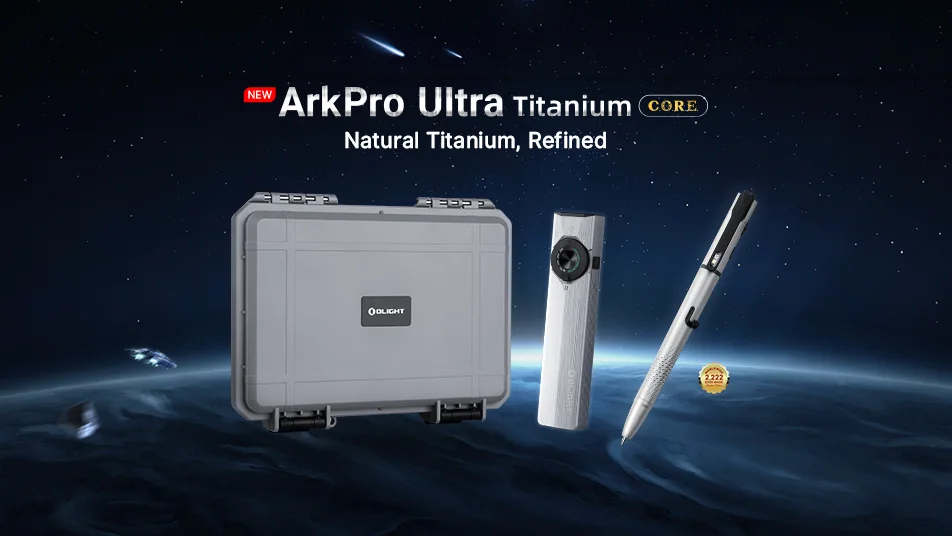
The National Park Service's Ten Essentials list says, "Headlamps are the recommended light source because they are hands-free." The Olight Perun 3 headlamp ($89.99, regular price, September 2026) is rated IP68, and the 6 in that code is the dust part. Olight lists its other outdoor and camping flashlights on one page.
This table sets the light levels this guide uses for each desert job; they are planning levels matched to the lights above, not a standard.
| Desert sub-scene | Light type | Output that works | Runtime per night | Protection |
|---|---|---|---|---|
| Camp chores and cooking | Headlamp, flood | 100 to 120 lumens | 2 to 3 hours | IP6X dust-tight |
| Inside the tent | Red or low white | 4 to 30 lumens | 1 to 2 hours | Any |
| Scorpion sweep | UV light | Lowest UV mode | About 20 minutes | Dust-tight if pocketed |
| Walk to the latrine or vehicle | Headlamp or thrower | 100 to 300 lumens | 30 minutes | Sealed port or dust cover |
| Scanning a wash | Thrower | 300 lumens, short maximum bursts | 5 to 10 minutes | Clean tail threads |
| Stargazing | Red light | 15 lumens or less | 1 to 3 hours | Any |
How Big Is the Desert Temperature Swing, and What Does It Do to Lithium Batteries?
The desert temperature swing is large. National Park Service averages put the daily range at 27 to 32°F at Furnace Creek in Death Valley and 35 to 45°F at Rio Grande Village in Big Bend. That is enough for a July afternoon to pass a light's 40°C working ceiling, and for a December dawn to fall below its 0°C floor.
The Death Valley weather page says, "Summer nights provide little relief as overnight lows may only dip into the 85°F to 95°F (30°C to 35°C) range," while winter brings "cool nights that only occasionally reach freezing."
Olight's manuals set the limits. The Perun 3 and Warrior X 4 manuals each list a working temperature of 0-40°C, and the ArkPro manual lists 0~45 °C. The Oclip 2 manual lists 0~45 °C for operating and charging and adds cold rules: "In 0°C to 10°C conditions, the white light Turbo will be unavailable"; below 0°C (32°F) "the white light is limited to Low and Medium modes, and the UV light is limited to Low mode only"; and "The product cannot be charged in environments below 0°C or above 45°C."
This table converts NPS monthly averages to Celsius, °C = (°F − 32) × 5 ÷ 9, and checks each against those manual limits.
| Site and month (NPS averages) | Avg high | Avg low | Daily swing | Manual limits crossed on an average day |
|---|---|---|---|---|
| Furnace Creek, January | 67°F (19.4°C) | 40°F (4.4°C) | 27°F | Oclip 2 Turbo unavailable at dawn (0 to 10°C) |
| Furnace Creek, July | 116°F (46.7°C) | 88°F (31.1°C) | 28°F | Above 40°C for Perun 3 and Warrior X 4; above 45°C for Oclip 2 and ArkPro |
| Rio Grande Village, January | 70°F (21.1°C) | 31°F (−0.6°C) | 39°F | Below 0°C for Perun 3, Warrior X 4, ArkPro; Oclip 2 limited modes, no charging |
| Rio Grande Village, July | 106°F (41.1°C) | 65°F (18.3°C) | 41°F | Above 40°C for Perun 3 and Warrior X 4 |
| Rio Grande Village, December | 74°F (23.3°C) | 29°F (−1.7°C) | 45°F | Below 0°C at dawn, as in January |
Elevation matters: the Big Bend weather page shows the Chisos Basin, at 5,401 feet, averaging 61°F and 41°F in December, a 20°F swing, less than half the 45°F at the river. On a December night at the river, sleep with the headlamp and spare cell inside your bag or jacket, and charge only after the sun has warmed camp above freezing.
Note: The Perun 3 and Warrior X 4 manuals give a working range but no separate storage range. Treat 0 to 40°C as the band your light and its 21700 cell should live in, day and night.
Where Does Sand Get Into a Flashlight? Switches, Threads and Charging Ports
Sand gets into a flashlight at three points: the switch, the threads of any cap you unscrew, and the charging port or magnetic contact. A dust-tight rating, the 6 in IP6X, covers the sealed body. It does not stop you from grinding sand into threads when you open a cap in the wind, or pressing grit into a port.
The IEC's IP ratings page explains the code: "The first numeral refers to the protection against solid objects and is rated on a scale from 0 (no protection) to 6 (no ingress of dust)." An X in that place means no dust rating was claimed.
This table maps the three sand entry points onto the four lights, using each light's published rating and design.
| Light (rating) | Switch | Threads or caps | Port or contact | Desert handling |
|---|---|---|---|---|
| Perun 3 (IP68) | Concave metal side button | Unscrews only to swap the 21700 cell | MCC3 magnetic tail | Wipe the tail before charging; swap cells in the tent |
| Warrior X 4 (IPX8, no dust rating) | Tail switch | Tail cap unscrews to change Regular and Tactical modes | USB-C behind a rotating dust cover | Set the mode at home |
| Oclip 2 Ultra (IP66) | Side button plus selector | None to open | USB-C with dust cover, MCC tail | Keep the cover closed |
| ArkPro (IPX7, no dust rating) | Center button, selector, side switch | None to open | USB-C and magnetic contact | Keep the port clean and dry |
The Warrior X 4 page says, "The battery indicator and the USB-C interface are hidden behind a dust cover -- let them appear by rotating it a quarter." Even at IP66, the Oclip 2 manual says, "When the charging port is not in use, keep the dust cover closed to prevent dust or foreign objects from entering." The ArkPro manual says, "Keep the charging port clean and dry."
The Warrior X 4 is the light to watch. Its manual switches modes by unscrewing the tail cap, so every twist in blowing sand drags grit across the threads. Death Valley's weather page warns, "Dust storms can suddenly blow up with approaching cold fronts." Set the mode before the trip and leave the cap alone. For how drop and crush ratings differ from dust ratings, see our guide to durable flashlights.
Tip: Brush sand off a light before you charge it, open ports and caps inside the tent or vehicle, and carry each light in a closed pouch.
Where Should Lights and Batteries Sit During a 100°F Day?
Lights and batteries should spend a desert day in shade, off the ground and out of any closed vehicle, then charge in the cooler hours. Olight's manuals set the ceiling: the ArkPro and Oclip 2 manuals forbid storing or charging in a car that may pass 60°C, and the Perun 3 and Warrior X 4 are rated to work only up to 40°C.
The ArkPro manual says: "Do not store, charge, or use this light in a car where the temperature inside may exceed 60°C or in similar environments." The Oclip 2 manual says: "Do not place, charge, or use this light in a car or other environment where the temperature may exceed 60°C." It adds: "Leaving a battery in an extremely high temperature surrounding environment can result in an explosion or the leakage of flammable liquid or gas."
Compare those limits with the air. Death Valley's safety page puts summer highs as high as 130°F (54°C), with nights up to 90°F (32°C). Shade air at 54°C is already 9°C past the Oclip 2's 45°C charging ceiling and 14°C past the Perun 3's 40°C working top. Our guide to the best flashlight for overlanding covers where lights ride in a vehicle; in the low desert in summer, the light rides with you or sits in deep shade.
Warning: Never charge a light or a spare 21700 cell in direct sun or inside a parked vehicle in the heat. Charge in the early morning or after sunset, once the air is inside the manual's range.
Scorpions, Rattlesnakes and What a UV Light Is Actually For
A UV light is for finding scorpions, not snakes. The National Park Service says Arizona bark scorpions "glow a bright bluish color" under UV, while rattlesnakes are found with ordinary white light on the ground ahead. Both are most often met on warm evenings, so a desert camp routine uses UV for boots and tent floors and white light for every step.
The NPS Arizona bark scorpion page says, "Under UV light, these scorpions will glow a bright bluish color making them easy to spot." It adds that "They are nocturnal and are generally only seen at night," and that they "hibernate throughout the winter (until evening temperatures consistently stay above 73°F/23°C)." A warm evening is your cue to sweep boots, packs and the tent floor before bed.
The Olight Oclip 2 Ultra clip light is the camp version of that tool: UV High 800~300 mW for 3 + 135 minutes and UV Low 300 mW for 140 minutes, clipped to a pack strap. Olight does not print its UV wavelength. The Olight ArkPro flat EDC flashlight states 365 nm, with UV Low 360 mW for 8 hours; the standard ArkPro is $109.99 (regular price, September 2026), while the series page opens on the $129.99 ArkPro Ultra. Our UV flashlight guide explains why 365 nm gives a cleaner glow.
Safety note: Point UV at the ground and gear, never at a face. The Oclip 2 manual says, "Do not look directly at the light source or shine it into your eyes, as this may cause temporary blindness or permanent damage to your eyes," and the ArkPro manual carries the same warning. The ArkPro also has a green laser; its manual lists "Max Output: 5 mW @510 nm~530 nm Wavelength" and warns, "Caution: Do not stare directly at the operating light source." Keep both away from children.
Snakes call for white light and slow feet. Organ Pipe Cactus National Monument's rattlesnake page tells hikers, "Don't put your hands or feet where you can't see them," and to "always carry a flashlight at night, to avoid those rattlers staying warm in the middle of the hot pavement." The CDC's venomous snakes page adds, "Be aware that snakes tend to be most active at dawn and dusk and in warm weather."
If someone is bitten, the CDC says: "Seek emergency medical attention as soon as possible to start antivenom (if needed) and stop irreversible damage." It also says, "Do not apply a tourniquet, electric shock, or folk therapies" and "Do not try to suck out the venom."
Water, Washes and Navigation: Where Light Fits In
Light supports three desert jobs beyond camp: finding your water, picking a safe campsite, and getting back to the vehicle. Choose the campsite in daylight, keep water where you can find it, and use light at night to confirm a route you already know.
Death Valley's safety page says to "DRINK plenty of water, at least one gallon a day." Joshua Tree's backpacking page says, "Do not camp near water sources (seeps, springs, or oases)," and warns that "if it's summer monsoon season or there is a chance of significant rain, do not camp in washes, because they can flow with water." You cannot judge a wash's flood risk by flashlight, which is one more reason to arrive early.
Joshua Tree recommends "carrying a first aid kit, map, compass, and satellite communication device with you and know how to use them." A thrower only confirms a landmark you found on the map. The Olight Warrior X 4 flashlight ($129.99, regular price, September 2026) is rated at 2,600 lumens, 99,310 candela and 630 m.
Its limits: it weighs 249 g, has no dust rating, and its lowest Regular mode is 300 lumens, far too bright for a tent. Pair it with the headlamp rather than using it alone.
How Long Is a Desert Night? Planning Light for Three Nights
A desert night in December lasts about 13 hours between evening and morning civil twilight, compared with about 8.6 hours in June, based on U.S. Naval Observatory data for the Joshua Tree area. Death Valley calls winter and spring "very pleasant," so a cool-season trip means about 53% more darkness than a June night. Size the light budget to it.
This table uses USNO sun data for 34.13°N, 116.05°W near Twentynine Palms, California, in local time. Dark hours run from the end of evening civil twilight to the start of morning civil twilight, using the same date's morning time as an approximation.
| Date (2026) | Sunset | Civil twilight ends | Civil twilight begins | Dark hours | Daylight left after a 3 p.m. arrival |
|---|---|---|---|---|---|
| June 21 | 7:59 p.m. | 8:28 p.m. | 5:04 a.m. | 8 h 36 min | 4 h 59 min |
| December 21 | 4:39 p.m. | 5:07 p.m. | 6:18 a.m. | 13 h 11 min | 1 h 39 min |
The December row is the one to plan around: 13 h 11 min ÷ 8 h 36 min = 1.53.
This table budgets one charge of each light across three December nights. The per-night use is our assumption for a two-person camp, and the shares are based on Olight's rated runtimes, not measured. Share per night = hours used ÷ rated hours, summed across modes.
| Light | Assumed use per night | Share of one charge per night | Three nights |
|---|---|---|---|
| Perun 3 | Med 120 lumens for 3 h (rated 25 h) plus red Low 15 lumens for 2 h (rated 70 h) | 3 ÷ 25 + 2 ÷ 70 = 0.120 + 0.029 = 14.9% | 44.6% |
| Oclip 2 Ultra | UV Low for 20 min (rated 140 min) plus red Low 4 lumens for 1 h (rated 22 h) | 20 ÷ 140 + 1 ÷ 22 = 0.143 + 0.045 = 18.8% | 56.5% |
| Warrior X 4 | Regular Low for 30 min (rated 8 h) plus 6 min on Regular High (rated 3 + 140 + 20 = 163 min) | 0.5 ÷ 8 + 6 ÷ 163 = 0.063 + 0.037 = 9.9% | 29.8% |
| ArkPro, UV only | UV Low for 20 min (rated 8 h) | 20 ÷ 480 = 4.2% | 12.5% |
On paper, every light finishes three nights with charge to spare. Cold dawns are why you still carry backup: the Perun 3 manual cites ANSI/PLATO FL 1-2019 and the Warrior X 4 manual cites ANSI/NEMA FL 1-2009 (the current edition is FL 1-2025), and neither publishes cold runtimes. The Olight 21700 battery ($26.95, regular price, September 2026) is listed for both the Warrior X 4 and the Perun 3, so one spare backs up both lights.
The Oclip 2 Ultra Premium ($94.99, regular price) adds a dock that Olight says gives "twice the total runtime," which would roughly halve the 56.5% above. The dock cannot help on a freezing dawn, because the manual forbids charging below 0°C.
Dark Skies: How to Light Your Camp Without Ruining the Stars
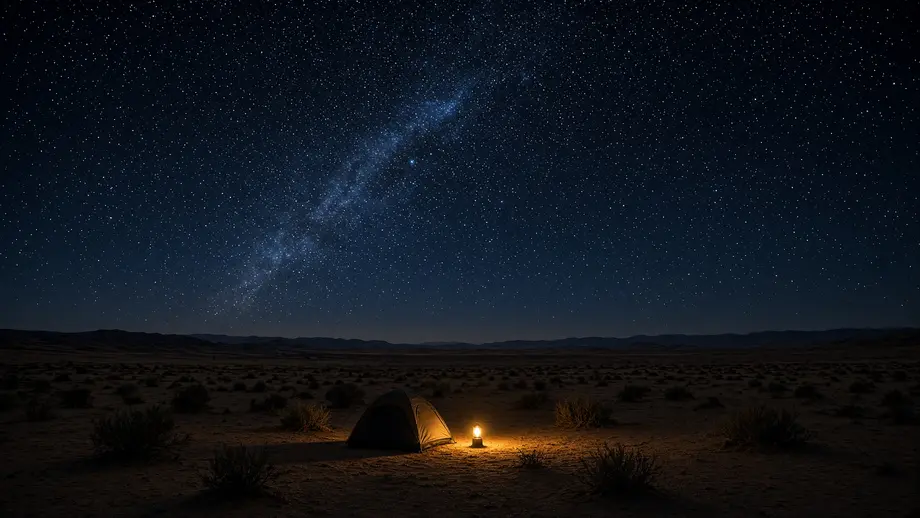
Protecting the desert night sky means using the least light that does the job, aimed down, for the shortest time. Death Valley holds the International Dark-Sky Association's highest Gold Tier, and Big Bend's night sky page reports the least light pollution of any park unit in the lower 48, so a headlamp on Turbo can be the brightest light for miles.
Death Valley's night exploration page says the park "is classified at the highest (Gold Tier) level by the International Dark-Sky Association."
DarkSky International's Five Principles for Responsible Outdoor Lighting were written for fixtures, but three of them map straight onto a desert camp:
- "Use light only if it is needed." Turn the headlamp off while you talk. For a latrine walk, the Perun 3 manual's built-in timer shuts the light off after 3 or 9 minutes.
- Aim the beam "so that it points downward." Tilt the Perun 3 down to your hands, not level with the next camp.
- "Limit the amount of shorter wavelength (blue-violet) light." The Perun 3 manual reaches red Low from off with a double press, so you never flash white at the group.
For red light choices at a telescope, see our guide to the best red flashlight for stargazing.
Getting Back and Getting Lost: Desert Terrain After Dark
Getting back after dark is where desert trips go wrong. Death Valley does not recommend night hikes over rocky ground, cell service is limited, and Joshua Tree warns that a rescue team may take hours or days to arrive. Plan to be back before civil twilight ends, keep a thrower for landmarks, and carry a satellite messenger.
Death Valley's night page says, "While we don't recommend a hike at night in an area with obstacles such as rocks, a casual stroll at a place like Mesquite Flat Sand Dunes or Badwater Basin can be quite rewarding." Its safety page notes, "There is limited to no cell phone service." Joshua Tree warns, "A search and rescue team may take hours or days to reach you."
Use the night-length table as a turnaround tool. On December 21, sunset near Twentynine Palms is 4:39 p.m. and civil twilight ends at 5:07 p.m., so set your turnaround to reach the vehicle by 4:39 p.m. and keep the 28 minutes of twilight as reserve.
What Is the 3-3-3 Rule for Camping?
The 3-3-3 rule for camping is an informal RV pacing habit, not a regulation: drive no more than about 300 miles or three hours a day, arrive by about 3 p.m., and stay at least three nights. Versions differ between RV clubs, and no land agency cited in this guide publishes it. In the desert, the 3 p.m. arrival matters most.
The night-length table above shows why. A 3 p.m. arrival leaves 4 h 59 min of sun on June 21 but only 1 h 39 min on December 21. In winter, arrive by 1 p.m. if you still need to choose a dispersed site, check a wash for flood debris and set up before dark.
Is It Legal to Camp in the Desert?
Yes, it is legal to camp in much of the U.S. desert, but the rules depend on who manages the land. Most Bureau of Land Management land allows free dispersed camping, usually 14 days within 28, unless posted closed. National parks such as Joshua Tree and Death Valley limit where you can camp and may require a permit.
The BLM's camping page says, "Most BLM lands allow dispersed camping unless an area is posted 'Closed to Camping' or has specific restrictions for land use or conservation." Federal regulation 43 CFR 8365.1-2 bars anyone on public lands from leaving "personal property unattended longer than 10 days (12 months in Alaska)" unless otherwise authorized, as reproduced by Cornell Law School's Legal Information Institute.
This table summarizes the rules that most often decide where a desert camp can go, with the official wording in short form.
| Land manager | Rule (official source) | What it means for your camp |
|---|---|---|
| BLM, dispersed | "generally limited to 14 days within any 28‑day period" (BLM camping page) | Then move on, often 25 to 30 miles away per BLM |
| BLM, all public lands | 43 CFR 8365.1-2(b): no property unattended longer than 10 days | You cannot hold a site with gear for weeks |
| BLM, developed campgrounds | "Do not leave personal property unattended for more than 72 hours (or as posted at the site)" | Tighter than the dispersed rule |
| Joshua Tree National Park | "A permit is required for all overnight stays in the backcountry" | $6 permit, up to 14 nights |
| Joshua Tree National Park | "Camping is not allowed at trailheads, along roadsides, and in day-use areas" | No roadside car camping |
| Death Valley National Park | "camping along paved roads is prohibited" (night exploration page) | Use a legal site, not a turnout |
Rules differ by field office and park, so check the local BLM office or park page before you go.
What Is Ghost Camping?
Ghost camping means leaving an empty tent, trailer or vehicle on a campsite to hold it while nobody is there. It is a live issue in the U.S. desert: BLM's California Desert District has discussed it at the Imperial Sand Dunes. On public land, the unattended-property limits in the table above apply to it directly.
Australia's public broadcaster ABC defined it in 2025 as "the practice of leaving an unoccupied tent or caravan on a campsite to reserve it." Minutes of the BLM California Desert District Advisory Council from April 2024 record a presentation on "Ghost Camping on Gecko Road" and list "a reservation or permit system" among possible solutions.
Desert Camping at Night Checklist: Lights and Maintenance
This desert camping at night checklist turns the sections above into steps for before and during the trip. It covers light choice, heat storage, sand, wildlife and land rules, and each item traces back to a manual or official source cited earlier in this guide.
Before you go:
- Check your site's NPS monthly averages against each light's manual range.
- Look up civil twilight for your dates and arrive with two or more hours of sun.
- Set the Warrior X 4 mode at home, so the tail cap stays closed in the field.
- Charge every light, and pack one spare 21700 for the Perun 3 and Warrior X 4.
- Confirm the BLM stay limit, park permit and road rules for your site.
At camp:
- Keep lights and cells in shade by day, never in a closed vehicle, and charge only between 0 and 40°C air.
- Open ports and caps only inside the tent or vehicle, and keep the Oclip 2 dust cover closed.
- Sweep boots, packs and the tent floor with UV on warm evenings, beam pointed down.
- Walk with white light on the ground ahead, and never put hands or feet where you cannot see.
- On cold mornings, keep the headlamp and spare cell in your sleeping bag until the sun is up.
After the trip, brush sand off every light, wipe magnetic tails and contacts, check that caps and dust covers seat fully, and charge before storage; the ArkPro manual says, "Before long-term storage, please fully charge the product." For the headlamp side of this kit, our best camping headlamp guide compares the Perun 3 with lighter options.
Note: The Oclip 2 Ultra clips to a pack strap or collar and has magnets in its clip and tail. Its manual says, "If you have an ICD or pacemaker, avoid close or prolonged contact with this product to prevent possible interference." If that applies to you, clip it to the pack or tent, not your chest or collar. The manual also says, "Do not immerse the product in water or other liquids, as it will damage the product," so keep it out of a flowing wash.
FAQ
Changelog
- September 25, 2026: First published.