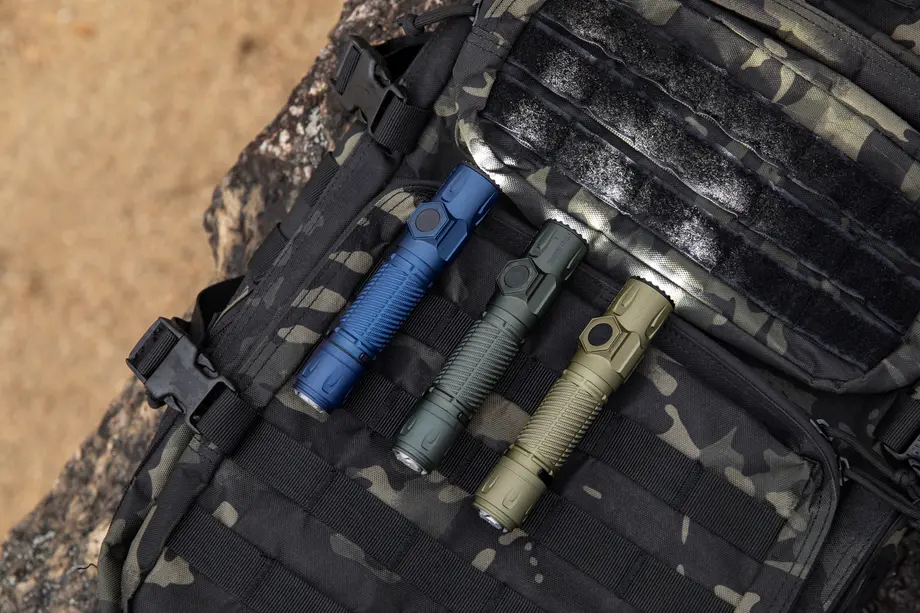
TL;DR:Choosing the best tactical flashlight requires balancing lumens, candela, durability, runtime, and interface design—not simply selecting the brightest model. For law enforcement, military personnel, and search-and-rescue teams, a true tactical flashlight must deliver reliable performance under extreme conditions. This guide explains tactical flashlight lumens vs candela, ANSI/PLATO FL 1 ratings, battery options, and highlights the best Olight tactical flashlights for professional duty use in 2026.
Table of Contents
1. What Is a Tactical Flashlight? 2. Key Features to Look for in a Tactical Flashlight 3. Tactical Flashlights for Different Use Cases 4. Best Olight Tactical Flashlights for Different Missions 5. Common Tactical Flashlight Buying Mistakes 6. Frequently Asked Questions About Tactical Flashlights
Selecting the best tactical flashlight is not merely about finding the brightest light on the market. For law enforcement, military personnel, and search and rescue teams, a flashlight is a critical piece of safety equipment. In high-stress environments, the difference between a high-performance duty flashlight and a standard consumer light can determine the outcome of a mission.
This guide provides a comprehensive analysis of what defines a true military flashlight or police flashlight, explains technical specifications like tactical flashlight lumens vs candela, and reviews the top models for 2026.
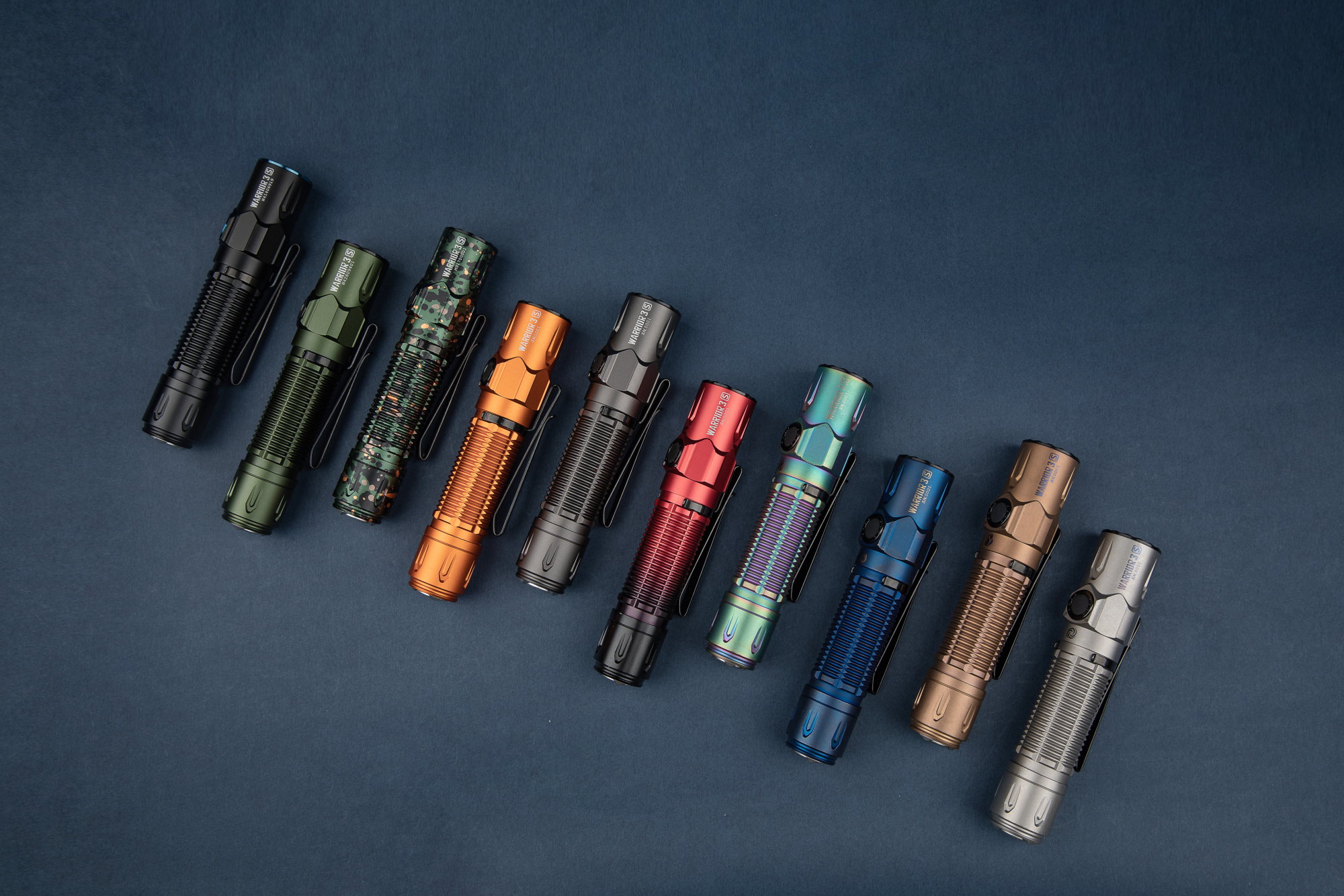
Warrior 3S High Beam Tactical Flashlight
What Is a Tactical Flashlight?
A tactical flashlight is a lighting tool specifically designed for use by law enforcement and military personnel. Unlike standard flashlights used for household tasks, tactical lights are built to withstand extreme conditions, including recoil from firearms, heavy impact, and exposure to water or chemicals. The primary goal of a tactical light is to provide reliable, high-intensity light that can disorient an adversary or illuminate targets at a significant distance.
Tactical vs. Everyday Carry (EDC) Flashlights
The distinction between tactical and EDC flashlights lies in their intended use and interface. An EDC flashlight typically prioritizes size, weight, and multiple brightness modes for general tasks like finding keys or walking a dog. In contrast, a tactical light prioritizes instant access to high-output light.
Tactical lights often feature a "momentary-on" capability through a tail switch, allowing the user to flash the light briefly without locking the switch. They also prioritize ruggedness, often featuring strike bezels for glass-breaking or self-defense. While many modern tactical lights are small enough for EDC, their internal components are reinforced to handle the mechanical stress of duty use.
Why a Tactical Flashlight Is an Essential Duty Tool
For a patrol officer or a soldier, a flashlight is as critical as a sidearm or radio. It is used to clear dark rooms, search vehicles, and verify threats during nighttime operations. A powerful beam can penetrate tinted windows or "blind" a suspect, providing a tactical advantage during an encounter. Additionally, tactical lights are used for signaling and search-and-rescue operations where long-range identification is vital for safety.
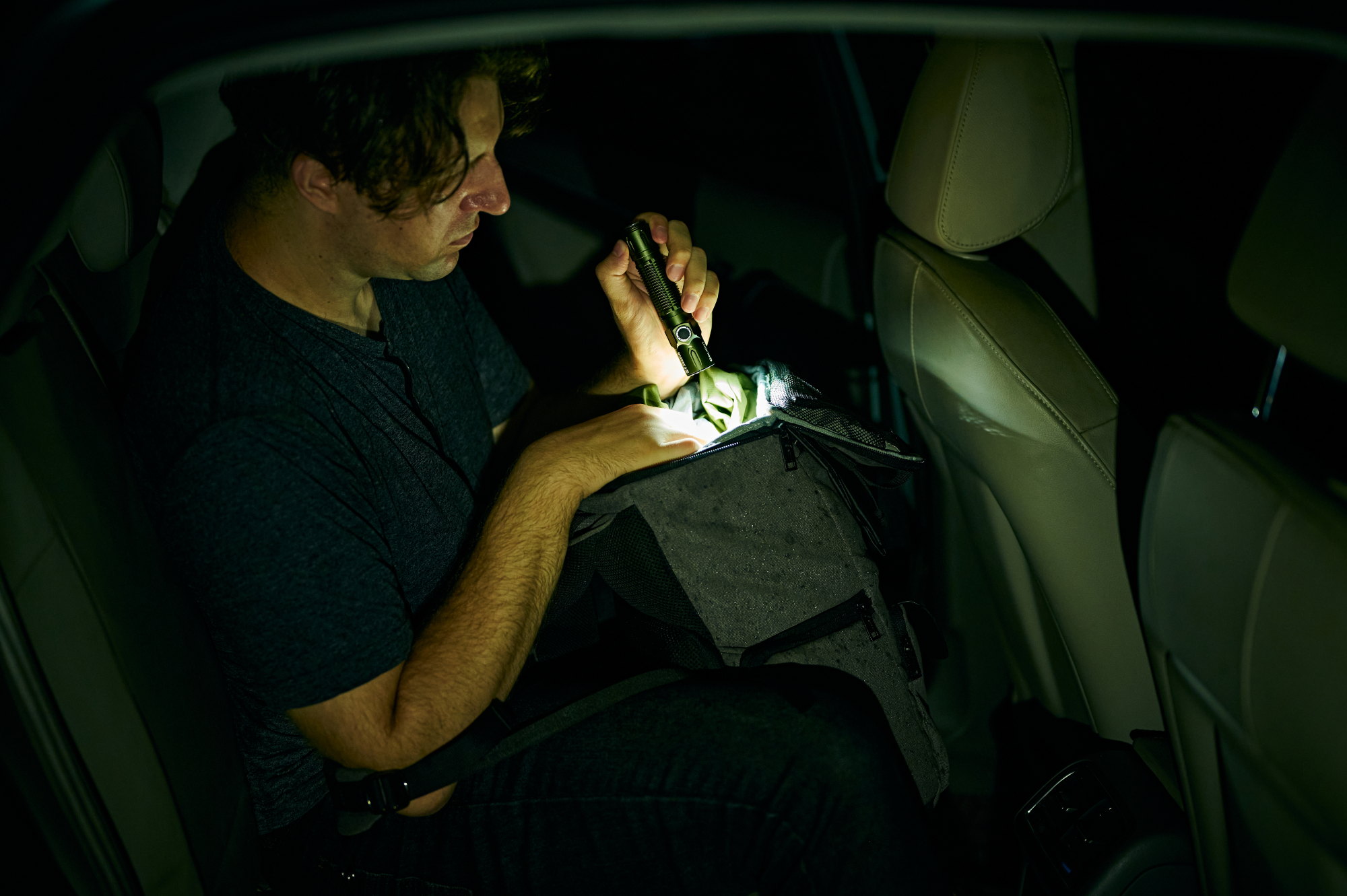
Warrior 3S High Beam Tactical Flashlight
Key Features to Look for in a Tactical Flashlight
When evaluating the best tactical flashlight, you must look beyond marketing claims and focus on standardized metrics and hardware design.
What ANSI/PLATO FL 1 Ratings Mean
According to the ANSI/PLATO FL 1 flashlight testing standard, beam distance is measured as the distance at which illumination reaches 0.25 lux—approximately the amount of light produced by a full moon on a clear night. The standard also defines runtime as the period until output declines to 10% of the initial measured value, helping consumers compare products using a common testing methodology (Source: ANSI/PLATO FL 1 Standard).These ratings include:
* Light Output: Measured in lumens.
* Beam Distance: How far the light travels before it reaches the equivalent of full-moon light.
* Peak Beam Intensity: Measured in candela.
* Run Time: How long the light stays above 10% of the initial output.
* Impact Resistance: Height from which the light can be dropped onto concrete without failing.
* Water Resistance: Rated as IPX4 (splash-proof), IPX7 (temporary immersion), or IPX8 (submersion beyond 1 meter).
Lumens vs. Candela: Understanding Brightness and Throw
One of the most common points of confusion is tactical flashlight lumens vs candela. Lumens represent the total amount of light emitted by the source—think of this as the "volume" of light.In photometric measurement, lumens quantify total luminous flux, while candela measures luminous intensity in a specific direction. The U.S. National Institute of Standards and Technology (NIST) identifies the candela as the SI base unit for luminous intensity, making it particularly relevant when evaluating long-range beam performance (Source: NIST – Candela Definition).
Candela represents the intensity of the light in a specific direction—think of this as the "punch" or "throw" of the beam.NIST further notes that candela differs from lumens because it describes how intensely light is projected in a given direction rather than the total amount of light emitted. This distinction explains why two flashlights with similar lumen ratings can have dramatically different beam distances (Source: NIST – Luminous Intensity Measurement).
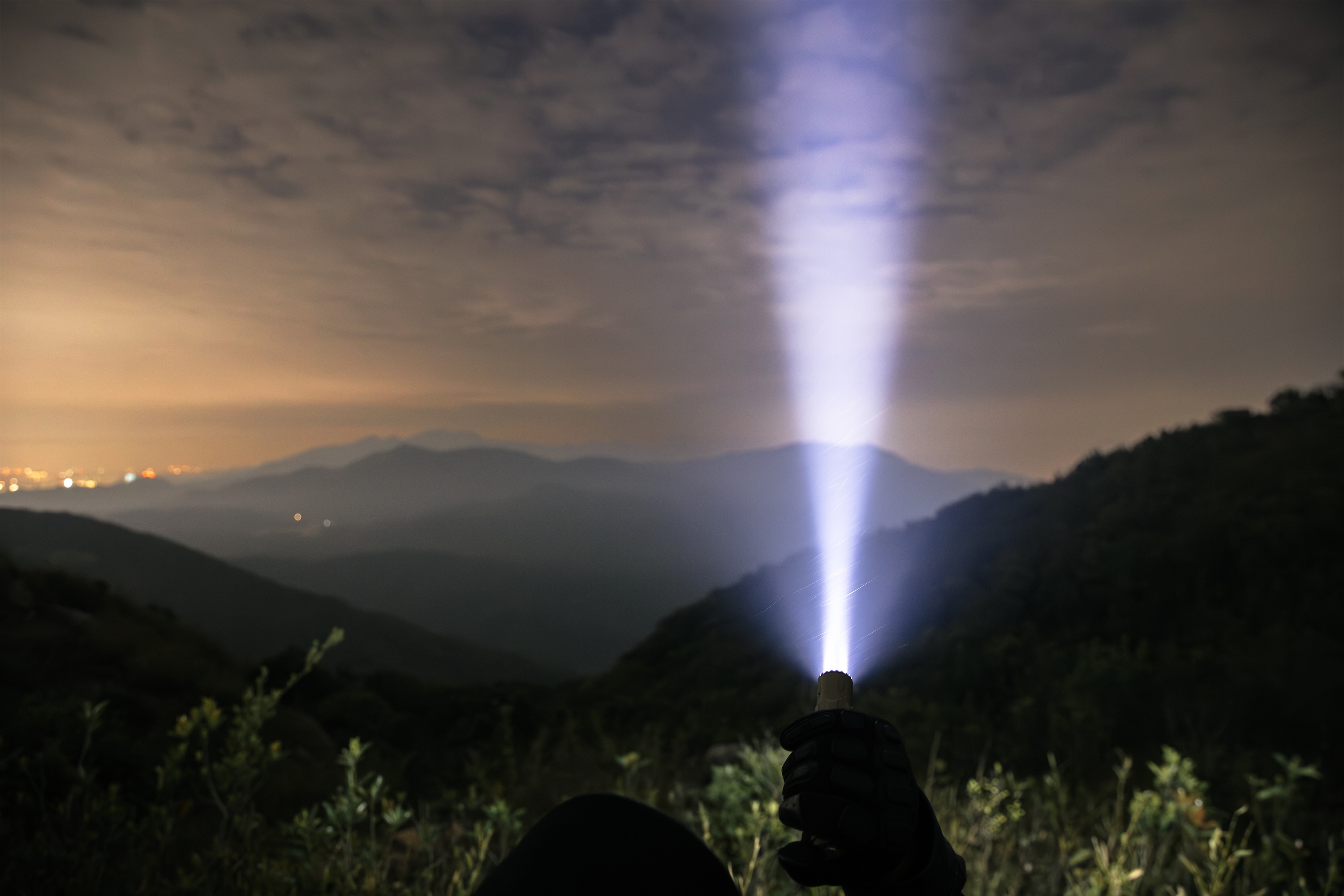
Warrior Ultra 2500 Lumens
Tactical Tail Switches for Instant Activation
In a tactical situation, you cannot afford to fumble with a side switch or scroll through five different modes to find the bright one. A dedicated tactical tail switch is essential. These switches are usually oversized and recessed to prevent accidental activation while remaining easy to press with a thumb while holding a firearm. Many tactical lights use a two-stage switch: a half-press for momentary-on and a full press for constant-on.
Strobe Mode: Practical Uses and Limitations
The strobe mode is designed to disorient an individual by disrupting their night vision and spatial awareness. While highly effective in some scenarios, it has limitations. The user must be trained to move while using the strobe to avoid becoming a target themselves. A well-designed tactical light allows for instant access to the strobe mode without needing to cycle through other settings.
Rechargeable vs. Replaceable Batteries
Modern duty lights primarily use high-capacity rechargeable batteries, such as the 21700 or 18650 lithium-ion cells. These provide the necessary voltage for high-lumen output and longer runtimes. Many professional units now feature built-in charging ports (USB-C or magnetic) to simplify maintenance. However, some operators prefer lights that can also accept CR123A disposable batteries as a backup during long deployments where charging is not possible.
Runtime Requirements for Duty Use
A duty flashlight must last through an entire shift. While the "Turbo" mode might only last for a few minutes due to heat management, the "High" or "Medium" settings should provide several hours of consistent light. A reliable law enforcement flashlight will have a regulated driver, ensuring the brightness does not drop off rapidly as the battery drains.
Waterproof and Impact Resistance Ratings
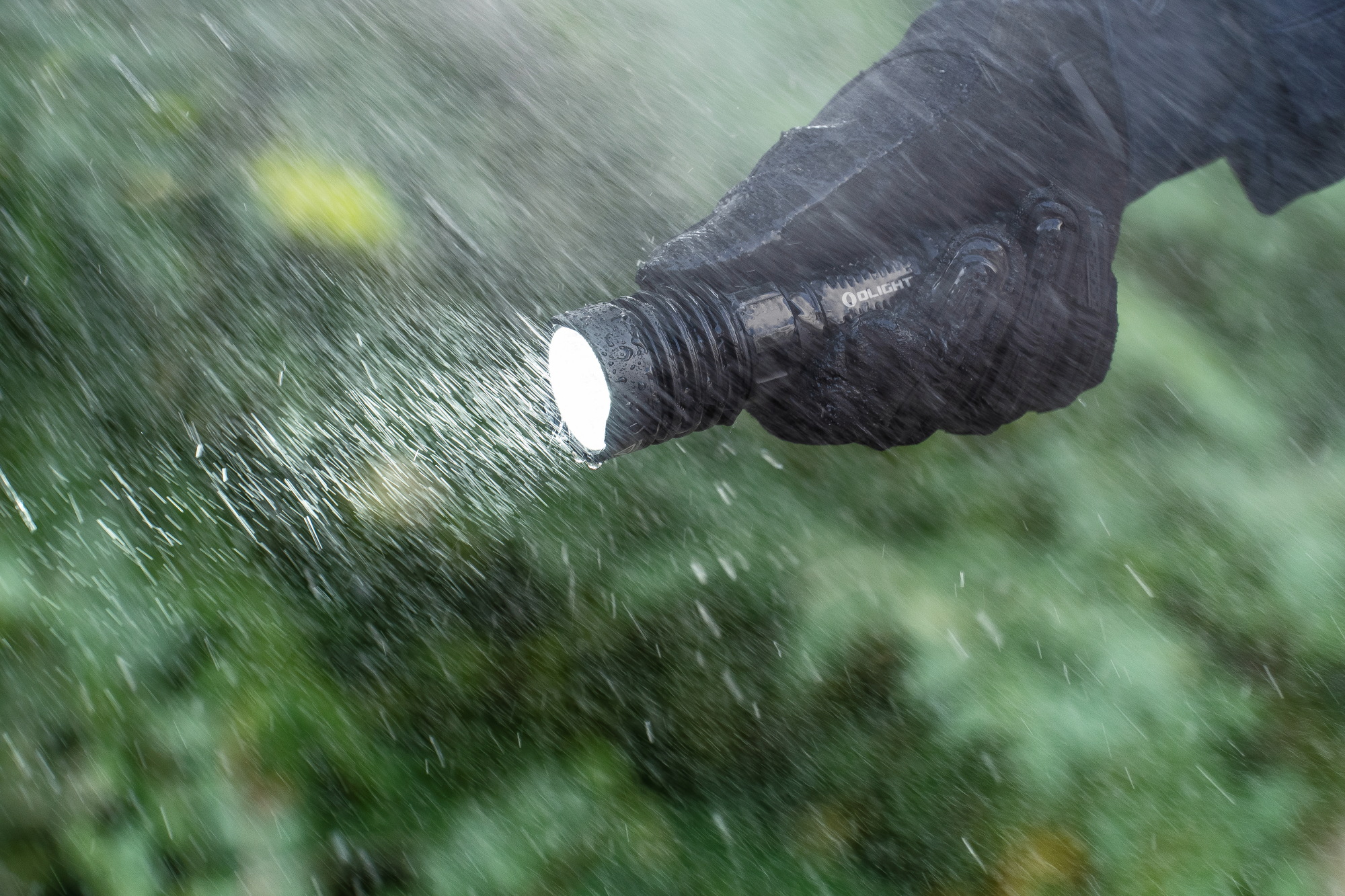
Military and police work takes place in the rain, mud, and snow. An IPX8 rating is the gold standard, ensuring the light works even after being dropped in a puddle or submerged. Under the IEC 60529 ingress protection system, IPX8-rated devices are tested for continuous immersion in water under conditions specified by the manufacturer, making the rating particularly valuable for law-enforcement, military, and emergency-response equipment (Source: International Electrotechnical Commission (IEC 60529)). Impact resistance of at least 1.5 to 2 meters is necessary to survive drops onto asphalt or concrete.
Warrior X 4 Rechargeable Tactical Flashlight
Grip Design and One-Handed Operation Under Stress
The body of the light should have aggressive knurling or a silicone grip to prevent slipping when wet or when wearing gloves. The diameter should be compatible with standard holster systems and comfortable for various tactical grips, such as the Harries or FBI technique.
Tactical Flashlights for Different Use Cases
Not every mission requires the same beam profile. Understanding your specific environment is key to selecting the right tool.
Patrol Officers and Daily Duty Carry
A patrol officer needs a versatile light. It must be bright enough to search a vehicle (flood) but have enough throw to check a backyard or alleyway. Portability is a high priority, as the light sits on a duty belt for 8 to 12 hours a day.
SWAT and Tactical Team Operations
Tactical teams often require lights with extremely high candela to punch through "photonic barriers" like high-intensity streetlights or headlights. They also favor lights with a dedicated strobe and a rugged strike bezel for breaching.
Military Field and Deployment Use
A military flashlight must prioritize durability and long runtimes. In a deployment environment, the ability to use the light on a low setting for map reading for days at a time is just as important as the high-intensity beam. Compatibility with weapon mounts is also a factor.
Security and Executive Protection
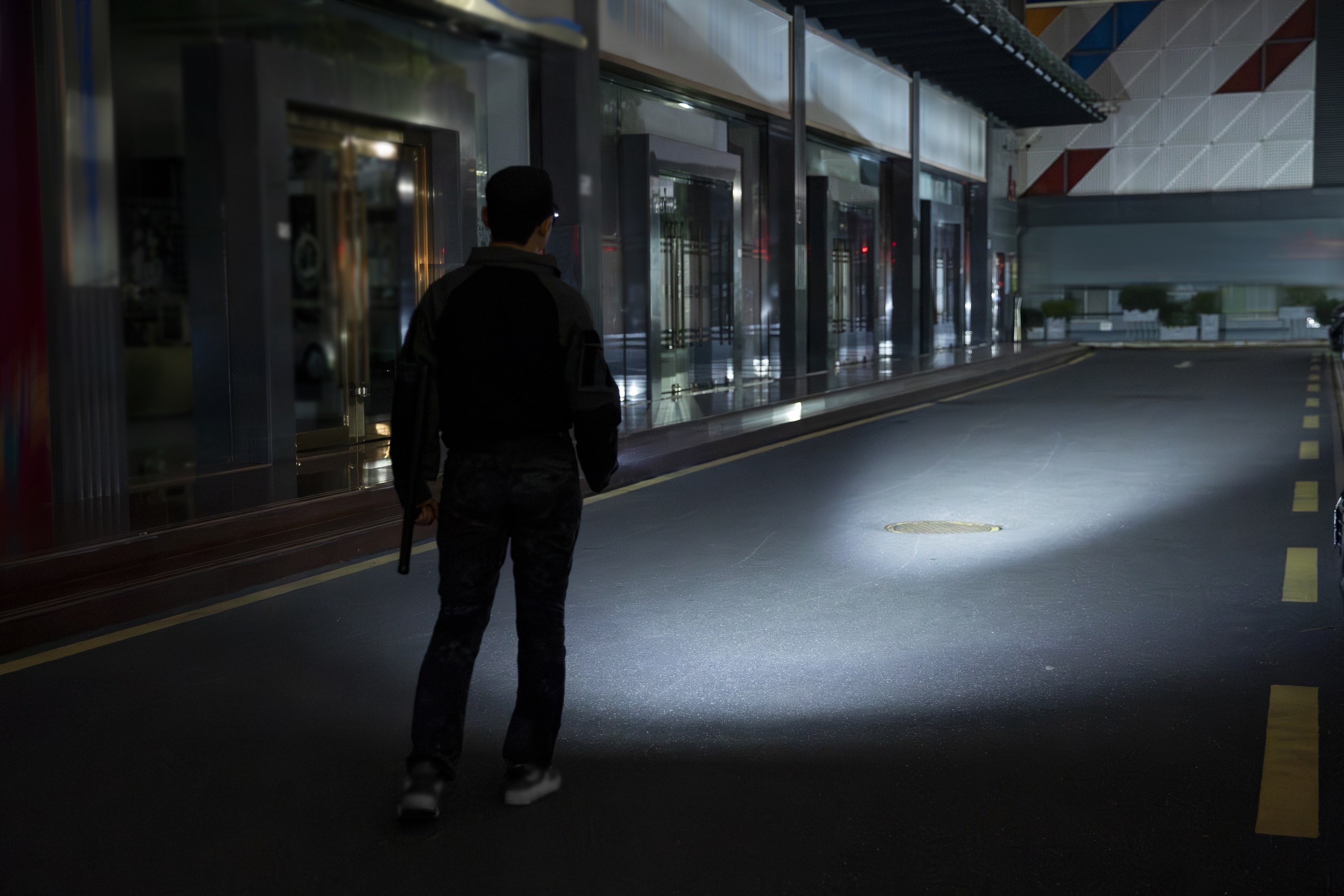
For security professionals, a light serves as a deterrent. A large, high-output light can signal presence and authority. Disorienting an intruder with a burst of light is often the first step in de-escalating a situation.
Search and Rescue Operations
Search and rescue (SAR) requires maximum throw. Identifying a person or a marker from several hundred meters away is the primary goal. These lights are often larger to accommodate bigger reflectors and more battery capacity.
Emergency Preparedness and Home Defense
For home defense, a light with a wide flood is often better for navigating hallways. It should be kept in a dedicated location with a fully charged battery, ready for immediate use during a power outage or home invasion.
Best Olight Tactical Flashlights for Different Missions
Olight has developed a reputation for creating innovative tactical lighting solutions with high performance and unique features like magnetic charging and vibrating battery indicators.
Olight Warrior X 4: Best Tactical Throw Flashlight for Long-Range Identification
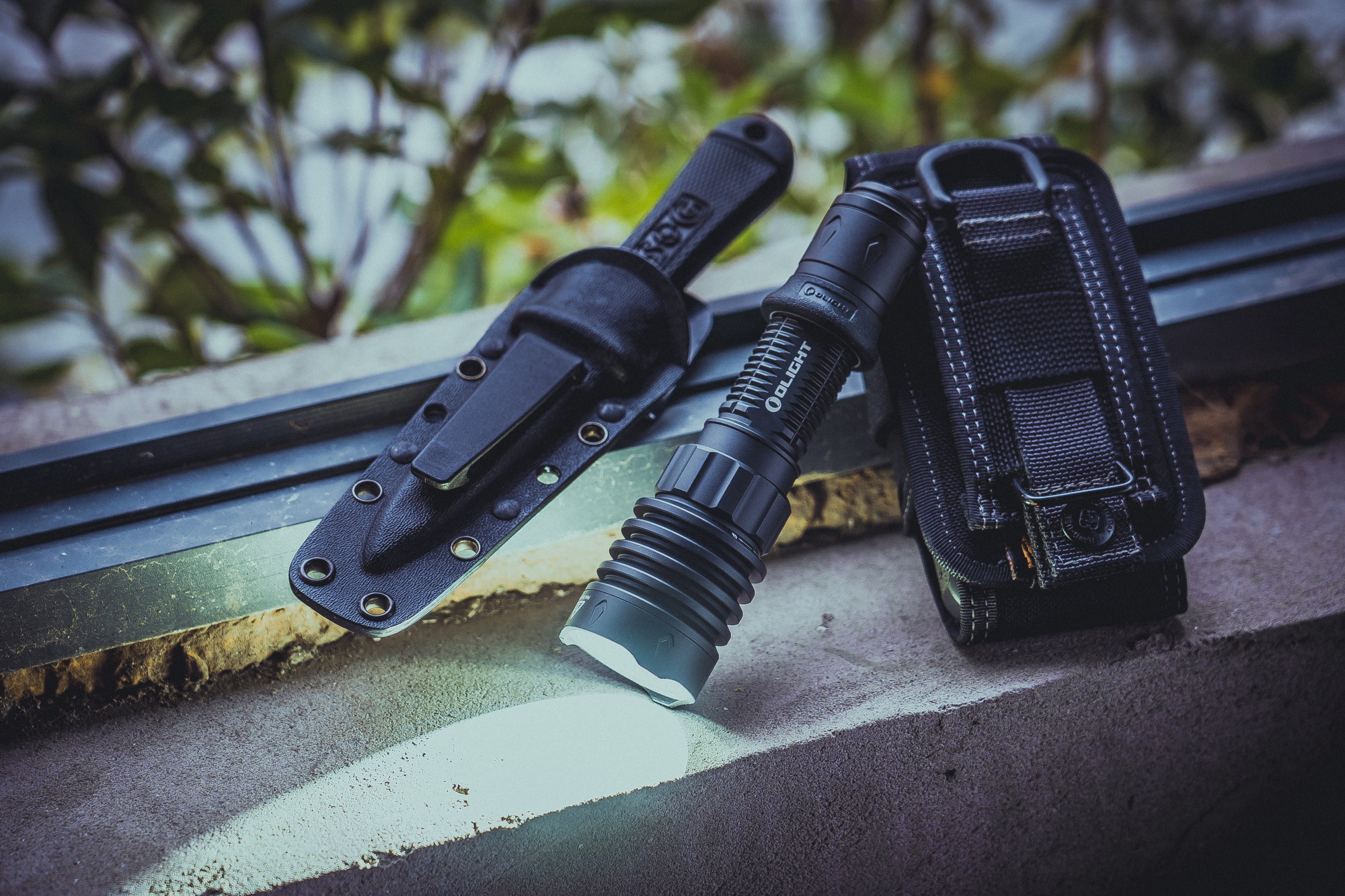
The Warrior X 4 is a powerhouse designed for those who need maximum reach. With a peak beam intensity of 99,310 candela and a 630-meter throw, it is arguably the best tactical flashlight for military personnel and SWAT teams.It balances spot and spill perfectly. Its "harpoon-like" bezel and aggressive styling make it clear that this is a professional tool built for warriors. The hidden USB-C port behind a dust cover ensures charging versatility without compromising water resistance.
Warrior X4 Tactical Flashlight
Features 2600 lumens output and ultra-long 630-meter throw, supporting USB-C & MCC dual charging, IPX8 waterproof and 2m drop resistance, matched with a portable carrying holster.
View DetailsOlight Warrior 3S: Best Tactical EDC Flashlight for Everyday Duty Carry
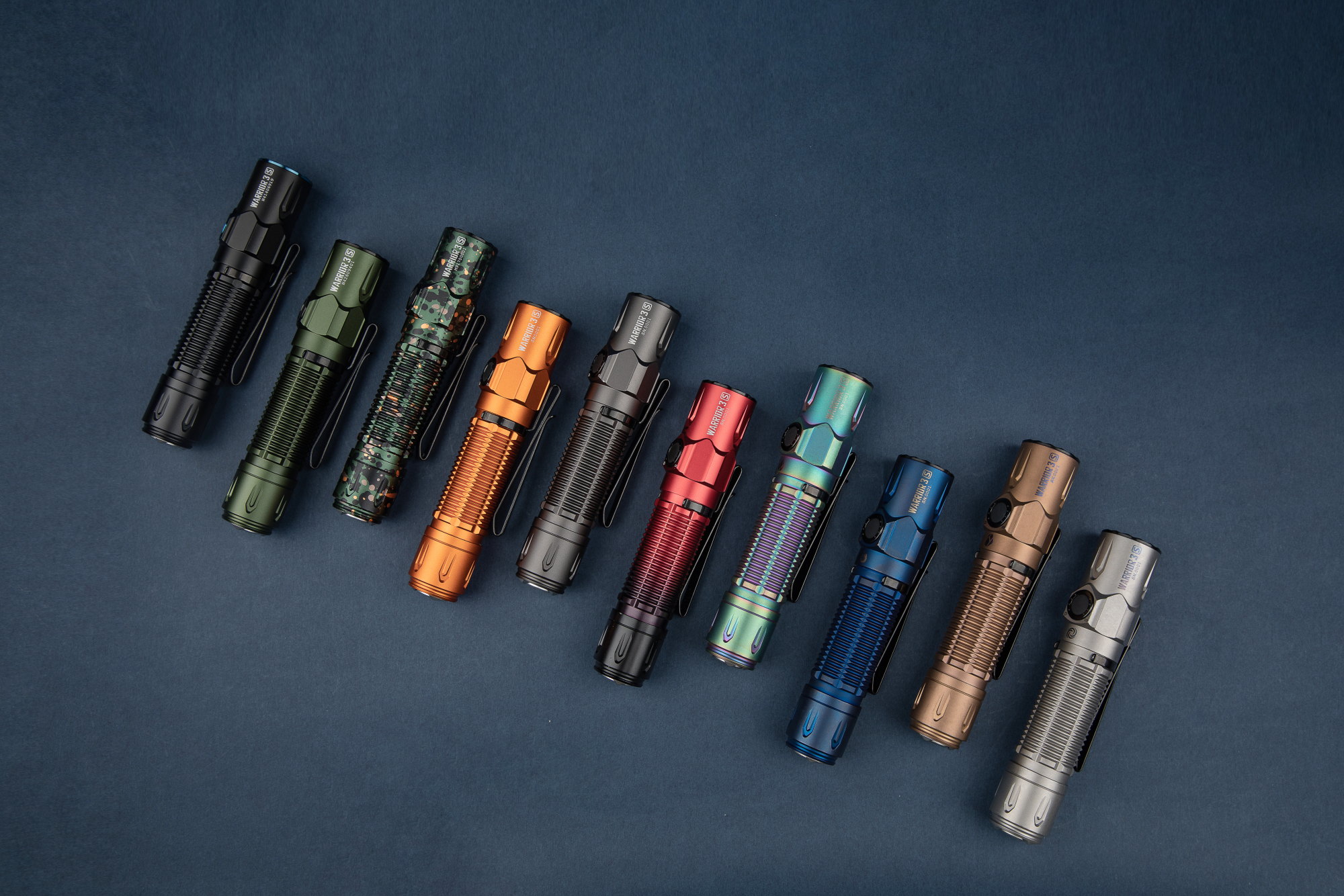
For patrol officers and daily users, the Warrior 3s offers the best balance of size and performance. It is compact enough for comfortable belt carry while delivering a massive 2,300 lumens.It is a leading tactical duty light because of its dual-switch interface. The side switch handles daily tasks, while the two-stage tail switch provides instant access to Turbo or Strobe. The proximity sensor is a critical safety feature, automatically dimming the light if it's accidentally turned on near an object, preventing heat damage.
Warrior 3S Tactical Flashlight
Boasting up to 2300 lumens output and 300-meter max throw, it supports up to 55 days ultra-long runtime with built-in proximity sensor and dual tactical switch design, rated IPX8 waterproof and 1.5-meter drop resistance.
View DetailsOlight Warrior Ultra: Best Premium Tactical Flashlight with Enhanced Durability and Performance
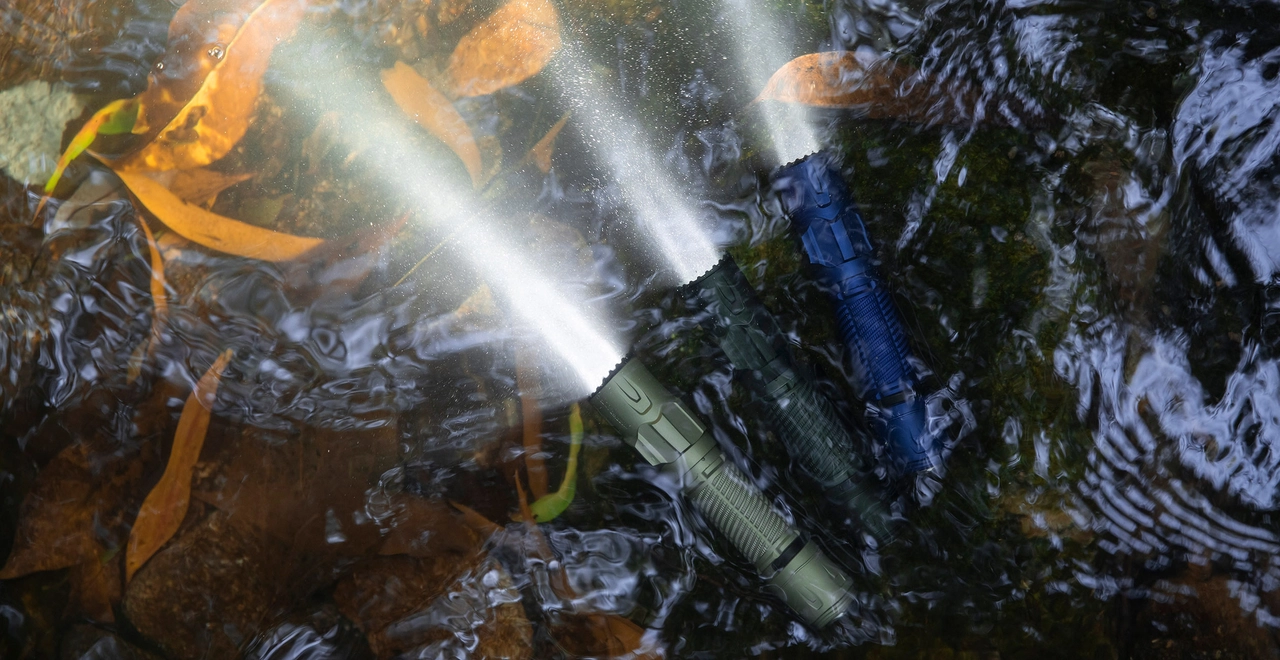
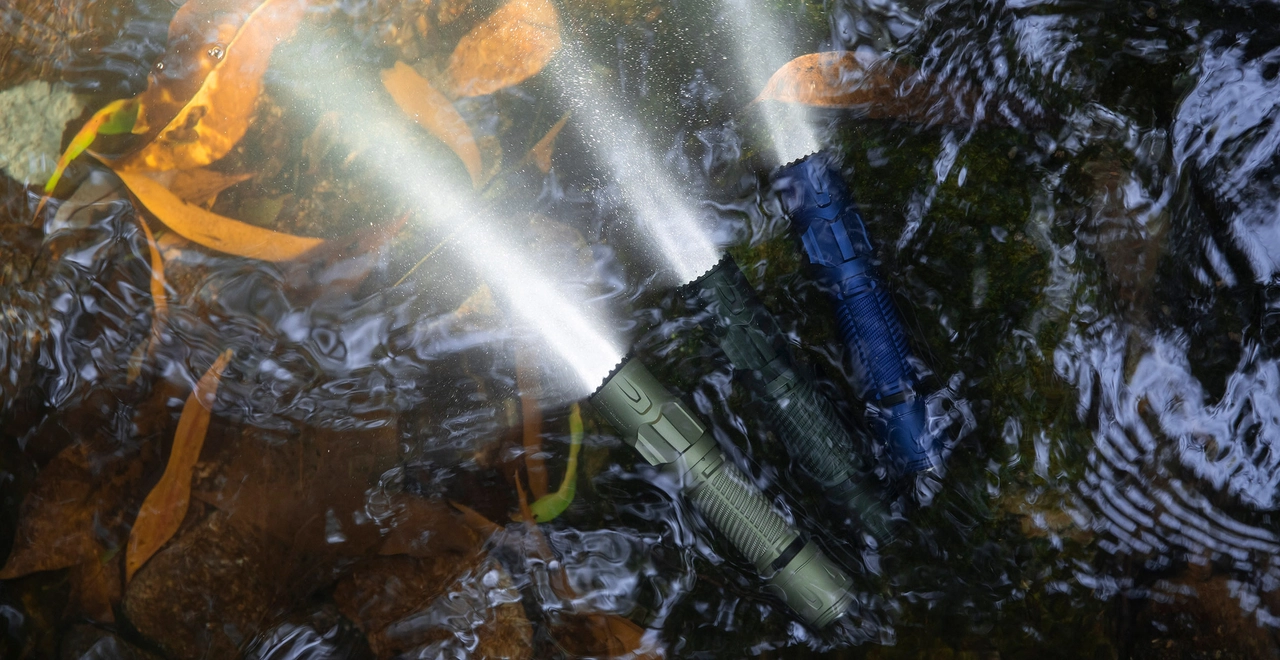
The Warrior Ultra represents the peak of flashlight engineering. It is crafted from Olight’s exclusive O-Aluminum, which is 1.73 times stronger than standard 6061 aluminum.It is built for missions where failure is not an option. It features the same intuitive dual-switch system as the Warrior 3S but adds a layer of extreme durability. The micro-engraved battery indicator provides precise feedback, ensuring you always know how much power remains.
Warrior Ultra Tactical Flashlight
Made of exclusive O-Aluminum material, this flashlight delivers 2500 lumens and 320-meter beam distance, with 55-day max runtime, 2-meter drop resistance and smart auto-dimming proximity sensor.
View Details| Model | Max Lumens | Beam Distance | Max Candela | Best Use Case |
|---|---|---|---|---|
| Warrior X 4 | 2,600 | 630 Meters | 99,310 | Long-range identification |
| Warrior 3S | 2,300 | 300 Meters | 23,000 | Everyday patrol / EDC |
| Warrior Ultra | 2,500 | 320 Meters | 25,600 | High-durability missions |
Common Tactical Flashlight Buying Mistakes
Even experienced professionals can make mistakes when purchasing a new light. Avoiding these pitfalls will ensure you get a tool that performs when it matters most.
Focusing Only on Lumens
High lumens look great on a box, but they don't tell the whole story. A 3,000-lumen light with no candela is just a giant lantern; it won't help you see someone at the end of a dark warehouse. Always check the candela and beam distance.
Choosing the Wrong Beam Profile
A "floody" light is great for indoor room clearing but terrible for searching an open field. Conversely, a "pencil beam" with high throw is difficult to use for close-up tasks because the hotspot is too intense. Choose a light that balances "spot" (center intensity) and "spill" (peripheral light).
Ignoring Ergonomics and Controls
If you have to look at the light to find the button, it is not a tactical light. Controls should be intuitive enough to operate by muscle memory alone, even under high stress or while wearing thick gloves.
Overlooking Runtime Requirements
Flashlights generate heat. Many lights can only maintain their "Turbo" brightness for 60 to 90 seconds before stepping down to a lower level. Check the runtime graphs to see what the "sustained" output is, as that is the brightness you will actually be using most of the time.
Buying a Light Without Testing Carry Comfort
A light that is too bulky will be left in the gear bag or the car. Ensure the light comes with a high-quality holster or pocket clip that fits your duty belt or clothing.
Warrior Ultra Tactical Flashlight with OAL Material