Table of Contents
When preparing for an outdoor expedition, your gear’s reliability is paramount. A flashlight that fails because of a damaged charging port or a torn rubber dust cover can turn a routine night hike into a hazardous situation. In recent years, flashlight manufacturers have increasingly adopted magnetic charging systems to replace or supplement traditional Micro-USB and USB-C ports.
For many outdoor enthusiasts, this technology—often referred to as MCC (Magnetic Charging Cable)—represents a major leap forward in convenience and weatherproofing. However, like any technical innovation, it comes with specific trade-offs.
In this comprehensive guide, we will break down the mechanics, physics, advantages, and drawbacks of magnetic charging systems so you can make an informed decision for your outdoor gear setup.
How Magnetic Charging Systems Work
Unlike inductive wireless charging (found in smartphones, which uses electromagnetic fields to transfer energy without direct contact), flashlight magnetic charging utilizes a direct electrical connection held together by magnetic force.
Energy Flow Schematic
This system relies on a specialized charging cable or cradle that snaps onto dedicated exposed metal contacts on the flashlight (typically located on the tailcap or side).
The Physics Behind Magnetic Connectors
At the heart of the system is a combination of high-strength Neodymium (NdFeB) magnets and spring-loaded brass or gold-plated contact pins (often called pogo pins).
When you bring the charging cable close to the flashlight’s charging dock, the magnetic fields align. Neodymium magnets are arranged in opposing polarities (e.g., a ring magnet of north polarity surrounding a center pin of south polarity). This polar alignment ensures that:
- The charger only attaches in the correct orientation.
- The electrical polarity (positive and negative terminals) is never reversed, preventing short circuits.
Once snapped into place, the physical force of the magnet compresses the inner pogo pins, establishing a stable, low-resistance electrical circuit. Current flows directly from your USB power source through the cable, across the solid metal contact interface, and into the flashlight's internal charging circuit.
The Pros of Magnetic Charging
Evaluating magnetic charging pros cons requires looking closely at how flashlights are used in rugged, real-world environments. For outdoor adventurers, the benefits are compelling.
Waterproof Without Rubber Flaps
While many modern USB-C ports now feature internal waterproofing, they still rely on rubber flaps to keep mud, sand, and pocket lint out of the physical port cavity. In the field, these rubber flaps remain a common failure point—they can tear off, degrade over time from UV exposure, or trap dirt underneath. Magnetic charging systems feature a solid, sealed metal tailcap. With no recessed cavity to clog, they offer a cleaner, more reliable seal in muddy or sandy environments.
 Solid-state tailcap designs eliminate the need for vulnerable rubber port covers.
Easy to Connect in the Dark
When you are inside a dark tent or setting up camp at night, trying to align a directional USB cable can be frustrating. With magnetic charging, you only need to bring the cable within a centimeter of the tailcap. The magnetic force pulls the connector into place and self-aligns it instantly. This "blind-mating" capability is an exceptional benefit for emergency preparation and night-time operation.
Self-Cleaning Contacts
The snapping action of the magnetic connection creates a microscopic sliding friction that helps scrape away light oxidation and dust. However, it is not entirely maintenance-free; pocket lint and skin oils can still build up and get compressed by the strong magnetic force, occasionally requiring a quick manual wipe with rubbing alcohol to restore a reliable connection.
No Port to Break or Get Dirty
USB-C and Micro-USB ports have delicate internal tongues and spring-loaded leaf contacts that can bend, snap, or wear out after thousands of insertion cycles. Furthermore, these recessed ports easily collect lint, mud, or sand, which can prevent a charging cable from seating properly. A magnetic pad is flat or slightly concave, making it virtually impossible to clog or deform.
The Cons of Magnetic Charging
Despite its conveniences, magnetic charging is not a flawless solution. Understanding the magnetic charging pros cons means recognizing the limitations of relying solely on this technology.
Proprietary Cables (Easy to Lose)
The biggest drawback of magnetic charging is the lack of a universal standard. If you lose your specific MCC cable while on a multi-day backpacking trip, you cannot simply borrow a friend's phone charger to power up your light. You must carry the exact cable designed for your flashlight brand.
Can Be Knocked Off Easily
Because the connection is held together solely by magnetic attraction rather than physical friction, the charger can be easily bumped or knocked loose. If you charge your light inside a bouncing vehicle, on a moving boat, or inside a packed backpack powered by a power bank, there is a constant risk that the connection will break, leaving you with a dead battery when you arrive.
Slower Charging than USB-C
Modern USB-C Power Delivery (PD) can support exceptionally high currents. In contrast, flashlight magnetic contacts are restricted by their small surface areas and thermal limits. Most magnetic chargers operate at 1A to 2A currents. While this is perfectly sufficient for small-capacity everyday carry (EDC) batteries, it results in noticeably slower charging times compared to high-speed USB-C systems when charging larger, high-capacity tactical cells (such as 21700 batteries).
Limited Compatibility Across Brands
Because there is no industry-wide standardization, an MCC cable from one manufacturer will not work with a magnetic dock from another. If you carry gear from multiple brands, you will find yourself packing a tangled nest of proprietary charging cords.
Attracts Metal Debris & Short-Circuit Risk
Because the tailcap contains a strong neodymium magnet, it naturally attracts iron filings, magnetic sand, and metal debris from your environment or pockets. These particles can be highly difficult to clean off and may block the charging connection. Additionally, exposed live contacts on the tailcap carry a small risk of short-circuiting or heating up if they come into contact with conductive items like keys, coins, or steel wool in your pocket—though modern premium brands incorporate protective circuitry to mitigate this.
Magnetic Charging vs USB-C: Which Lasts Longer?
| Feature | Magnetic Charging (MCC) | USB-C |
|---|---|---|
| Physical Wear | Near-zero mechanical wear | Contacts wear down over thousands of insertions |
| Water/Dust Resistance | Superior (solid metal seal) | Vulnerable if rubber flap fails |
| Field Serviceability | Hard to clean deep mud; requires special cable | Easy to find replacement cables globally |
| Connection Stability | Can be bumped loose easily | Snaps in securely |
Durability Comparison Over Years
Over a 5-to-10-year lifespan, magnetic charging systems generally hold up better against mechanical wear. A standard USB-C port is rated for roughly 10,000 insertion cycles. While this is highly durable, a magnetic connection experiences virtually no insertion friction, meaning the physical interface can easily outlast the battery inside the flashlight.
However, in terms of practical survival, if you are deep in the wilderness, the "durability" of your system is only as good as your access to power. If your proprietary cable breaks, your flashlight's long-term physical durability becomes irrelevant.
To bridge this gap, modern tactical and everyday carry (EDC) lights are increasingly utilizing dual charging systems. By combining an external magnetic contact with a secondary, protected USB-C port, users get the fast, universal compatibility of USB-C along with the convenient, wear-free nature of magnetic charging.
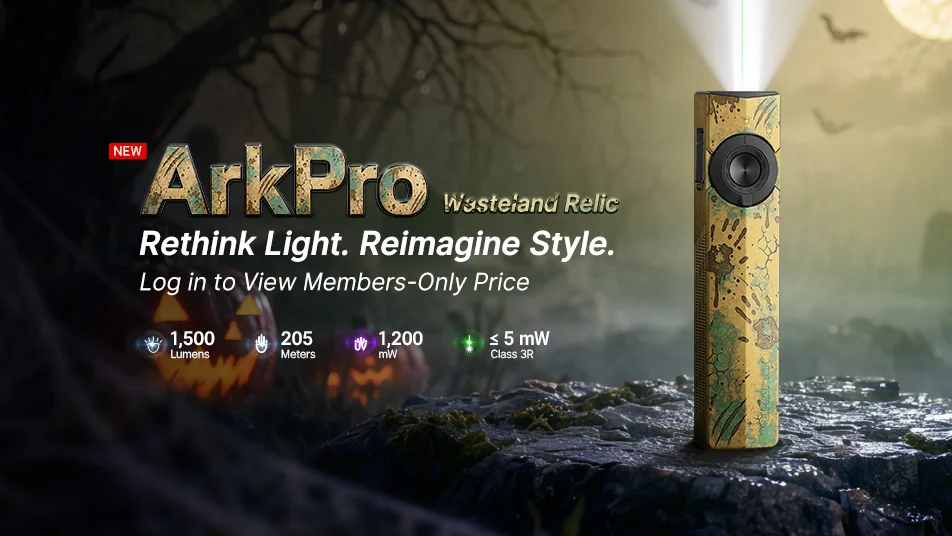
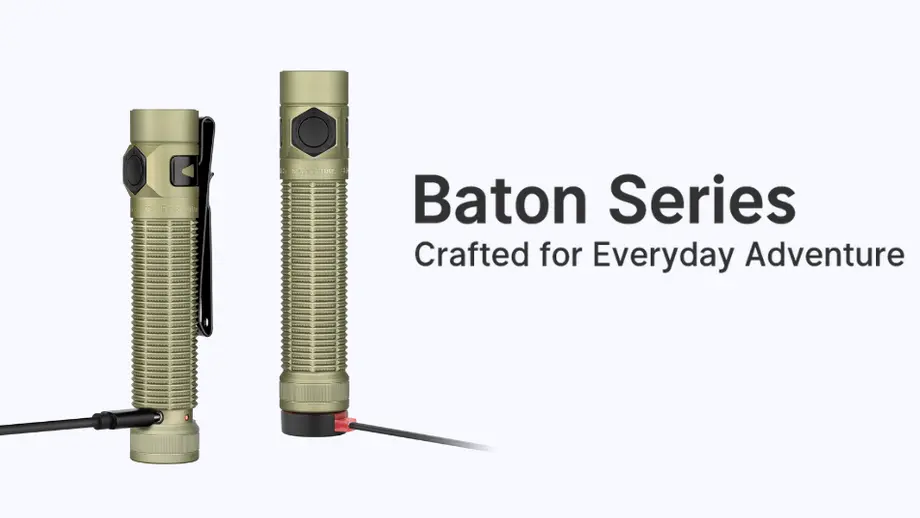
For instance, highly versatile EDC flashlights—including premium flat unibody models like the ArkPro Series and tactical compact options like the Baton Ultra / 4 Pro—now feature both charging mechanisms. This ensures you can fast-charge on the go with a standard phone cable, yet enjoy effortless magnetic charging on your nightstand or vehicle dock.
Is Magnetic Charging Worth It?
If you are trying to decide whether to transition your outdoor gear over to magnetic charging, ask yourself the following questions:
- How harsh is your typical environment? If you frequently encounter heavy rain, mud, or saltwater, the solid-state, flap-free design of a magnetic tailcap is highly beneficial.
- Where do you do most of your charging? If you primarily charge your flashlight at home, on your bedside table, or on a stable desk, magnetic docks offer unmatched convenience.
- Are you a minimalist backpacker? If you want to carry a single cable to charge your phone, GPS, camera, and flashlight, a pure magnetic setup may complicate your packing list unless you opt for a dual-charging light.
For everyday carry (EDC) and light outdoor use, the ease of simply dropping your light onto a charging pad or letting the magnetic cord snap into place at the end of the day is incredibly satisfying.
Conclusion: A Trade-Off of Convenience
Magnetic charging technologies offer an elegant solution to the age-old problem of port wear and environmental intrusion. By eliminating physical openings, they provide superior dust and water resistance while making nighttime charging completely effortless.
However, the reliance on proprietary cables and the risk of physical disconnection during rugged travel mean that they cannot completely replace universal standards. For the ultimate peace of mind on outdoor adventures, look for advanced gear that offers dual charging capabilities—combining the effortless utility of magnetic systems with the universal accessibility of USB-C.
Frequently Asked Questions
Is magnetic charging safe for flashlights?
Yes. Premium manufacturers design magnetic charging systems with integrated safety circuitry. This protects the flashlight from short-circuiting, overcharging, and reverse polarity, ensuring that the system is completely safe for everyday use.
Does magnetic charging degrade the battery faster than USB-C?
No. Because magnetic charging relies on a direct electrical connection via physical metal-on-metal contacts, it is highly efficient. Unlike wireless inductive charging, it does not generate excessive heat, meaning it does not cause accelerated battery degradation.
What should I do if my magnetic contacts attract metal debris?
If your flashlight tailcap collects metal shavings or magnetic sand, simply use a piece of adhesive tape, Blu-Tack, or a small brush to lift the debris away from the contacts. Routinely wiping the interface with a clean microfiber cloth keeps the connection reliable.