TL;DR: Finding the perfect EDC flashlight requires balancing size, power, and battery design. While ultra-compact models offer ultimate portability, they face strict thermal limits. High-power alternatives deliver incredible brightness but add significant bulk. Understanding these critical EDC flashlight trade-offs and EDC flashlight downsides—such as built-in batteries versus removable cells—ensures you select the ideal illumination tool tailored to your daily carry needs.
T Table of Contents
1. The Myth of the Perfect EDC Flashlight
2. Dimensional Limitations: Downsides of Small EDC Flashlights
3. The Power Paradox: Downsides of High-Power EDC Flashlights
4. Energy Management: Downsides of Rechargeable EDC Flashlights
5. Form Factor Evolution: Downsides of Flat EDC Flashlights
6. Connectivity Constraints: Downsides of Magnetic Charging
7. Longevity & Safety: Maintenance and Lithium Care
1. No Perfect EDC Flashlight Exists
Everyday carry (EDC) flashlights serve as indispensable tools for outdoor enthusiasts, hikers, search and rescue personnel, and daily users who understand that darkness is an inevitable part of the human experience. However, any experienced gear user knows that flashlight design involves a series of complex compromises. In the world of engineering, there is no such thing as a "free lunch." To gain pocketability, you must inevitably sacrifice thermal mass. To obtain extreme lumens that can pierce through the dense fog, you must accept shorter runtimes, increased heat, or a significantly larger physical footprint.
The search for the "ultimate" light is often a journey of discovering one's own priorities. When analyzing the modern market, including any detailed Olight EDC flashlight review, it becomes clear that selecting the right tool requires understanding EDC flashlight trade-offs at a granular level. We are currently living in a golden age of illumination technology, where LEDs are more efficient than ever, but the laws of physics—specifically thermodynamics and energy density—remain the ultimate gatekeepers of performance.
Two prime examples of different design philosophies represent the duality of the market:
- The Versatile Specialist: The Arkfeld Pro Flat EDC Flashlight focuses on flat, low-profile pocket carry and multi-functional versatility. By incorporating a high-performance white light, a dedicated UV light for inspection, and a green laser for pointing, it targets the "utility" user.
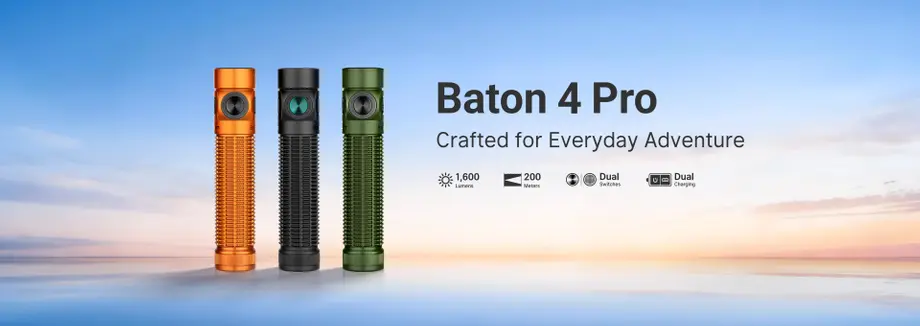
- The Power Compact: The Baton 4 Pro Compact Flashlight High Lumen prioritizes pure power density. It packs a massive 1,600-lumen output and a high-capacity 18650 battery into a traditional, pocketable cylinder, targeting those who need raw strength in a miniature frame.
This guide examines the typical EDC flashlight downsides to help you make an informed decision based on your specific requirements. We will delve into the physics of heat, the chemistry of batteries, and the ergonomics of daily use to provide a holistic view of what it means to carry light in the 21st century.
2. Downsides of Small EDC Flashlights
Small EDC flashlights are highly valued for their portability, often fitting into the "fifth pocket" of a pair of jeans or disappearing onto a keychain. Yet, their miniature form factor imposes distinct technical limitations that can frustrate a power user during extended tasks.
The Thermal Ceiling: Limited Brightness
Small flashlights lack the physical surface area and thermal mass required to dissipate heat efficiently. When a compact light produces high output, the internal LED generates extreme heat as a byproduct of converting electricity into photons. In a large searchlight, the heavy aluminum body acts as a massive heat sink. In a micro-light, there is nowhere for that energy to go.
To prevent the emitter from burning out or damaging the sensitive internal circuitry, the flashlight's driver (its computer brain) must utilize a "step-down" mechanism. This means the 1,000-lumen burst you see on the box might only last for 30 to 60 seconds before the light drops to 200 or 300 lumens to save itself from melting. Therefore, the continuous, sustainable output of a micro-sized flashlight is often only a small fraction of its advertised maximum brightness.
The Energy Gap: Shorter Battery Life
Portable EDC flashlights must use smaller batteries, such as 10440 (AAA size), 16340, or 14500 (AA size) cells. These batteries possess limited milliamp-hour (mAh) capacities. For comparison, a standard 18650 battery might hold 3500mAh, while a 16340 often holds only 700mAh. This five-fold difference in capacity translates directly into runtime.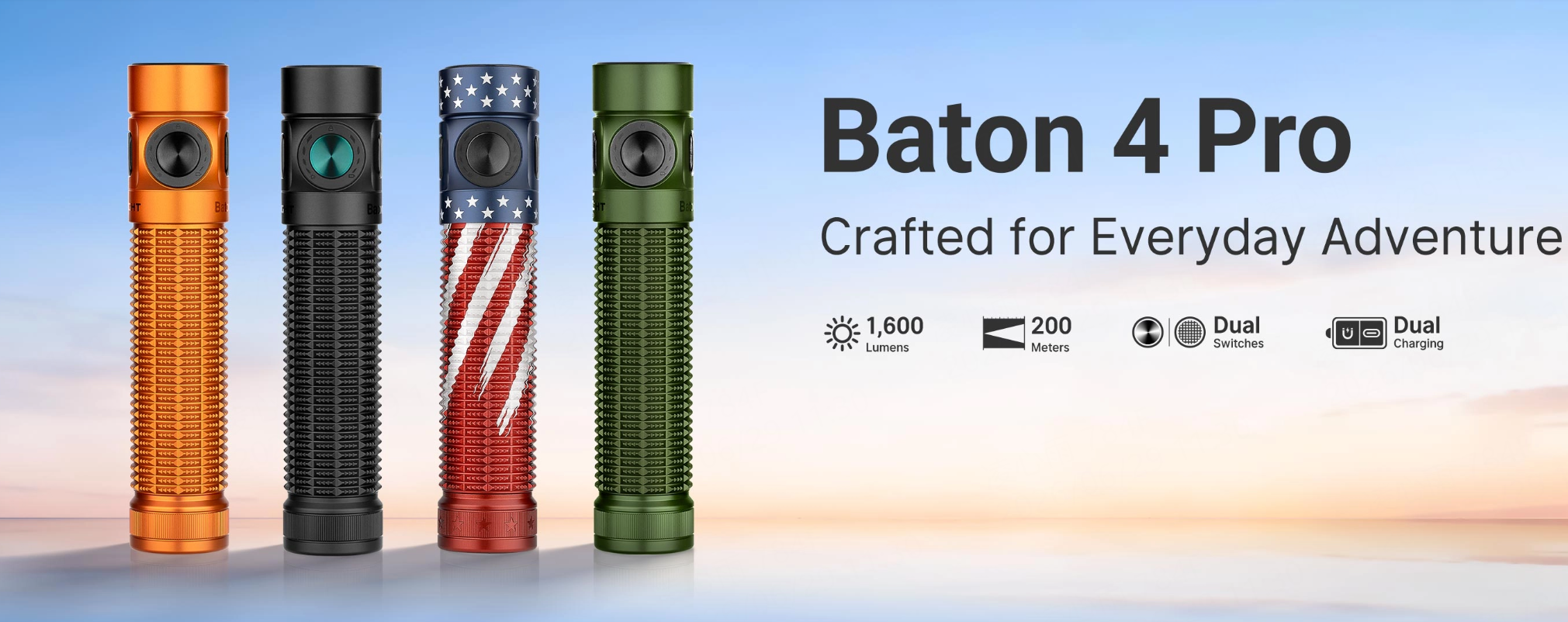
If you require sustained lighting for extended outdoor trips, night hiking, or emergency search situations, smaller lights will inevitably fail to provide the necessary runtimes. To offset this, some compact models opt for larger cells at the cost of thickness. For instance, the Baton 4 Pro uses a customized 3,500 mAh 18650 battery to achieve a maximum runtime of 100 days in moonlight mode. However, this battery choice naturally increases the overall thickness of the flashlight body compared to ultra-thin penlights.
Ergonomic Friction: Small Switches
In the quest to reduce weight and size, manufacturers often design smaller control buttons that sit flush with the flashlight body to prevent accidental activation in the pocket. While this keeps the profile clean and prevents "pocket rockets" (lights turning on and burning holes in clothing), it creates significant usability issues in the field.
In cold weather, when wearing heavy gloves, finding and pressing a miniature side switch becomes nearly impossible. The lack of distinct tactile feedback—that "click" you can feel through a glove—can slow down operation in high-stress or tactical scenarios where immediate illumination is critical.
3. Downsides of High-Power EDC Flashlights
High-power EDC flashlights, often exceeding 2,000 or 3,000 lumens, are marvels of modern engineering. They can turn night into day and illuminate objects hundreds of meters away. However, this level of performance comes with a literal and figurative weight.
Bulk and Weight: The "Pocket Anchor" Effect
High-power output requires a larger battery to provide the necessary current draw, thick metal housing for heat dissipation, and larger optical lenses to shape the beam. This added bulk makes the flashlight heavy and cumbersome to carry inside a standard pants pocket. It can pull down light fabrics or occupy too much space, leaving little room for other essential EDC gear like keys, knives, or wallets. Many users who buy a "mega-lumen" light find themselves leaving it at home because it is simply too annoying to carry every day.
Thermal Throttling and Safety
A high-power EDC flashlight running on its maximum "Turbo" setting generates massive amounts of thermal energy. Within a short time, the aluminum body can become uncomfortable or even hot to hold with bare hands. Furthermore, there is a safety risk: if a high-power light accidentally activates in a backpack or pocket, the heat generated at the lens can be intense enough to singe fabric or melt plastic.
4. Downsides of Rechargeable EDC Flashlights
Modern premium EDC lights have almost entirely shifted toward integrated rechargeable power sources. While this is environmentally friendly and cost-effective over time, it introduces a reliance on the grid and specific maintenance challenges.
Battery Degradation: The Finite Lifespan
Lithium-ion and lithium-polymer batteries are chemical devices that degrade naturally with every charge and discharge cycle. Over a period of two to three years of regular use, the battery's internal resistance increases and its maximum holding capacity declines. Unlike traditional flashlights that utilize standard, easily replaceable alkaline batteries available at any gas station, a rechargeable light with a worn-out internal cell will experience diminished runtimes. Eventually, the entire light may need professional servicing or complete replacement.
Field Maintenance Limitations
Many rechargeable EDC lights, especially those featuring flat or unibody designs, seal the battery permanently inside the chassis to achieve higher water resistance (IPX8) and structural strength. The Arkfeld Pro is a prime example, utilizing a built-in 1500mAh Li-Po battery to maintain its sleek profile.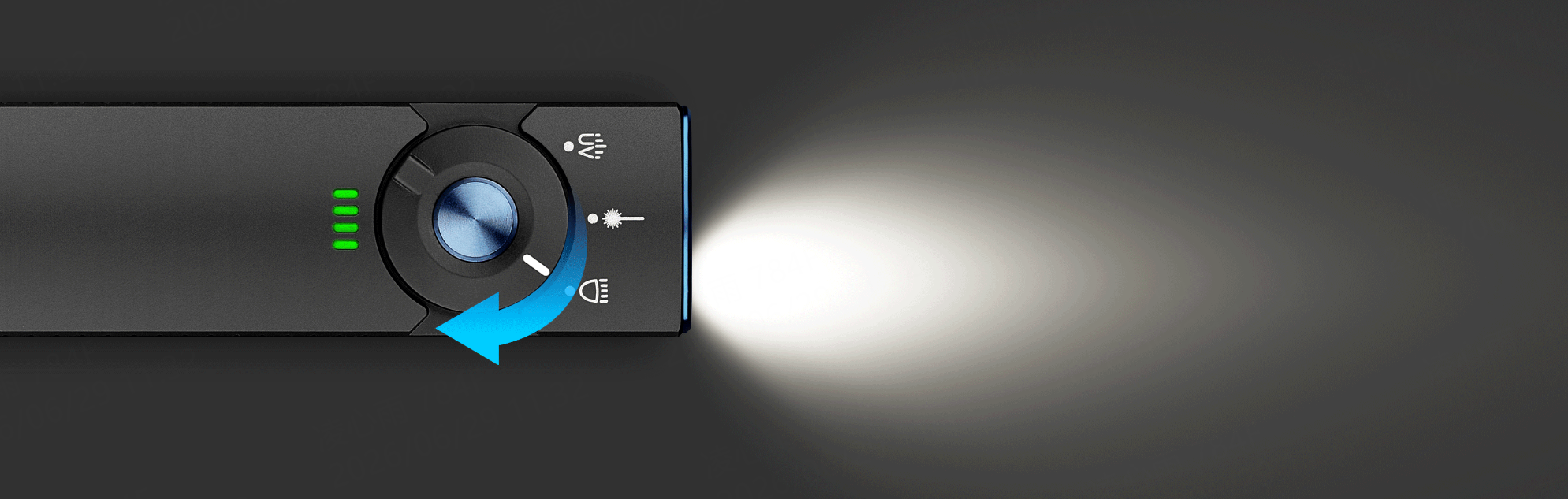
Built-in Battery Model (Arkfeld Pro)
Offers a unified, rock-solid feel and thinner design. However, when it's dead, it's dead until you find a charger. Not ideal for long-term power outages.
Removable Cell Model (Baton 4 Pro)
Allows you to carry "spares." You can swap an empty 18650 for a full one in 10 seconds, providing infinite runtime as long as you have extra cells.
5. Downsides of Flat EDC Flashlights
The "Flat Flashlight" revolution has taken the EDC community by storm. By moving away from the traditional "pipe" shape, these lights solve the problem of pocket bulge. However, this non-traditional form factor has its own set of technical downsides.
Symmetry and Muscle Memory
For decades, users have been accustomed to the symmetrical, round grip of traditional flashlights. Switching to a flat, rectangular model like the Arkfeld Pro requires adjusting your hand placement. In pitch-black conditions, your hand naturally knows how to orient a round tube. With a flat light, you might find yourself holding it sideways or searching for the button because the tactile "landmarks" are different.
Beam Profile Constraints
Traditional round flashlights use deep, circular reflectors or TIR (Total Internal Reflection) optics that are easy to optimize for a perfect, symmetrical beam. Flat flashlights often have to use shallower or more oval-shaped optics to fit the thin body. This can sometimes result in a beam that is less uniform or has artifacts at the edges, which might bother "white wall hunters"—flashlight enthusiasts who demand a perfect circle of light.
6. Downsides of Magnetic Charging
Magnetic charging systems offer exceptional convenience: simply bring the cable near the light, and it snaps into place. No rubber flaps to tear, no USB ports to clog with pocket lint. But there is a catch.
The primary issue is the Proprietary Cable Problem. If you travel and forget your specific magnetic cable, your light is effectively a single-use tool. You cannot borrow a friend's phone charger or use a standard USB-C cable found in any hotel or office. Furthermore, magnetic tailcaps can attract metal shavings if you work in an industrial environment, which can interfere with the charging connection or cause a mess in your pocket.
7. Longevity & Safety: Maintenance and Lithium Care
To truly understand the downsides of EDC lights, one must also look at maintenance. High-performance lithium batteries require respect. Over-discharging a battery (letting it sit dead for months) can chemically damage it, making it unable to hold a charge or, in rare cases, making it dangerous to recharge.
Regular maintenance is also required for the mechanical parts. The threads of a flashlight should be cleaned and lubricated with silicone grease periodically to ensure water resistance and smooth operation. The glass lens should be kept clean; a fingerprint on a high-power LED lens can actually absorb enough heat to crack the glass or degrade the light output. These are "hidden" downsides that many casual users overlook until their expensive tool fails them.
8. Expert FAQ
Q: Why does my flashlight step down its brightness so quickly?
A: This is a safety feature called Thermal Regulation. Compact lights generate heat faster than they can shed it. The internal sensor detects when the temperature reaches a limit (usually 50-60°C) and lowers the power to prevent permanent damage to the LED and the battery.
Q: Can I use standard AA batteries in a high-power 14500 light?
A: It depends on the driver. Some "dual-fuel" lights can take both. However, a standard AA alkaline battery cannot provide the high current required for Turbo modes, so your light will be significantly dimmer than when using a Lithium-ion cell.
Q: What is the best way to store my EDC light if I'm not using it?
A: If it has a removable battery, store it at about 40-50% charge in a cool, dry place. If it has a built-in battery, use the "electronic lockout" mode to prevent parasitic drain, and remember to top up the charge every 3-6 months to maintain battery health.
Q: Are "Flat" flashlights better for tactical use?
A: Generally, no. Most tactical instructors prefer a round light because it can be used with various shooting grips (like the Rogers/Technique) more easily. Flat lights are superior for utility and comfort, but round lights remain the standard for high-stress tactical applications.
9. Conclusion: Choose Trade-Offs That Fit Your Life
In the final analysis, the "best" EDC flashlight is not the one with the highest lumens or the smallest size—it is the one you actually have on your person when the lights go out. Every design choice is a trade-off. A flat light offers better carry comfort; a round light offers better ergonomics. An integrated battery offers a slimmer profile; a removable battery offers better field endurance.
If your daily life involves office work, urban commuting, and occasional mechanical inspections, a versatile tool like the Arkfeld Pro with its UV and laser capabilities is nearly perfect. However, if you are a camper, a security professional, or someone who lives in a rural area with no streetlights, the raw power and battery swappability of the Baton 4 Pro will likely serve you better.