


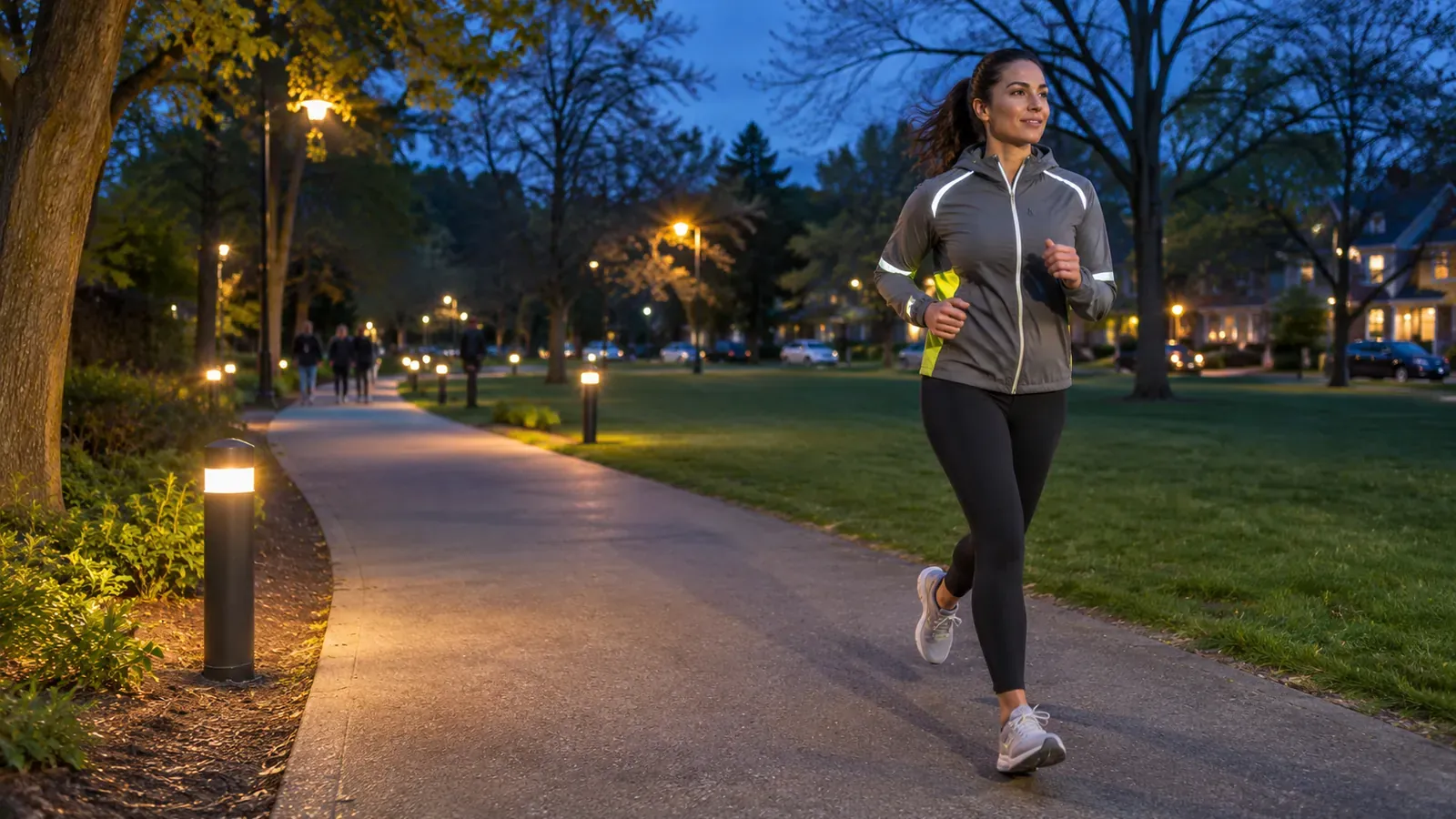
TL;DR: To run at night with more confidence, choose a familiar, well-lit route with people and open businesses nearby, tell someone the plan, and carry a phone. A headlamp helps reveal the path. A small hand light can be aimed where you need a closer look. Neither replaces route judgment or a trusted check-in.
📋 Table of Contents
- 1. How to Run at Night as a Woman: Start With a Repeatable Plan
- 2. Seeing the Route and Being Seen Are Different Jobs
- 3. Choose a Route With Options, Not Just a Short Distance
- 4. Headlamp, Hand Light, Phone, and Whistle: Different Roles
- 5. Match the Light to the Run You Actually Do
- 6. What to Carry and Where to Put It
- 7. Check-Ins That Are Useful Without Becoming a Chore
- 8. If Something Feels Wrong, Change the Plan Early
- 9. Common Planning Mistakes
- 10. Frequently Asked Questions
- 11. Is it a good idea to jog at night?
- 12. Is it safe for women to run alone at night?
- 13. What should women carry when running at night?
How to Run at Night as a Woman: Start With a Repeatable Plan
Choose a familiar, populated route with good lighting, tell a trusted person where you are going and when you expect to return, and carry a reachable phone. Use a headlamp or hand light to inspect the path and reflective details to help traffic notice you. If conditions or your comfort change, take the planned exit or end the run.
| Before you leave | A practical first choice | If the situation changes |
|---|---|---|
| Route | Familiar, populated, well-lit streets or paths | Use the shorter exit toward people or an open business |
| Check-in | Tell someone the area, start time, and expected return | Send an update, call, or arrange a ride if you stop |
| Visibility | Light for the path plus reflective details for traffic | Slow down or change routes if you cannot see the surface clearly |
| Carry | Charged, reachable phone, identification, and only useful extras | Keep essential items accessible and end the run if the setup no longer works |
A useful setup is simple enough to repeat on a tired weekday. Keep the authority to change the plan with yourself. Turning around early is a sensible choice, not a failed run.
This guide separates seeing from being seen, compares headlamp and handheld-light roles, and lays out a check-in routine that does not require a complicated tracking system. It draws on public recommendations from running and police organizations, alongside the documented features of Olight products. No light can guarantee personal safety, and no route is universally safe for every runner or every night.
Seeing the Route and Being Seen Are Different Jobs
A running light can serve two different purposes. A forward-facing beam helps you see pavement changes, roots, wet leaves, curb edges, and the point where a path bends. A light or reflective element visible from the front, side, or rear helps another road user notice you. One device may contribute to both jobs, but the two goals should not be confused.
For seeing the route, a headlamp follows your gaze and keeps both hands free. That can be useful on a path with uneven ground, on a route where you need to check signs, or whenever carrying a phone or water bottle already takes a hand. A broad beam makes nearby ground easier to scan. A more focused beam helps direct attention farther ahead. The actual beam pattern and output depend on the exact model and mode, so read the product information and practice its controls before running in the dark.
A handheld light gives you a separate direction of aim. You can point it down toward a patch of rough pavement, sweep it across a curb cut, or check an unfamiliar sign without moving your head. The tradeoff is that a hand is occupied and the beam can move more than intended when your arm swings. A small light is not automatically a better light. It is useful when the size and control suit the job.
Being seen is a different problem. A beam aimed at the sidewalk may not make your body obvious to a driver approaching from the side or behind. Reflective clothing and visible lights can help people notice movement, but they do not give a runner the right of way. Follow traffic signals, use pedestrian crossings, and choose a path that lets you see and hear approaching traffic.
Palo Alto Police’s personal-safety guidance advises runners to use appropriate lighting and reflective clothing at night, stay alert, and avoid headphones. Those habits work together: a headlamp may help with the path while reflective material helps with visibility. Neither is a substitute for paying attention.
A quick division of jobs
Use this quick comparison to match the light to the part of the run it needs to support.
| Need | Useful setup | What it does well | What it does not promise |
|---|---|---|---|
| See the surface immediately ahead | Headlamp or handheld light aimed toward the ground | Makes pavement edges and nearby obstacles easier to notice | It cannot reveal every hazard or make a damaged path safe |
| Inspect a specific point | Handheld light | Lets you direct the beam toward a sign, curb, or dropped item | It occupies a hand and should not be waved into another person’s eyes |
| Be more noticeable to traffic | Reflective clothing or a visible running light, plus route choice | Adds cues that may help other road users notice you | It does not replace crossings, signals, or defensive route choices |
| Keep a second option available | Small backup light carried securely | Provides another source if the primary light is misplaced or depleted | It does not replace a phone or emergency plan |
Choose a Route With Options, Not Just a Short Distance
The shortest route may have the fewest useful choices. A route with sidewalks, lighting, open businesses, other people, and more than one way to return can be easier to adapt if a section feels uncomfortable or conditions change. Think about where the route passes, not only how many miles it measures.
Before the run, check the parts you can know in advance: whether the path is open at that hour, where construction or crossings may interrupt it, whether the route has isolated stretches, and where you could turn toward a busier street or staffed business. If a park closes after dark, respect its hours. A familiar route is a starting point, not a reason to ignore a new closure, crowd, or change in conditions.
The same local guidance favors well-lit, busy streets, avoiding isolated roads and paths, varying exercise times and routes, and knowing which businesses are open and where police and fire stations are. These are practical choices, not a guarantee about any particular location. Apply local rules and conditions to the route you choose.
A practical route plan can have three levels:
- Preferred loop: the route you know and expect to run.
- Short exit: a well-lit turn that leads toward a more populated street or open business.
- Stop point: a place where you can pause, call someone, or arrange a ride without continuing farther into an uncomfortable area.
Consider a morning when a familiar park entrance is closed or the main sidewalk is temporarily blocked. Before starting, choose a second route that stays on a sidewalk and crosses only at a marked intersection you already know. Send your trusted contact a short update with the alternate loop and a revised return time. Keep your phone somewhere reachable without digging through a bag. If the alternate route feels darker, busier, or less comfortable than expected, use the known well-lit segment back or end the run. The planned distance can wait. A familiar decision point works better than trying to rethink a route while hurrying near traffic.
You do not need to map every possible event. You need a few recognizable options so “I want to change this” has a next step. If the planned route no longer looks right when you arrive, choose the alternative before starting rather than trying to convince yourself to continue.
Headlamp, Hand Light, Phone, and Whistle: Different Roles
A good carry setup is not a pile of gear. Each item should have a clear role, a place where it rides, and a reason it belongs. This comparison is about function, not a promise that one combination is right for every runner.
| Item | Best role during a run | Placement and tradeoff | Before leaving |
|---|---|---|---|
| Headlamp | Keep both hands free while lighting the direction of travel | A comfortable strap matters, and the beam follows head movement | Adjust it in a familiar setting and check that it does not bounce or obstruct vision |
| Handheld light | Direct a beam toward a nearby detail or alternate line of sight | Takes one hand and needs a secure grip or pocket between uses | Practice its on/off control and select a manageable mode |
| Phone | Call, message, navigate, and share a check-in | Needs to remain reachable and have enough charge | Set the contact and location-sharing method before the run |
| Whistle | Make an audible signal if a runner needs to attract attention | Attach it where it can be reached without unpacking a bag | Know where it is and keep it attached securely |
| Reflective details | Help other people notice movement in low light | Position affects visibility from different directions | Check front, side, and rear visibility, not just the front of a shirt |
| Backup light | Provide another small source if the primary one is unavailable | Should be secure, not loose in a bag | Check charge or battery status according to its manual |
A headlamp can be a useful starting point when the route calls for both hands free. A clip-on light offers another placement option when attached to compatible clothing or gear or used with its intended accessory. Check the fit before running. No clip, magnet, or strap should be assumed secure on every garment or through every movement.
A whistle is a compact sound signal. It is not a self-defense device or a guarantee that someone will respond. A phone is more versatile, but it depends on access, battery, and connection. Consider both the planned route and what you can reach while moving. Keep essential items in a predictable place, not at the bottom of a pocket with keys and earbuds.
Match the Light to the Run You Actually Do
A neighborhood sidewalk run, a park loop, and a mixed-use trail make different demands. On a familiar street with working lamps, a low, steady beam may be enough to inspect the ground directly ahead. On a darker path, a runner may prefer a headlamp and a separate visible light. In either case, use the route’s actual lighting and surface as the guide. Do not assume that a published maximum lumen number automatically gives useful visibility in every setting.
A headlamp for hands-free path awareness
A headlamp can make a practical difference when you want to keep a hand free for water, a phone, or balance on a familiar uneven path. Olight’s Perun Series is designed for hands-free use, while the Olight Oclip Series Headlamp Strap is an accessory for compatible Oclip lights. An accessory pairing does not turn every clip light into a purpose-built running headlamp. Try the exact combination for comfort and stability before relying on it.
The key question is not “Which light is brightest?” It is “Can I keep the beam where I need it without distraction?” A headlamp that bounces, shines into other people’s eyes, or is awkward to adjust can make a route less pleasant. Set the strap before leaving, keep the beam angled toward the path, and use a setting that suits the task. If a light causes discomfort or repeated adjustment, stop and fix the fit rather than pushing through.
A prior Olight headlamp setup for hiking and running discusses using a compatible strap across activities. Use that as a product setup reference, then check the current manual and actual fit for the light you own. Your route, clothing, hair, and running motion all affect comfort.
A clip light for a visible attachment point
A clip light can be helpful when the runner wants a light attached to a waistband, vest, pack, or another compatible point. Placement matters. A clip mounted where it swings can create glare, point away from the route, or come loose. Check the garment’s thickness and fabric, confirm that the clip is fully seated, and try a short walk before running.
Olight’s Oclip Ultra offers white flood and spot modes, a UV source, and multiple mounting options according to its product information. For a night run, the white-light modes are the relevant options for seeing the route. UV is not a substitute for route illumination or visibility. It can also be paired with the Oclip Series Headlamp Strap, subject to fit and comfort. Consider this format when a clip-on source is useful across daily carry and a specific hands-free setup, not because every runner needs multiple modes.
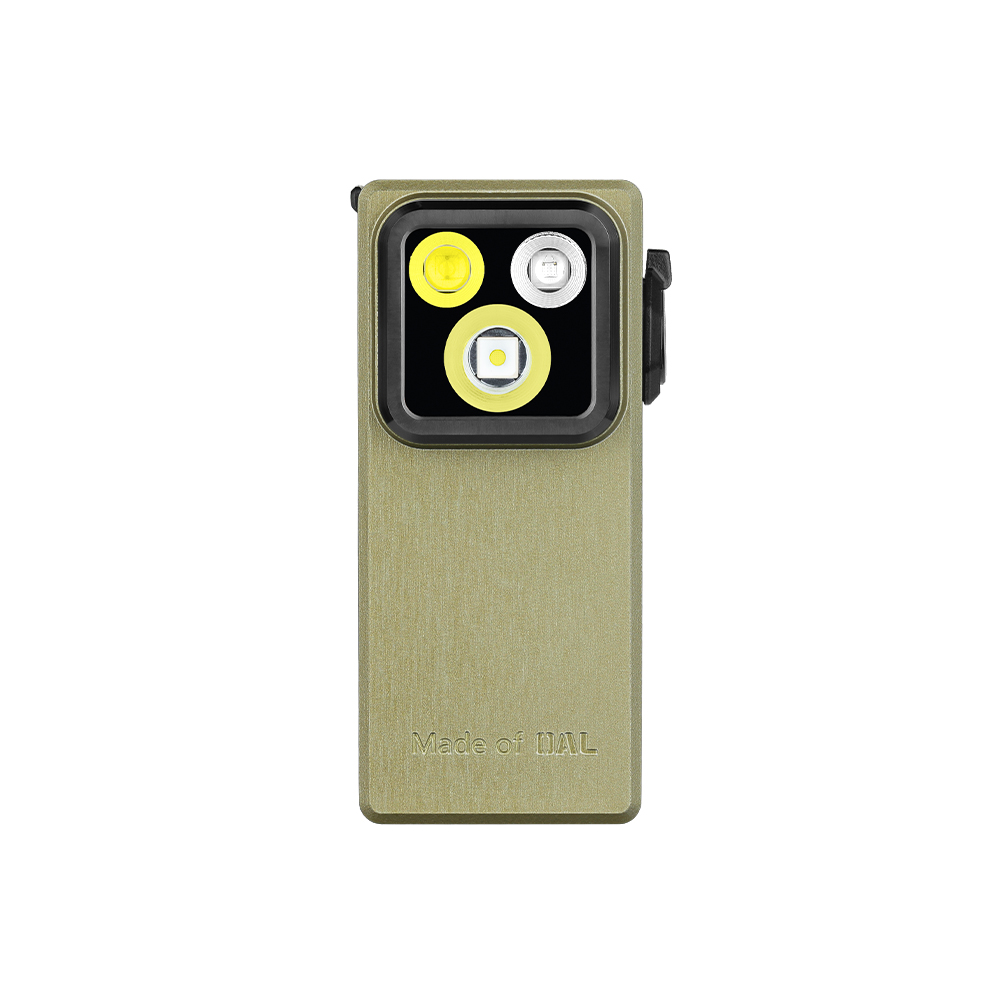
The Olight Oclip 2 family includes several clip-light formats. Compare the exact model and its controls before choosing. The Oclip Ultra and every other clip light should not be treated as interchangeable. Keep the product’s mode choices familiar. If switching modes takes attention away from the route, set up the light before the run and avoid experimenting while moving. A light should make a small task easier, not add a control puzzle at an intersection.
A pocket light for close checks or a backup
A small rechargeable light can act as a backup or as a way to inspect something close by. The i1R 2 Pro is a compact twist-operated keychain light with a 5-lumen low mode and a 180-lumen high mode listed in Olight’s product information. Its manual describes the high and low modes and the charging procedure. Those published settings do not tell you how much light a particular route needs, and the manual’s runtime definition matters: the listed time is measured until output falls to half its initial level.
The i1R 2 Pro is small enough to keep in a pocket or attach to a key ring, but a keychain light can swing or snag if placed carelessly. Secure it where it can be reached without catching on clothing. Practice turning it on and off before the run. If used as a backup, keep the primary light and phone separate so a single misplaced item does not remove every option.
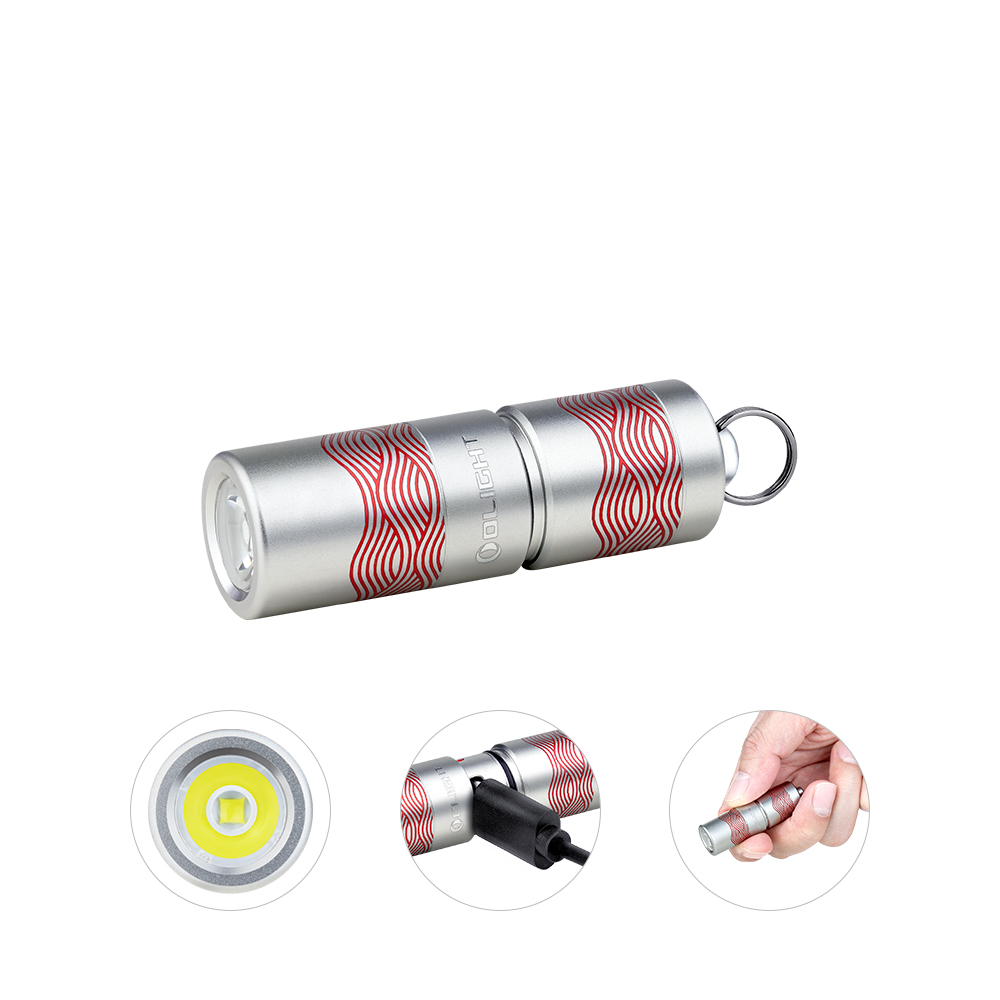
A pocket light is not a replacement for a forward-facing running light on a dark route. It is a compact second source that may help with a short close-up check or a backup plan. If the route is too dark to see the ground confidently, choose a different route, a suitable dedicated light, or a different time.
What to Carry and Where to Put It
Carrying more does not automatically make a run safer. A useful list starts with essentials and adds items according to the route, weather, duration, and local conditions.
- Phone: charged, reachable, with the check-in contact or location-sharing method already set.
- Identification: carried where it remains with you if a pocket is opened or a layer is removed.
- Light: selected for seeing the ground, plus a visible or reflective element where traffic is present.
- Backup light: small and securely stowed if the route or time makes a second source useful.
- Whistle: only if it is something you can reach and use without searching through a bag.
- Water or needed personal items: based on the length and conditions of your run, not a generic list.
Olight’s Titanium Emergency Whistle is a compact titanium accessory. If choosing a whistle, consider where it will be carried and whether the attachment keeps it easy to reach. A whistle does not communicate your location by itself, and it should not replace calling emergency services when that is needed.
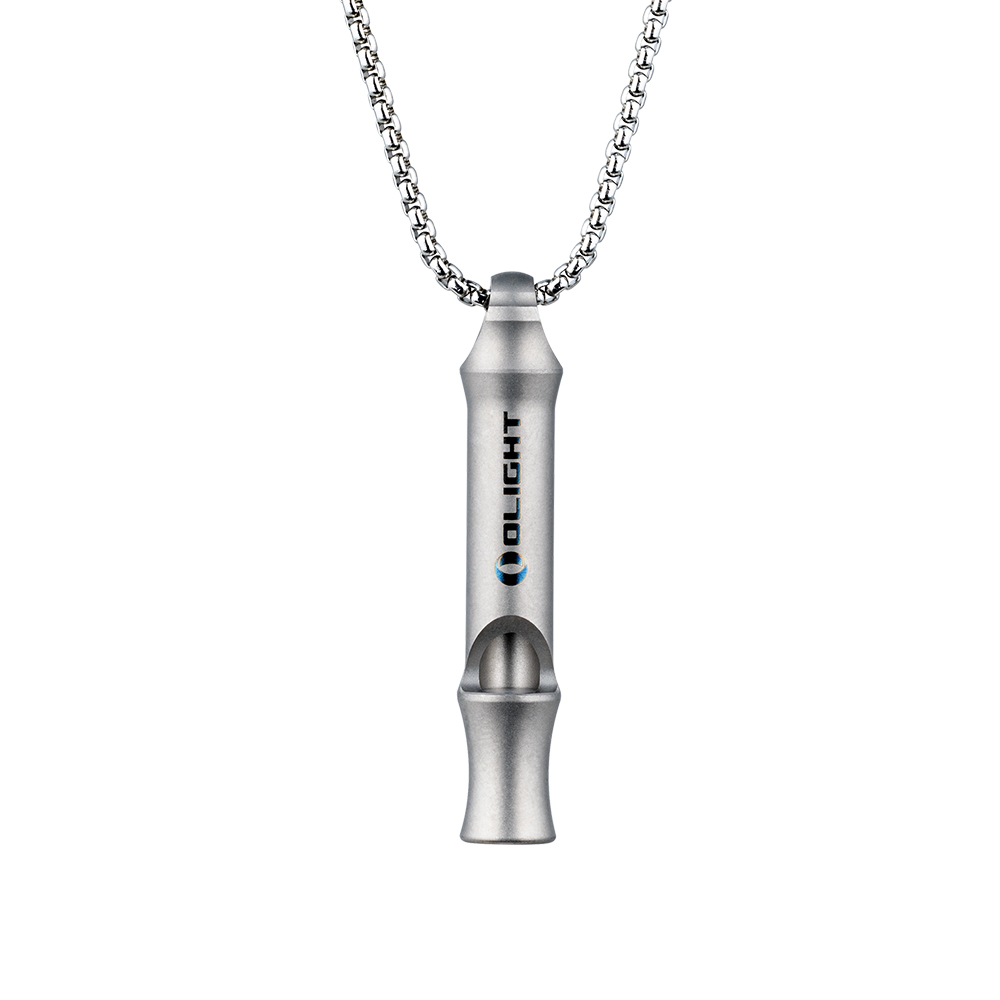
Keep the phone accessible without making it easy to drop. A secure pocket or running belt may be more practical than holding it for the entire run. If the phone is being used for music, keep volume low enough to hear approaching people, traffic, or a change in the environment. Headphones with strong noise cancellation can reduce awareness. Choose a setup that leaves you able to notice what is happening around you.
The National Park Service’s Ten Essentials guidance recommends telling someone where you are going and when to expect you back for an outdoor trip. That general planning habit can be adapted into a simple pre-run message: “I’m starting the north loop at 8:10 and expect to be back by 8:45. I’ll text when I finish.” Share only the information you are comfortable sharing, with a person you trust.
Check-Ins That Are Useful Without Becoming a Chore
A check-in plan works best when it matches how you already communicate. You could send a start message and an end message, share a live location with a trusted person, or use a scheduled check-in for a longer solo run. The important details are who receives the message, when they should expect it, and what they should do if you miss it. Olight’s light-first routine for running at night covers the general setup. This article adds route, visibility, and check-in decisions for women who run after dark.
A missed message can have an ordinary explanation: a dead phone, a forgotten text, or a run that took longer than expected. Agree on a reasonable grace period and a simple follow-up step before anyone needs it. For example, the contact can first call or message you, then use the route information you chose to share. Avoid making a plan so elaborate that neither person remembers it.
If you use live-location sharing, review the app’s current settings and choose the recipients intentionally. Share only for the period you mean to share, and confirm that the contact can see it. Technology can fail or be unavailable, so a basic route-and-return-time message is still useful. Do not treat a map dot as a substitute for a conversation about the plan.
A running group or partner can make the routine more social and may be a preferred choice on some nights. It is not a requirement for every run. A group can agree on pace, route, meeting point, and a no-one-left-behind plan. For a solo run, the same basic planning still applies: choose the route, make a contact plan, and keep the option to stop or turn back.
If Something Feels Wrong, Change the Plan Early
You do not need proof that a situation is dangerous before deciding it is not comfortable. A route that suddenly becomes isolated, a person whose behavior concerns you, a broken light, a closed gate, or a change in traffic can all be reasons to alter course. Trusting that signal can be as simple as crossing to a busier street, turning toward an open business, or ending the run.
Public-safety guidance encourages runners to favor busy, well-lit routes and know where open businesses are. Think of a route change as an option to consider, not a scripted confrontation plan. You can move toward a staffed public place, call someone you trust, or contact local emergency services if you believe immediate help is needed.
If you stop, move to a place where you can pay attention to your surroundings. Do not remove yourself farther into an isolated area to answer a message or inspect a device. If you want to call, do so from a location that feels more public and accessible. If the route continues to feel wrong, end the run and arrange another way home.
The light’s job in that moment is limited. It can help you see where you are stepping or make your position more visible. A strobe, bright beam, or accessory should not be presented as a guarantee, a substitute for local emergency support, or a self-defense method. Keep the focus on leaving an uncomfortable area and contacting people who can help.
Common Planning Mistakes
Treating a bright beam as personal protection
A higher output can help illuminate a task, but it does not prevent someone from approaching and does not tell you whether an area is safe. It can also cause glare, shorten runtime, or distract people nearby if aimed carelessly. Choose an output for the path and use reflective details or a separate visibility light where appropriate.
Assuming every park path stays open after sunset
Operating hours and lighting vary. Check local rules and choose another route if the path is closed or poorly maintained. Do not rely on a memory of how the trail looked during the day. Visibility, crowds, and access may change at night.
Carrying gear that is difficult to reach
A phone, whistle, or backup light at the bottom of a bag is not a practical carry choice. Test where each item sits while moving. If the location is awkward, change it before the run.
Letting an accessory create a new distraction
A clip light or strap can be useful only when it fits securely and does not bounce or shift. Confirm the fit with the actual clothing or pack. If it comes loose, stop in a suitable place and correct it rather than adjusting it repeatedly while running.
Thinking a shared location is a complete plan
Location sharing can help someone follow a route, but it does not provide context on its own. Tell the contact what time to expect you and how you want them to respond if you miss that time. Keep your phone charged and accessible.
Frequently Asked Questions
Is it a good idea to jog at night?
It can be, if the route and conditions suit you and you can see and be seen well enough to make the run comfortable. Choose a familiar, populated, well-lit route where possible, check local access hours, keep a phone available, and tell someone your plan. If the route, visibility, weather, or your own comfort changes, shorten the run or choose another time.
Is it safe for women to run alone at night?
No route or gear can make solo night running risk-free, and no single rule applies to every person or place. Many runners choose solo night runs by weighing local conditions, selecting routes with lighting and people nearby, sharing a check-in plan, and changing course when needed. Running with a partner or group is another valid choice, not an obligation.
What should women carry when running at night?
Carry a charged phone and identification, and choose lighting and reflective details for the route. A headlamp can help you see the ground. A separate small light or whistle may suit a specific need if it is easy to reach. Keep the load comfortable and secure. Gear supports a plan, but it cannot guarantee safety.
Changelog
- November 19, 2026: Reviewed Olight product specifications and manuals, and checked public running-safety guidance for route, visibility, and check-in recommendations.




