⚡ TL;DR
The best EDC knife for women should match the individual's ordinary tasks, hand and carrying space. Our OKNIFE LK combines a folding blade with rechargeable lighting. The NexTool Mini Flagship F12, made by NexTool and offered through OSelect, combines a locking main blade, scissors and pliers. Compare the functions you need, the complete dimensions and the controls you can use deliberately.
Opening deliveries at a desk, organizing craft materials and preparing equipment at a campsite are different jobs. Start with the material you need to handle and the tool suited to it. Our OKNIFE range provides a starting point for comparing documented features. Keep the purchase focused on useful cutting and equipment preparation rather than a promise of a universal winner.
| Everyday need | Detail to compare | Purchase decision |
|---|---|---|
| A tool for parcels and ordinary cutting | Blade, closed dimensions, handle and controls | Match the whole tool to the task and the place you will keep it |
| Cutting plus nearby illumination | Separate blade and lighting functions, charging route | Decide whether one combined item suits both jobs |
| Small adjustments and mixed tasks | Scissors, pliers and the other functions actually needed | Consider a multitool instead of buying a blade for every job |
| Carrying between different bags or clothing | Clip, storage location and access | Choose a location you can use consistently |
📋 Table of Contents
- 1. Choose an EDC Knife by the User's Tasks
- 2. OKNIFE LK Combines a Folding Blade and Rechargeable Lighting
- 3. Which EDC Knife Dimensions Matter for Pocket or Bag Carry?
- 4. Compare Handle Fit With Your Actual Working Grip
- 5. One-Hand Opening and Blade Locking Are Different Features
- 6. Keep Lighting Lockout Separate From Blade Locking
- 7. Choose Between Pocket Carry and a Defined Bag Compartment
- 8. Decide Whether a Knife-and-Light Combination Fits Both Jobs
- 9. What Does USB-C Charging Add to the LK Carry Plan?
- 10. NexTool F12 Offers a Different Everyday Tool Mix
- 11. Treat Finish, Steel and Appearance as Separate Choices
- 12. Build a Small Tool Kit Around Remaining Needs
- 13. FAQ
Choose an EDC Knife by the User's Tasks
A useful shortlist starts with the work you expect to do. A delivery label, folded wrapping paper and a small equipment tie present different shapes and materials. Consider whether scissors, a folding knife or another appropriate tool makes sense for each job. Buying a knife does not require treating every cutting task as a reason to use its blade.
Women have different hand sizes, clothing preferences, working environments and familiarity with folding tools. A recommendation should preserve those differences. The same published dimensions may suit one person's desk and trouser pocket while being inconvenient in another person's small bag. Evaluate the actual arrangement instead of treating a smaller or more decorative product as automatically appropriate.
Separate a personal tool from equipment shared at work or home. A personal item can have a familiar place and user, while a shared item needs clear identification and an agreed return location. If someone else will borrow it, include the applicable instructions in that handover. Familiarity with another folding tool does not establish familiarity with this model's controls.
Think about how often the task actually occurs. Someone who opens a delivery at a fixed desk may prefer a tool that stays there. Someone carrying equipment between locations may want an accessible personal tool. That distinction changes the importance of pocket space, a clip, a bag compartment and the accessories needed to keep a combined tool ready.
OKNIFE LK Combines a Folding Blade and Rechargeable Lighting
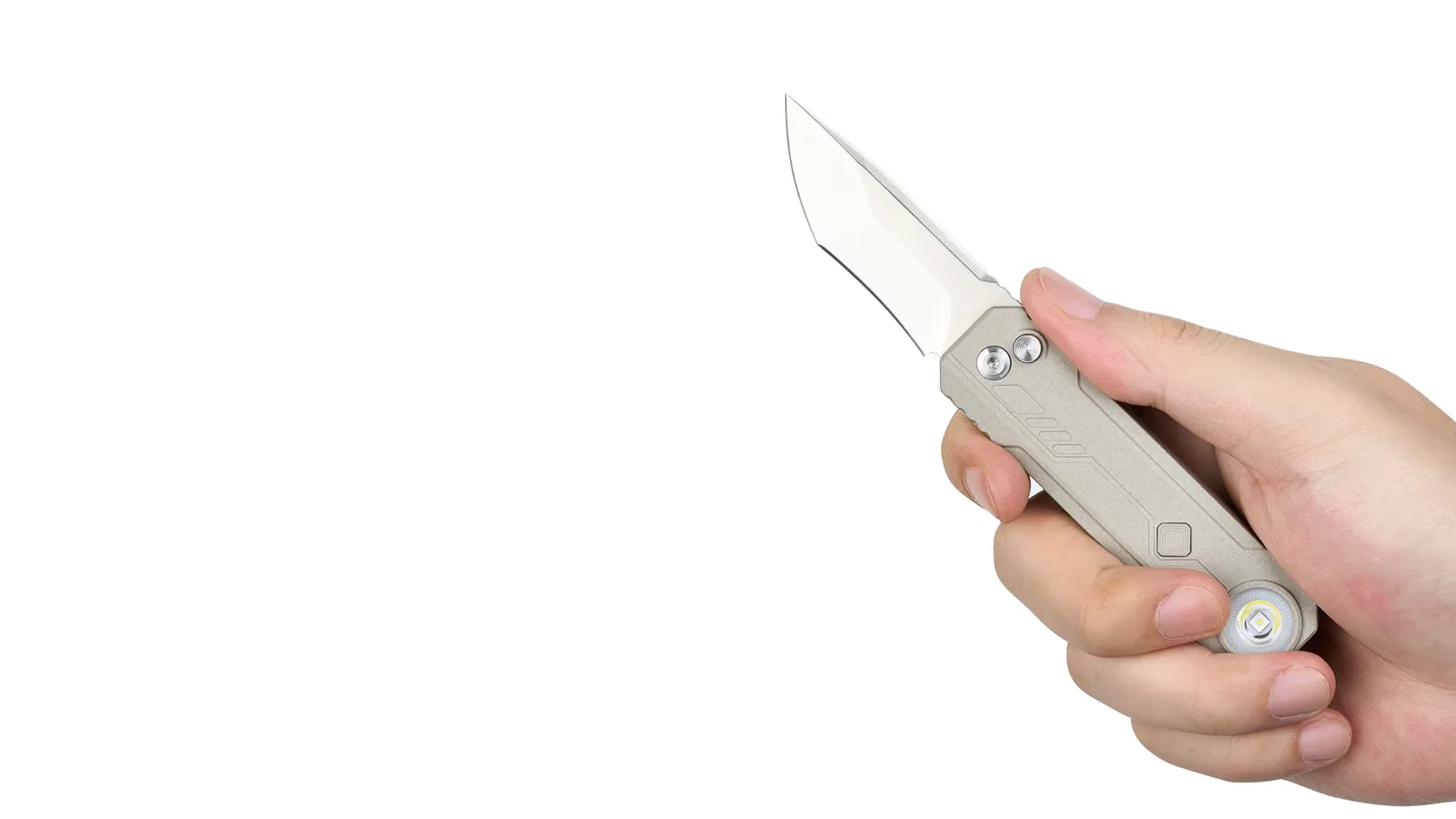
Our OKNIFE LK combines a folding knife with white and RGB lighting. Its US specifications list a 62.9mm blade, a 159.9mm overall length and a 16.6mm handle thickness. The product description lists a weight of 86 grams and a deep-carry pocket clip. These are concrete details to compare with the place where you intend to carry the tool.
The blade material is listed as Bohler M390, with a 6061-T6 aluminum handle. The US description identifies a tanto blade, a flipper tab and a button-lock mechanism. Consider those as distinct aspects of the product. The blade's material, its shape, the handle's dimensions and the controls each answer a different part of the selection question.
The supplied package lists the tool with its battery and pocket clip, a USB C-to-C charging cable and a user manual. That matters if the attraction is carrying cutting and lighting functions together. The lighting component adds a charging task, while the folding blade has its own operating and care requirements. Both belong in the decision about the complete item.
A combined format may suit someone who wants one identifiable tool for a small set of regular tasks. It may be less convenient when the light and cutting tool need to be in different places. Think through who uses each function and where it will be needed before interpreting the number of features as the main reason to buy.
Which EDC Knife Dimensions Matter for Pocket or Bag Carry?
Use the closed dimensions to assess pocket or bag space, and read blade length and overall length as separate measurements. For OKNIFE LK, the published 62.9mm blade figure belongs with the blade specification. Its 159.9mm overall length describes a different dimension.
The LK manual separately lists dimensions of 97 by 25 by 16.6mm. Read those alongside the folded product illustration when considering storage. Keep the closed-tool and overall figures on separate lines in a comparison note. That prevents a reader from mistaking the longer operating outline for the space required by the folded item.
Check all three dimensions of the intended storage place. Length matters in a shallow compartment, thickness affects what can sit alongside the tool, and width affects how it shares space with other items. A pocket that accommodates the length can still be inconvenient when loaded with a phone, keys or another object. The whole arrangement determines whether access remains practical.
Avoid converting a blade measurement into a general permission to carry the product. A product specification describes the product. Before taking a cutting tool to a workplace, event or other destination, check that destination's current requirements and the applicable official rules for the exact item and carrying arrangement. Keep that decision separate from whether its dimensions suit your bag.
Compare Handle Fit With Your Actual Working Grip
Handle fit involves the actual points where your hand supports the tool and reaches its controls. A dimension table is useful for narrowing options, but it does not describe every person's reach or grip. Consider whether you can identify the correct control and maintain a comfortable, deliberate hold while following the product's instructions.
Thickness deserves attention without becoming a universal rule. LK's listed handle thickness is 16.6mm. A user considering a very slim pocket may weigh that figure differently from someone choosing a tool for a dedicated bag compartment. Handle length, thickness, surface and control placement work together. There is no single measurement that makes a knife suitable for all women.
A clip can also affect how the complete item feels in the hand. Consider the tool as supplied, including the pocket clip, rather than imagining only the bare handle outline. If you already own the product, assess its ordinary handling in a clear preparation area before carrying it for a new task. Keep attention on the actual task and the operating instructions.
Clothing and other equipment can change access even when the tool itself stays the same. A bag strap, a crowded compartment or a different jacket may alter how you retrieve it. Consider the likely combinations of clothing and belongings. A convenient arrangement should leave you able to identify the tool and take it out deliberately without searching among unrelated loose objects.
One-Hand Opening and Blade Locking Are Different Features
The LK product description identifies its flipper tab and button-lock mechanism. Its manual separates opening the knife, locking the blade and closing the knife. Read those as different actions when deciding whether the interface suits you. A feature described as convenient for opening does not remove the need to understand how the blade returns to its closed position.
The manual shows the flipper as the opening control and identifies the button lock separately. It states that the button lock engages when the knife is fully opened. Learn the applicable sequence from the exact instructions, including how to release the blade for closing. Do not substitute the behavior of another knife merely because it also has a button or flipper.
The lighting switch is another separate control on LK. Its overview labels the button lock, flipper and light switch individually. Before using an unfamiliar combined tool, identify which control belongs to which function. This is particularly important when explaining the tool to someone who has seen its light but has not handled its folding blade.
One-hand opening should be evaluated as an interface preference for ordinary work. It is not a reason to pursue a faster movement or a promised success rate. If a control is difficult for you to manage deliberately, reconsider the tool or task arrangement. A different appropriate tool can be a better purchase than an interface you expect to struggle with repeatedly.
Keep Lighting Lockout Separate From Blade Locking
A combined tool can use the word lock in more than one context. LK's button lock concerns the folding blade, while the flashlight has a separate electronic lockout instruction. Identify which function a reminder is referring to before using it. A note saying only lock the tool leaves an important distinction unresolved for the person preparing it for a bag.
The LK manual's flashlight section starts its lockout instruction with the light off. It specifies pressing and holding the light switch for about two seconds to enter lockout. Its unlock instruction uses another held press until the light turns on. Keep the light switch and the light's starting state with that instruction. The blade's button lock is a different control, described in the knife-operation section.
This distinction matters when the lighting function has been used separately from a cutting job. A user may need to finish a nearby inspection, turn the light off and prepare the item for transport without changing the blade's position. Read the two applicable sections rather than assuming one button performs both tasks. The manual calls for locking the product during carrying or transport.
Temperature and storage also remain part of the lighting task. The LK manual warns against putting a hot light into a fabric bag or fusible plastic container. Plan the return from using the light before putting the combined item among other belongings. A documented lockout function and the correct storage conditions are separate checks, so the presence of one should not replace attention to the other.
Choose Between Pocket Carry and a Defined Bag Compartment
LK's deep-carry pocket clip provides a documented carrying feature. To assess its usefulness, consider the actual pocket or other suitable location you intend to use. The clip's presence does not establish that every fabric, pocket opening or bag edge will work equally well. Check the complete clothing and equipment combination instead of selecting by the feature name alone.
For a bag-based arrangement, give the closed tool a defined location. A dedicated compartment makes it easier to identify and return the item without mixing it with small loose hardware. Keep the operating instructions' storage requirements with that choice. A convenient pocket in one bag may not correspond to the same location in a smaller evening bag or another work bag.
For clothing without a suitable pocket, a bag can provide the tool's return location without turning the clip into a universal attachment system. Choose the bag and compartment by their actual construction and the manufacturer's handling guidance. Keep the closed item identifiable and out of children's reach, as the LK manual instructs. A clip is a carrying feature, without replacing the storage decision.
Decide Whether a Knife-and-Light Combination Fits Both Jobs
LK's white light gives the combined format a useful additional role. The manual lists a 100-lumen High setting for 1.5 hours and a 10-lumen Low setting for 13 hours. Its Turbo entry begins at 400 lumens for one minute, followed by a lower stage. Select the relevant operating entry for the lighting task rather than treating the maximum as its continuous output.
The lighting function can help a user who wants one item available for ordinary nearby checks. For example, reading an equipment label and dealing with packaging may happen in the same preparation area. Consider whether the combined item's size and position suit both tasks. Having two functions in one housing does not require using both during every job.
Think about the direction and location of the light when a cutting task requires attention elsewhere. If the task needs illumination from a separate position, plan another appropriate light for that role. The combined device can still be useful without becoming the only lighting arrangement in a room or campsite. Assign the lighting role before choosing the format.
The RGB functions are separate from the white working-light choice. The product description lists multi-mode ambient lighting, while the manual explains the corresponding lighting controls. Decide whether those functions have a place in your intended use. Their presence does not establish that they improve blade handling or replace the white light needed to distinguish a label or ordinary object.
What Does USB-C Charging Add to the LK Carry Plan?
Include the supplied USB C-to-C cable and a suitable power source in the plan for LK's lighting function. The LK manual lists a USB-C charging port, a 5V 1A input and a charging time of about 60 minutes. Keep the input specification with that reference time, and choose an appropriate charging location for the complete arrangement.
The manual describes a blinking red indicator during charging and green when charging is complete. It also states that only the High brightness level is supported during charging. Keep that condition with the lighting function if considering the tool at a preparation surface. Do not transfer the behavior to every combined tool or assume every lighting mode is available while connected.
LK's manual excludes charging below 0°C or above 40°C. It also warns against placing, charging or using the light in a car where the interior may exceed 60°C, or in similar environments. Choose the charging location with those model-specific conditions in mind before leaving the tool there. For a long period of storage, the manual calls for charging the product completely first. That instruction belongs with the decision to put LK away for a season, separate from the cable and indicator checks for an ordinary recharge.
A combined item needs to return from a charging task to its normal carrying arrangement. Decide where the cable remains and where the tool goes afterward. Someone borrowing the tool needs to know whether the cable comes with it or stays at home. That is a different question from whether the blade is ready for its next ordinary task.
For more detail on organizing connectors and the complete charging route, see our flashlight charging and care guide. Use LK's own instructions for its input, indicator and handling requirements. Keeping the tool and the correct instructions together is more useful than assuming another USB-C light has identical behavior.
NexTool F12 Offers a Different Everyday Tool Mix
The NexTool Mini Flagship F12, offered through OSelect, serves a different selection need. Its US description identifies pliers, scissors and a locking main blade, with a listed 79-gram body, a pocket clip and a glow-in-the-dark insert. NexTool is the manufacturer. The product belongs in this comparison when those additional tools correspond to jobs you actually expect to do.
A person mainly dealing with tags or wrapping material may value scissors more than an integrated light. Someone making small ordinary adjustments may have a reason to consider the pliers. Identify those tasks individually. A longer feature list has little purchasing value when the extra tools have no assigned purpose in the kit.
F12's description lists an 8Cr14MoV main blade, while LK lists Bohler M390. Those are material specifications for different tools and formats. Compare them alongside the actual function mix, handle and carrying arrangement. The steel name alone does not tell you which whole product will be more convenient for your desk, bag or campsite equipment.
The F12 manual includes separate illustrations for its different tools and warns about sharp blades and pinch points. Learn the instructions for the specific function before using it. A compact multitool still needs enough room and a suitable task arrangement for the component selected. Consider whether a dedicated pair of scissors or another single-purpose tool would handle your most frequent job more simply.
Treat Finish, Steel and Appearance as Separate Choices
A preferred color or finish can help you enjoy using and identifying your own equipment. It should sit alongside the dimensions, controls and function mix in the selection. A particular appearance does not establish cutting performance, handle fit or ease of operation. Keep those questions tied to the actual product information and the person who will use it.
The same separation helps with gift buying. Start with the recipient's ordinary tasks and carrying habits, including whether a knife is welcome and suitable in the intended setting. Confirm the exact model rather than choosing only by a photograph. A gift's appearance can be personal without standing in for the practical decisions about how it will be used and stored.
Material information also belongs with care requirements. Read the instructions supplied with the exact tool and avoid assuming a premium steel or aluminum handle removes the need for maintenance. Our pocket knife cleaning and lubricant guide discusses organizing that task. For LK, keep its rechargeable lighting and the manual's no-immersion instruction in mind when deciding how to care for the complete item.
Build a Small Tool Kit Around Remaining Needs
Review the equipment already available before adding another item. A desk may already have suitable scissors, while the actual missing item is a small light for reading an equipment label. A bag may contain a useful multitool but lack a consistent compartment for it. Name the specific gap so the next purchase solves that gap instead of duplicating an existing function.
After an ordinary use, return the tool to its agreed location and note anything requiring attention. Follow the model's instructions rather than improvising repairs or disassembling LK, which its manual prohibits. A clear return routine makes it easier to notice a missing item, a charging task still to complete or a question about a particular control before the next activity.
FAQ
Changelog
- November 6, 2026: Product information and buying guidance reviewed.