Olight publishes this guide and makes the UV flashlights named in it. Product specs come from Olight's official product pages, checked on September 20, 2026, and prices were checked on September 20, 2026. Claims about what does and doesn't glow cite the public sources behind them.
⚡ TL;DR
A black light flashlight is a handheld lamp that emits long-wave ultraviolet (UV-A) light, which makes certain materials glow. It reliably reveals scorpions, many dried pet urine stains, fluorescent cleaning markers and the security threads in current-design U.S. bills from $5 up. It cannot confirm bed bugs, identify mold, verify disinfection, test drinking water or prove a diamond is real.
The table below sums up what a black light can and can't tell you.
| What a black light can show | What it can't tell you |
|---|---|
| Scorpions, which fluoresce under UV light | Whether you have bed bugs |
| Many dried pet urine stains | Whether a stain is mold, or which mold it is |
| Fluorescent markers placed on surfaces to check cleaning | Whether a surface is disinfected |
| The security thread in current-design U.S. bills from $5 up | Whether your water is safe to drink |
| Fluorescent minerals and many diamonds | Whether a diamond is real |
📋 Table of Contents
- 1. What Does a Black Light Flashlight Show?
- 2. How Does a Black Light Work?
- 3. Do Black Lights Detect Bed Bugs?
- 4. Four More Black Light Myths: Mold, Disinfection, Water and Diamonds
- 5. Party UV Lights vs a 365 nm Black Light Flashlight
- 6. Why Do Professionals Use 365 nm UV Light?
- 7. What Is the Strongest Black Light Flashlight?
- 8. How to Choose a Black Light Flashlight: 6 Checks
- 9. Is a Black Light Flashlight Safe?
- 10. FAQ
What Does a Black Light Flashlight Show?
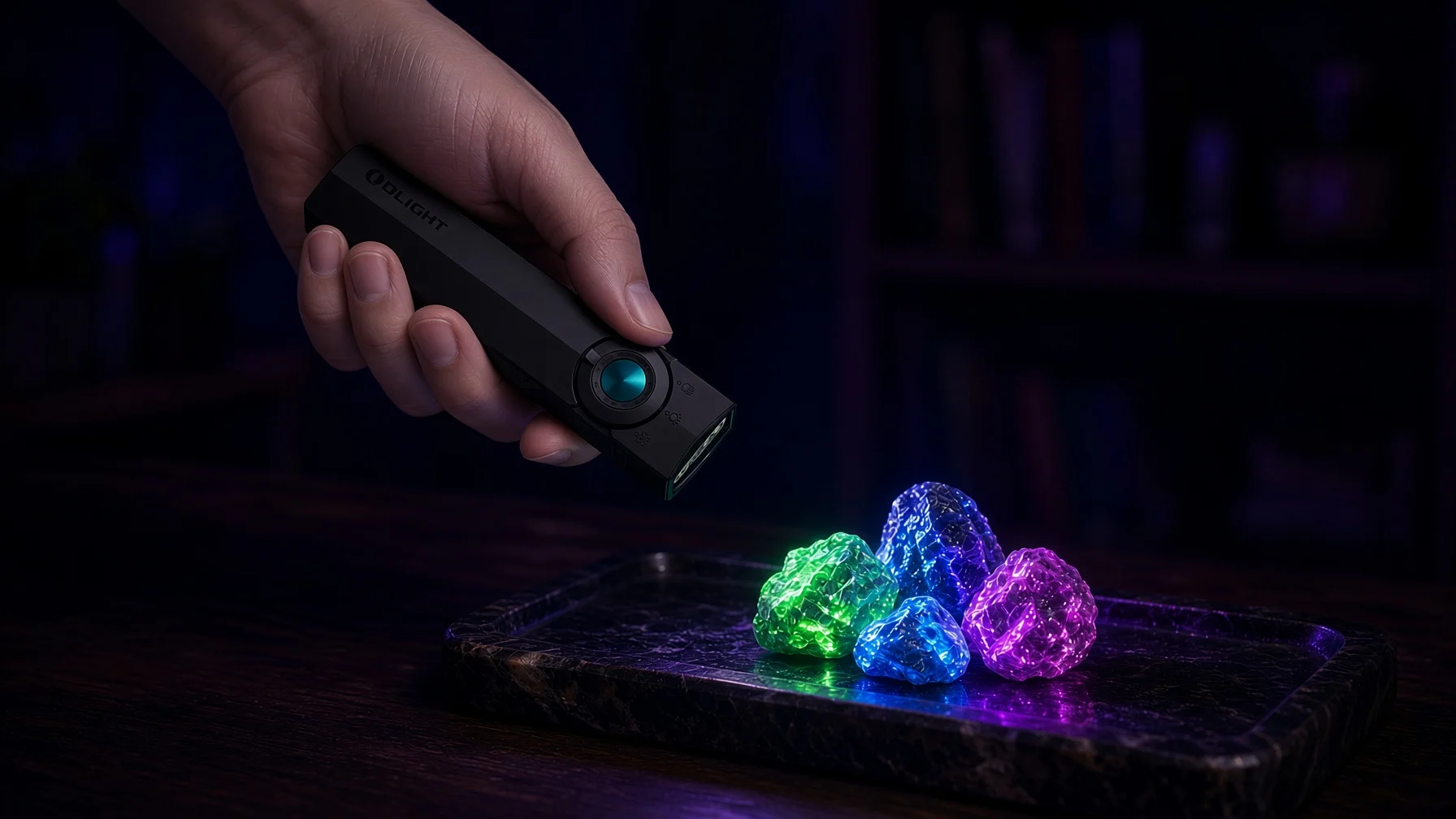
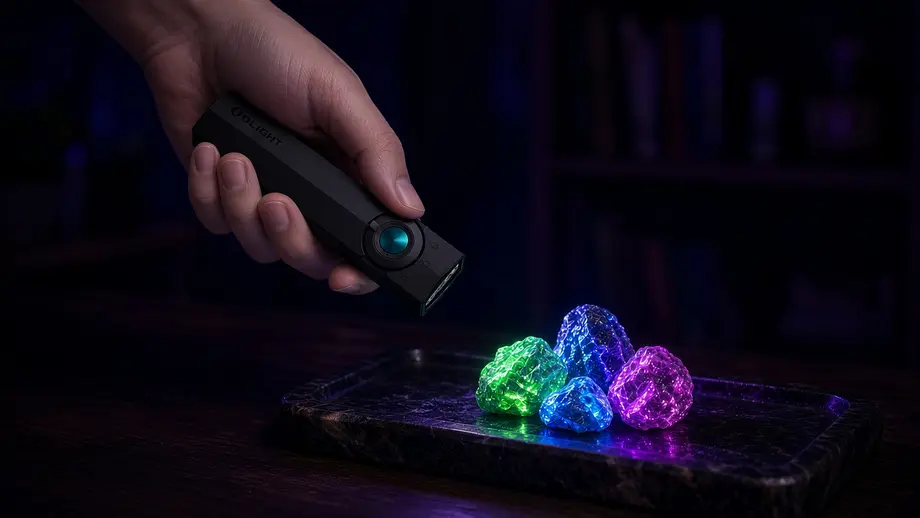
A black light flashlight shows materials that fluoresce, meaning they absorb invisible UV-A light and give it back as visible color. Common examples are scorpions, dried urine, fluorescent tracer marks, currency security threads, many minerals and roughly a quarter to a third of diamonds. Anything that doesn't fluoresce stays dark, so treat a black light as a screening tool and confirm what you find another way.
This table lists common things that glow under a black light, what you see, and where each claim comes from.
| What glows | What you see | Source |
|---|---|---|
| Scorpions | All scorpions fluoresce; newly molted ones start to glow only after a while | Arizona State University, Ask A Biologist |
| Dried urine | Dried stains often glow; Preventive Vet attributes this to proteins and other compounds in urine | Preventive Vet |
| U.S. currency | The security thread glows pink in a $100 bill; each denomination glows its own color | U.S. Currency Education Program |
| Fluorescent cleaning markers | A mark still visible after cleaning shows a surface was missed | CDC environmental cleaning guidance |
| Fluorescent minerals | Clearer glow under a filtered 365 nm flashlight than under a 395 nm light | Fluorescent Mineral Society article |
| Diamonds | About 25% to 35% show some fluorescence, and blue is by far the most common color | GIA |
Plenty of ordinary things glow too. Preventive Vet lists laundry detergent, milk, honey, canola or olive oil, ketchup, tonic water and antifreeze among the substances that fluoresce under UV light, so a glowing spot on a carpet may be a spill rather than urine. Treat any glow as a reason to look closer, then check the spot under normal white light.
How Does a Black Light Work?
A black light works by emitting UV-A, the band of ultraviolet light the World Health Organization defines as 315 to 400 nanometers. Your eyes barely register it, but fluorescent materials absorb that energy and release it at longer, visible wavelengths. That released light is faint, so the darker the room, the easier the glow is to see.
Older black lights were tube lamps made with dark filter glass. The traditional Wood's lamp, still used in dermatology, emits roughly 320 to 450 nm through its filter and glows faintly violet because some of that output is visible light, according to a clinical review in the National Library of Medicine's StatPearls. Black light flashlights use UV LEDs instead, and their spec sheets typically list a wavelength such as 365 nm or 395 nm.
Lumens are the wrong yardstick for this kind of light. Lumens measure light as the human eye perceives it, and UV-A sits almost entirely outside that range. UV LEDs are rated instead by radiant power in milliwatts (mW) and by wavelength, which is how Olight lists the UV channels on its flashlights.
Do Black Lights Detect Bed Bugs?
Not reliably. Bed bug guidance from the EPA and University of Kentucky entomologists tells you to look for live bugs, tiny pale eggs, shed skins, dark fecal spots and rusty or reddish stains, and neither lists a black light as a detection tool. Many residues glow under UV light, so a glowing stain on a mattress doesn't show that bed bugs are there.
Here is what the University of Kentucky's bed bug fact sheet recommends instead:
- A close inspection. A thorough check means taking the bed apart and standing the pieces on edge so the upper and lower seams and surfaces can be examined. A regular flashlight helps in dim spots. The EPA also points to cracks in the bed frame and headboard, and in heavily infested rooms to furniture seams, drawer joints and electrical outlets.
- Interceptors. Small plastic dishes placed under bed legs catch wandering bed bugs that crawl or fall in and can't climb out.
- Detection dogs. Some companies use specially trained dogs to find small, dispersed infestations. The fact sheet says properly trained dogs can be quite effective, but few firms use them and reliability can vary from one inspection to the next.
- A professional. The fact sheet calls it prudent to bring in a professional, because experienced pest controllers know where bed bugs hide.
If you find signs of bed bugs, contact a licensed pest management professional before you buy treatments. A black light won't narrow the search, and a false alarm from a glowing detergent stain can send you in the wrong direction.
Four More Black Light Myths: Mold, Disinfection, Water and Diamonds
Black lights can't identify mold, sanitize a surface, show whether water is safe or authenticate a diamond. In each case, official guidance or the relevant scientific body points to a different tool, and the table below lists the evidence and the better option for each claim.
| Myth | What the evidence says | What to use instead |
|---|---|---|
| "A black light finds mold" | A USDA-developed grain method, published by Iowa State University, uses 366 nm light only as a presumptive screen for a fungus on corn; a positive result doesn't confirm aflatoxin, and Purdue Extension says a chemical test is needed | Fix the moisture problem; the EPA says sampling is usually unnecessary when mold is visible, and larger areas call for professional cleanup guidance |
| "UV light sanitizes surfaces" | The FDA names UV-C as a known disinfectant for air, water and nonporous surfaces; black lights emit UV-A, a different band | A disinfectant used as its label directs |
| "A black light shows whether water is safe" | The CDC recommends testing private well water at least once a year for total coliform bacteria, nitrates, total dissolved solids and pH | A state-certified laboratory for a private well; your utility's annual water quality report for city water |
| "Fluorescence proves a diamond is real" | GIA says fluorescence should not be used as a DIY test of whether a diamond is real | A report from a gemological laboratory |
The mold myth starts from a real grain-screening method. Under a 366 nm lamp, corn infected by the fungi that can produce aflatoxin may show a bright greenish-yellow glow, but the USDA-developed screening method Iowa State publishes notes that aflatoxin itself doesn't glow that color, and that about one-third to one-half of corn lots that test positive still come in under the FDA's 20 ppb guideline. That protocol was built for trained grain inspectors using color standards, and it says nothing about mold on a bathroom wall. For mold at home, the EPA says that in most cases, if visible mold growth is present, sampling is unnecessary. The EPA's guide to mold and moisture adds that you can usually clean a moldy patch smaller than about 10 square feet yourself; for larger areas or heavy water damage, follow its professional remediation guidance or hire an experienced contractor.
The disinfection myth mixes up UV bands. The FDA describes UV-C radiation as a known disinfectant for air, water and nonporous surfaces, and black light flashlights emit UV-A, a different band. What a black light can do is check cleaning coverage when a fluorescent tracer was placed first. Healthcare facilities mark surfaces before cleaning and inspect them with UV light afterward, and the CDC describes the method as quick and relatively inexpensive while noting that it doesn't measure how many germs remain.
A black light can't show whether water is safe. If you have a private well, the CDC's well water guidelines call for yearly laboratory tests, including total coliform bacteria, and suggest asking your health department what else to test for where you live. If you're on city water, the EPA requires community water systems to send customers an annual drinking water quality report by July 1.
Party UV Lights vs a 365 nm Black Light Flashlight
A UV party light and a 365 nm black light flashlight can both make things glow, but they suit different jobs. The practical difference is how much visible violet light comes along with the UV. If a party light lists 395 nm or higher, expect more of that violet. Violet spill washes over the target and hides faint fluorescence, so for inspection work the wavelength and filtering matter more than how bright the light looks.
Check the wavelength before you buy, because it affects price as well as performance. Smart Vision Lights, which builds UV lighting for industrial machine vision, noted in an undated technical note on 365 nm and 395 nm LEDs that 365 nm LEDs were then up to ten times more expensive than 395 nm LEDs.
This table compares the two LED types on the points that matter when you inspect by eye.
| Question | 395 nm UV light, unfiltered | 365 nm UV flashlight |
|---|---|---|
| Where the wavelength sits | 5 nm short of the 400 nm upper edge of UV-A | 35 nm inside the UV-A band |
| Visible spill | A Fluorescent Mineral Society article describes the "objectionable blue/purple light" cheap 395 nm LEDs give off | Less visible violet to wash out a faint glow |
| Mineral colors | Unfiltered, "the blue overwhelms all the color and changes tints on everything," per the same article | Filtered, minerals such as Franklin willemite fluoresce clearly |
| With a filter | Filtered 395 nm lights are "kind of OK," but some minerals, including Franklin willemite, glow dimly or not at all | The article recommends investing in "a serious 365nm flashlight" |
| LED cost | Lower | Up to ten times higher in the Smart Vision Lights note |
| Good fit | Décor and casual checks where color accuracy doesn't matter | Minerals, faint stains and cleaning checks |
A 395 nm light isn't useless. Smart Vision Lights reports that most of the machine-vision applications it has evaluated work at 395 nm once the camera has the right filter. Your eyes have no such filter, so the violet spill lands on exactly what you are trying to see.
Why Do Professionals Use 365 nm UV Light?
Professionals use 365 nm because much of their reference work is built around it. A USDA-developed black light screening method for corn specifies a 366 nm lamp, and a Fluorescent Mineral Society article recommends a filtered 365 nm flashlight for serious mineral collecting after finding that some minerals glow dimly or not at all under filtered 395 nm light.
Gemology follows the same pattern. GIA's figure that about 25% to 35% of diamonds fluoresce comes from examination under a standard long-wave UV lamp, and its grading reports describe fluorescence intensity on a scale from None to Very Strong.
Several of Olight's current UV flashlights list 365 nm, and the comparison table in the next section gives each model's wavelength and rated UV output. For the wider picture of UV wavelengths, uses and buying, see our guide to what a UV flashlight can do.
What Is the Strongest Black Light Flashlight?
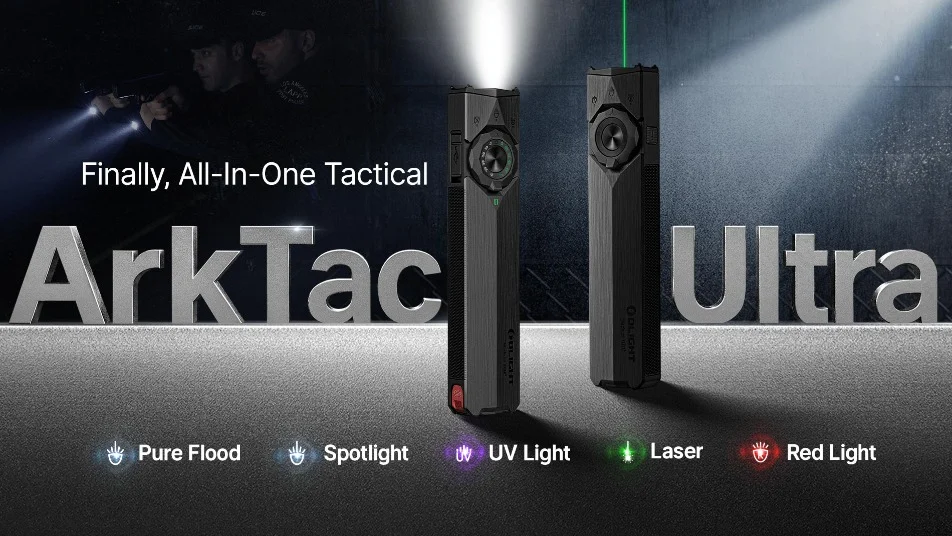
The strongest black light flashlight is the one with the highest rated UV output in milliwatts at a useful wavelength, not the one with the most lumens. In Olight's current lineup, the Olight ArkPro and ArkPro Ultra rate highest, at 1,200 mW of 365 nm UV for the first five minutes. Brands measure and publish UV output differently, so compare milliwatt ratings within one lineup.
This table lists the rated UV output of each Olight flashlight with a UV channel, using Olight's own spec pages. Rated output is total UV power, so beam focus also affects how bright the glow looks at a distance.
| Light | UV wavelength | Rated UV output | Other light sources | Water rating | Price |
|---|---|---|---|---|---|
| Olight ArkPro | 365 nm | 1,200 mW for 5 min, then 580 mW for 300 min; low mode 360 mW for 8 h | 1,500 lm white light, green laser | IPX7 | from $99.99 |
| Olight ArkPro Ultra | 365 nm | Same UV ratings as the ArkPro | 1,700 lm white light, green laser | IPX7 | $129.99 |
| Olight Arkfeld Pro | 365 nm | 560 to 900 mW | 1,300 lm white light, Class 3R green laser | IPX7 | $89.99 |
| Olight Arkfeld Ultra | Not specified | 900 mW | 1,400 lm white light, Class 3R green laser | IPX7 | $119.99 |
| Olight Oclip Pro S | 365–370 nm | 800 mW for 3 min, then 300 mW for 130 min | 600 lm white light; red, green and blue light | IPX6 | $39.99 |
| Olight Oclip Ultra | Not specified | 800 mW | 530 lm floodlight, 450 lm spotlight | IPX6 | $49.99 |
The Olight ArkPro (1,500 lumens, 365 nm UV up to 1,200 mW, IPX7) shares the lineup's highest UV rating with the ArkPro Ultra, and it pairs that UV with flood and spot white light plus a green laser rated at no more than 5 mW. White light matters here too: once the UV shows you where a stain is, you need normal light to see what it actually is. The Olight ArkPro Ultra (1,700 lumens, 365 nm UV up to 1,200 mW, IPX7) has the same UV ratings in an O-Aluminum body. Browse the ArkPro series if you want a black light flashlight that also works as an everyday light.
The Olight Arkfeld Pro (1,300 lumens, 365 nm UV up to 900 mW, IPX7) costs less and fits white light, UV and a laser into a flat body. The Olight Arkfeld Ultra (1,400 lumens, 900 mW UV, IPX7) lists counterfeit detection, stain detection and hotel cleanliness inspection among its uses. Both use Class 3R green lasers, so never aim either laser at a person's or animal's eyes or at aircraft.
For hands-free checks, the Olight Oclip Pro S (600 lumens, 365–370 nm UV up to 800 mW, IPX6) clips to a pocket or backpack strap, mounts magnetically and has no laser. The Olight Oclip Ultra (530 lumens, 800 mW UV, IPX6) also has a magnetic base, in a tougher O-Aluminum body.
How to Choose a Black Light Flashlight: 6 Checks
Choose a black light flashlight by checking six things: a stated 365 nm wavelength, a published UV output in milliwatts, how long it holds that output, whether it also has white light, how you will carry it, and its water rating. A lumen figure on the box describes the white light only.
This checklist turns each point into something you can confirm on a spec sheet.
| Check | What to look for | Why it matters |
|---|---|---|
| 1. Wavelength | 365 nm stated on the spec sheet | Less violet spill, and the band most reference methods use |
| 2. UV output | A rating in milliwatts, not lumens | Milliwatts are the published measure of UV strength |
| 3. Sustained output | The runtime at each UV level | The ArkPro drops from 1,200 mW to 580 mW after 5 minutes |
| 4. White light | A white mode on the same light | You need normal light to identify what glowed |
| 5. Carry | A pocket clip, magnet or clip-on body | Hands-free light helps when you check under furniture or inside a cabinet |
| 6. Water rating | IPX7 or higher if the light may get wet | IPX6 handles rain and water jets but is not rated for immersion |
Three habits make any black light more useful. Work in a dark room, because fluorescence is faint. Hold the light close to the surface and move slowly. Then check anything that glows under white light before you draw conclusions.
Is a Black Light Flashlight Safe?
A black light flashlight is low-risk when used briefly and carefully, but UV-A is still ultraviolet radiation, and a high-output 365 nm light deserves respect. The FDA notes that both UV-A and UV-B can damage skin, and clinical guidance on Wood's lamps says not to look at the light for long and to protect the eyes. Never look into the emitter or shine it at people or pets.
Follow these rules every time you use one:
- Keep the beam off faces. Don't aim UV light at the face of a person or a pet.
- Keep exposure short. Avoid holding the beam on bare skin for long periods. The FDA also warns that some medications and cosmetics can increase sensitivity to UV.
- Protect your eyes during long sessions. The USDA grain screening method calls for goggles that cut off UV at about 410 nm.
- Supervise children, and store UV and laser flashlights out of their reach.
- Treat lasers separately. On models with a green laser, never aim it at eyes or aircraft, and don't stare into the beam.
FAQ
Changelog
- September 2026: First published. Specs checked September 14, 2026; prices checked September 15, 2026.