⚡ TL;DR
Do not treat red light as invisible to hogs. Research on domestic pigs supports a different color-vision system from ours, but recognizing a color, detecting a light and reacting to it are different questions. Read the study's subjects and task before applying its conclusion, and choose a flashlight for the human task you need to complete.
📋 Table of Contents
- 1. Separate Color Recognition From Detecting a Light
- 2. Read the Pig Cone Study as Retinal Evidence
- 3. Interpret Colored-Card Experiments Within Their Task
- 4. Keep Low-Light Acuity Separate From Color Claims
- 5. Check What the Word Red Describes
- 6. Distinguish Light Output From an Animal-Response Measurement
- 7. Recognize the Human Observer Behind Photometric Quantities
- 8. Evaluate Behavior Reports by the Outcome They Record
- 9. Read Photos and Videos as Camera Records
- 10. Use the Exact Marauder Mini 2 Configuration List
- 11. Keep Thermal Viewing Separate From Visible-Color Vision
- 12. Compare Red, Green and White by the Human Task
- 13. Check the Evidence Behind a Colored-Light Claim
- 14. FAQ
Separate Color Recognition From Detecting a Light
“Can hogs see red light?” can mean several things. A person may be asking whether a pig experiences a particular color, whether it can distinguish two colored objects, whether it notices a change in illumination or whether it will leave an area. A short answer becomes misleading when it moves between these meanings without saying so.
For a color-recognition question, look for a comparison. What two things did the animal have to tell apart? For a detection question, ask what counted as noticing the stimulus. For a behavior question, ask what response was actually measured. Each requires an observation that matches the question. Success or failure in one task does not automatically provide the answer to another.
This distinction matters when you read a product description. A red-light mode tells you which function a flashlight offers. It does not tell you how a particular animal will respond to that function. A photograph of a red-lit area supplies another kind of information. It records an image through a camera, rather than measuring a pig's perception of the scene.
We recommend starting with the claim you want to evaluate, then locating the observation that supports it. That approach helps you read both scientific papers and equipment descriptions without turning a useful feature into an unsupported promise. The following studies illustrate how much the experimental question matters.
| Evidence you encounter | What it can help answer | What requires separate evidence |
|---|---|---|
| Measurements of retinal responses | Which cone mechanisms the researchers measured | Whether a free-ranging animal will ignore a flashlight |
| A trained choice between colored cards | Whether the subjects distinguished those stimuli under the study's conditions | Whether a red beam is undetectable |
| A shape-discrimination task at different light levels | How the animals performed that visual task under those conditions | A universal brightness limit for wildlife |
| A named flashlight's red-mode specification | Which visible-light function that model provides | A biological effect on hogs |
| A thermal image on a viewer | The displayed thermal information | The animal's visible-color experience or a confirmed species identity |
Read the Pig Cone Study as Retinal Evidence
Jay Neitz and Gerald H. Jacobs studied spectral sensitivity in domestic pigs in a paper published in Visual Neuroscience in 1989. Their publisher's abstract describes electroretinogram flicker photometry. The researchers reported two cone classes with average sensitivity peaks at 439 and 556 nanometers and identified a retinal basis for dichromatic color vision.
The important reading distinction is between a sensitivity peak and a visibility cutoff. The abstract reports peak measurements. It does not establish a wavelength beyond which every pig notices nothing. The subjects were domestic pigs, and the endpoint was a retinal measurement. A claim about free-ranging hogs ignoring a named flashlight would add a different subject context, stimulus and behavioral outcome.
When a page cites those peak values, check what follows them. A careful explanation preserves the measured endpoint. An absolute statement about red-light invisibility requires more evidence than the abstract supplies.
Interpret Colored-Card Experiments Within Their Task
A 1991 study by Hajime Tanida and colleagues examined color discrimination in weanling pigs. Two female weaners took part in each of two experiments. The researchers used trained, rewarded choices with color cards matched for luminosity. The pigs in the study distinguished blue in the reported comparisons but did not meet the discrimination criterion for the red-and-green comparisons.
This was a controlled card-choice task. A failure to make the required choice between two stimuli does not show that neither stimulus was detectable. Keep the comparison, training and success criterion attached to the result. The paper also discusses limits involving breed, age and the need for further work concerning wild ancestors.
For a reader comparing lighting claims, the lesson is to examine what the animal had to do. Describing a result as simply “pigs cannot see red” removes the experiment's conditions and changes its meaning.
Keep Low-Light Acuity Separate From Color Claims
Toshio Tanaka and colleagues investigated visual acuity under different illumination levels in a 1998 study. Their original paper used two female domestic pigs trained to distinguish a Landolt ring from an ordinary ring. The lighting conditions were 500, 200, 100 and 20 lux. The animals' acuity scores decreased under lower illumination in that experiment.
That result concerns a shape-discrimination task. It is not a red-versus-green flashlight comparison, and its illumination levels are not universal thresholds for an animal noticing light outdoors. The authors explicitly call for further research on relationships between acuity and behavioral patterns in domestic and wild pigs.
Read the measured task before reusing a number. A precise value can still be applied to the wrong question. Here, the useful context is controlled illumination and trained shape discrimination, rather than a field rule for choosing a colored beam.
Check What the Word Red Describes
In a product listing, “red” may describe an emitted-light configuration, a colored part of the housing or a display palette. Locate the exact feature before comparing products. The same word appearing on two pages does not make the underlying functions equivalent.
A flashlight with a red-light mode produces visible illumination in that mode. A red-colored body can belong to a light whose output options are described separately. A thermal viewer can display information using a palette with “Red” in its name. These are different product descriptions, and each needs to remain attached to its device and function.
Wavelength numbers also need a defined source. A cone-sensitivity peak reported in a pig study is not the wavelength specification of your flashlight. A color name on a box does not supply a measured spectral curve. If a comparison depends on the output spectrum, check whether the evidence actually describes that spectrum before drawing a conclusion from the label alone.
For ordinary equipment selection, write down the function you need in plain language. Examples include reading a printed instruction, finding an item in an open pouch or illuminating the route back to a vehicle. Those requirements can be checked against documented product features and your ability to complete the task. They do not require a claim that an animal cannot perceive the light.
Distinguish Light Output From an Animal-Response Measurement
A lumen rating describes a published light-output quantity. A runtime table describes a mode and its associated duration or stages. Neither is a record of how a hog behaved. Keep those categories separate when a comparison places a flashlight specification beside a statement about animal vision.
A useful equipment table names the model, light source and selected setting. A useful biological comparison names the subjects, stimulus, task and measured response. Moving a number from the first table into the conclusion of the second requires evidence connecting them. Without that connection, a precise-looking recommendation can rest on an assumption.
For example, two red-mode entries with different lumen values give you information about those published settings. They do not establish a corresponding ranking in how likely a pig is to notice them. Likewise, a manufacturer's beam-distance specification cannot be turned into a distance at which an animal recognizes or ignores the light.
This is also a reason to avoid mixing the maximum value from one mode with the duration from another. If you are comparing equipment for your own work, read the complete row for the selected light source. Once the model and mode are clear, assess the human task separately. An instruction that you cannot read remains unreadable regardless of the biological claim attached to the product.
Recognize the Human Observer Behind Photometric Quantities
The International Commission on Illumination explains in its public description of ISO/CIE 23539:2023 that physical photometry uses agreed response functions for human vision. It also notes that sources of different colors with the same measured luminance need not appear equally bright. The measurement framework and the observer therefore matter when interpreting a comparison.
This gives a practical reason to keep a reported lighting quantity with its definition. A human-oriented photometric value is not, by itself, a direct measurement of a pig's experience. Likewise, the fact that two values match does not establish that every observer will experience the stimuli in the same way. Look for the method that connects the measurement to the question being asked.
For equipment selection, retain the published quantity as useful product information. For a claim about animal vision, look for the relevant biological evidence as well. A conversion based only on a product's lumen rating or a general color name cannot supply that missing connection.
Evaluate Behavior Reports by the Outcome They Record
A report that an animal stayed in an area answers a narrower question than a claim that it could not detect a light. Staying is an observable outcome. Invisibility is an explanation of perception. The latter does not follow automatically from the former.
Look for a description of the observation before accepting an explanation. Was the report a single event, a repeated observation of the same animals or a controlled comparison? Did it identify what changed between observations? Did it define the response being counted? These questions help you understand the strength and scope of a report without requiring you to recreate the activity.
A statement such as “nothing happened” needs particular care. It may mean that the observer did not record a particular movement. It may also leave the duration, viewpoint and chosen response undefined. A clear account specifies what was observed and separates that from an interpretation of what the animal noticed.
Treat a personal report as a report with its own context. Do not promote it into a universal rule simply because it agrees with a preferred equipment choice. Equally, a different outcome in another report does not automatically overturn a controlled study that measured a different endpoint. First determine whether the accounts are asking the same question.
Read Photos and Videos as Camera Records
A red-lit photograph can help show the arrangement of ordinary objects or the visible result recorded by that camera. It cannot show you the scene through a pig's visual system. Keep that distinction clear when an image appears beside a claim about what an animal can or cannot see.
Ask what the image is supposed to demonstrate. A photograph of a flashlight on a table may identify the product. An image of a brightly colored surface may show the camera's recorded appearance. Neither establishes the subject's success in a discrimination task. An animal visible in a frame also does not, by itself, establish what caused its position or movement.
For video, separate what can be observed from what has been narrated. A caption may assign a reason to an action that the footage itself does not isolate. Check whether the supporting description supplies the conditions needed to evaluate that explanation. Avoid filling missing context with a conclusion that happens to favor red, green or another lighting option.
This approach also helps when reading promotional comparisons. Prefer a clearly named function and a specific, documented claim over a dramatic image presented as biological proof. A useful lighting decision should remain understandable when the photograph is removed and the written evidence has to stand on its own.
Use the Exact Marauder Mini 2 Configuration List
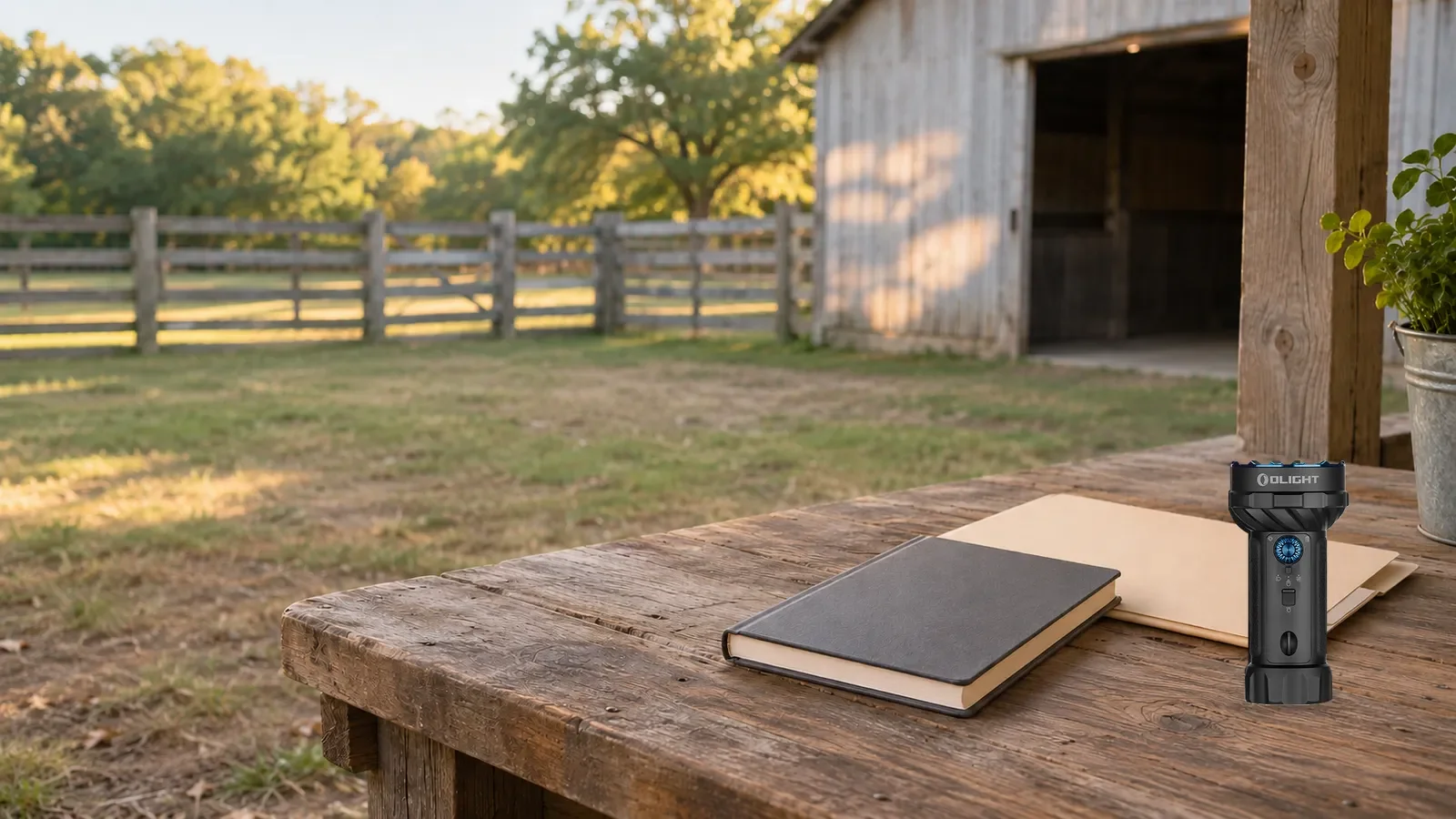
Our Marauder Mini 2 offers five documented lighting configurations, floodlight, spotlight, combined spotlight and floodlight, red light, and side light. That list lets you identify the visible-light functions available in this model. It does not attach a hog-vision result to any of them.
The model name matters. The original Marauder Mini and the Marauder Mini 2 have different configuration descriptions. A feature shown for the original Mini should not be transferred to the Mini 2 because both belong to the same family. Body-color names also remain separate from the light-source options. Start with the exact product and its own manual.
Our hunting lighting collection groups equipment options. Compare the named product functions before assigning them a task.
The Mini 2's published red-mode table includes distinct settings. Two lower entries list five lumens and 25 lumens. Those are specifications for those named entries, rather than measurements of a work surface or animal perception. Their practical use is to help you compare available settings for a close human task after selecting the correct configuration.
Keep suitable white light available when the task depends on visible color information. A colored cord, a printed symbol or a label with small details may require a different lighting choice from simply locating a pouch. Read the actual item under the selected illumination and change the arrangement when the information remains unclear. Choosing a red mode does not remove the need to finish the task accurately.
Before sharing the light, identify which configuration is selected. A companion who expects white illumination should not have to infer the setting from the body finish or the product family name. Familiarity with the particular controls is useful, while the manual remains the reference for the exact starting state and operation. Our red-light preparation guide discusses the separate practical question of matching the light's position and format to nearby work.
Keep Thermal Viewing Separate From Visible-Color Vision
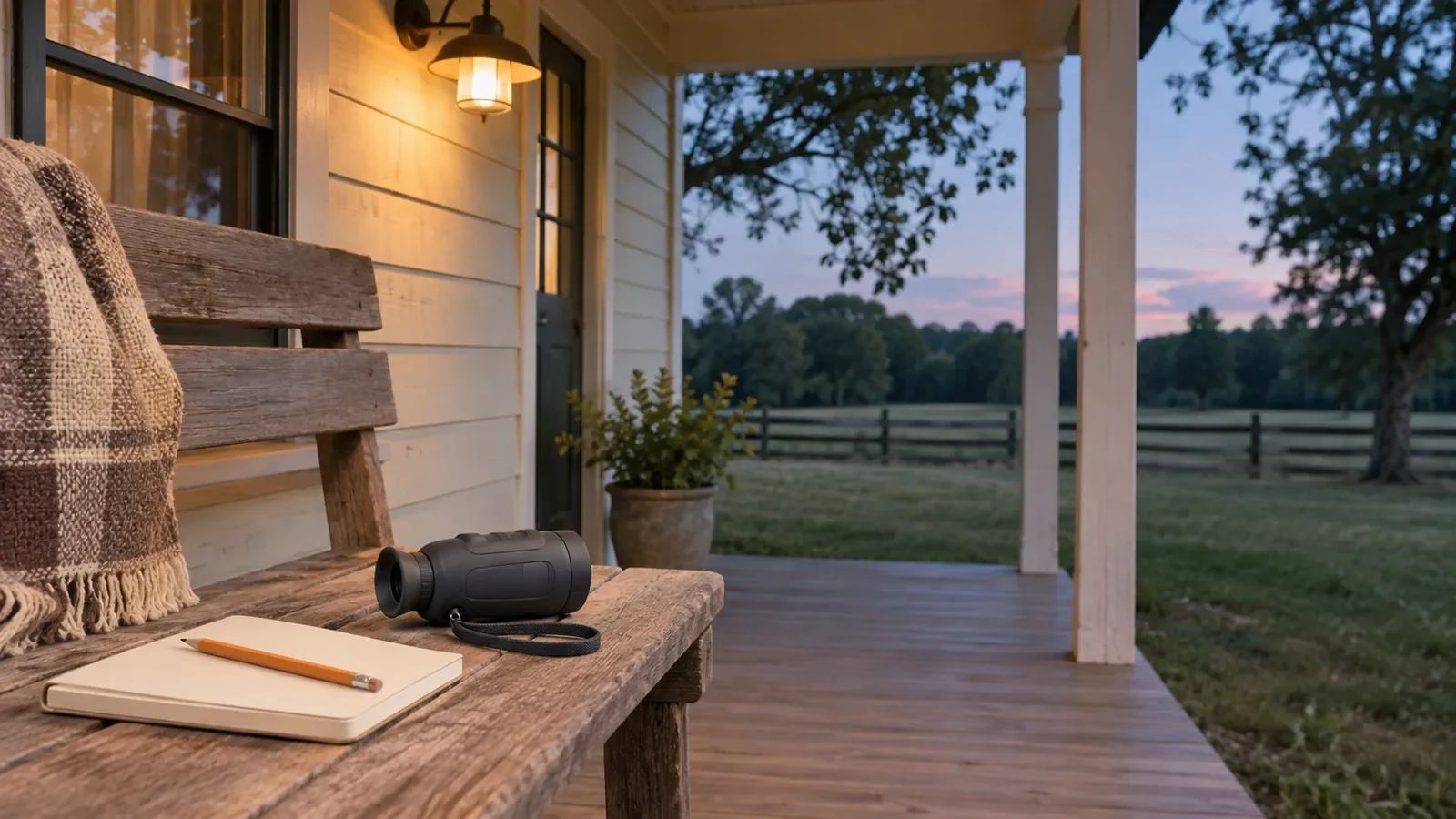
The TOPDON TS004 thermal imaging monocular, available through OSelect, is manufactured by TOPDON. It provides a displayed thermal image through an eyepiece. A thermal image concerns a different information channel from the visible color of a flashlight illuminating a surface.
The TS004 manual names Bird, White Hot, Black Hot, Red Hot and Fusion display palettes. “Red Hot” is a display choice. It does not mean that the thermal imaging function casts red light onto the scene, and it does not describe how an animal perceives visible red illumination. Keep the device's display settings separate from the question about swine color vision.
The TS004 also has a separate LED flashlight function. That feature should be considered on its own terms. The existence of thermal imaging does not mean that every function of the whole device is non-illuminating. Read the exact device instructions when distinguishing viewing, recording and visible-light functions.
A thermal outline also does not establish species identity or explain an animal's response to a light. Our guide to thermal imaging monocular uses explains how to keep an observation question and its limitations together. For this article's question, adding a thermal viewer does not turn a color-vision assumption into evidence. It adds another tool whose output needs its own interpretation.
Compare Red, Green and White by the Human Task
When your immediate job is organizing equipment, begin with what you need to read, handle or distinguish. If the task requires identifying colored marks, suitable white illumination can help you examine the actual marks. If you are considering a colored-light function, check whether the selected setting lets you complete that particular task. Keep the decision grounded in the information you can obtain.
Separate that practical check from a claim about wildlife. “I can read this note” and “a hog cannot notice this light” concern different observers and different outcomes. Completing the first check supplies no measurement of the second. This separation lets you make a useful equipment decision while keeping the biological explanation within the evidence.
Consider the lighting format as well as the color option. A handheld light can be directed separately from your gaze, while an appropriate head-worn arrangement can leave both hands available. A clip or other supported placement can change where the light falls. Those handling choices address your task, without requiring a ranking of colors by presumed animal response.
The route is another distinct requirement. Choose lighting that lets you attend to the ordinary surroundings and the ground you need to see. Do not carry an uncertain wildlife claim into a decision about whether a route is adequately illuminated. If the task changes from sorting equipment to moving, reassess the lighting for the new requirement instead of keeping a setting merely because it was chosen for the previous activity.
Check the Evidence Behind a Colored-Light Claim
Use a short reading sequence when a product page, video or discussion makes a strong biological claim. First identify the exact claim. Then locate the original source and check its subjects, stimulus and measured endpoint. Finally, compare that scope with the conclusion being advertised. A missing connection becomes easier to recognize when each part is written plainly.
Keep dates and versions visible. A paper's original publication year can differ from the year it appeared on a publisher's website. A newer product can also share a family name with an older model while offering different functions. Use the research citation to identify the study and the exact model name to identify the equipment. A recent web page date does not make an older experiment a new field trial.
When two statements appear to conflict, check whether they use the same meaning of “see.” One may concern a measured retinal response and another a trained color choice. A third may concern a person describing an animal's movement. Recognizing the different endpoints can explain the apparent disagreement without deciding that every source must be either wholly right or wholly wrong.
Choose the conclusion that the evidence actually supports. Research can help explain why a pig's color vision differs from human vision. Product specifications can help you select a documented lighting function. A claim that red light is universally invisible to hogs joins those subjects in a way that needs separate support. Keep your equipment choice useful even when that stronger claim remains unestablished.
FAQ
Changelog
- November 6, 2026: Product information and buying guidance reviewed.