Specifications below are our published ratings.
⚡ TL;DR
The Olight Seeker 4 Pro is a rechargeable handheld flashlight with a listed maximum of 4,600 lumens and a 260-meter beam-distance rating. Its higher output steps down, so use the complete mode table when planning a task. Its included holster offers USB-C charging; the magnetic MCC3 cable is optional.
| Decision | Published detail | What it means for a buyer |
|---|---|---|
| Short burst | Turbo: 4,600 → 1,200 → 600 lm | The first figure does not last through all three listed stages. |
| Longer work | Medium: 300 lm / 11 h | Match this setting to your task rather than combining 4,600 lm with 11 h. |
| Charging | USB-C through the included holster; optional MCC3 | Consider where you will keep the holster and whether you need the extra cable. |
| Carry | Standard finishes: 205 g including battery | It is a substantial handheld light, not the smallest pocket option. |
For a wider trip-planning framework, see outdoor flashlights, including water, temperature and runtime checks. The outdoor flashlights collection provides other shapes; the Olight Seeker 4 Pro page lists the configurations discussed here.
📋 Table of Contents
- 1. Where the Olight Seeker 4 Pro Fits
- 2. Seeker 4 Pro Brightness and Beam Distance
- 3. Seeker 4 Pro Turbo Runtime and Step-Down
- 4. Seeker 4 Pro Heat and Safe Handling
- 5. Seeker 4 Pro Holster and Magnetic Charging
- 6. Seeker 4 Pro Holster and Carry Options
- 7. Seeker 4 Pro Compared With Other Olight Models
- 8. Buying the Olight Seeker 4 Pro
- 9. Common Seeker 4 Pro Misunderstandings
- 10. A Seeker 4 Pro Pre-Trip Check
- 11. FAQ
Where the Olight Seeker 4 Pro Fits
The Olight Seeker 4 Pro is a reasonable choice for someone who wants a high-output handheld light, a rotary control and an included charging holster. Its published 300-lumen medium mode is a useful starting point for a longer job. Its size and the separate holster are trade-offs for someone who wants the smallest everyday carry.
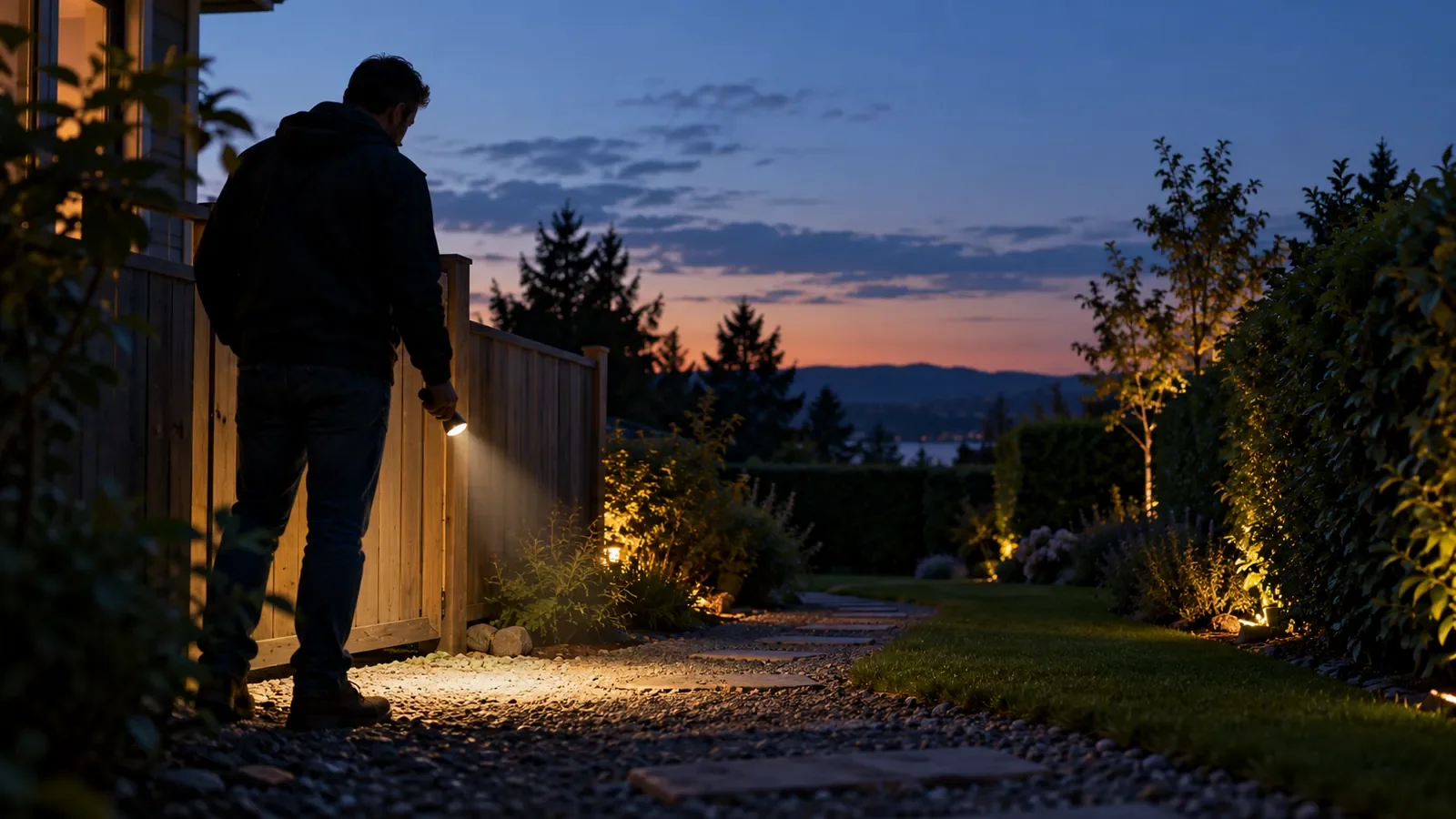
For a campsite, the rotary switch lets the user adjust output to the immediate task rather than using Turbo continuously. Around a yard, the 260-meter rating gives a way to compare specifications, but it cannot tell you whether a particular person can identify an object at that distance. Indoors, the lower settings can be more appropriate than a bright reflection from a nearby wall.
The choice also depends on how you intend to keep it powered. USB-C charging uses the holster, while direct magnetic charging needs an optional MCC3 cable. If you expect to leave the holster at home, decide whether you will also carry that cable or another suitable light.
Seeker 4 Pro Brightness and Beam Distance
The 4,600-lumen figure describes our maximum light output; 260 meters is the published beam-distance rating. They are useful for comparing published specifications, but neither tells you exactly what a person will recognize at a particular distance. Weather, contrast, the target and surrounding light change the scene.
Imagine checking a fence from a doorway. A beam can reach the fence without making a small sign beside it readable. For the walk to the fence, you also need to see steps and objects near your feet. Choose a setting and beam that let you handle both parts of the task, and keep another light available if safe movement depends on it.
The product page lists 16,895 candela and a TIR optic. Candela is a measure of intensity in a direction; it is not a complete photograph of the beam. The numbers cannot establish the width of a useful work area or prove visibility at 50, 100 or 200 meters.
Seeker 4 Pro Turbo Runtime and Step-Down
We list Turbo as 4,600 lumens for 2.5 minutes, followed by 1,200 lumens for 122 minutes and 600 lumens for 35 minutes. These are consecutive published stages, not 159.5 minutes at 4,600 lumens. Actual operation can vary with the battery and conditions.
| Mode | Published output | Published duration | How to read it |
|---|---|---|---|
| Turbo | 4,600 → 1,200 → 600 lm | 2.5 + 122 + 35 min | The initial output is only the first stage. |
| High | 1,200 → 600 → 300 lm | 135 + 35 + 10 min | A mode name does not imply one fixed output for the entire sequence. |
| Medium | 300 lm | 11 h | Use this row when evaluating a 300-lumen task. |
| Low | 50 lm | 60 h | A lower output has a different use and runtime. |
| Moonlight | 5 lm | 15 days | The longest figure belongs to this mode, not Turbo. |
The table is a transcription of our published ratings for the stated modes. The ratings do not establish whether a particular job will be visible at a listed setting. Try the controls and the beam in a safe setting before relying on the light for a trip.
Seeker 4 Pro Heat and Safe Handling
High-output flashlights can become hot during operation. The Seeker 4 Pro's listed Turbo sequence reduces output after the initial stage, so do not plan on continuous maximum output. Follow the model's warnings, keep the lens away from eyes and flammable materials, and let a hot light cool before packing it.
Heat is one reason to choose the lowest setting that makes the task clear. A brief look across a yard and a long period working at close range do not require the same output. Avoid placing an operating light face down or covering its head; stop and reposition it if the surface or surroundings make the placement unsuitable.
Handling temperature depends on the setting, ambient conditions and ventilation; the output rating alone does not specify a safe handling time. Follow the supplied manual and allow for ventilation and ambient conditions.
Seeker 4 Pro Holster and Magnetic Charging
The included vertical holster has a USB-C charging connection. Place the light in the holster and connect the supplied USB-C cable as directed in the manual. We also list MCC3 magnetic charging, but the MCC3 cable is an optional accessory rather than an assumed part of the standard package.
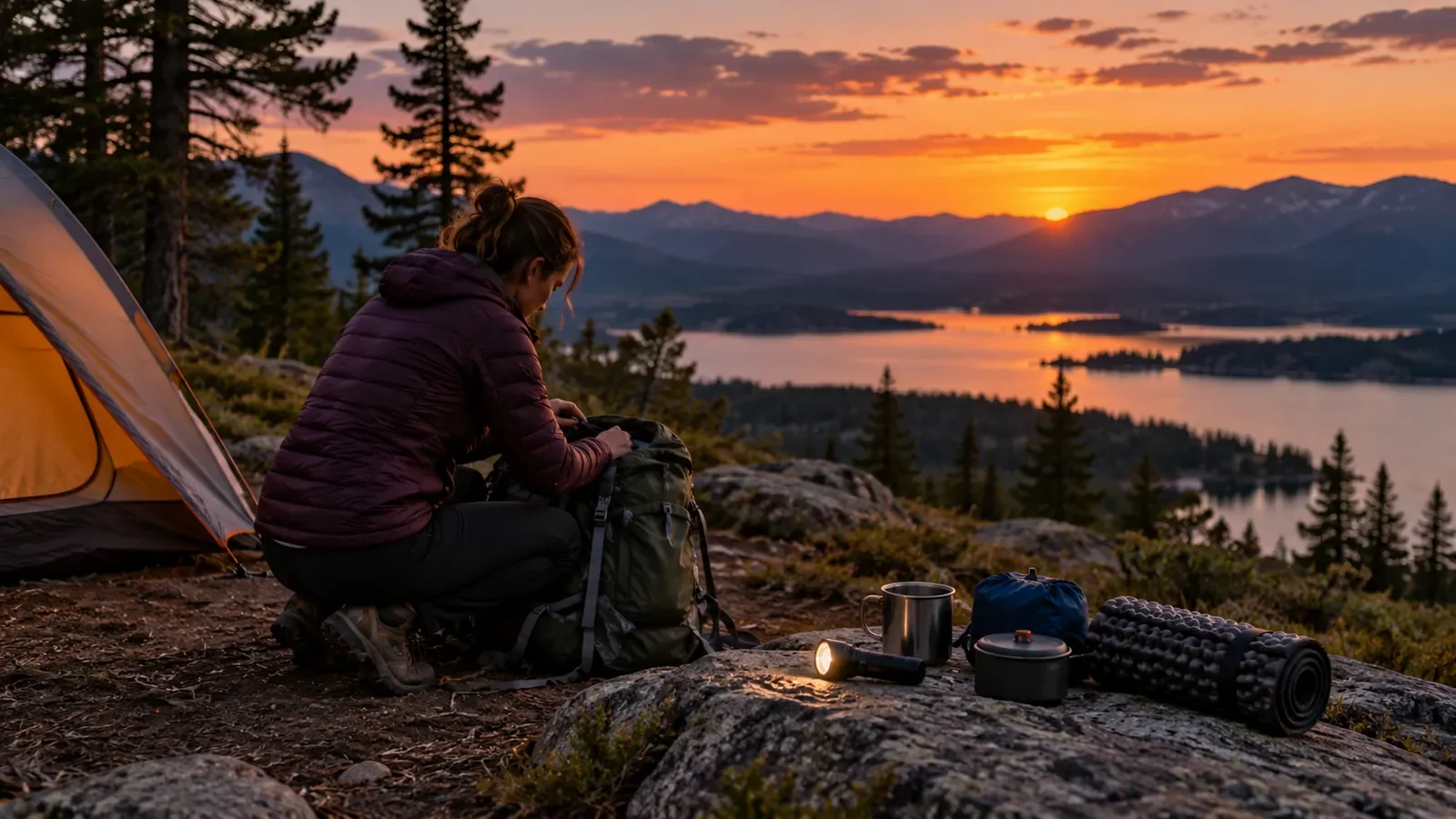
That distinction matters when making a kit. A wall-mounted holster can provide a regular place to store and charge the light at home. On a trip, the holster and USB-C cable take additional space; a separately obtained MCC3 cable is another arrangement. Check the power source and follow our instructions before leaving.
The package list also names a fixing bracket and mounting hardware. Choose a stable mounting location appropriate for the surface and access the charging port without straining the cable. Do not infer that any similarly shaped cable or battery is interchangeable. Keep the contacts clean and dry, and follow the manual's charging guidance.
Seeker 4 Pro Holster and Carry Options
The included holster gives the Seeker 4 Pro a defined place on a belt or in storage, and it also serves as the USB-C charging dock. We specify automatic locking when the light is placed in the holster while off and unlocking when it is removed. Practice this with your own configuration before depending on it.
The standard listed weight is 205 g with the battery; this is the light figure, not the weight of the complete holster, bracket and cable. We list 350 g for the silver-plated bronze version, so a buyer should select the exact finish before comparing weight. The shape and bulk of a worn setup can matter as much as the number on a specification sheet.
If you prefer a pocket light, compare the size and lower modes of a smaller model. If you prefer keeping a primary light in a known place, the included holster may be useful. Before choosing a carry position, consider whether a coat, seat belt or pack strap will cover the light or obstruct access to the holster. Practice removing and returning the light with the clothing you expect to wear. If you need to operate it with gloves, check that the controls remain easy for you to reach. Neither arrangement guarantees comfort for a full day: check the fit, clothing and intended activity for yourself.
Seeker 4 Pro Compared With Other Olight Models
The four models below represent different combinations of output, runtime and carry. The Seeker models list medium at 300 lumens, Warrior Ultra at 200 and Baton 4 Pro at 120; compare each runtime at its stated output. Select a mode that meets the task before comparing its duration.
| Model | Maximum / rated distance | Medium mode | Listed light weight with battery |
|---|---|---|---|
| Seeker 4 Pro | 4,600 lm / 260 m | 300 lm / 11 h | 205 g for standard finishes |
| Seeker Ultra | 4,800 lm / 265 m | 300 lm / 12.5 h | 220 g |
| Warrior Ultra | 2,500 lm / 320 m | 200 lm / 13 h | 178 g |
| Baton 4 Pro | 1,600 lm / 200 m | 120 lm / 18 h 30 min | 114 g |
Our Olight Seeker Ultra lists a similar medium output with a longer rated duration and a heavier light. Our Olight Warrior Ultra lists a longer maximum beam distance but a lower medium output. Our Olight Baton 4 Pro is lighter in the published figures, with a lower medium output.
Those differences do not prove that one model is better for every person. The two Seeker medium ratings share an output figure, while operating conditions can differ. The Warrior and Baton medium settings are different, and maximum beam distance does not tell you what is recognizable in your conditions. Compare controls, carrying arrangements and package contents as well.
Buying the Olight Seeker 4 Pro
On October 31, 2026, our Matte Black cool-white Seeker 4 Pro (SKU SEEKER4PROMTBKCW) was listed at $139.99. That figure excludes any tax and shipping calculated at checkout. Other finishes or configurations may be priced differently, and prices and availability can change; check the exact listing before ordering.
The page lists a USB-C cable and vertical holster in the package. It describes the MCC3 magnetic cable as optional. If you need direct magnetic charging, check that accessory separately rather than assuming it is in the box. The finish can also affect the published weight, as the bronze version differs from other listed versions.
Before buying for a vehicle kit, consider where the light will be stored and whether that location can become excessively hot. Follow the specific light's storage and charging instructions. A mounting bracket can keep equipment organized, but it does not establish that a parked vehicle is within the product's permitted temperature range.
Common Seeker 4 Pro Misunderstandings
The Seeker 4 Pro's headline numbers are useful only when paired with their conditions. The following checks prevent a maximum figure from being mistaken for a sustained mode or a complete description of the beam.
| Claim | Better reading | What to check |
|---|---|---|
| 4,600 lm lasts for the entire Turbo runtime | The published sequence has three output stages. | Read each output and duration together. |
| 260 m means every object can be identified at 260 m | The rating is not a recognition guarantee. | Consider target, contrast, weather and spill. |
| Both charging methods are included as cables | USB-C uses the included holster; MCC3 is optional. | Read the actual package list. |
| 205 g includes the entire carrying setup | The figure is for standard light finishes including the battery. | Add the holster and other accessories if carry weight matters. |
| A larger number always means the best choice | Output, runtime, beam and carry solve different problems. | Start with the job and the intended mode. |
A Seeker 4 Pro Pre-Trip Check
Use the specifications to make a plan, then check the actual light before leaving. The National Park Service includes illumination and spare batteries in its Ten Essentials guidance for park visitors. If a hands-free backup is useful, the best headlamps guide compares other options; choose one whose controls and power source fit your trip.
- Charge the light with the correct equipment and check its indicator.
- Practice unlocking, switching and choosing a suitable lower setting.
- Check the beam on your intended task without directing it into anyone's eyes.
- Pack the appropriate charging equipment and a suitable backup light.
- Read the manual for temperature, water and storage limits before the trip.
FAQ
Changelog
- September 27, 2026: First published.