⚡ TL;DR
For a power outage for more than 12 hours, use separate lights for walking, hands-free tasks, and a shared room. Set them up before daylight fades, protect phone power, and resolve food and temperature concerns early. A low, well-placed beam often helps more than one bright flashlight moving around the house.
📋 Table of Contents
- 1. Power Outage Lighting and Equipment Before Dark
- 2. What to Do If Your Power Has Been Out 12 Hours?
- 3. Checkpoints at Four, Eight, and Twelve Hours
- 4. Fridge Decisions After a Long Power Outage
- 5. Set Up the Entry, Hallway, Kitchen, and Bathroom
- 6. Choose Low Modes and Keep a Lighting Reserve
- 7. Replace Candles With Task and Area Lighting
- 8. Keep Phone Power for the Next Morning
- 9. Avoid Garage Charging and Unsafe Heating
- 10. How Long Can You Legally Go Without Power?
- 11. How Long Does Your Power Need to Be Off Before Compensation?
- 12. FAQ
Power Outage Lighting and Equipment Before Dark
Gather the lights already available, check their charge, and give each one a specific job. Keep one portable light with the person handling household decisions rather than leaving every light in a single room. The equipment below supports different tasks; a household does not need every model to make a workable overnight arrangement.
| Use | Recommended type | Feature to prioritize | Olight option and relevant published specification |
|---|---|---|---|
| Carry between rooms and check the entry | Compact handheld | Accessible low mode and a convenient charging connection | Baton 4 Pro: USB-C and magnetic charging |
| Prepare supplies with both hands free | Small headlamp | Secure headband, adjustable aim, and a useful low setting | Perun 3 Mini: Standard CW version lists 10 lumens for 30 hours |
| Aim light at a shelf or nearby task | Adjustable clip light | Secure attachment and a beam that stays on the work | Oclip 2 Pro: tilting head, rotating clip, USB-C charging; standard light considered here |
| Light a shared table or sitting area | Stable area light | Adjustable output and broad coverage | Prowess: reverse warm-white area light with stepless dimming |
These published features describe the products, rather than a guaranteed lighting level in a particular room. Wall color, furniture, mounting height, and the selected mode all change what reaches the floor or countertop. Check the actual route and task from the position of the person using them. No single lumen figure establishes that a bathroom or staircase is adequately lit.
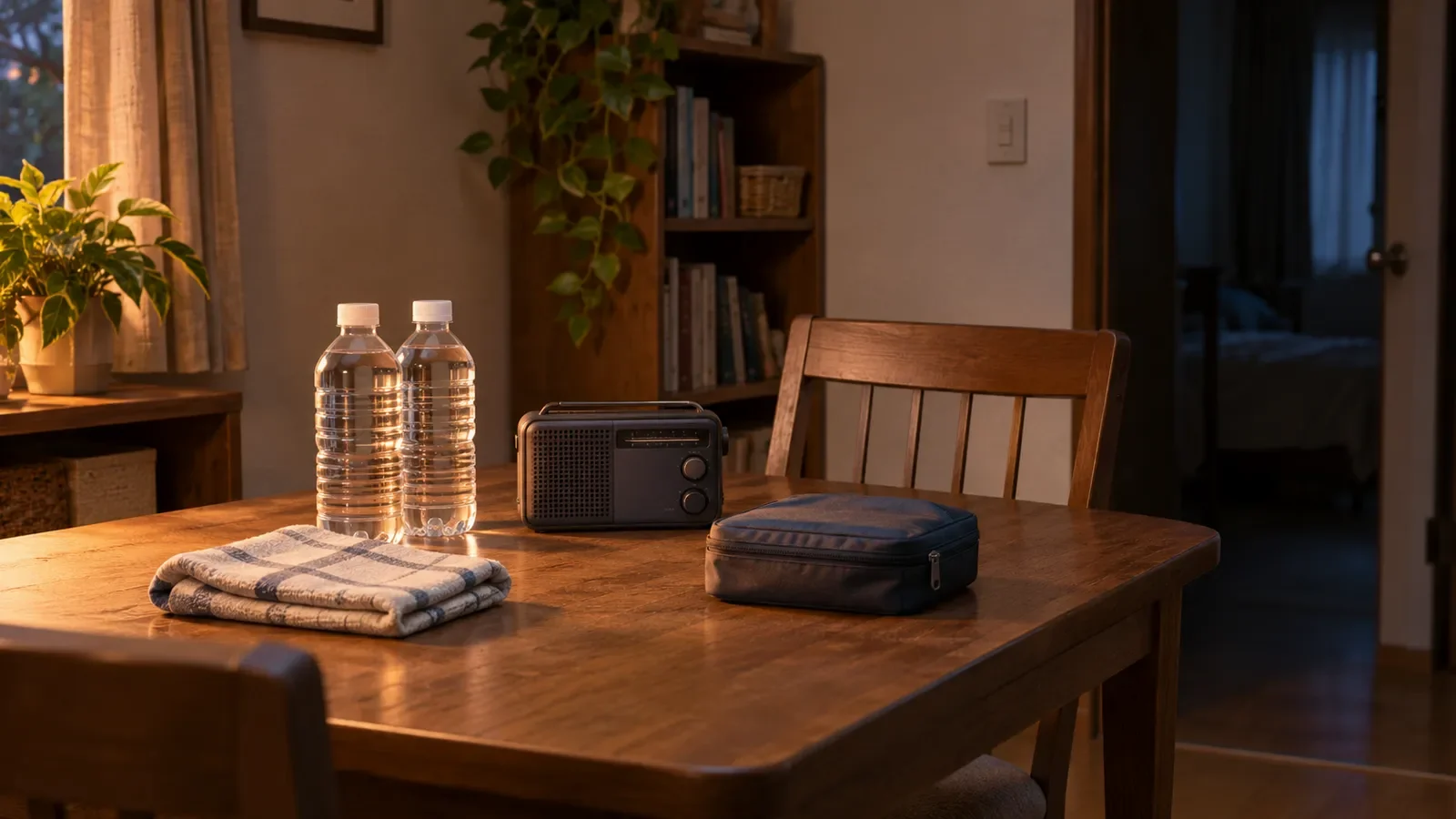
Put a charged power bank, the right phone cable, a paper contact list, and the lights together while there is still daylight. Add an appliance thermometer and an insulated cooler if available. Put drinking water and a simple dinner within reach so the next household decision does not require another search through a dark cupboard.
If choosing a flashlight for future outages, consider how easily another adult could find it, turn it on, and select a modest output. Familiar controls and a known storage location deserve as much attention as maximum brightness. A powerful light is less useful when its charging cable lives somewhere nobody remembers.
What to Do If Your Power Has Been Out 12 Hours?
Confirm that the outage is reported, check the latest restoration estimate, and make an overnight plan now. Set up lighting, arrange dinner without relying on questionable refrigerated food, conserve phone power, and decide whether the home can remain comfortable and safe. If anyone needs powered medical equipment, follow their established backup plan and seek assistance before that backup runs out.
Twelve hours is a planning checkpoint, not a universal deadline for food, batteries, or staying home. An outage beginning at dawn reaches that point near evening; one beginning at dinner reaches it around breakfast. Work from the actual outage start time and the next period of darkness. Do not wait for a round number before handling an immediate need.
Assign a few responsibilities if more than one adult is available. One person can check utility updates and contact relatives while another prepares the lighting route and meal. Agree on where everyone will gather and where the spare light belongs. This keeps two people from independently using the last charged phone to look up the same outage map.
An estimate is useful information, but household arrangements should also work if it changes. Decide what would trigger leaving, who could provide transportation, and where to go. Those choices become harder when batteries are low or a child is already asleep. Keep essentials ready without blocking the exit with bags, extension cords, or equipment.
Checkpoints at Four, Eight, and Twelve Hours
Use the timeline to revisit decisions that change during an outage. The four-hour food check follows official household food-safety guidance; the eight- and twelve-hour checks below are practical planning prompts, not additional government safety thresholds. If the house becomes unsafe, or an official instruction requires action, act immediately rather than waiting for the next checkpoint.
Around four hours: resolve cold-food storage
An unopened refrigerator generally keeps food cold for about four hours. FoodSafety.gov recommends arranging coolers for an outage that may last longer. Its emergency food-storage guidance also estimates about 48 hours for a full freezer and 24 hours for a half-full freezer when the door remains closed. These estimates do not extend to repeated door openings or establish an item's actual temperature history.
If perishable food has not been kept safely cold, do not make it the basis of dinner. FoodSafety.gov advises discarding perishables held above 40°F for two hours or more, shortened to one hour when temperatures exceed 90°F. Ice or another cold source helps only when it actually maintains safe storage; adding ice later does not erase earlier warm exposure.
Around eight hours: arrange the evening
Check what will be needed between dinner and bedtime. Move a portable light to the kitchen, prepare the bathroom route, and put spare clothing or blankets where they are easy to reach. If a bath would be difficult to supervise or the water supply is uncertain, simplify the evening routine instead of trying to recreate a normal night exactly.
Ask everyone to stop borrowing the phone reserved for essential communication. Check the power bank and cables once, then return them to the agreed location. If relatives need an update, send one concise message with the current plan. Repeatedly checking for new information can become a task of its own, without changing the household's next action.
Around twelve hours: choose the overnight arrangement
Reassess the restoration estimate, indoor conditions, available water, and remaining lighting. Put a usable light within reach of each occupied sleeping area. Decide which shared light stays on and which task lights turn off when nobody needs them. Keep the route to the bathroom and exit consistent so nobody has to discover a new furniture arrangement at midnight.
If leaving is the better option, do the necessary packing while the task lights are available. Take essential medication, communication equipment, charging cables, keys, and a portable light. Tell a trusted contact where the household is going. Leave any further utility or building instructions to the appropriate provider or manager rather than improvising electrical work.
Fridge Decisions After a Long Power Outage
After twelve hours without power, an uncooled refrigerator cannot be treated as if it simply needs its door kept shut until morning. Review perishables individually using the FoodSafety.gov outage food chart. It distinguishes foods that need discarding from items such as uncut produce or some condiments that have different guidance. Never taste food to decide whether it is safe.
Frozen food needs a separate assessment. FoodSafety.gov says food may be safely refrozen if it still contains ice crystals or is at 40°F or below, although quality may suffer. The chart includes item-specific exceptions, including ice cream. A freezer's estimated cold-holding time is a reason to limit opening, not a guarantee for every package inside.
Make one deliberate refrigerator visit when a decision requires it. Have the light, cooler, and any necessary containers ready first. Identify what needs checking before opening the door, and close it after the task. Avoid using the refrigerator as an illuminated pantry when every opening releases more of the remaining cold air.
For dinner, choose a meal that fits the equipment and ingredients safely available. Shelf-stable food, a manual can opener, drinking water, and minimal cleanup can be more practical than a complicated cooking plan. Keep preparation tools and a trash bag nearby. The kitchen still needs task lighting even when dinner involves more opening packets than cooking.
Keep a simple record of the outage start time and any meaningful food-storage actions, such as moving items into an adequately iced cooler. Record observations rather than guessing temperatures you never measured. If a later reimbursement request needs a record of discarded food, that note may help, but documentation should not delay disposal or create a reason to keep unsafe items.
Set Up the Entry, Hallway, Kitchen, and Bathroom
Arrange light around the places people will actually use, then check the whole route. A bright kitchen does not solve a dark stair landing. Start with the door, bathroom, and main living area; add task lighting where needed. Careful task light placement helps keep beams away from faces and shadows off the work. Support lights securely and keep cables outside walking paths.
| Household area | Useful lighting arrangement | What to check in place | Output, runtime, and water considerations |
|---|---|---|---|
| Entry and exit | Handheld light stored within reach | Keys, door hardware, shoes, and the route out | Use enough output to recognize obstacles; retain charge for an unexpected departure |
| Hallway or stair approach | Stable, low white light aimed along the route | Changes in floor level and dark corners | Choose the lowest setting that makes the route clear; recheck from both directions |
| Kitchen counter | Headlamp or securely aimed clip light | Labels, utensils, work surface, and shadows from hands | Increase output for the task, then reduce it; keep lights and charging equipment dry |
| Bathroom | Secure light outside splash and fall zones | Floor, doorway, toilet, and access to supplies | Low glare matters; a water rating does not make charging around water appropriate |
| Shared room | Stable area light | Seating, table, and movement around furniture | Use adjustable output; room size and surface color determine how much is useful |
Entry and hallway
Check the route while carrying whatever is normally carried: a bag, laundry basket, or supplies for a child. The beam should reveal the next step without requiring an awkward grip. Remove clutter while daylight remains. Put shoes and keys where they can be found without moving the light that serves the hallway.
A compact edc flashlight can stay with an adult who needs to move between rooms. The household still benefits from a stationary light where other people are walking. One person taking the portable beam outside should not leave everyone else with a dark route to the bathroom.
Kitchen and shared room
Place the task light so hands do not block the work. A headlamp follows the person preparing food; a clip light stays aimed at a particular surface. With Oclip 2 Pro, the adjustable head and clip help separate attachment position from beam direction. Check that the attachment is secure before releasing the light, especially above a countertop or hard floor.
Use Prowess's reverse area light for the shared table rather than shining its forward beam across seated faces. Start with modest output and increase it only as needed. Keep the light on a stable, clear surface where children and pets will not easily knock it over. A broad pool of light can serve several quiet activities without lighting every room.
Bathroom and bedtime route
Position the bathroom light where a towel, door, or person will not immediately block it. Keep it away from the sink edge, tub, and wet floor. Look at the route from the doorway and from inside the room. A reflection in a mirror may be uncomfortable even when the fixture itself is outside the direct line of sight.
Show children the arrangement before bedtime. Explain which light stays in place and which one they can carry, and keep small detachable parts out of reach. Adults should manage the lights and battery equipment. A familiar location matters at night; do not move the only bathroom light into another room without replacing its function.
Choose Low Modes and Keep a Lighting Reserve
Match output to the immediate job and keep another usable light available. Reading a label at arm's length and checking a distant entry need different beams. Maximum output is useful briefly when the task calls for it, but a headline lumen number does not describe the light level a product maintains through an entire night.
Perun 3 Mini illustrates why the selected mode matters. The Standard CW specification lists 10 lumens for 30 hours and 100 lumens for 4.5 hours. The HCRI NW version has different white-light outputs, so do not transfer every CW specification to it. Published runtime describes a stated operating mode and conditions; it cannot predict the charge remaining in a partly used light.
Treat a long low-mode rating as planning information, not a reason to skip checking the actual beam. Ten lumens may be useful for a close task, but it may be insufficient for a cluttered room or someone with different vision needs. Increase output whenever the task requires it, then return to an appropriate lower setting after the task ends.
Separate continuous needs from occasional ones. A route light may be useful for hours, while a cupboard light is needed for minutes. A headlamp can turn off when its wearer sits down in the shared area. These changes conserve the equipment already available without asking anyone to walk through darkness simply to protect a battery percentage.
Keep a usable light in reserve. Tell everyone where it is, and check that its controls are familiar. If every light is used continuously, they can all reach low charge at roughly the same inconvenient time. A reserve also helps when someone must leave the shared room while another person needs to finish a task.
Replace Candles With Task and Area Lighting
Use battery lighting for the night, with a portable beam for movement and a stable source for shared activities. The practical difference between a flashlight, lantern, and headlamp is where the light goes and whether it leaves hands available. Choose by that job rather than expecting one type to cover every room equally well.
| Candle replacement | Useful role | Limitation to plan around |
|---|---|---|
| Handheld flashlight | Moving between rooms and examining a specific area | It occupies a hand unless supported securely |
| Headlamp | Carrying supplies and working with both hands | The beam follows the wearer's head and can shine into another person's eyes |
| Adjustable clip light | Keeping a nearby task illuminated from a secure attachment | The attachment and beam aim need checking in the actual location |
| Area light | A shared table or sitting area | One position may leave other rooms and routes dark |
| Phone light | A brief backup when another light is unavailable | It uses the device needed for calls, alerts, and information |
Keep the arrangement easy to understand. A person entering the room should know which light they can take and which one needs to stay. Avoid balancing a handheld on a narrow shelf just to imitate a lamp. If no secure support is available, use it in the hand or choose a different light for that position.
Do not cover a light with fabric, paper, or an improvised shade. Make glare adjustments through position, aim, and the product's output settings instead. Leave clear space around operating and charging equipment and follow its instructions. A lower mode aimed at a useful surface is easier to manage than a bright source hidden under something unsuitable.
Keep Phone Power for the Next Morning
Reserve phone power for communication, official updates, and navigation if leaving becomes necessary. Turn on the phone's battery-saving setting and reduce display brightness to a readable level. NYC Health's outage communication advice recommends texting rather than calling, disabling unused Wi-Fi or Bluetooth, and reducing background notifications. Keep emergency calls and necessary alerts available.
Choose one household phone to check routine updates when practical. Share the useful information with everyone else instead of loading the same map on several devices. Save the utility's contact details and the address of the intended destination while the phone is usable. A screenshot can help with reference information, although it will not show later changes to an outage or route.
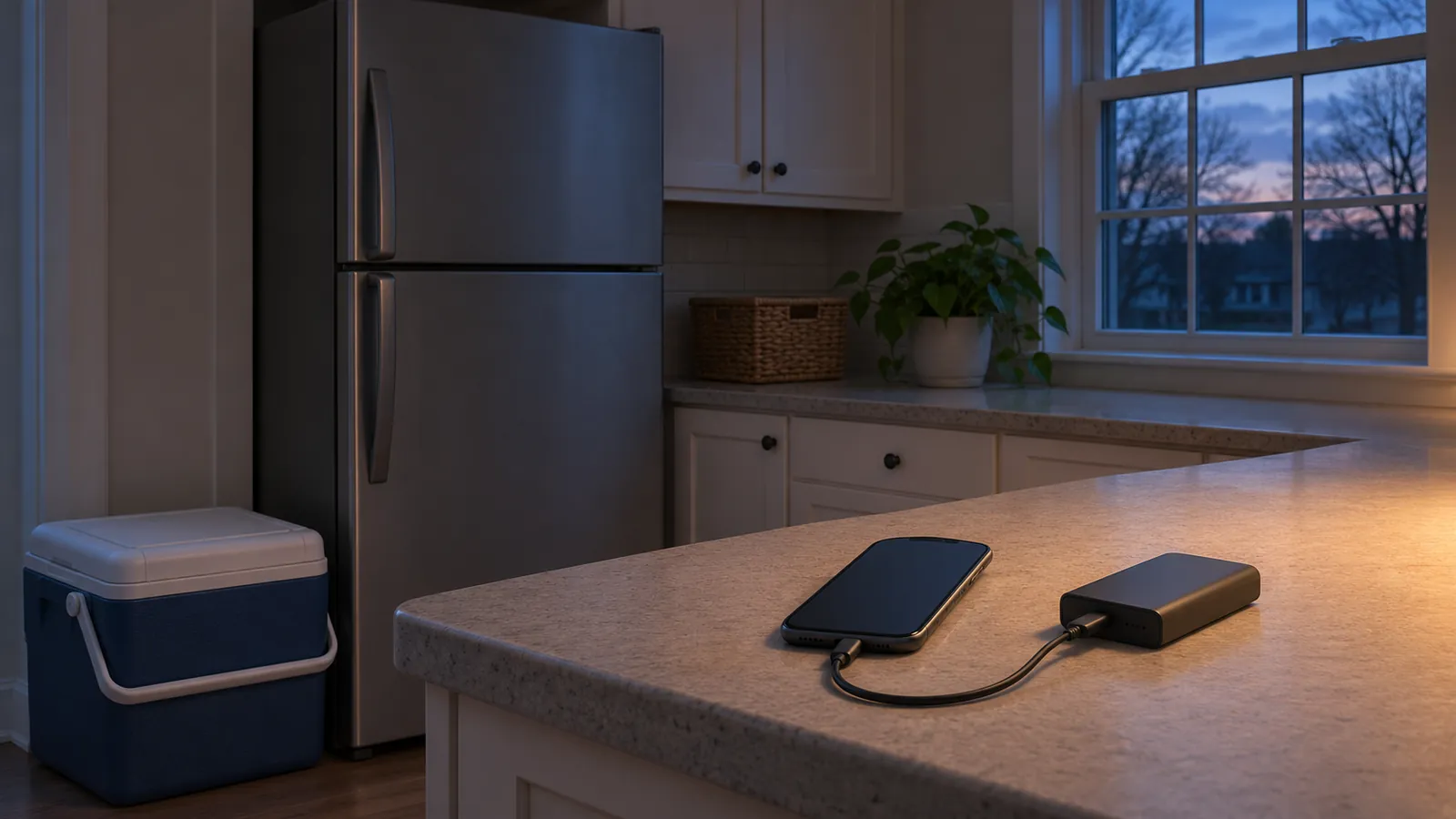
Set up a dry charging location with the correct cable. Confirm that the phone actually shows it is charging; a connected cable alone does not establish that the power bank is supplying energy. Keep the cable and bank away from bedding, water, and foot traffic. Follow their instructions and stop using equipment that appears damaged or behaves abnormally.
A rechargeable flashlight also needs a compatible power source when its stored energy runs low. Baton 4 Pro supports USB-C and magnetic charging; Prowess uses USB-C through its detachable base, or an optional compatible MCC3 cable. Keep the required parts with the light. A USB-C cable cannot replace a missing charging base on a system that requires that base.
Oclip 2 Pro's standard light can charge through USB-C. The separate Premium configuration adds a Mobile Charging Dock; do not assume the standard light has that reserve. Likewise, Perun 3 Mini Standard uses its magnetic charging cable, while a Premium kit has different included charging equipment. Check the actual kit in the house before allocating the last available USB connection.
Avoid Garage Charging and Unsafe Heating
Do not run a vehicle in a garage to charge phones, even with the garage door open. Never use a gas range or oven to heat the home. CDC's power-outage safety guidance also says gasoline-powered generators belong outside, at least 20 feet from doors, windows, and vents, with a battery-powered or battery-backup carbon monoxide detector inside.
CDC recommends battery flashlights and lanterns instead of candles to reduce fire risk. It also advises seeking shelter with friends or at a community shelter if conditions are too hot or cold. A better lighting arrangement helps with movement and tasks; it cannot make unsafe temperatures or an exhausted medical-device backup acceptable. Seek emergency help for an immediate threat rather than finishing household preparations first.
Do not investigate downed lines or attempt electrical repairs to accelerate restoration. Keep household preparation focused on accessible supplies, communication, and safe movement. If a building manager or utility provides instructions for the property, follow those directions. A working flashlight helps read the instructions; it does not provide the training or protection needed for electrical work.
How Long Can You Legally Go Without Power?
The answer depends on where you live, the provider, and why service is unavailable. A storm-related outage, a utility disconnection, and a rental-property problem involve different rules. Do not treat twelve hours as a nationwide legal deadline. Report the outage to the provider, preserve the case number, and ask the relevant regulator or local housing authority about the specific situation.
For a rental home, tell the landlord or building manager what is affected, including shared doors, hall lighting, or water systems. Keep a written record of when the problem was reported and the response. Ask which building arrangements are available while power is out. Avoid assuming that a utility restoration estimate answers a separate question about the building's responsibilities.
If service is restored nearby but remains absent at the property, update the provider rather than assuming the original area report still describes the problem. Give the service address and report number. Describe observations without trying to diagnose wiring. A local fault and a wider outage may require different follow-up, and neither should be approached by handling electrical equipment without appropriate expertise.
How Long Does Your Power Need to Be Off Before Compensation?
Eligibility depends on the applicable utility rules and the type of claim. An outage credit, reimbursement for spoiled food, and an insurance claim are different processes. Check the current rules for the service address and keep the outage record. There is no reliable nationwide twelve-hour payment promise that applies to every provider and every cause of an interruption.
Michigan provides a useful example of why the conditions matter. Its Public Service Commission describes outage-credit thresholds that vary with outage conditions: 16 hours under normal conditions, 48 hours under gray-sky conditions, and 96 hours under catastrophic conditions. These are Michigan rules for covered service, not a national schedule or a promise to reimburse every household expense. Check the commission's current details and the provider's applicability.
Save the provider's reference number, start and restoration times, useful messages, and receipts for expenses you may need to document. Photograph discarded food if appropriate for the claim process, without tasting or retaining it. Ask separately whether the utility offers a bill credit and whether it considers property-loss claims. Approval of one does not establish approval of the other.
FAQ
Changelog
- November 7, 2026: Product information and buying guidance reviewed.