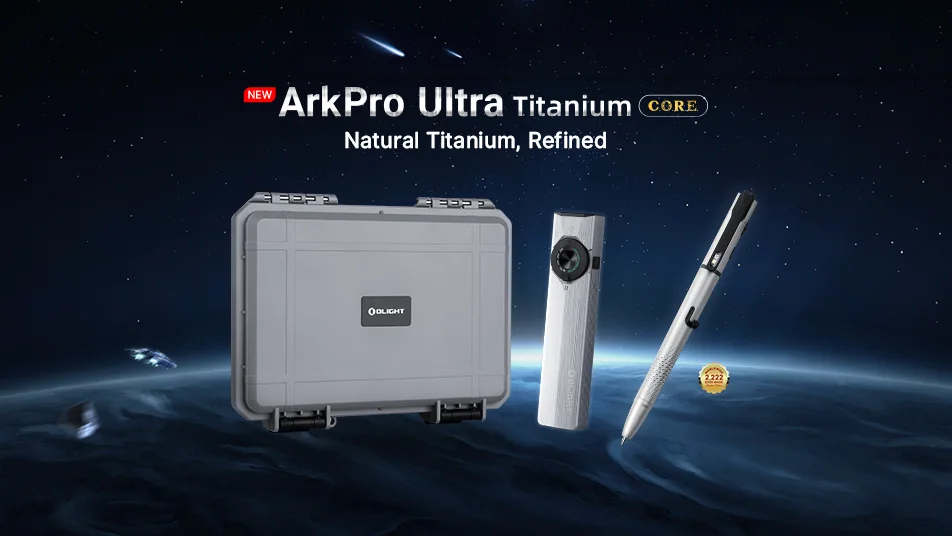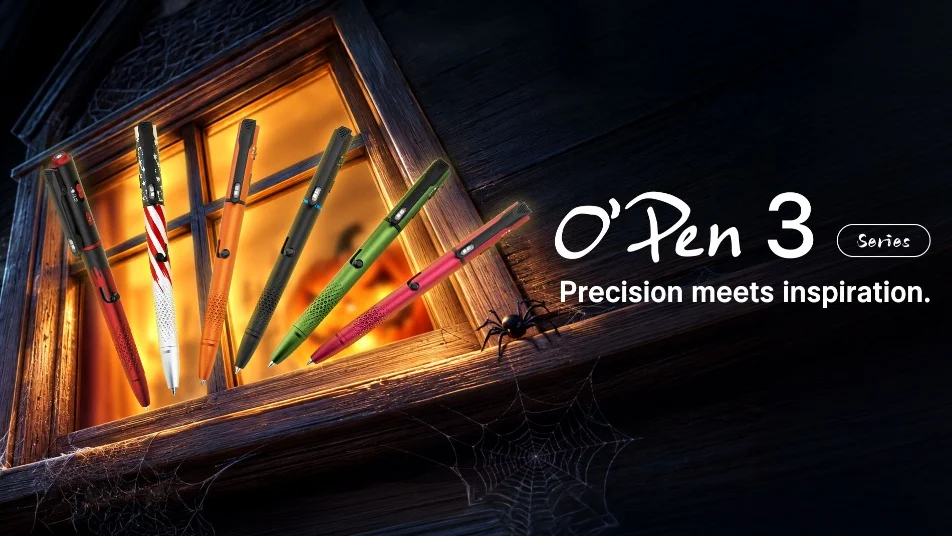
Olight makes the two example lights here; their specs and regular prices come from Olight's US product pages and manuals as of September 2026. Standard editions and scopes come from the publishers' pages or public summaries, since the full texts are sold. Illuminance and battery figures are calculations from published ratings, not measurements.
⚡ TL;DR
The ANSI FL1 standard, now published as ANSI/PLATO FL 1-2025, is a voluntary U.S. method for measuring and labeling flashlight performance: output, beam intensity, beam distance, runtime, impact and water resistance. Three other codes often share the spec sheet: IEC 60529 for ingress protection, IEC 62471 for photobiological safety and UN 38.3 for lithium battery transport. Check which edition each label cites.
A flashlight box can carry codes from four different bodies, and they all look equally official. Mixing them up leads to real mistakes: trusting an IPX8 icon near salt water, or reading "FL1" as a safety approval. This guide sorts out who writes each standard, what it covers, which edition is current and how to check it yourself.
This quick reference places the ANSI FL1 standard beside the other codes on a flashlight spec sheet, with who writes each and whether U.S. law requires it.
| Code on the spec sheet | Who writes it | Current edition (September 2026) | Required by U.S. law? |
|---|---|---|---|
| ANSI/PLATO FL 1 | PLATO, a trade association accredited by ANSI | FL 1-2025 (published February 2, 2026) | No |
| IEC 60529 (IP Code) | IEC Technical Committee 70 | Edition 2.2 (2013); U.S. adoption ANSI/IEC 60529-2020 | No |
| IEC 62471 | IEC TC 76, from CIE S 009 | IEC 62471:2006, plus IEC 62471-7:2023 for visible-light products | No federal flashlight rule found |
| UN 38.3 | UN Committee of Experts on the Transport of Dangerous Goods | UN Manual Rev.8 (2023), Amendment 1 (2025) | Yes, for shipping lithium batteries |
| 21 CFR 1040.10 (lasers) | U.S. Food and Drug Administration | FDA regulation, with Laser Notice No. 56 | Yes, for laser products |
📋 Table of Contents
- 1. Quick Answer: Most Flashlight Standards Are Voluntary, So the Label Itself Is Evidence
- 2. Who Creates Flashlight Standards?
- 3. Four Standards on a Flashlight Spec Sheet and What Each One Governs
- 4. The ANSI FL1 Standard: How Flashlight Performance Is Measured
- 5. What Is IEC 60529?
- 6. IEC 62471: Photobiological Safety of Lamps and LEDs
- 7. UN 38.3: Lithium Battery Transport Testing
- 8. Are Flashlight Standards Mandatory?
- 9. How to Find a Standard's Original Text and Current Version
- 10. Reading a Real Spec Sheet: Two Olight Lights Decoded
- 11. Common Misreadings of Lighting Standards
- 12. Your Standards-Reading Checklist
- 13. FAQ
Quick Answer: Most Flashlight Standards Are Voluntary, So the Label Itself Is Evidence
Most codes on a flashlight spec sheet are voluntary. We found no U.S. law requiring a maker to test a flashlight to ANSI FL1, IEC 60529 or IEC 62471, so a named standard with a named edition tells you the maker chose a published method you can look up. The two exceptions are UN 38.3 battery testing for shipping and FDA rules for lasers.
That makes the code a screening tool. "Tested per ANSI/PLATO FL 1-2019" plus "IPX8" gives you two methods you can look up; "waterproof" and "military grade" give you nothing to check. Olight's product pages for its flashlights list lumens, candela, beam distance and runtime in the FL1 format, and manuals such as the Arkfeld Pro's name the FL1 edition behind the table.
Who Creates Flashlight Standards?
Flashlight standards come from four kinds of lighting standards organizations. A trade association, PLATO, writes the FL1 performance method under ANSI accreditation. International committees at the IEC write enclosure and photobiological standards. A UN committee writes lithium battery transport tests, which U.S. law adopts. Federal agencies write binding rules, such as the FDA's laser regulation. ANSI itself writes none of them.
ANSI's own introduction states: "ANSI is not itself a standards developing organization." Its description of its roles explains what it does instead: "ANSI facilitates the development of American National Standards (ANS) by accrediting the procedures of standards developing organizations (SDOs) and approving their documents as American National Standards (ANS)." So "ANSI/PLATO FL 1" means PLATO wrote it and ANSI approved it as an American National Standard.
PLATO, the Portable Lights American Trade Organization, was incorporated in 2010, according to its history page, and has "more than three dozen members," including Energizer, Streamlight, Coast and Petzl. For the 2025 revision, PLATO's summary of what changed says the revision process included "a 33-member roster representing producers, testing laboratories, retailers and distributors, users and media, and general-interest participants," and that the Standards Committee "received and reviewed 54 comments."
ANSI is "the sole U.S. representative to the International Organization for Standardization (ISO), and, through the U.S. National Committee (USNC), to the International Electrotechnical Commission (IEC)," per the same ANSI page. Behind the eye-safety standard sits a science body. The International Commission on Non-Ionizing Radiation Protection says in its 2020 statement on LEDs: "Standardization bodies, such as the International Electrotechnical Commission (IEC) employ ICNIRP exposure guidelines to develop emission limits used in product safety standards."
Four Standards on a Flashlight Spec Sheet and What Each One Governs
Each of the four standards answers one question and ignores the others. FL1 measures performance but not eye safety. IEC 60529 rates leaks but not corrosion. IEC 62471 classifies optical risk but excludes lasers. UN 38.3 tests batteries for shipping, not daily use.
This standards lookup table lists the formal number, current edition and scope of each code, drawn from the publishers' pages.
| Standard | Formal number and edition | Publisher and committee | What it governs | What it does not cover |
|---|---|---|---|---|
| FL1 | ANSI/PLATO FL 1-2025 | PLATO Standards Committee | Test and labeling method for portable light performance | Eye safety, color rendering, corrosion |
| IP Code | IEC 60529:1989+AMD1:1999+AMD2:2013, edition 2.2 | IEC TC 70, Degrees of protection provided by enclosures | Protection against solid objects, dust and water | Corrosion, condensation, mechanical damage |
| Photobiological safety | IEC 62471:2006, edition 1.0; IEC 62471-7:2023 | IEC TC 76 (62471); IEC TC 34 Lighting (62471-7) | Exposure limits, measurement and risk groups for non-laser optical sources | Lasers |
| Lithium battery transport | UN Manual of Tests and Criteria, sub-section 38.3 | UN Committee of Experts; enforced in the U.S. through 49 CFR 173.185 | Up to eight tests (T.1 to T.8) a cell or battery type must pass before transport | Daily-use safety or charging at home |
The ANSI FL1 Standard: How Flashlight Performance Is Measured
The ANSI FL1 standard, formally ANSI/PLATO FL 1, is a test and labeling method for flashlights, headlamps and other portable lights. It defines how makers measure and print output, beam intensity, beam distance, runtime, impact and water resistance. The current edition is FL 1-2025, but many manuals on sale in 2026, including Olight's, still cite FL 1-2019 or the 2009 edition.
PLATO announced the publication of the revised standard on February 2, 2026, and called it "the most significant update in the Standard's history." It added a method for short turbo bursts and dust ratings, IP5X and IP6X. PLATO says the full text "is now available for purchase," so public summaries are the only free source. Our guide to the ANSI FL1 numbers explains each rating.
Why your manual may cite an older edition
PLATO's guide to marking products under FL 1-2025 states: "ANSI/PLATO FL 1 is a voluntary performance standard. There is no mandatory industry-wide deadline requiring manufacturers to transition to the new markings." It adds that PLATO "anticipates that updated tables and markings will appear in the marketplace over approximately two years, based on previous transitions." Two years from February 2026 is early 2028, though PLATO adds that adoption "could occur more quickly," so expect mixed editions for a while.
Olight manuals show three labels, each to be read as printed:
- "ANSI/PLATO FL 1-2019": the Arkfeld Pro manual says, "Above data are tested per ANSI/PLATO FL 1-2019 standard in Olight's labs for reference."
- "ANSI/NEMA FL 1-2009": the Marauder Mini manual says its data "are tested per ANSI/NEMA FL 1-2009 standard in Olight's labs for reference."
- "ANSI/NEMA FL 1-2019": the O'Pen 3 manual pairs the 2019 year with the older NEMA name; PLATO's history page credits the 2019 revision to PLATO.
PLATO says standard modes still use "the existing procedures," so a 2019 steady-mode figure stays comparable. The differences sit in turbo bursts, dust ratings and IPX8, where the old "fixed four-hour testing duration" was dropped. If a listing names no edition, see our guide to fake lumens.
What Is IEC 60529?
IEC 60529 is the international standard that defines the IP Code, the "IP" plus two digits that rate how well an enclosure keeps out solid objects and water. It is written by IEC Technical Committee 70 and covers electrical equipment up to 72.5 kV. The current version is edition 2.2, the 1989 text with amendments from 1999 and 2013.
The IEC Webstore listing gives the details you need to cite it: IEC 60529:1989+AMD1:1999+AMD2:2013, edition 2.2, published August 29, 2013, 207 pages. It includes corrigenda through January 2019 and lists a stability date of 2027, when the committee plans to review it. In the U.S., NEMA publishes the same text as ANSI/IEC 60529-2020. Its contents and scope document describes it as an "Identical National Adoption of IEC 60529: 1989/AMD2:2013/COR1:2019," approved by ANSI on September 23, 2020.
FL1 borrows IPX codes from this standard, and PLATO says its 2025 IPX8 method aligns "more closely with ANSI/IEC 60529, the underlying standard for IP testing." For the digits, see our explainer on IPX8 meaning and our comparison of IPX7 vs IPX8 vs IP68.
What it leaves out matters too. NEMA's guide to enclosure types says: "IEC 60529 does not specify degrees of protection against mechanical damage of equipment, risk of explosions, or conditions such as moisture (produced for example by condensation), corrosive vapors, fungus, or vermin." That is why an IPX8 light can still carry a seawater warning.
IEC 62471: Photobiological Safety of Lamps and LEDs
IEC 62471 is the international standard for the photobiological safety of lamps, including LEDs. It sets exposure limits, a measurement method and four risk groups, RG0 to RG3, for optical radiation from 200 to 3,000 nm. It excludes lasers. The base edition is IEC 62471:2006, and visible-light products now also have IEC 62471-7:2023.
The IEC Webstore's IEC 62471:2006 listing states its scope: "all electrically powered incoherent broadband sources of optical radiation, including LEDs but excluding lasers, in the wavelength range from 200 nm through 3000 nm." It was "prepared as Standard CIE S 009:2002 by the International Commission on Illumination." Its stability date is 2026, and a revision is under way: the CIE's committee page lists a goal "To work with IEC to produce a dual-logo standard to replace CIE S009/IEC 62471."
The newer IEC 62471-7:2023, from TC 34, Lighting, covers products emitting mainly visible radiation (380 to 780 nm) that "are used to illuminate spaces or objects or used for signalling." The older blue-light report IEC TR 62778:2014 is listed as withdrawn since May 26, 2023.
What the four risk groups mean in time
ICNIRP's 2020 statement summarizes the groups: "If a lamp is classified as RG0, also known as "exempt," there is considered to be no hazard associated with exposure to this lamp." At the other end, "If a lamp is classified as RG3, it is considered to potentially pose a high risk, and exposure to this lamp may pose a hazard even for a brief exposure, particularly at close distances."
This table converts the exposure times in lighting maker Smart Vision Lights' summary of IEC/EN 62471 into minutes for two hazards.
| Hazard (label in the summary) | Exempt (RG0) | Risk Group 1 | Risk Group 2 | Risk Group 3 |
|---|---|---|---|---|
| Blue Light Radiance | 10,000 s = 166.7 min, about 2.8 h | 100 s = 1.7 min | 0.25 s | No time listed |
| UVA Hazard | 1,000 s = 16.7 min | 300 s = 5 min | 100 s = 1.7 min | No time listed |
The 0.25 s figure is the key to visible light. LED maker Luminus explains in its guide to IEC 62471 risk groups that "The added protection due to aversion response (about 0.25 seconds) gives visible light sources an added safety buffer so RG2 requires caution but RG1 does not." It adds that "Nonvisible RG1 sources should be treated the same as RG2 sources," which matters for UV lights and any IR illuminator.
Why measurement distance changes the answer
A risk group is only valid at the distance where it was measured. Luminus notes that lamps for general lighting service (GLS) are assessed at the distance giving 500 lux, while every other source uses 200 mm, "the distance chosen as the close focus limit for retinal possible damage." The GLS definition it quotes from IEC 62471 covers lamps "for lighting spaces that are typically occupied or viewed by people" and excludes "searchlight applications," so a handheld light you aim is better judged at 200 mm. ICNIRP cites a study in which LED lamps were all Exempt at the 500 lux distance, but "if evaluated at a measurement distance of 20 cm," a camping lantern "fell into the RG 2 category."
Illuminance is candela divided by distance squared, so the 500 lux distance is the square root of candela divided by 500. This table applies that rough far-field estimate to Olight's rated peak candela.
| Light (rated peak intensity) | Illuminance at 200 mm: cd ÷ 0.2² | Distance where the beam falls to 500 lux: √(cd ÷ 500) | Ratio, 200 mm vs 500 lux |
|---|---|---|---|
| Olight Arkfeld Pro (2,608 cd) | 2,608 ÷ 0.04 = 65,200 lux | √5.216 = 2.28 m | 130 times |
| Olight Marauder Mini (90,000 cd) | 90,000 ÷ 0.04 = 2,250,000 lux | √180 = 13.4 m | 4,500 times |
These figures are based on Olight's rated candela, not measured, and are only approximate this close to a lens. They are not risk groups; Olight publishes none for either light. The point is scale: at 200 mm, even the pocket light delivers over a hundred times the 500 lux condition.
Safety note: The Arkfeld Pro warning manual says: "Do not look directly at the light source or shine it into your eyes, as this may cause temporary blindness or permanent damage to your eyes." Its UV line adds: "Ultraviolet light: Do not look directly at the light source with the naked eye."
UN 38.3: Lithium Battery Transport Testing
UN 38.3 is sub-section 38.3 of the UN Manual of Tests and Criteria, a series of up to eight tests, T.1 to T.8, that a lithium cell or battery type must pass before it can be shipped. It is written by the UN Committee of Experts on the Transport of Dangerous Goods. In the U.S., 49 CFR 173.185 makes it mandatory for shipping, so it is the one code here that federal law requires.
The federal rule is blunt. 49 CFR 173.185 says: "Each lithium cell or battery must be of the type proven to meet the criteria in part III, sub-section 38.3 of the UN Manual of Tests and Criteria." It also requires every manufacturer and later distributor of lithium cells or batteries made on or after January 1, 2008, with an exception for button cells installed in equipment, to "make a test summary available."
A public test summary from flashlight maker Bayco lists the eight tests by name in its UN 38.3 summary for a work light battery pack: T.1 Altitude Simulation, T.2 Thermal Test, T.3 Vibration, T.4 Shock, T.5 External Short Circuit, T.6 Impact/Crush, T.7 Overcharge and T.8 Forced Discharge. Its impact line reads "P/na," a reminder that not every test applies to every type. That summary cites the Sixth Revised Edition of the Manual, so older test records stay in use.
What a UN 38.3 test summary must contain
This checklist restates the elements 49 CFR 173.185(a)(3) requires in every test summary.
| Required element | What to look for |
|---|---|
| Manufacturer name and contact details | Address, phone, email and website |
| Test laboratory name and contact details | A named lab, not just "passed" |
| Unique test report number and date | Both present |
| Battery description | Lithium ion or metal, mass, Wh rating or lithium content, physical description, model number |
| List of tests and results | Pass or fail for each test |
| Assembled battery testing reference | Where it applies |
| Edition of the UN Manual used | A named revision and any amendment |
| Responsible person | Name and title |
Which edition counts
UNECE lists the UN Manual of Tests and Criteria Rev.8 (2023) and Amendment 1 to Rev.8 (2025) as the current files. U.S. law lags: 49 CFR 171.7 incorporates the "Seventh revised edition (2019)" and "Seventh Revised Edition, Amendment 1 (2021)." And 173.185 lets older types keep shipping: cells and batteries made to "Revision 3, Amendment 1 or any subsequent revision and amendment applicable at the date of the type testing may continue to be transported."
The watt-hour check
Section 173.185 also sets size lines for its smaller-battery provisions: "The Watt-hour (Wh) rating may not exceed 20 Wh for a lithium ion cell or 100 Wh for a lithium ion battery." Watt-hours equal nominal volts times amp-hours:
- Arkfeld Pro: 3.7 V × 1.5 Ah = 5.55 Wh, matching the "1500mAh 3.7V (5.55Wh)" in its manual. That is 27.75% of the 20 Wh cell figure (5.55 ÷ 20).
- Marauder Mini: 3.7 V × 6.5 Ah = 24.05 Wh, matching the "6500mAh 3.7V 24Wh" on its product page. That is about 120% of the 20 Wh cell figure (24.05 ÷ 20). Its pack is one 32650 cell, and 173.185 says a single cell battery as defined in sub-section 38.3 "is considered a 'cell' and must be offered for transportation in accordance with the requirements for cells." So the 20 Wh line applies, not the 100 Wh battery line.
So the Arkfeld Pro sits under the 20 Wh line for the smaller-battery provisions, while the Marauder Mini's cell is over it and cannot use them. These are shipping thresholds, based on Olight's rated capacity, not measured, and they differ from the rules for carrying a light on a plane. If you fly with a pocket flashlight, check the airline battery rules separately.
Are Flashlight Standards Mandatory?
Mostly no. In the U.S., ANSI/PLATO FL 1, IEC 60529 and IEC 62471 are voluntary for flashlights: makers choose whether to test to them and print the results. Two rules are mandatory. Lithium batteries must pass UN 38.3 before shipping under 49 CFR 173.185, and laser products must meet FDA rules under 21 CFR 1040.10 and 1040.11.
PLATO's marking guide calls FL1 voluntary with no transition deadline. NEMA says its standards, including ANSI/IEC 60529-2020, come from a "voluntary consensus Standards development process," and adds that it "has no power, nor does it undertake to police or enforce compliance with the contents of this document," so accuracy rests on the maker. For IEC 62471 we found no U.S. federal flashlight rule; Luminus notes that in Europe, EN 62471:2008 is the version "EU countries use."
Lasers are the clearest mandatory case. FDA's Laser Notice No. 56 guidance explains that for makers conforming to the IEC 60825-1 Ed. 3 clauses it identifies as comparable, "FDA does not intend to enforce the applicable requirements in 21 CFR 1040.10 and 1040.11." That is why a green-laser flashlight manual carries a federal line.
How to Find a Standard's Original Text and Current Version
To find a standard's current version, go to the publisher, not a reseller or a summary. For IEC standards, search the IEC Webstore by number and read the edition, publication date and stability date. For FL1, check PLATO's news page. For UN 38.3, check UNECE and then 49 CFR 171.7 for the edition U.S. law adopts.
This table shows how old each edition is in 2026 and what the full texts cost on the IEC Webstore in September 2026.
| Document | Current edition date | Age in 2026 | Next review or status | Listed price |
|---|---|---|---|---|
| IEC 60529 ed. 2.2 | August 29, 2013 (base text 1989) | 13 years since last amendment | Stability date 2027 | CHF 515 |
| IEC 62471:2006 | July 26, 2006 | 20 years | Stability date 2026; CIE revision under way | CHF 295 |
| IEC 62471-7:2023 | February 16, 2023 | 3 years | Stability date 2026 | CHF 260 |
| ANSI/PLATO FL 1-2025 | February 2, 2026 | New | About two-year marking transition | Sold by PLATO |
| UN Manual Rev.8 | 2023, Amendment 1 in 2025 | 3 years | U.S. law cites Rev.7 (2019) | Files listed on UNECE's site |
Reading all three IEC texts costs CHF 515 + CHF 295 + CHF 260 = CHF 1,070, for 207 + 89 + 65 = 361 pages. That is why most buyers work from abstracts, and why you should doubt any listing that claims to quote a paid standard word for word.
Reading a Real Spec Sheet: Two Olight Lights Decoded
Two Olight lights show how the codes appear in practice. The Arkfeld Pro cites FL 1-2019, IPX7 and an FDA laser line. The Marauder Mini cites the 2009 FL1 edition and IPX8, and carries a 24 Wh single-cell battery. Neither lists an IEC 62471 risk group, so their manuals' eye warnings do that job.
This parameter table maps each spec-sheet label to its standard, unit and typical range, with both lights' published values.
| Label | Standard behind it | Unit | Arkfeld Pro | Marauder Mini | How to judge it |
|---|---|---|---|---|---|
| Max output | FL1 | lumens | 1,300 lm (Turbo, 4 min) | 7,000 lm (Level 7 flood, 2 min) | Read the step-down stages, not only the peak |
| Peak intensity and beam distance | FL1 | candela, meters | 2,608 cd, 102 m | 90,000 cd, 600 m | Longer distance needs more candela |
| Edition | FL1 | year | FL 1-2019 | NEMA FL 1-2009 | Newer editions add turbo, dust and IPX8 changes |
| Water rating | IEC 60529 via FL1 | IP digit, 0 to 9 | IPX7 | IPX8 | IPX8 depth and time are set by the maker |
| Photobiological group | IEC 62471 | RG0 to RG3 | Not listed | Not listed | Follow the manual's eye warnings |
| Laser class | 21 CFR 1040.10 / IEC 60825-1 | Class | Class 3R, 5 mW | No laser | Class 3R needs care; never aim at eyes |
| Battery energy | UN 38.3 summary field | Wh | 5.55 Wh | 24 Wh | A single-cell pack counts as a cell: compare with 20 Wh |
Olight Arkfeld Pro: three light sources, three rulebooks
The Olight Arkfeld Pro flat EDC flashlight ($89.99, regular price, September 2026, OD Green CW default SKU) combines white light, a 365 nm UV light and a Class 3R green laser at 510 to 530 nm. Olight lists UV optical power as 560 to 900 mW in its specs and 900 mW in its highlights. Its white Turbo runs 1,300~420 lumens for 4 + 126 minutes, and Med gives 100 lumens for 9 hours 45 minutes.
Each source falls under a different code. The laser carries the manual line "Complies with 21 CFR 1040.10 and 1040.11 except for conformance with IEC 60825-1 Ed. 3., as described in Laser Notice No. 56, dated May 8, 2019." That date is the notice's original one; FDA's current guidance page is dated February 2023. The warning manual says to avoid looking at "3R laser products with the naked eye."
Its limits are on the same sheet. It is rated IPX7, not IPX8, and the warning manual says, "Do not immerse the flashlight in seawater or other corrosive media as it will damage the product." It also warns: "Do not store, charge, or use this light in a car where the temperature inside may exceed 60°C or in similar environments." If you only need white light, a model without a laser avoids the extra rules.
Olight Marauder Mini: an older edition and a bigger battery
The Olight Marauder Mini flashlight ($199.99, regular price, September 2026, Black) is rated at 7,000 lumens, 90,000 cd and 600 m, IPX8, 462 g. Its Level 7 floodlight runs 7,000~1,600~900 lumens for 2 + 160 + 10 minutes. It also has red, green and blue modes.
Its manual cites ANSI/NEMA FL 1-2009, with tests "performed indoors under a room temperature of 25 degrees celsius with windless conditions," and lists a 1.5 m impact rating and IPX8. That IPX8 figure predates the 2025 IPX8 change. The warning manual adds: "Keep the light locked out when carrying or transporting to prevent burning accidents caused by abnormal startup." It carries a seawater warning worded like the Arkfeld Pro's and tells you not to "leave the light in a car where inside of temperature may be over 60°C."
The limit is size: at 462 g it is a search light, not a pocket light.
Common Misreadings of Lighting Standards
Most mistakes come from reading one standard as if it answered another's question. An FL1 table is not a safety approval, an IP rating is not a corrosion rating, and a UN 38.3 pass says nothing about charging at home.
This table lists common misreadings of lighting standards, the fact and the basis for each.
| Misreading | Fact | Basis |
|---|---|---|
| "ANSI certified this flashlight." | ANSI accredits standards developers and approves standards; the FL1 figures come from the maker's or a lab's tests | ANSI introduction and roles pages |
| "FL1 means the light is safe for eyes." | FL1 covers performance; eye safety is IEC 62471's subject | PLATO summaries; IEC 62471 scope |
| "IPX8 means salt water is fine." | IEC 60529 does not cover corrosive vapors; Olight manuals warn against seawater | NEMA enclosure guide; Olight manuals |
| "IP65 equals NEMA 4X." | NEMA's conversion table "cannot be used to convert from IEC Classifications to enclosure Type numbers" | NEMA enclosure guide |
| "A UN 38.3 summary citing Rev.6 is invalid." | Types tested to Rev.3 Amendment 1 or later may continue to be transported | 49 CFR 173.185 |
Your Standards-Reading Checklist
Use this checklist whenever you compare lights by their ANSI FL1 standard ratings and the codes printed beside them. It turns a crowded spec sheet into six quick checks and tells you where to look when a label is unclear.
- Find the FL1 line and its year. FL 1-2025 is current; 2019 and 2009 figures remain common until about 2028.
- Read the IP code as a leak rating only. Check the manual for seawater and chemical warnings.
- Look for an IEC 62471 risk group. If none is listed, follow the manual's eye warnings, and treat UV and IR sources with extra care.
- For lasers, find the 21 CFR 1040.10 line and the laser class.
- For batteries, compute volts × amp-hours and compare it with the printed Wh. Ask a seller for the UN 38.3 test summary if you resell or ship lights.
- Verify any edition at the publisher: plato-usa.org, webstore.iec.ch, unece.org or ecfr.gov.
Note: Olight manuals state that their performance tables were produced "in Olight's labs for reference." That is testing by the maker under the named FL1 edition, not third-party certification.
FAQ
Changelog
- September 25, 2026: First published.