⚡ TL;DR
A bidirectional flashlight can direct light from opposite sides of one body. Decide first whether your task needs both directions at the same time or whether switching between them is sufficient. Check the model's controls, beam patterns and mounting options before relying on either arrangement, and pack a suitable backup.
| Task | Starting equipment | What to verify | Example to investigate |
|---|---|---|---|
| Walk to a campsite | Headlamp or handheld light | Near-field visibility, controls and reserve power | Olight Perun 3 |
| Alternate between a path and a table | A light with documented direction switching | Control sequence and secure mounting | Olight Prowess, used as an alternating-direction example |
| Keep a table lit while someone walks | Two independently aimed lights | Separate power, mounting and controls | A headlamp plus a separate area light |
| Alternate between spot and flood in one direction | Multi-mode handheld or separate lights | Beam pattern and control sequence | Olight ArkPro series |
| Search across an open area | Spot or switchable spot/flood light | Intensity, beam width and useful runtime | Olight Marauder Mini 2 |
Our product descriptions reflect specifications reviewed on October 31, 2026.
No single lumen minimum fits these jobs. Choose requirements from the space, expected operating time and charging access. Manufacturer maximums do not show how bright a light stays throughout a trip, and two advertised directions do not establish that both can operate together.
📋 Table of Contents
- 1. Bidirectional Flashlights: Directions, Beams and Simultaneous Modes
- 2. Walking, Work, and Camp: Placing Light Where It Is Needed
- 3. Bidirectional Flashlight Beam Shape and Brightness
- 4. One Bidirectional Light Versus Two Independent Lights
- 5. Mounting and Hanging a Bidirectional Flashlight
- 6. Bidirectional Flashlight Runtime and Combined Modes
- 7. Olight Formats: Direction Switching and Alternatives
- 8. When Bidirectional Lighting Adds Little Value
- 9. Military Equipment Claims and Civilian Selection
- 10. Evaluating Product Reputation in Context
- 11. Ownership and Responsible Use: No Universal Brightness Limit
- 12. FAQ
Bidirectional Flashlights: Directions, Beams and Simultaneous Modes
A bidirectional light has emitters or a lighting arrangement intended to illuminate in two directions relative to its body. That broad description leaves important details open. The beams may point along opposite ends or one may spread around a rear section. A product may let you select front or back; another may offer a combined mode. Ask what the exact model supports rather than assuming the label answers it.
A dual-beam flashlight can mean something different: spot and flood beams may leave the same end of a light. Those beams have different widths without necessarily pointing in opposite directions. A lamp with white and red light is not automatically bidirectional either. The practical question is where the light falls when the device is held or mounted.
Before purchasing, look for a diagram or manual showing both emitters and the control sequence. If the description does not say whether the beams run together, treat simultaneous operation as unconfirmed. If that feature is essential, choose an arrangement you can verify, such as a headlamp plus a separate low area light.
Walking, Work, and Camp: Placing Light Where It Is Needed
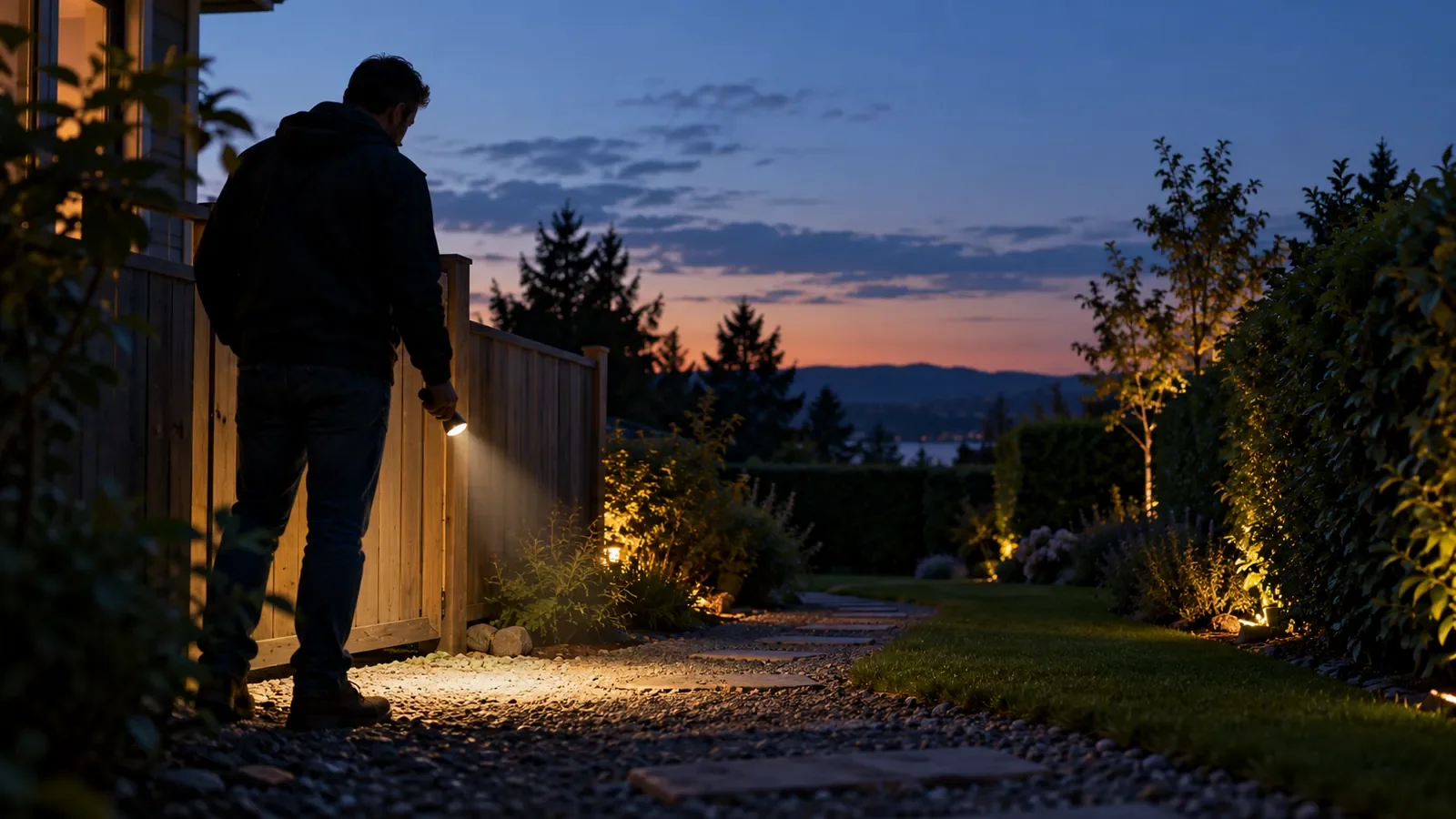
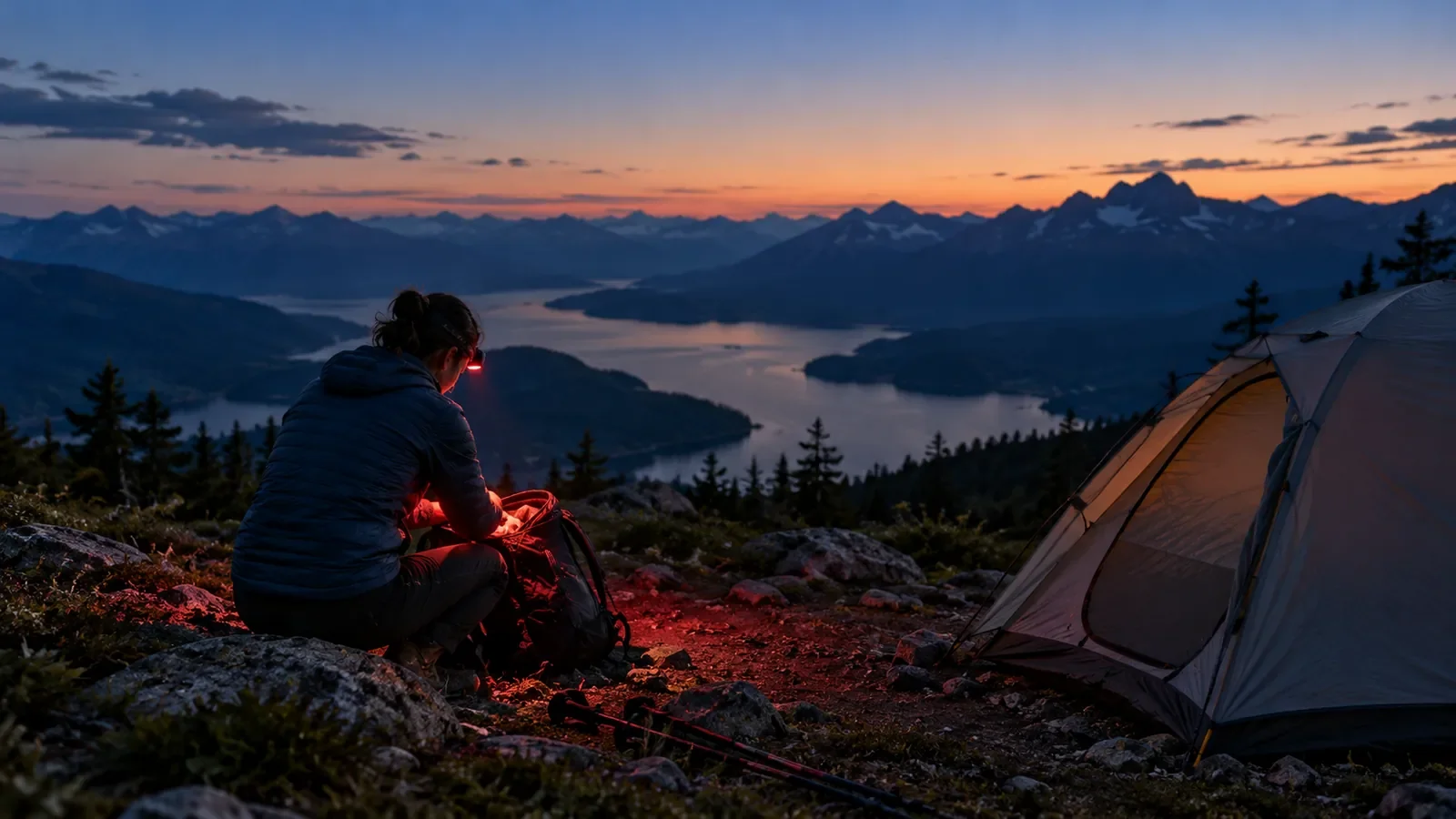
Walking: See the route and plan for a second task
A headlamp can free both hands to adjust a pack or read a trail marker. If you also want a light to show the ground beside or behind you, identify its actual direction and whether it operates while the first emitter is on. An opposite-facing emitter may illuminate behind the body rather than the next step; mounting height and orientation change the result. Do not treat two directions as a guarantee that the path and your feet are lit at once.
Try the setup on familiar level ground before departure. Keep a separate backup accessible, avoid shining in a companion's eyes, and adjust your pace to the terrain. Our pre-dawn group headlamp guide covers beam, tilt and spacing for a group start. A second emitter helps only if its beam reaches the area you need without glare or an obstruction.
Work: Change between the target and your hands
At a bench, an installer may want a directed beam to inspect a fitting and broader light for tools. A reversible lamp can reduce how often the body must be moved, but switching directions still means one task may go dark. Add a separate work light if both areas must remain illuminated continuously.
Mount the lamp where it cannot roll or tip into the work area. Keep it away from moving machinery, hot surfaces and liquids outside its rating. Check the surface and supplied attachment before trusting a magnet, hook or stand. If the job requires safety-rated equipment, follow the site rules and select a light certified for that environment; a general-purpose flashlight is not proof of certification.
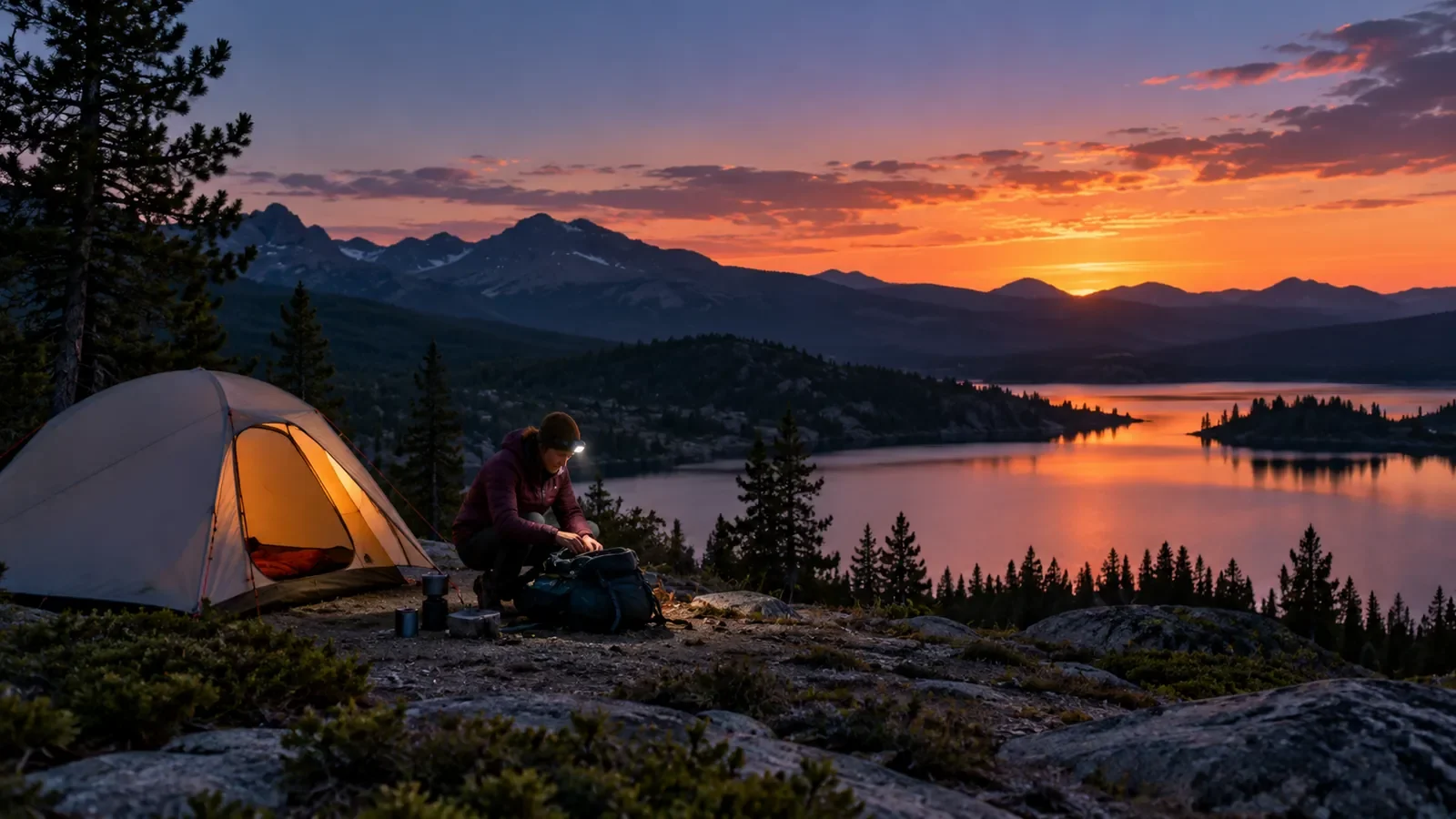
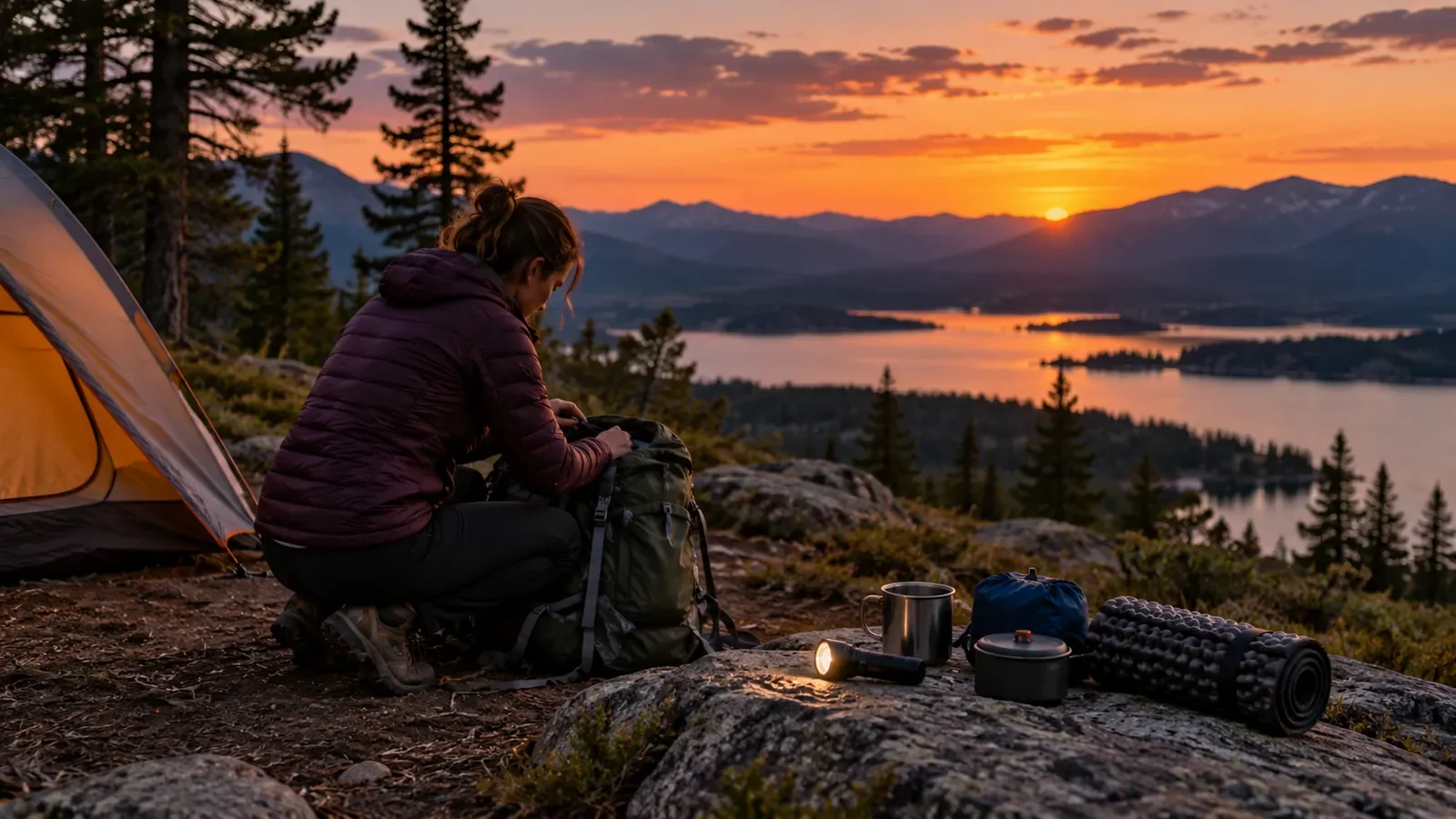
Camping: Move from a path to a table
A forward beam can help locate a campsite feature, while an area-facing emitter may suit reading a map or preparing a meal. Choose a position below eye level when practical, aim away from neighboring campers and avoid placing a hot light against tent fabric. If the lamp is suspended, confirm the support is designed for the load and cannot fall onto people or cooking equipment.
Weather and cold nights can change the plan. The desert nights guide discusses preparing lights and batteries for a large day-to-night temperature swing. Neither a second emitter nor a high water-resistance rating replaces shelter, spare power or the manufacturer's operating-temperature instructions.
Bidirectional Flashlight Beam Shape and Brightness
Look separately at each direction. Lumens describe total visible output for a mode; candela describes intensity in a direction. A manufacturer's beam-distance rating is calculated against a defined light level. None alone describes a comfortable working distance or guarantees that a person, obstacle or landmark can be identified at the stated distance.
| Decision | Directed beam | Broad or area light | What to check |
|---|---|---|---|
| Main use | Inspect a farther point or follow a route | Illuminate a table or nearby work area | Beam location when mounted |
| Output | Start with a usable lower mode | Choose a comfortable setting for the space | Actual mode sequence and adjustment |
| Power | Estimate time in expected modes | Budget separately if both can operate together | Runtime chart and step-down behavior |
| Weather | Match the rating to expected exposure | Protect charging ports and attachments | Stated rating and manual restrictions |
Avoid adding two advertised maximum-lumen numbers to predict combined output. The manufacturer may specify them under different conditions, and a combined mode may have its own output or may not exist. Compare the documented mode you would actually use, then try the light in a representative space when practical. A broad low setting may be more useful at a small table than a maximum that creates glare.
One Bidirectional Light Versus Two Independent Lights
One reversible body means fewer objects to pack and fewer controls to remember. It can be convenient when you alternate between a route and a nearby task. It also puts both functions in one place: if the battery is depleted, the body fails or the light falls somewhere inaccessible, both functions may be unavailable.
A headlamp plus a small area light gives independent aim and separate control. One can stay on the table while the other moves with its wearer. The tradeoffs are more equipment, batteries or charging connections, and potentially more weight. For a shared camp, two people may need light at once, making independent lights more useful than one reversible device.
Use this decision test: name the two surfaces that need light; decide whether they need it concurrently; identify where each lamp could be placed; then check power and backup. If you cannot find a stable position serving both surfaces, use separate lights. Browse the Olight collection for other formats, and check each manual for the exact controls and included accessories.
For example, a person setting up a tent alone might switch between a narrow beam to locate a peg and a broad light on a table. A group cooking and walking around the site at the same time has a different need: the table should stay lit while someone takes a separate lamp to the path. Sketch the positions before packing, including the people who will use them, rather than counting modes alone.
Mounting and Hanging a Bidirectional Flashlight
Start with the attachment supplied for your configuration. A magnetic base needs a suitable surface and reliable holding force in the intended orientation; a hook needs a secure anchor that cannot slip off. An accessory shown in a lifestyle image may be optional, and an attachment intended for a desk may not suit a moving pack.
With the light off and cool enough to handle, secure it over a clear area and gently check that it cannot rotate into a face or fall. Consider the weight of the body and any charging cable, which can pull the light sideways. Keep cords out of walking paths, and do not hang a lamp over a stove or directly against material that could trap heat. Follow the model's mounting and heat instructions instead of inventing a universal clearance.
If a beam is blocked by a hook, bag or table edge, reposition the device. A lamp that works in a product photograph may cast shadows in your actual space. The goal is reliable, comfortable illumination where the task occurs, not simply getting the lamp to stay on a vertical surface.
Bidirectional Flashlight Runtime and Combined Modes
Use the manufacturer's runtime table for the exact direction and output level, noting whether it includes a step-down from a high initial output. A figure such as “up to” may apply to the lowest mode rather than your intended setting. Compare output, operating mode, battery configuration and test conditions as far as the available data allows.
For a combined mode, use a separately published combined-mode runtime if one exists. Do not calculate it by adding front and rear runtimes. Shared electronics, output changes and thermal regulation can make that arithmetic misleading. If no combined-mode specification exists or simultaneous use is unconfirmed, plan with an independent light or spare power and mark the comparison as unknown.
The Prowess documentation reviewed does not provide a simultaneous-use figure; use an independent light if both areas must stay lit. Charge the light as the manual directs, test the controls before departure and carry a backup. Temperature and battery condition can affect available runtime; a planned reserve is more useful than treating a maximum advertised number as a promise.
Olight Formats: Direction Switching and Alternatives
The ArkPro series is a useful comparison when one forward-facing multi-mode light may be enough. The standard ArkPro combines spot and flood lighting with additional functions; different beam patterns do not make it a bidirectional light. It suits switching between directed and nearby illumination in one direction. For continuous light behind it, add a source or choose a documented suitable layout. Check the selected version and its manual, since series configurations differ.
Our Prowess multifunctional flashlight illustrates a documented front-and-reverse arrangement. We specify a cool-white forward light with a maximum of 5,000 lumens and a warm-white 360-degree reverse light with a maximum of 800 lumens and stepless adjustment. The manual describes a toggle that selects the forward or reverse light; the reviewed documentation does not establish simultaneous output or combined-mode runtime. These maximums apply to different functions, so do not add them. Verify exact accessories before depending on a mounting or charging method.
The Perun 3 headlamp represents a hands-free alternative when independent head movement and access to both hands matter more than opposite-facing emitters on one body. The Marauder Mini 2 is a different comparison: switchable spot and flood patterns do not prove opposite-facing lights. Check each model's own specification and manual; compare the modes and specifications for the actual task.
When Bidirectional Lighting Adds Little Value
If you only need a single beam to unlock a door or walk briefly across a familiar room, a compact light with straightforward controls may be easier. If two people need light in different places, independent lamps give each person control. If a work task requires a continuous beam while a table remains lit, an unverified reversible mode is not a substitute for a second lamp.
Consider charging and backup as well as convenience. A specialized body may make a useful primary light, but pack a backup appropriate to the consequences of losing illumination. For a household task, that might be a second small flashlight; for a remote trip, match the reserve to the route and conditions.
Military Equipment Claims and Civilian Selection
There is no single flashlight that can reliably be identified as the one used by every Navy SEAL in every situation. Equipment selection varies by mission, unit and time, and public marketing does not establish a universal issue list. For a civilian camp or work task, compare beam placement, controls, runtime and backup instead of choosing on an unsupported military association.
Evaluating Product Reputation in Context
Opinions about any flashlight brand vary, and a broad reputation claim needs context. Read recent, verifiable reviews for the exact model and look for the reviewer's use, purchase context, reported problem and documented resolution. Compare the manual, warranty terms available at purchase and independent testing where available; a few comments do not prove every product has the same issue or that every customer has the same experience.
Ownership and Responsible Use: No Universal Brightness Limit
This guide cannot name a universal legal brightness limit for flashlight ownership. Rules may depend on jurisdiction and how a light is used, particularly around vehicles, aircraft, protected areas or other people. Check applicable local rules and site restrictions before use. A high output rating is not permission to shine a light at someone or interfere with transport.
FAQ
Changelog
- September 28, 2026: First published.