⚡ TL;DR
A black light is a UV source intended to make fluorescent materials glow; ultraviolet light is the broader category. Some black lights emit UVA, but a product's name or purple glow alone does not establish its wavelength or safety. Check the label, intended use and instructions before choosing a lamp or flashlight.
Use the task, rather than the purple appearance of a lamp, to narrow your choice.
| Your question | Practical answer |
|---|---|
| Is black light UV? | A black light uses ultraviolet light to excite fluorescence; not every UV source is a black light. |
| Is a purple LED automatically a black light? | No. Visible color alone does not establish ultraviolet output. |
| Room decoration or local inspection? | Compare the light's stated coverage and mounting with the job; do not assume all lamps or flashlights spread light alike. |
| Does fluorescence identify a stain? | No. A glow indicates a fluorescent response, not the identity, cleanliness or safety of the material. |
| Can any black light cure any resin? | No. Match the resin manufacturer's required wavelength, intensity and exposure instructions to a purpose-designed curing lamp. |
The FDA describes a black light as a noncoherent UV light source used to illuminate fluorescent material. For product terminology, the flashlight terms glossary explains common lighting specifications.
📋 Table of Contents
- 1. Black Lights Within the UV Spectrum
- 2. Black Light and UV Light Terminology
- 3. UVA, UVB and UVC: Why the Category Matters
- 4. Blacklight Bulbs, Tubes and LED Blacklight Flashlights
- 5. Choosing a Black Light for a Room
- 6. Inspecting a Suspected Stain With UV
- 7. Black Light Exposure and Sleep
- 8. Black Lights and UV Resin Curing
- 9. Portable Olight Options: Match the Mode to the Task
- 10. UV and Laser Safety Before Switching Modes
- 11. Common Black Light Misunderstandings
- 12. Black Light Selection Checklist
- 13. FAQ
Black Lights Within the UV Spectrum
A black light is a UV light source used for fluorescence, but that does not make it suitable for every job described as “UV.” The output spectrum, power, beam distribution and instructions matter. A light chosen to make a poster fluoresce is not automatically an appropriate lamp for curing resin or for disinfection.
UV describes radiation beyond the violet end of visible light. Black light is a use-oriented name: it refers to a source used to reveal fluorescence. A fluorescent object absorbs suitable energy and emits visible light; different materials respond differently to different sources. A dim or absent glow does not prove a surface is clean, nor does a glow identify what produced it.
Black Light and UV Light Terminology
A black light is a UV source used to illuminate fluorescent materials, while UV light is the broader category. The name describes the visual effect: the source may appear relatively dim to the eye while certain materials glow. It does not mean the source emits no visible light. Depending on its construction and filters, a lamp can also produce visible violet or other light, so appearance is a poor substitute for documented wavelength and intended use.
Look for a product specification that states its UV range or peak wavelength and names the application. If a listing only shows a purple room photograph, ask for the underlying specification. A violet decorative light can look dramatic without necessarily producing enough UV to excite the material you want to see.
For a first look at multi-source pocket designs, compare the ArkPro series. For a pocket device with white and UV modes, the EDC flashlight with UV guide addresses carrying multiple light sources. This article focuses on what the names mean and how to choose a form for a task.
UVA, UVB and UVC: Why the Category Matters
UVA, UVB and UVC are different regions of the ultraviolet spectrum. The FDA's UV radiation overview explains that UVA has the longest wavelengths of the three, followed by UVB and UVC. Some black lights use UVA, but check the specific source rather than assuming a name describes its complete spectrum.
The distinction matters because UV is not one interchangeable application. A product advertised for fluorescence, a curing lamp and a UVC device may have different sources, instructions and hazards. Do not infer that one is suitable for another purpose because their listings all contain “UV.” The FDA warns that UV exposure can harm the skin and eyes, and UVC exposure can cause skin burns and eye injury.
Blacklight Bulbs, Tubes and LED Blacklight Flashlights
Choose the physical form according to where the light must go. A fixed fixture may be convenient when the goal is to illuminate an installation; a compact handheld light can help you inspect a small surface. Neither shape alone establishes a beam angle, exposure level or safe distance. Use the manufacturer's specifications and instructions for the actual product.
| Form | Typical setup to consider | What to verify | Limitation |
|---|---|---|---|
| Fluorescent tube | Fixture and compatible lamp for a designated area | Correct fixture, installation and stated UV output | A tube's length does not by itself establish room coverage or exposure. |
| LED bulb | Compatible socket or fixture | Lamp label, intended purpose and manufacturer guidance | Visible violet appearance does not verify UV wavelength. |
| LED flashlight | Portable inspection of a defined area | UV mode, battery, beam information and safe operation | A handheld inspection beam is not automatically a whole-room effect. |
An LED blacklight describes the emitter technology, not a guarantee of wavelength, coverage or suitability for a particular task. A blacklight bulb still needs a compatible socket and installation; a handheld source needs a beam and operating method suited to the area you want to inspect.
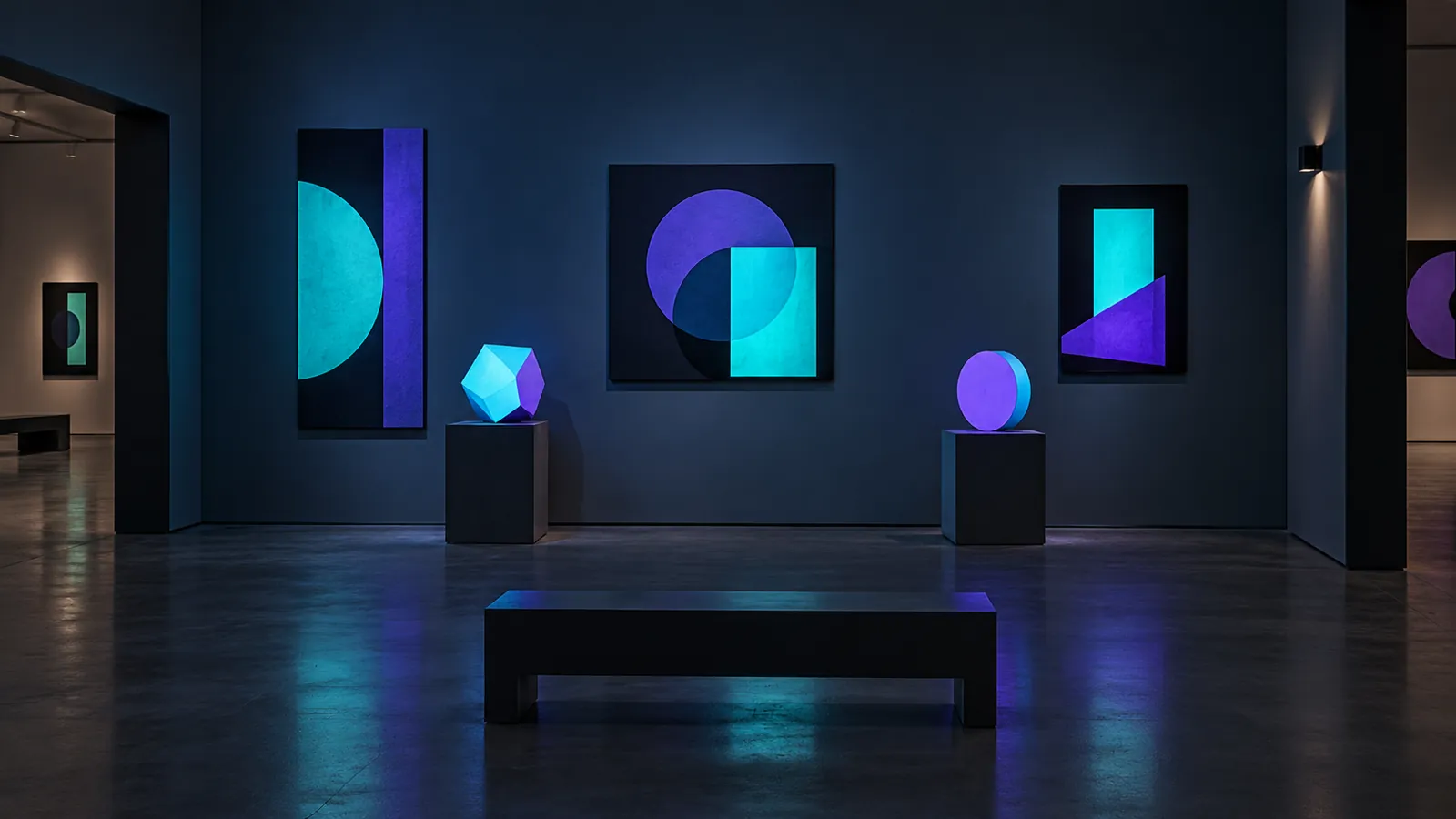
A party display may call for several fixtures arranged according to the manufacturer’s instructions. A small handheld UV light is easier to take to a specific mark or object. In either case, keep the beam away from people and animals, and do not point it toward eyes or exposed skin.
Choosing a Black Light for a Room
Start with the size and location of the materials you want to illuminate, then compare the fixture's published coverage, installation requirements and safety directions. A broad effect requires suitable placement and a source designed for that purpose; one narrow flashlight pointed at a wall may leave other areas unlit. Do not guess a safe exposure duration from a photograph or a wattage claim.
Plan where people will stand and whether the light can reach their eyes or skin. Use the fixture only in the way its manufacturer instructs, and turn it off when it is not needed. For a bedroom or children's space, a normal visible-light night-light avoids using UV as ambient illumination.
Before buying, make a short placement plan: mark the display, the proposed fixture position and where viewers will stand. Check that mounting hardware and power arrangements match the product instructions. Leave controls accessible so the source can be switched off after use. This plan is a shopping checklist, not a prediction of coverage or safe exposure.
If the listing lacks a spectrum, user instructions or clear purpose, choose another product with enough information to make a decision. “LED,” “blacklight” and “purple” do not by themselves tell you what exposure is appropriate for an occupied room.
Inspecting a Suspected Stain With UV
A UV flashlight can help locate a fluorescent area for closer inspection, but it cannot identify a material or certify that cleaning is complete. First check that the surface and cleaning product permit the inspection method. Use the device according to its instructions, avoid direct exposure to eyes and skin, and keep children and pets away from the beam.
Mark the area with a removable reference outside the suspected stain and follow the surface manufacturer's cleaning guidance. After cleaning and drying, a repeat look may help you see whether the visible fluorescence has changed. It cannot prove that all residues or microorganisms are gone. When identity or sanitation matters, use an appropriate professional assessment rather than relying on glow alone.
Reflective items, laundry products and other materials may fluoresce. An unfamiliar glow is therefore a cue to investigate, not a diagnosis. Do not present a handheld UV source as a germ-detection or sterilization device unless the manufacturer provides evidence and instructions for that specific use.
Black Light Exposure and Sleep
Do not use a black light as an overnight night-light. Unnecessary exposure can continue while a person is asleep, and the source's spectrum, intensity, position and exposure duration are needed to assess a particular setup. Turn it off after the intended use and choose a normal visible-light night-light instead.
The FDA identifies risks to skin and eyes from UV exposure. The presence of a faint visible glow does not show how much UV is reaching a person. If a product’s instructions specify protective measures or restrictions, follow them. A faint glow cannot establish a safe all-night exposure level.
Black Lights and UV Resin Curing
A black light can cure a particular resin only if the resin and lamp are specified as compatible. Resin formulations require appropriate light and exposure conditions; a lamp sold to create fluorescence may not provide the wavelength, intensity or coverage needed for reliable curing. Follow the resin maker's directions for the matched lamp, exposure and ventilation rather than assuming any black light will work.
Do not judge complete curing merely by whether the surface feels hard or glows. Use the manufacturer's full cure instructions, including product-specific safety precautions. A portable inspection flashlight should not be represented as a resin-curing device unless its manufacturer explicitly supports that application.
Portable Olight Options: Match the Mode to the Task
We list the Oclip Ultra with white flood, white spot and UV modes, plus a clip and magnetic mounting option. Its portable form is useful when a brief, localized inspection is part of a broader task. It is not a substitute for a fixture selected to illuminate a whole display. The Oclip Ultra manual advises people with an ICD or pacemaker to avoid close or prolonged contact with the product because of possible interference.
The Arkfeld Pro combines white light, UV and a green laser in a flat handheld design. It can suit an adult who needs those distinct functions in one device. Its laser is not UV mode and is not a toy; if you do not need a laser, consider whether a UV-and-white-light device better matches the job.
We list the ArkPro Ultra among the configurations on the ArkPro product page. Compare the exact version and selector before buying; similar names can have different functions. These portable examples are not room-lighting fixtures, disinfection devices or verified resin-curing lamps. Product details must be checked against the exact listing and manual.
UV and Laser Safety Before Switching Modes
Do not look into a UV emitter or point it toward anyone's eyes or exposed skin. Use the product only as directed, minimize unnecessary exposure and supervise access to devices around children. UV output and the amount reaching a person cannot be determined by how purple the device looks.
Some multi-source lights also contain a visible laser. The FDA's laser safety guidance warns against aiming a laser pointer at anyone and says laser pointers are not toys. Do not point a laser at a person, an animal, a vehicle or an aircraft, or use it as a pet toy. Check the selected mode before pressing the switch, and follow the specific model's warning label and manual.
Common Black Light Misunderstandings
These distinctions prevent common buying and safety mistakes. A product label, its intended application and instructions provide more useful information than a color photograph. The table summarizes what to verify before treating two light sources as interchangeable.
| Misunderstanding | Better interpretation | Check |
|---|---|---|
| Every purple lamp is a black light | Visible color alone does not establish UV output. | The product's UV specification and intended use. |
| Every UV source performs the same job | Spectrum, distribution and instructions vary by source. | The application and the manufacturer's directions. |
| A glowing patch identifies its contents | Different materials can fluoresce. | Use another suitable identification method. |
| No glow proves a surface is clean | The target may not fluoresce under that source. | Follow the appropriate cleaning or inspection process. |
| A black light is suitable to leave on overnight | Exposure depends on the actual source and conditions. | Turn UV off when not needed and use a visible night-light. |
Black Light Selection Checklist
Before ordering, describe the task and the area you need to illuminate. Use that description to narrow the form, then check the product's documented output and instructions. The list below keeps room effects, close inspection and curing from being treated as the same application.
- Choose the intended task: fluorescent display, local inspection or a separately specified curing process.
- Check the source's stated spectrum and purpose; do not infer UV output from purple light.
- Compare fixture placement or handheld beam characteristics with the area you need to cover.
- Read the manufacturer's eye, skin, electrical and mounting instructions.
- If a laser is included, identify its mode and keep it away from people, animals and vehicles.
- Switch off UV when finished; use normal visible light for ordinary room illumination.
FAQ
Changelog
- October 29, 2026: First published.