TL;DR:This weapon light buying guide explains the key differences between pistol lights and rifle lights, helping you choose the best WML for home defense, duty use, or outdoor applications. Learn how lumens, candela, beam distance, mounting systems, and activation methods affect real-world performance. Whether you're comparing a pistol light vs rifle light or evaluating options like the Olight Baldr S, PL X, and Odin, understanding these fundamentals will help you select the right weapon mounted light for your firearm.
Choosing a tactical weapon light is one of the most significant upgrades you can make for a firearm intended for self-defense, professional duty, or outdoor adventure. Whether you are navigating a dark hallway at home or tracking a target in the woods, a reliable weapon mounted light (WML) ensures you can see what you are doing and, more importantly, identify exactly what is in front of you.
Table of Contents
- Why Choosing the Right Weapon Mounted Light Matters
- WML Basics: What Is a Weapon Mounted Light?
- Lumens vs Beam Distance: Which Specification Matters More?
- Weapon Light Mounting Methods Explained
- Pistol Light vs Rifle Light: What's the Difference?
- Best WML Options from Olight FAQ About Weapon Mounted Lights
Why Choosing the Right Weapon Mounted Light Matters
The primary reason to mount a light on a firearm is Positive Identification (PID). You cannot shoot what you cannot see. In a high-stress situation, the ability to distinguish between a legitimate threat and an innocent bystander or family member is a legal and moral necessity. Low-light conditions account for a large percentage of defensive encounters, making a tactical weapon light an essential tool rather than an accessory.
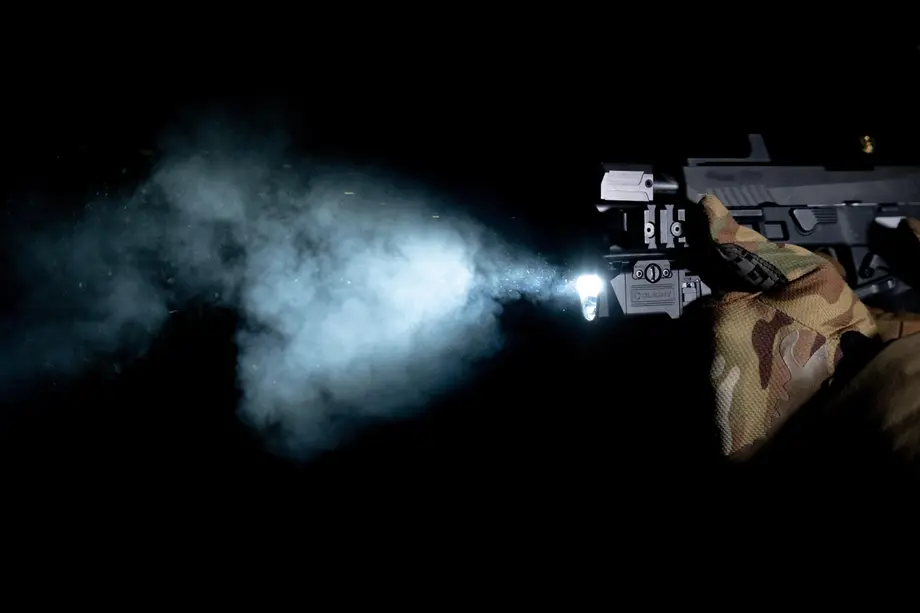
Beyond identification, a powerful weapon mounted light serves as a non-lethal deterrent. High-intensity light can temporarily disorient an intruder, giving you a tactical advantage. For outdoor enthusiasts, a WML provides hands-free illumination, allowing you to maintain a proper grip on your firearm while navigating uneven terrain or searching for gear in the dark.
A well-chosen WML also improves your shooting accuracy in the dark. It illuminates your sights (if they are iron sights) and provides a clear view of the target area, ensuring that every round fired is done so with full visual awareness.
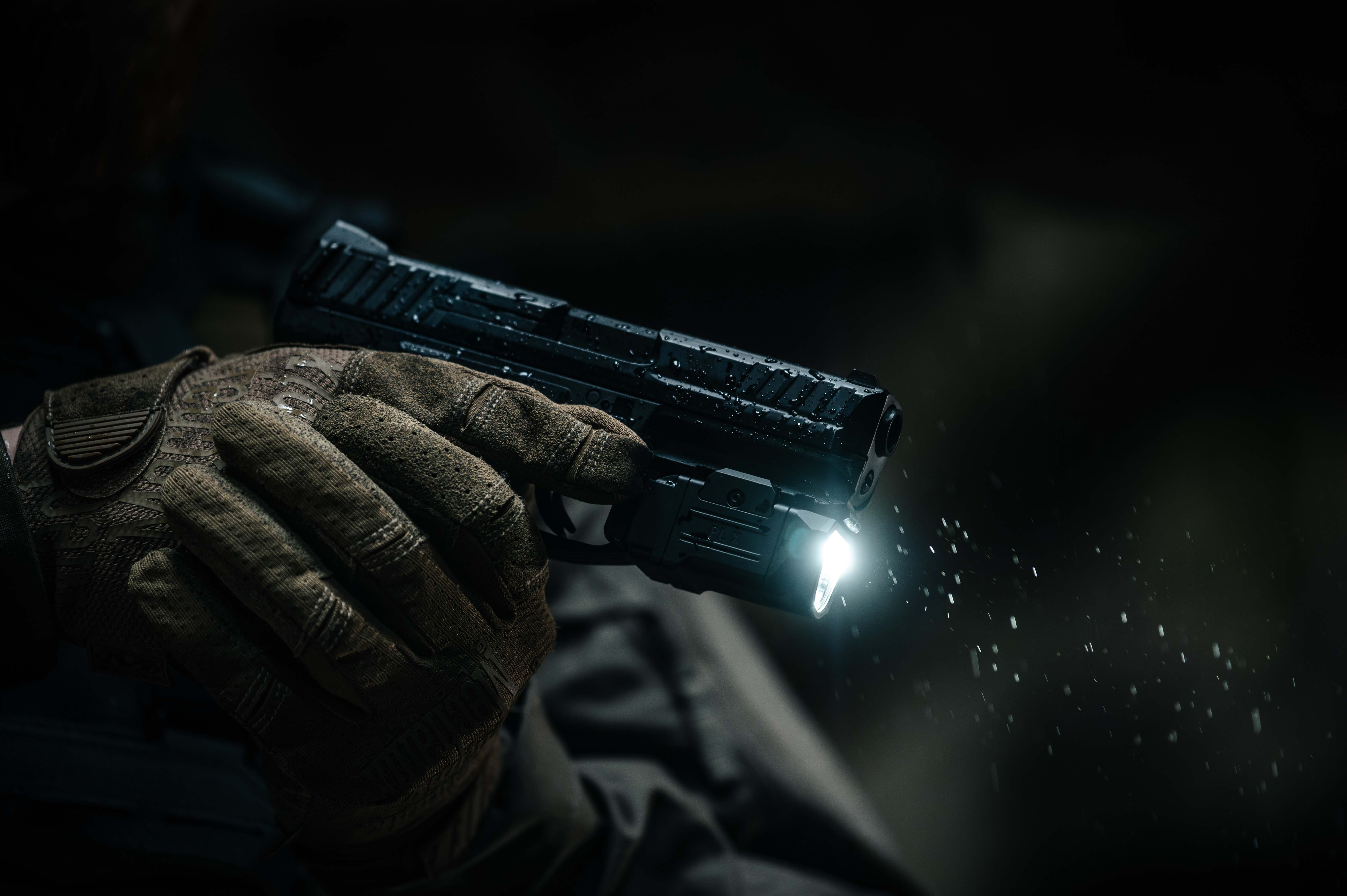
PL X Tactical Weapon Light 1,200 Lumens Dual Beams
WML Basics: What Is a Weapon Mounted Light?
A Weapon Mounted Light (WML) is a specialized flashlight designed to be attached directly to a firearm. Unlike a standard handheld flashlight, a WML is engineered to withstand the violent recoil of repeated gunfire and the harsh environments often encountered by hunters and tactical professionals.
Modern weapon lights are commonly tested using ANSI/PLATO FL 1 performance standards, which provide standardized methods for measuring output, beam intensity, beam distance, runtime, impact resistance, and water resistance. These standards allow consumers to make more accurate comparisons between different WML models and manufacturers (Source: ANSI/PLATO FL 1 Standard Overview)
Key Components of a Modern WML
- Bezel and Lens: The front part of the light that houses the LED emitter and the glass lens. Modern lenses are often treated to be scratch-resistant and to maximize light transmission.
- Reflector/TIR Lens: This determines the shape of the beam. A deep reflector usually creates a tighter "hot spot" for long-distance reach, while a Total Internal Reflection (TIR) lens can create a more balanced beam with good spill.
- Housing: Usually made from high-strength aluminum alloy. It must be durable, heat-dissipating, and often waterproof (IPX7 or IPX8).
- Mounting Interface: The part that clamps onto the firearm's rail (Picatinny, Glock, or M-LOK).
- Switch/Activation Mechanism: The interface used to turn the light on or off. This can be a toggle, a push-button, or a remote pressure pad.
- Battery Compartment: Where the power source is stored. Many modern Olight models feature built-in rechargeable batteries or magnetic charging ports.
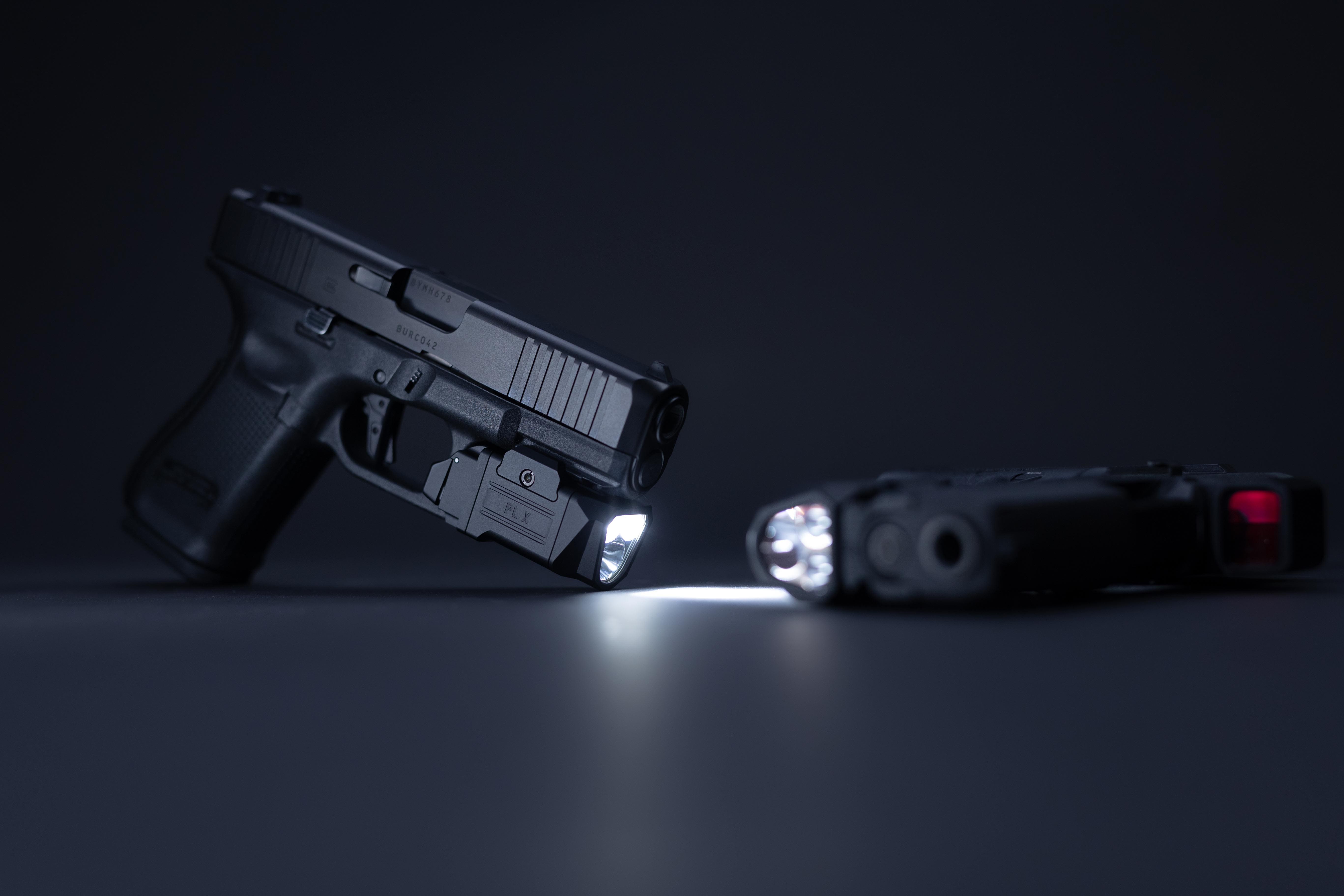
Olight PL X
How Weapon Lights Improve Target Identification
Target identification is the process of confirming that the object in your sights is indeed a threat. A high-quality tactical weapon light floods the environment with enough white light to reveal colors, facial features, and whether or not a person is holding a weapon. Without a WML, a user is forced to use a handheld light, which complicates the "two-handed" grip required for accurate shooting, or worse, move through the dark blindly.
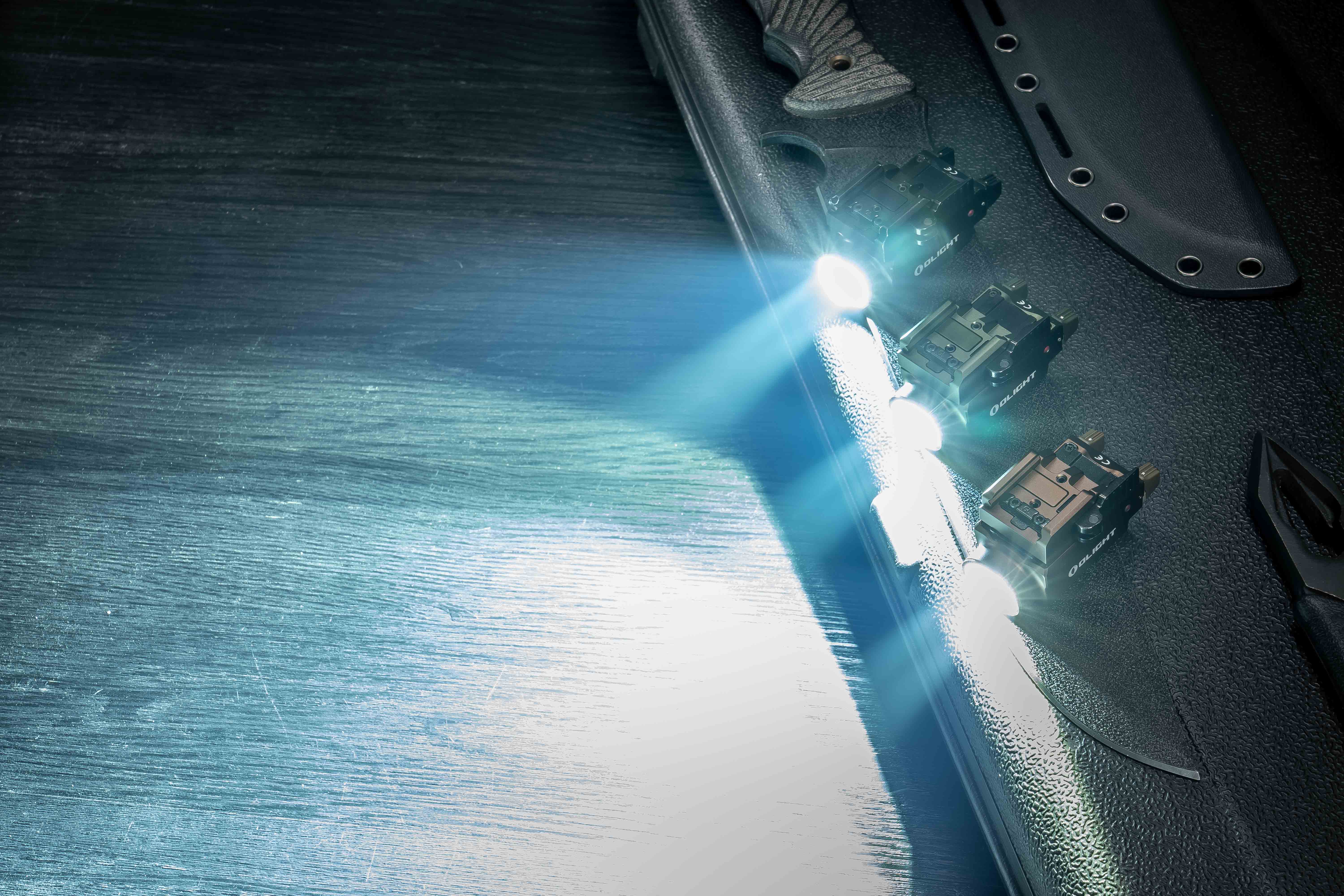
Lumens vs Beam Distance: Which Specification Matters More?
When shopping for a weapon mounted light, you will see two main technical specs: Lumens and Candela. Understanding the relationship between these two is vital for choosing the right tool.
Many buyers focus exclusively on lumen output, but industry standards show that beam distance is primarily determined by candela rather than lumens. Under ANSI/PLATO FL 1 testing protocols, beam distance is calculated from peak beam intensity (candela), meaning a high-candela light can often identify objects at greater distances even when total lumen output is lower (Source: ANSI/NEMA FL-1 Flashlight Performance Standard)
Understanding Lumens, Candela, and Throw
- Lumens: This measures the total volume of light emitted by the LED. Think of lumens as the "amount" of light. A high-lumen light provides a wide "flood" that illuminates everything in the immediate vicinity.
- Candela: This measures the intensity of light in a specific direction. Candela represents the "punch" or "focus" of the beam. High candela allows a light to cut through "photonic barriers" like tinted windows, fog, or smoke.
- Throw (Beam Distance): This is the distance at which the light can still cast useful illumination. This is directly related to candela.
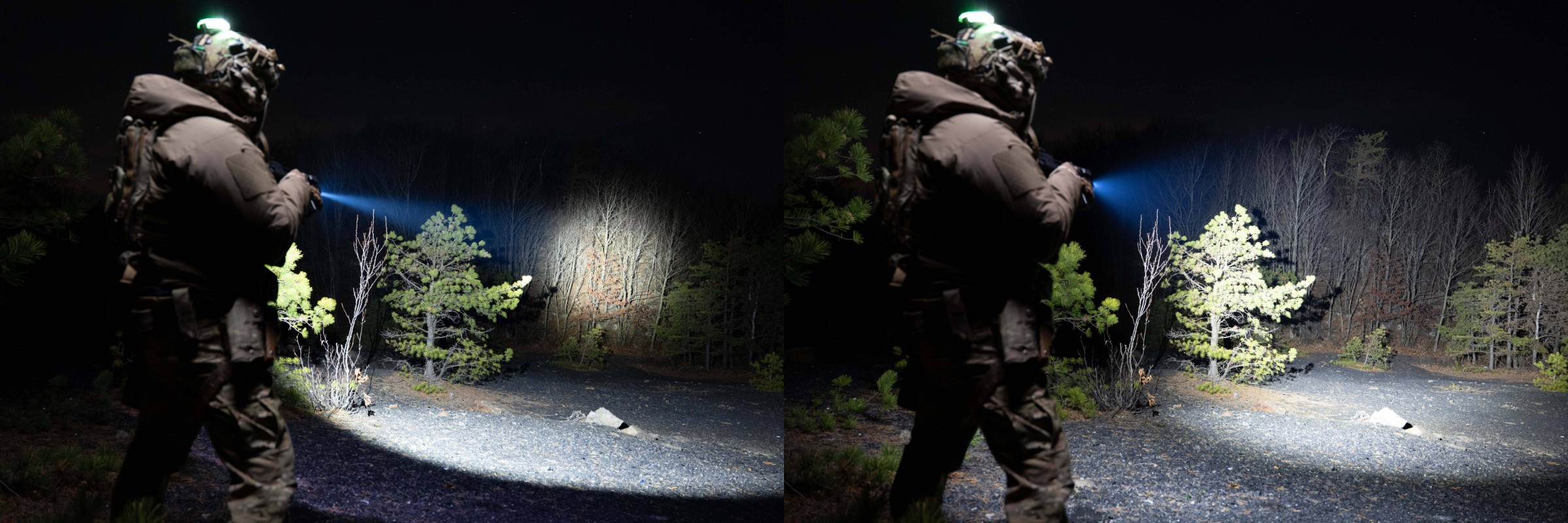
Choosing the Right Output for Indoor vs Outdoor Use
For indoor home defense, a balanced light is often better. Extremely high candela can create a "hot spot" so bright that it reflects off white walls and temporarily blinds the user (splashback). A high-lumen light with a wide flood is excellent for clearing rooms and seeing into corners.
For outdoor use or rifle weapon light applications, candela is king. If you are a hunter or a search-and-rescue professional, you need a light that can reach out 100, 200, or even 300 meters. High candela ensures that the light remains concentrated over long distances rather than scattering.
Industry testing standards define beam distance as the range at which a flashlight delivers 0.25 lux of illumination—approximately the brightness of full moonlight. While this provides a standardized comparison between products, real-world identification distances are often shorter and depend on environmental conditions, target contrast, and user vision. This is why balancing lumens and candela is often more important than maximizing either specification alone (Source: LINEA-Beam Distance Explained (ANSI FL1))
| Usage Scenario | Primary Metric | Recommended Output |
|---|---|---|
| Home Defense (Pistol) | Lumens (Flood) | 500 - 1,200 Lumens |
| Tactical/Outdoor (Rifle) | Candela (Throw) | 20,000+ Candela |
| Professional Duty | Balanced | 1,000+ Lumens / 15,000+ Candela |
Weapon Light Mounting Methods Explained
A WML is only as good as its mount. If the light moves or falls off under recoil, it is useless.
Rail-Mounted Systems for Pistols
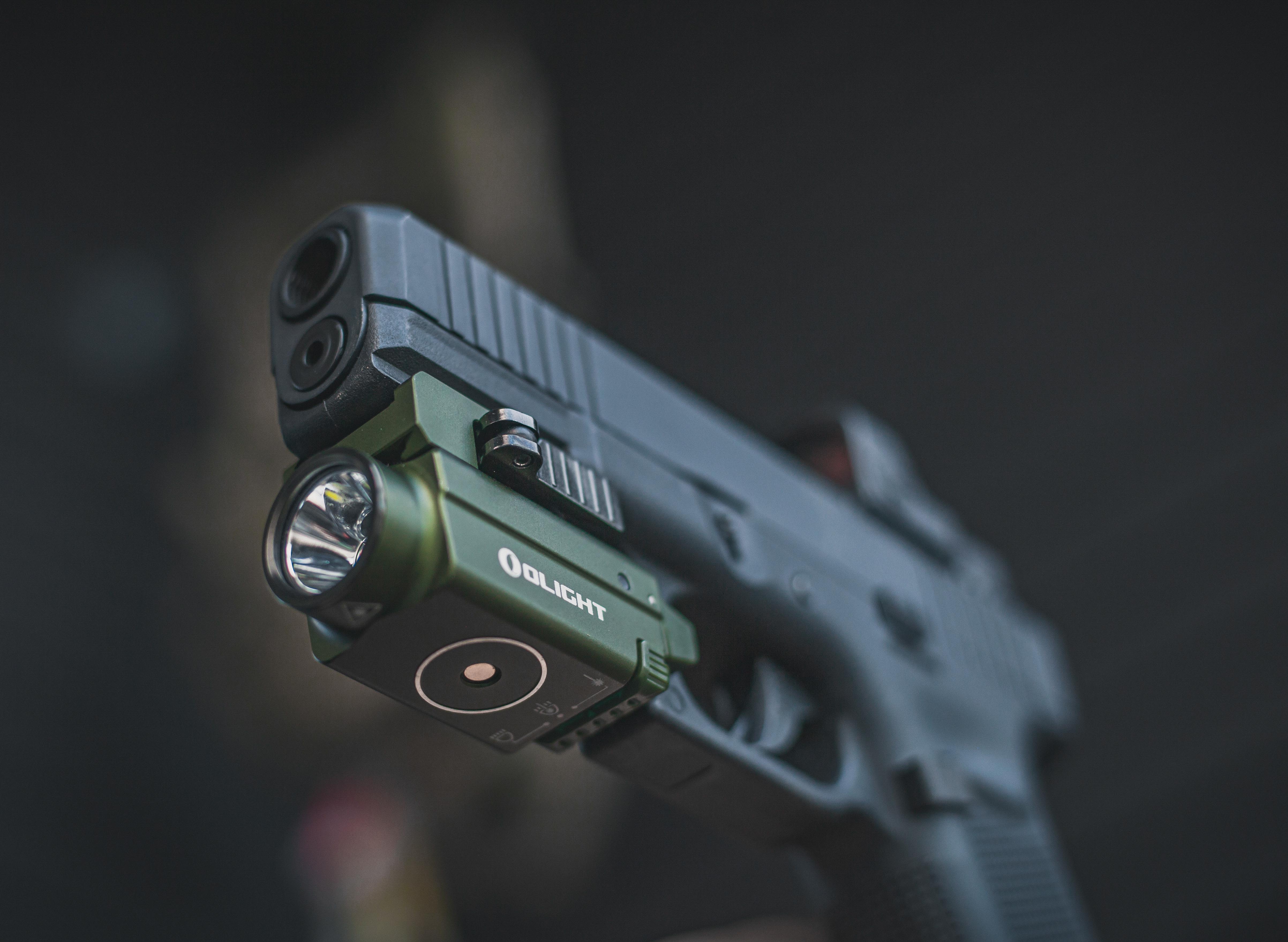
Most modern handguns feature an accessory rail under the barrel. The two most common standards are the Glock rail and the Picatinny (MIL-STD-1913) rail. * Olight models like the Baldr S often feature a sliding rail mechanism. This allows you to adjust the light forward or backward to ensure the switches are perfectly positioned for your trigger finger, regardless of the pistol size.
Picatinny and MLOK Options for Rifles
Rifles offer more real estate for mounting.
- Picatinny: The classic "teeth" rail found on the top and sides of most AR-style rifles.
- MLOK: A modular system that allows for a slimmer handguard. You often need an adapter to mount a Picatinny-style light to an M-LOK rail.
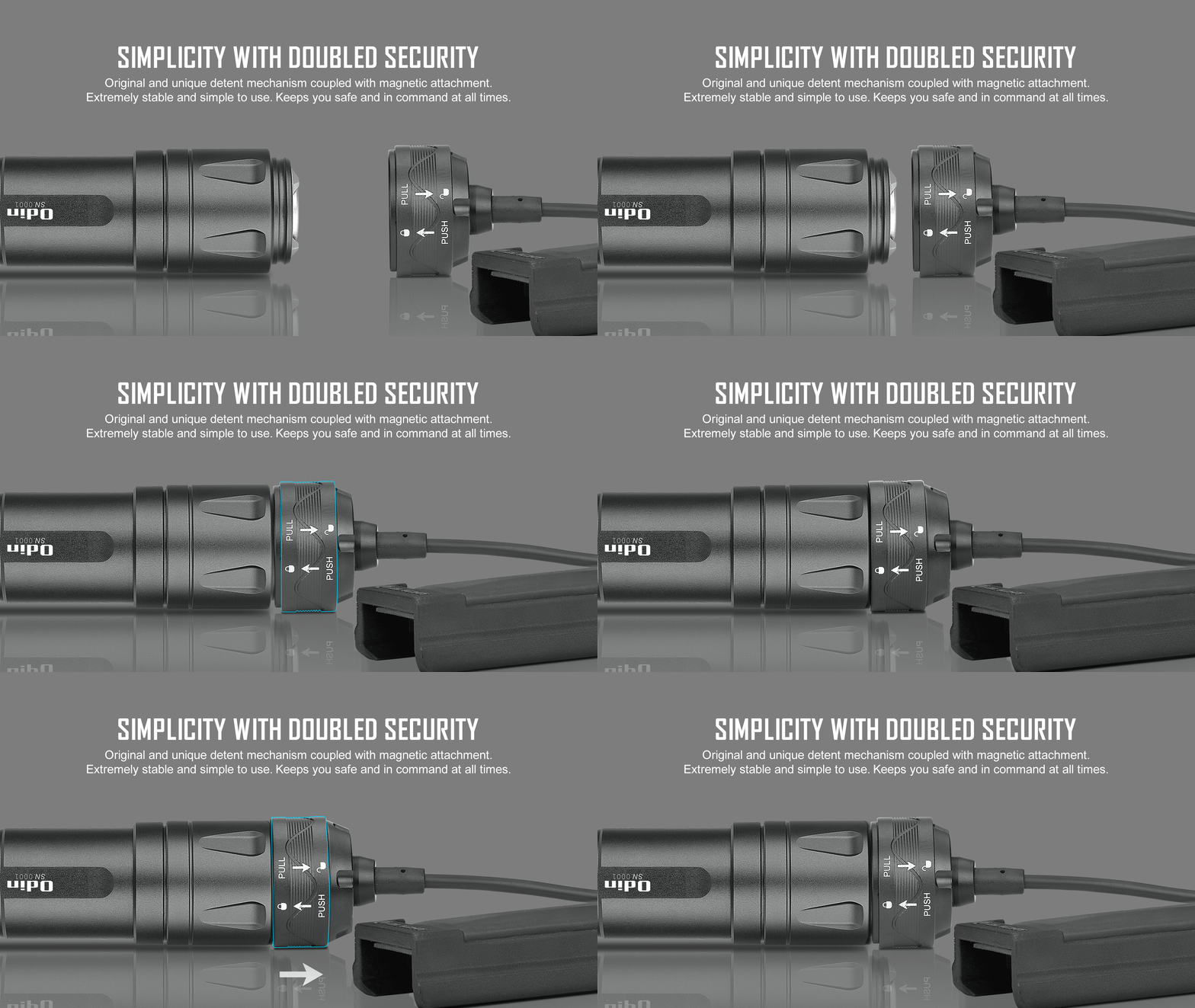
The Odin Tactical Light utilizes a specialized slide rail mount with a mechanical lock, ensuring the light stays secure during heavy movement or recoil.
Olight Odin Tactical Light
Pistol Light vs Rifle Light: What's the Difference?
While both serve the same purpose, the design requirements for a pistol weapon light and a rifle weapon light are quite different.
Size, Weight, and Balance Considerations
A pistol light must be compact. Adding too much weight to the front of a handgun can affect its balance and make it difficult to transition between targets. A rifle light can be larger and heavier because the user has more points of contact (shoulder, grip, handguard) to manage the weight.
Activation Controls and Ergonomics
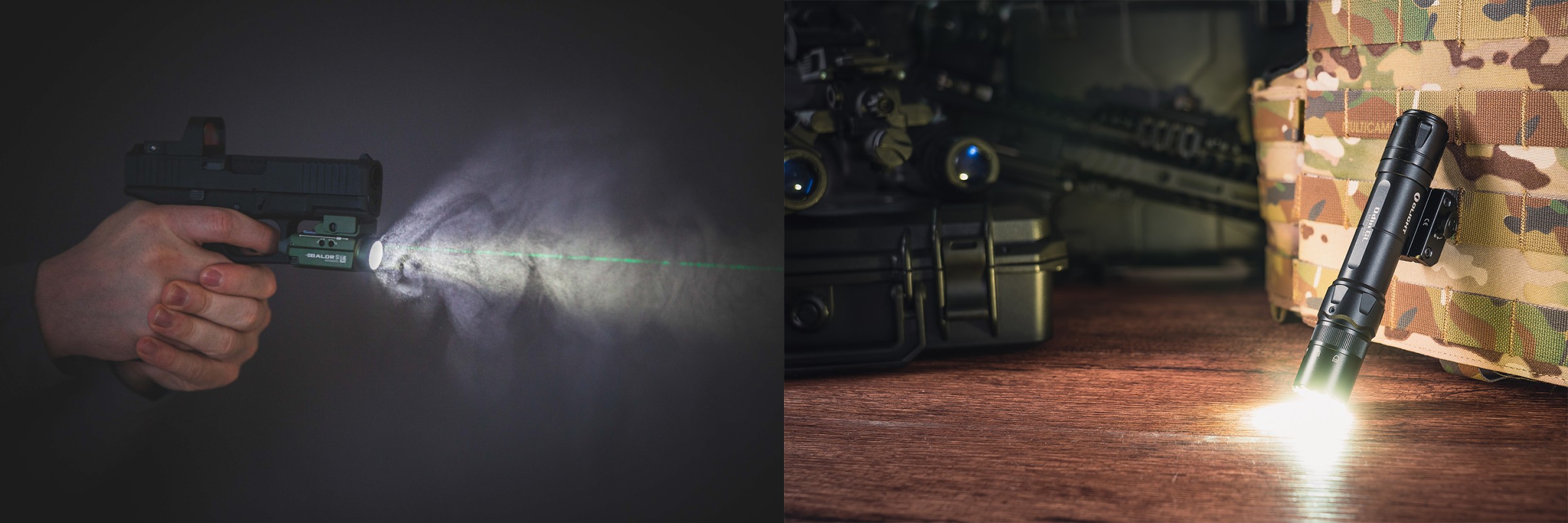
Pistol lights are usually activated by "paddles" located near the trigger guard. These are designed to be pressed by the index finger or the thumb of the support hand. Rifle lights often use a tail-switch or a remote pressure pad. A pressure pad allows you to mount the light further forward on the rail (to avoid barrel shadow) while keeping the switch where your hand naturally rests on the grip.
Beam Patterns and Intended Engagement Distances
Pistol engagements usually happen within 7 to 15 yards. Therefore, a wide, room-filling beam is preferred. Rifle engagements can occur at 50, 100, or 300 yards, requiring a focused, high-candela beam to reach the target.
Best Olight WML Options
Olight has developed a reputation for high performance and innovative charging solutions. Here are three top-tier recommendations.
Baldr S for Compact and Full-Size Handguns
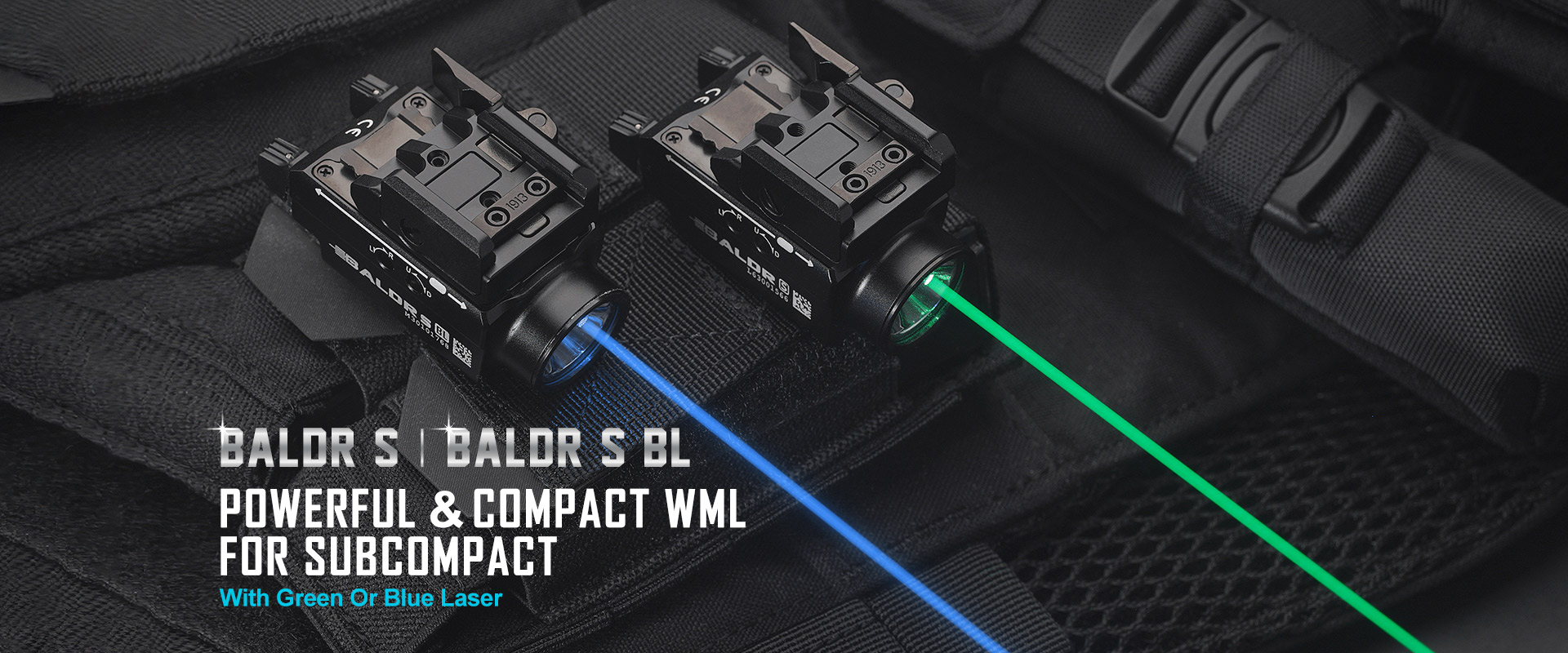
The Baldr S is a rail mounted weapon. It is designed for those who want both white light and a laser aiming module.
- Performance: 800 lumens of white light with a 4,400-candela intensity.
- Dual Light Source: Features a highly visible green beam for fast target acquisition.
- Adjustable Rail: The sliding rail ensures it fits almost any handgun rail perfectly.
- Compatibility: Includes inserts for both Glock and Picatinny rails.
- Runtime: Up to 140 minutes in low mode.
Baldr S Rail Mounted Light
This rail mounted weapon light delivers 800 lumens max output with a 130-meter beam throw. It supports three working modes, features an adjustable sliding rail and dual rear switches, and is compatible with Glock and Picatinny rails for wide application.
View DetailsPL X for High-Performance Pistol Applications
The PL X is for users who refuse to choose between flood and throw. It features an innovative dual-beam design.
- Dual Beams: Switch between a 1,200-lumen floodlight for area illumination and a 22,500-candela spotlight that throws up to 300 meters.
- Mounting: Uses a patented anti-loosening ratchet mounting system for a rock-solid fit.
- Durability: IPX7 waterproof and 1.5-meter impact resistance.
- Charging: Convenient USB-C charging for rapid power recovery.
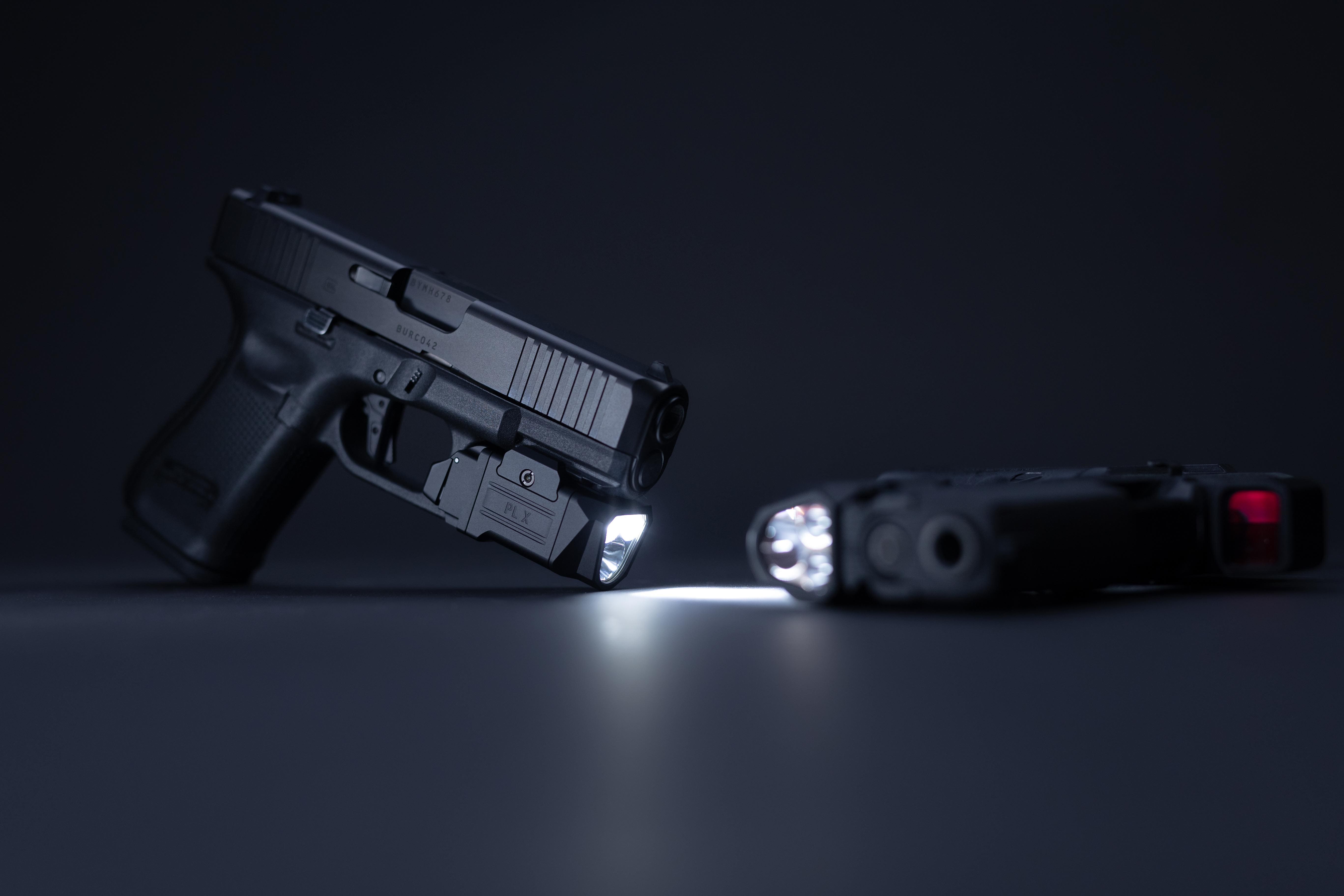
PL X Dual Beam Rail Weapon Light
Olight's first dual-beam tactical light boasts 1200 lumens floodlight and 22500cd spotlight with 300 meters max throw. It adopts metal construction, IPX7 waterproof rating and USB-C charging, equipped with anti-loosening ratchet mounting system.
View DetailsOdin Tactical Light for Rifles and Carbines
The Odin is the gold standard for a professional-grade rifle weapon light.
- Massive Power: Delivers 2,000 lumens and a 300-meter beam distance.
- Mounting System: Includes a slide rail mount with a mechanical lock for secure attachment.
- Remote Switch: Comes with an innovative locking remote pressure switch for reliable activation.
- Tail Switch: Supports magnetic charging and traditional tactical handheld operation.
- Battery: Powered by a customized 5000mAh 21700 rechargeable battery for extended runtimes.
| Model | Max Lumens | Max Candela | Best Use |
|---|---|---|---|
| Baldr S | 800 | 4,400 | Concealed Carry / Home Defense |
| PL X | 1,200 | 22,500 | Duty Carry / Tactical Pistol |
| Odin | 2,000 | 22,500 | Rifle / Carbine / Hunting |
When comparing the best WML options, buyers should evaluate more than maximum brightness. Independent lighting standards recommend considering beam intensity (candela), beam distance, runtime, durability ratings, and mounting compatibility alongside lumen output. Together, these specifications provide a more complete picture of real-world performance than brightness alone (Source:LINEA-How to Read Flashlight Specs: Lumens, Candela and Throw Explained)
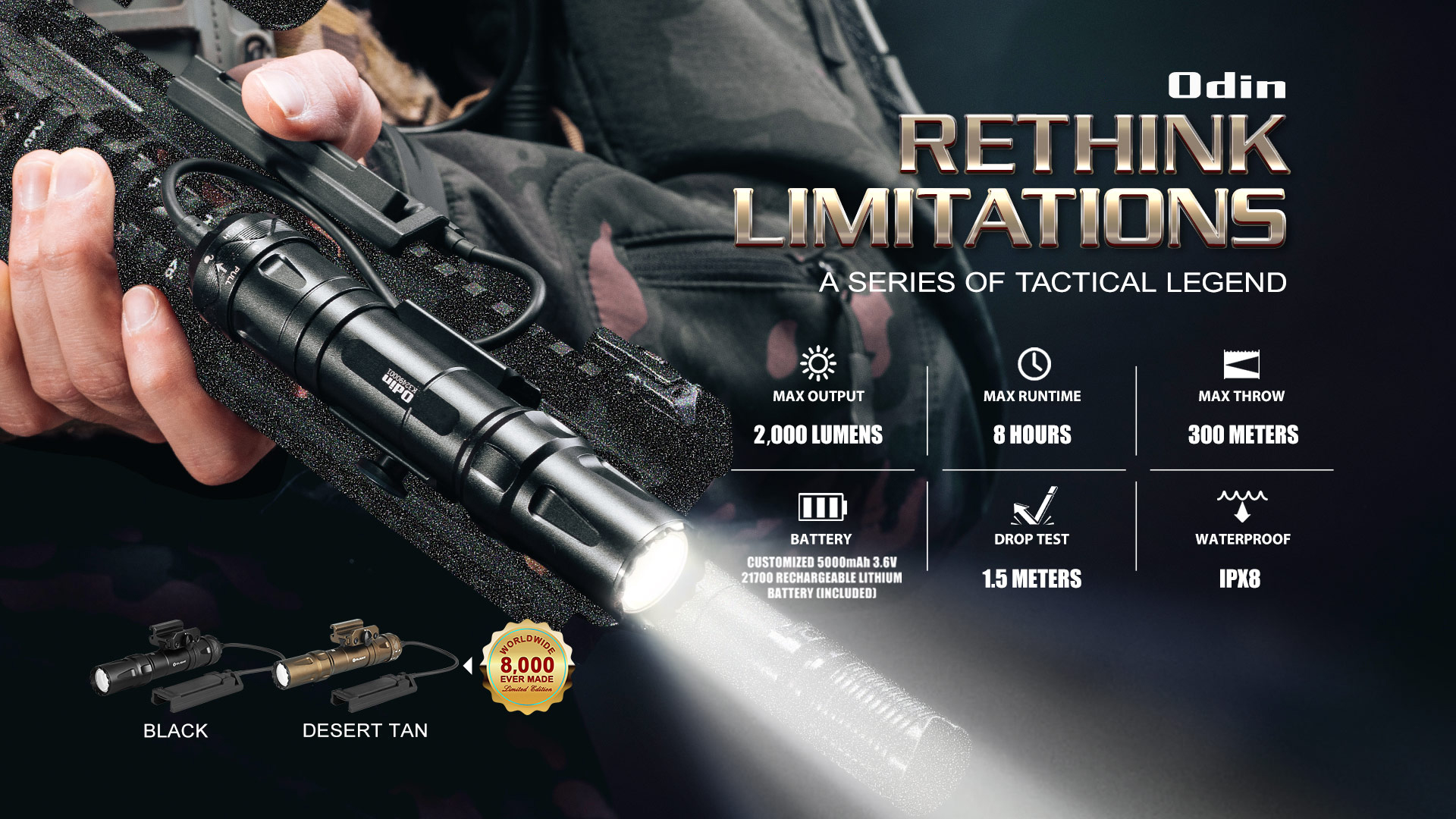
Odin Tactical Flashlight
A professional tactical flashlight with 2000 lumens peak brightness and 300-meter beam distance. It comes with a lockable magnetic remote switch, mechanical lock slide rail mount and magnetic charging design for tactical and hunting scenarios.
View DetailsFAQ About Weapon Mounted Lights
How Many Lumens Do I Need for a Weapon Light?
Are Laser Weapon Lights Worth It?
Can I Use a Rifle Light on a Pistol?
What Is the Best WML for Home Defense?
Choosing a tactical weapon light is about balancing your specific needs for brightness, distance, and mounting. By understanding WML basics and the relationship between lumens vs candela, you can select an Olight model that provides the reliability and performance required for any low-light situation.